Quick answer: how long reputation management takes
Reputation management timing depends on source authority, search competition, removal eligibility, content quality, review volume, legal complexity, and how quickly platforms or publishers respond.
Simple corrections may resolve quickly; search suppression and trust rebuilding often take months. Set milestones for removals, rankings, reviews, profiles, traffic, leads, and stakeholder sentiment.
How Long Does Reputation Management Take? A Realistic Timeline
When your online reputation is under pressure, one question naturally comes to mind: How Long Does Reputation Management Take? Whether you’re dealing with negative search results, harmful reviews, unfavorable media coverage, or a damaged personal brand, it’s understandable to want fast results.
The reality is that reputation management is not a one-time fix. It is a strategic process that improves how people and search engines perceive your brand over time. While some changes can be noticeable within weeks, meaningful and lasting improvements often require several months of consistent effort.
In this guide, we’ll explain what influences the timeline, what you can realistically expect, and how working with an experienced reputation management agency can help you achieve sustainable results.
How Long Does Reputation Management Take?
There is no universal timeline because every reputation challenge is different. A business responding to a few negative reviews will typically recover faster than an executive trying to rebuild credibility after years of negative media coverage.
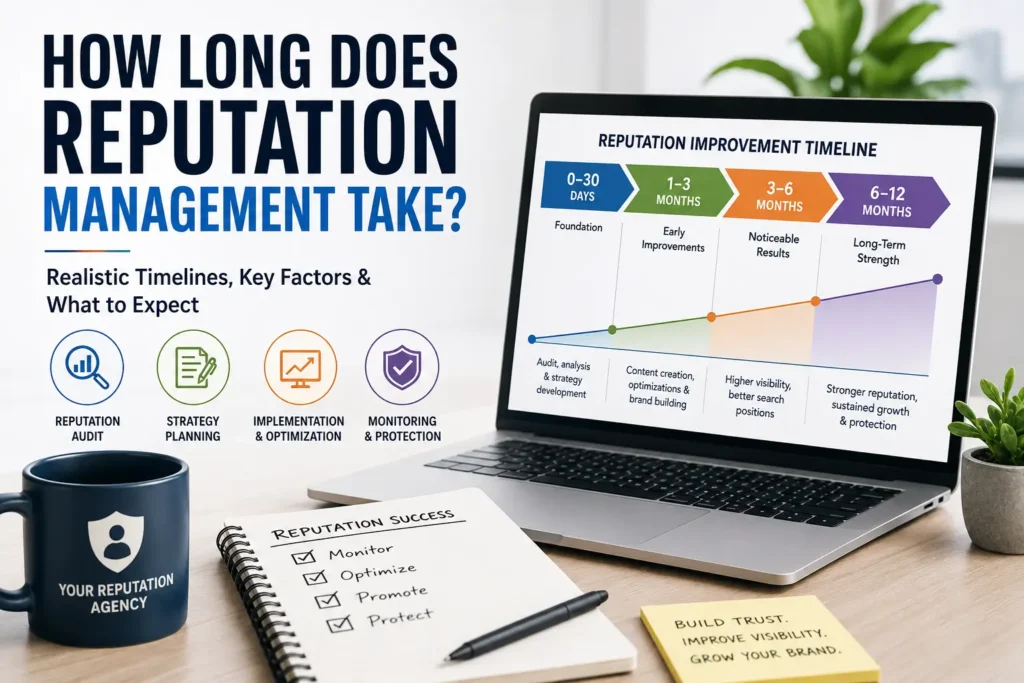
Professional online reputation management usually follows a phased approach. Each phase builds upon the previous one, creating long-term improvements instead of temporary fixes.
In many cases, clients begin seeing early progress within the first one to three months. However, comprehensive reputation recovery often takes between six and twelve months, depending on the complexity of the situation and the competitiveness of the online landscape.
The goal isn’t simply to hide negative information—it’s to strengthen your overall digital presence with accurate, trustworthy, and authoritative content.
Why Every Reputation Project Has a Different Timeline
Several factors influence how quickly your online reputation can improve.
The Severity of the Reputation Issue
A few isolated negative reviews require a very different strategy than multiple news articles, legal records, or years of negative search results.
The broader the issue, the more time it usually takes to build stronger positive signals.
Search Engine Competition
Highly competitive industries naturally require more work.
For example, executives, law firms, healthcare professionals, financial advisors, and national brands compete with thousands of authoritative websites. Improving visibility in these industries generally requires a longer-term SEO and reputation strategy.
Authority of Existing Negative Content
Not every negative page carries the same weight.
Content published by major news organizations, government websites, or highly trusted domains is generally more difficult to outrank than content published on smaller blogs or inactive websites.
This is why ethical search suppression strategies often focus on strengthening positive assets rather than attempting unrealistic removal requests.
Your Existing Digital Presence
Organizations with a strong website, active social profiles, positive media coverage, and consistent content usually see improvements faster than businesses with very little online presence.
A solid digital foundation provides more opportunities to build authority and improve branded search results.
What Happens During the First 30 Days?
The first month is usually focused on research, planning, and building the right strategy.
Rather than rushing into changes, reputation specialists first identify the issues affecting your online presence.
Typical activities include:
- Comprehensive reputation audit
- Search result analysis
- Brand mention monitoring
- Competitor evaluation
- Risk assessment
- Content gap analysis
- Strategy development
- Priority action planning
Although dramatic search changes are uncommon during this stage, the groundwork established in the first month has a significant impact on long-term success.
Months One to Three: Building Positive Momentum
Once the strategy has been developed, active reputation improvement begins.
During this phase, organizations typically focus on improving digital authority through high-quality content, search optimization, and reputation monitoring.
Activities often include:
- Publishing authoritative content
- Improving branded search results
- Optimizing business profiles
- Enhancing executive visibility
- Strengthening social media presence
- Managing customer reviews
- Expanding trusted digital assets
Many businesses begin noticing measurable improvements during this period, particularly for branded searches.
If harmful content cannot be removed, professional search suppression becomes an important part of the overall strategy.
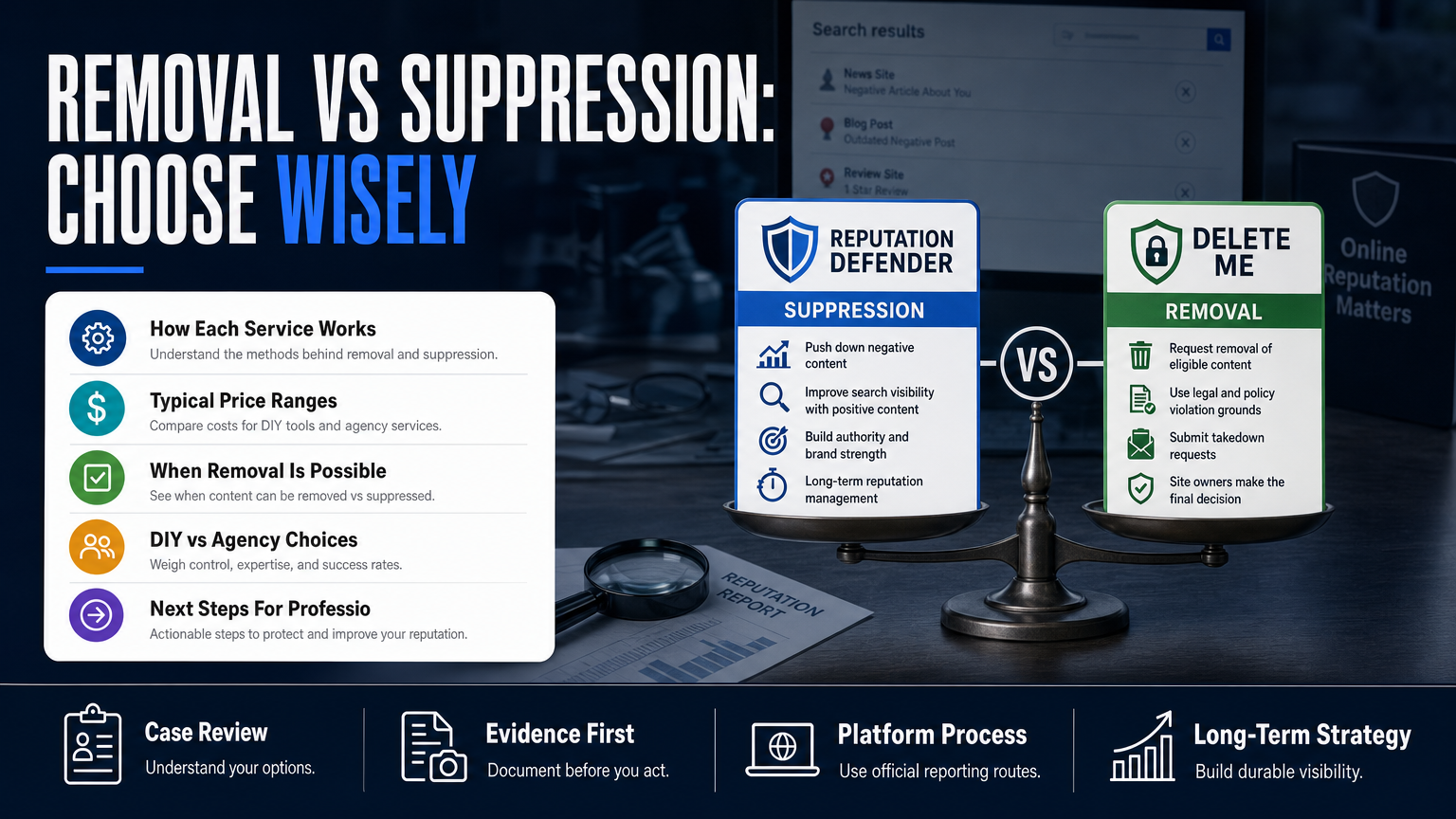
Our article on Search Suppression vs Content Removal | Key Differences explains when each approach is most effective:
Months Three to Six: Noticeable Reputation Improvements
By the third month, many reputation management campaigns begin producing visible results. Positive content becomes more established, branded search results improve, and authoritative assets start gaining traction in search engines.
During this phase, the focus shifts from building a foundation to strengthening online credibility.
Common activities include:
- Publishing additional authoritative content
- Improving search visibility for positive assets
- Expanding digital PR opportunities
- Strengthening brand authority
- Ongoing reputation monitoring
- Managing customer feedback
- Optimizing business listings
Businesses that consistently invest in these efforts often experience stronger search performance and improved customer confidence.
If negative pages remain visible, strategic search suppression helps reduce their prominence by promoting more relevant and trustworthy content.
For a deeper explanation, read our guide:
What Is Search Result Suppression? | Complete Guide
Six to Twelve Months: Building Long-Term Reputation Strength
Reputation management delivers its greatest value when viewed as a long-term investment rather than a short-term project.
Between six and twelve months, organizations often see:
- Stronger branded search results
- Increased positive online mentions
- Higher digital authority
- Better customer trust
- Improved visibility for high-quality content
- Reduced impact of negative search results
- Greater resilience against future reputation challenges
At this stage, the objective is no longer simply responding to problems. Instead, it becomes maintaining a trustworthy digital presence that supports future growth.
What Can Delay Reputation Management Results?
Many clients ask why one business recovers more quickly than another.
Several factors can extend the timeline.
Highly Authoritative Negative Content
Articles published by respected news organizations or government websites often carry significant authority. While these pages cannot always be removed, they can frequently be balanced through ethical reputation management strategies.
Ongoing Reputation Issues
If new complaints, negative reviews, or media coverage continue appearing during a campaign, additional work may be required before long-term improvements become visible.
Limited Positive Online Presence
Businesses with very little original content or few trusted online assets usually need more time to establish authority.
Creating valuable content, optimizing branded search results, and strengthening digital credibility all contribute to long-term success.
Competitive Industries
Professionals such as physicians, attorneys, executives, politicians, and financial advisors often compete in highly competitive search environments.
As a result, reputation improvement typically requires greater consistency and patience.
A Realistic Example
Imagine a healthcare clinic receives several negative reviews and an outdated article ranks on the first page of Google.
Rather than attempting unrealistic “instant removal,” a professional reputation management strategy might include:
- Improving the clinic’s website
- Publishing educational healthcare content
- Optimizing physician profiles
- Strengthening local SEO
- Encouraging genuine customer feedback
- Monitoring new brand mentions
- Building authoritative digital assets
Within several months, positive content may become significantly more visible, helping prospective patients find accurate and trustworthy information first.
This type of ethical strategy produces more sustainable results than short-term tactics.
Why Professional Reputation Management Matters
Managing an online reputation involves far more than publishing new content.
Experienced specialists evaluate your complete digital footprint before developing a customized strategy.
Professional reputation management often includes:
- Reputation audits
- Search engine analysis
- Content strategy
- Search suppression
- Executive reputation management
- Review management
- Digital PR
- SEO optimization
- Brand monitoring
If you’re responsible for protecting a leadership team or executive brand, our CEO Reputation Management Guide provides additional insights into maintaining long-term professional credibility.
Trust Is Built Over Time
Consumers increasingly research businesses before making purchasing decisions.
A strong online reputation isn’t created overnight—it develops through consistent transparency, quality service, and credible online visibility.
Many prospective clients also review a company’s Google Business Profile and Trustpilot ratings before making contact. Positive, authentic customer feedback across trusted platforms reinforces confidence and complements your broader reputation management strategy.
According to Google’s Search documentation, creating helpful, people-first content is one of the most effective ways to build long-term search visibility.
https://developers.google.com/search
Likewise, the U.S. Federal Trade Commission (FTC) encourages businesses to manage reviews honestly and avoid deceptive practices that could undermine consumer trust.
Need Help Protecting Your Reputation?
Whether you’re facing negative search results, damaging reviews, or a broader reputation challenge, having a proactive strategy can make a significant difference.
At Your Reputation Agency, we create customized online reputation management strategies based on your goals, industry, and current digital presence. From reputation monitoring and search suppression to executive reputation management and review optimization, our team focuses on sustainable, ethical solutions that support long-term growth.
You can also explore our specialized services:
If you’ve been wondering How Long Does Reputation Management Take?, the most accurate answer is that it depends on your specific situation. The severity of the issue, the authority of existing content, your industry’s competitiveness, and the strength of your current online presence all influence the timeline.
While some improvements may appear within the first few months, building a trustworthy digital reputation is an ongoing process. Ethical reputation management focuses on creating long-term value rather than chasing quick fixes. By investing in high-quality content, search optimization, reputation monitoring, and strategic brand building, you can establish lasting credibility that benefits both your audience and search engines.
The most successful reputation management strategies are proactive. Instead of waiting for a crisis, organizations that consistently invest in their online presence are better prepared to protect their reputation and maintain customer trust for years to come.
Protect Your Reputation Before Small Issues Become Bigger Problems
Your online reputation influences purchasing decisions, professional opportunities, media perception, and long-term business growth. Every day, potential customers search for businesses before deciding whom to trust.
At Your Reputation Agency, we help businesses, executives, professionals, and public figures build stronger digital reputations through ethical online reputation management. Our tailored strategies combine search suppression, reputation monitoring, executive branding, review management, and SEO best practices to create sustainable, long-term results.
If you’re facing negative search results or simply want to strengthen your digital presence, our team is ready to help.
Contact Your Reputation Agency today for a confidential reputation assessment and discover how a customized reputation strategy can support your long-term success.
Frequently Asked Questions
1. How long does reputation management usually take?
Most reputation management campaigns begin showing measurable progress within one to three months. However, meaningful and sustainable improvements often require six to twelve months, depending on the complexity of the situation.
2. Why does reputation management take time?
Search engines need time to discover, evaluate, and rank new authoritative content. Building trust, improving search visibility, and strengthening digital authority are gradual processes rather than instant changes.
3. Can negative search results disappear quickly?
Some content may be removed or updated relatively quickly if it violates platform policies. However, many situations require long-term strategies such as search suppression and reputation optimization rather than immediate removal.
4. What factors affect the timeline?
Several factors influence results, including:
- The severity of the reputation issue
- The authority of negative content
- Industry competition
- Existing online presence
- Website authority
- Content quality
- Ongoing reputation challenges
5. Is reputation management a one-time service?
No. Reputation management works best as an ongoing process. Continuous monitoring and optimization help protect your brand against future issues while maintaining strong search visibility.
6. Can businesses speed up reputation recovery?
Businesses that consistently publish helpful content, manage customer feedback professionally, improve SEO, and strengthen their digital authority often achieve better long-term outcomes than those relying on short-term tactics.
7. Does removing negative content solve every reputation problem?
Not always. In many situations, ethical search suppression and positive content development are more effective than attempting to remove every negative mention.
8. Who benefits from reputation management?
Online reputation management is valuable for:
- Business owners
- CEOs and executives
- Healthcare professionals
- Attorneys
- Financial advisors
- Public figures
- Entrepreneurs
- Corporate brands
- Small businesses
- Growing organizations
9. How do I know if I need professional reputation management?
If negative search results, harmful reviews, inaccurate information, or declining customer trust are affecting your business or career, professional reputation management can help develop a structured recovery strategy.
10. Why choose Your Reputation Agency?
Your Reputation Agency provides ethical, customized online reputation management solutions designed for long-term success. Our experienced team focuses on sustainable search visibility, reputation monitoring, executive reputation management, review management, and strategic digital brand protection while following Google’s best practices.