You searched for “Expunge my record online” because a court record, mugshot, or news result keeps showing up when people Google your name. That visibility can cost interviews, clients, and opportunities even when the legal case is over.
This article breaks down how expungement and online removal work together: the court-side steps to clear or seal records, the platform and publisher routes for takedowns, and practical alternatives when removal isn’t available. Expect specifics for Texas, Georgia and Florida plus realistic timeframes and next steps.
We’ll explain what qualifies for expungement in each state, what commonly disqualifies you, how to file the filing paperwork, and the technical steps to reduce search visibility. You’ll also get a clear plan for cases where courts or platforms won’t remove content.
Table of Contents
- Can I get a conviction removed from my record?
- How can I get my record expunged in Texas?
- How do I apply for an expungement in Georgia?
- What disqualifies you from expungement in Florida?
- How to expunge my record online: court orders, platforms and data brokers
- When expungement or removal is not available: mitigation and suppression
- Timing, expectations and realistic timelines
- DIY vs hiring a reputation agency: which path fits your case?
- DIY vs Agency: Quick Comparison
- Hypothetical case: A dental practice facing a mugshot and a local news article
- Common mistakes that make matters worse
- Best practices for pursuing expungement and online removal
- Expert Tips
- Conclusion
- Why Businesses Choose Your Reputation Agency
- Frequently Asked Questions
Can I get a conviction removed from my record?
Short answer: sometimes — but not always. “Removed” can mean several different legal outcomes: expungement (erasing records), sealing (limiting public access), vacatur of conviction, or pardon. Which applies depends on the charge, the court outcome, and state law.
Expungement and sealing are statutory processes with eligibility rules. A conviction generally requires additional legal steps (e.g., motion to vacate, pardon) compared with non-conviction cases or arrests that did not lead to prosecution.
From an online perspective, even a successful court expungement doesn’t automatically remove third‑party copies: news stories, social posts, archived webpages, and data‑broker listings may persist and require separate requests.
- 1) Confirm the precise disposition on court dockets and obtain certified documents.
- 2) Check state statutes for eligibility and waiting periods (often measured from case closure or release).
- 3) File the petition or application in the court that handled your case (or work with counsel).
- 4) Notify prosecutors as required; attend hearings if the court schedules one.
- 5) After an order, pursue publisher and platform takedowns and update public records where possible.
- Expungement: the court orders records destroyed or not publicly accessible (varies by state).
- Sealing: records remain but access is restricted to certain agencies or court order.
- Vacatur/Pardon: may clear legal guilt but does not erase all public documents automatically.
- Publishers and platforms control copies and search visibility — you must pursue them separately.
How can I get my record expunged in Texas?
Texas has several post‑conviction remedies but its rules are specific: non‑convictions (dismissed, acquitted) may be eligible for expunction; certain convictions may be eligible for non‑disclosure (sealing) or a Certificate of Rehabilitation rather than expunction.
If you’re asking “Expunge my record online” from Texas, start with the county court where the case was handled — the clerk’s office can confirm the official disposition and whether the case qualifies for expunction or non‑disclosure.
- 1) Order certified disposition and case file from the clerk.
- 2) Confirm eligibility under Texas Code of Criminal Procedure Chapter 55 and related statutes.
- 3) Prepare and file a Petition for Expunction (or Petition for Order of Nondisclosure) in the appropriate court.
- 4) Serve the district attorney and other required agencies; a hearing may be scheduled.
- 5) If granted, obtain the court order and use it to request removal from government indexes and to send takedown requests to publishers and data brokers.
- Expunction in Texas typically applies when charges resulted in acquittal, dismissal, or certain pardons.
- Convictions are not usually expungable; non‑disclosure or habeas/pardon pathways may be available.
- Juvenile and deferred adjudication cases have distinct rules and timelines.
Practical notes for Texas cases
Timing varies: some petitions move quickly, others take months. The clerk or your attorney can give an estimated window after the petition is filed.
Even after a favorable order, third‑party sites may not act without an official certified order; keep copies and follow their specified processes.
- Check county-specific local forms — some courts require local cover sheets.
- Use certified court documents when submitting takedown or suppression requests to Google or publishers.
How do I apply for an expungement in Georgia?
Georgia’s expungement and record‑sealing options include expungement for arrests not leading to conviction and limited sealing for certain misdemeanors and pardoned offenses. The state updated statutes in recent years, so confirm current eligibility.
The typical process requires filing a petition with the clerk of the superior court or state court that handled the case, providing the arrest/charge information, and serving copies to the prosecuting authority.
- 1) Obtain certified disposition and arrest records.
- 2) Complete the state or local petition to expunge/mediate sealing, following checklist in the applicable county.
- 3) File the petition and pay the filing fee (fee waivers may apply in limited cases).
- 4) Serve the prosecutor and any named agencies; prepare for a possible hearing.
- 5) If the court grants relief, use the signed order to contact data brokers, publishers and search engines.
- Arrests without conviction can often be expunged if certain conditions are met.
- Georgia has specific statutory waiting periods and disqualifiers; felonies and sex offenses are often excluded.
- A hearing may be required; the prosecutor can object.
Where to find forms and help
Many Georgia counties publish local expungement packets and checklists. If the case is older, you may need to request archived records from the clerk.
An attorney can streamline the filing and service process, but self‑filing is feasible for straightforward non‑conviction cases.
- Search the superior court clerk’s page for county forms.
- Document every service and keep certified copies of the final order for online requests.
What disqualifies you from expungement in Florida?
Florida’s expungement system is narrow: many convictions cannot be expunged, and eligibility often hinges on whether adjudication was withheld. The state differentiates between expunction of arrests that did not lead to conviction and sealing of records for certain qualifying cases.
Certain categories typically disqualify a person from expungement in Florida: offenses requiring registration as a sexual offender, violent felonies, convictions for crimes involving minors, and cases where adjudication was not withheld are common exclusions.
- 1) Confirm the case disposition: expungement often applies when charges did not result in conviction.
- 2) Consult the Florida statutes or a qualified attorney to determine statutory exclusions for your offense.
- 3) If eligible, file the petition in the circuit court that handled the arrest and follow the service rules.
- 4) If ineligible, pursue sealing (where allowed), pardons, or the mitigation/suppression approaches described below.
- Convictions (where adjudication occurred) are often not eligible for expunction.
- Sexual offenses, crimes against children, and many violent felonies are excluded.
- Repeated similar offenses or a recent criminal history can disqualify eligibility.
If you’re told you’re ineligible
An ineligible result doesn’t mean you have no options. You can still address online records directly — requesting corrections from publishers, pursuing direct takedowns for privacy violations, and implementing suppression strategies.
For certain serious disqualifiers (e.g., sex‑offense registration), legal relief is rare; focus on managing online context, accurate public profiles, and professional communications.
- Document any factual errors in online content and request corrections.
- Use neutral, authoritative content to push negative results deeper in search pages.
How to expunge my record online: court orders, platforms and data brokers
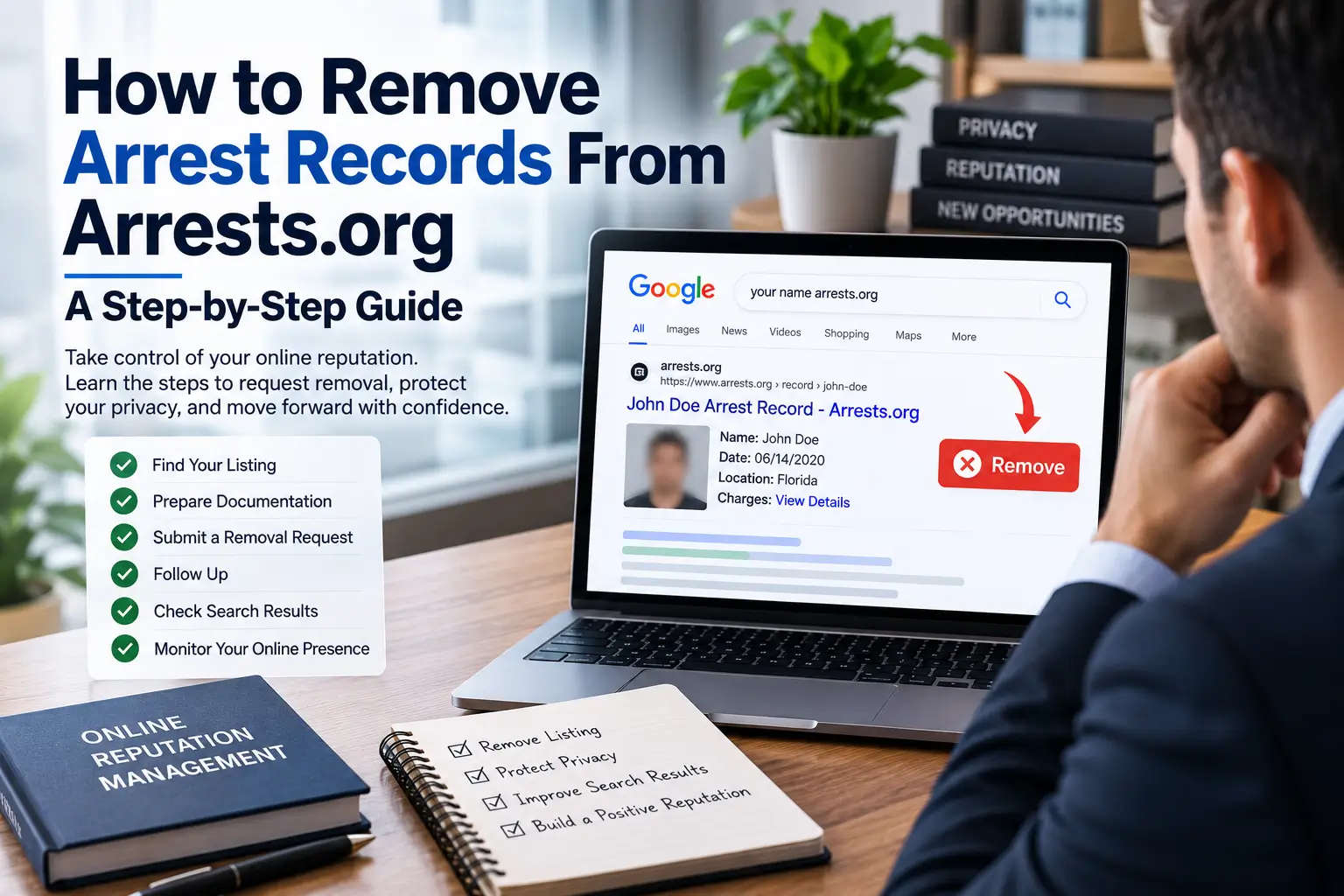
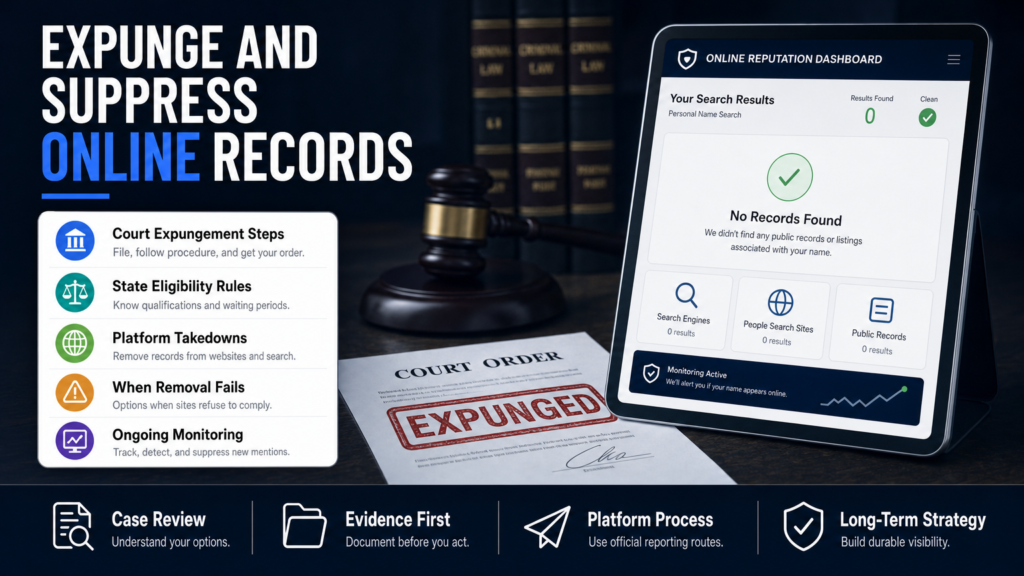
“Expunge my record online” usually requires two parallel workflows: (1) the legal route (petitioning the court to seal or expunge) and (2) the digital route (asking publishers, platforms and data brokers to remove or limit copies). Both must be pursued; one does not automatically solve the other.
Use certified court orders as the backbone of online requests, but know that many third‑party sites will only remove content under their own policies or if the content violates privacy rules.
- 1) Get certified copies of dispositions and the final expungement order from the clerk.
- 2) Identify the list of websites, article URLs, and data brokers where your name appears.
- 3) Submit removal requests to major platforms: Google (legal or personal info requests), Facebook, Twitter/X, YouTube, and site owners.
- 4) Use each data broker’s opt‑out form (PeopleFinders, Intelius, Whitepages, Spokeo, BeenVerified, etc.).
- 5) Track all submissions, follow up when necessary, and repeat opt‑outs as new copies appear.
- Court order = strongest evidence to present to government indexes and platforms.
- Data brokers maintain copies of personal records; many allow opt‑outs but require specific documentation.
- News outlets and archives rarely remove accurate journalism; corrections or litigation are the usual paths there.
Platform-specific notes
Google accepts legal removal requests for specific categories (e.g., explicit images, doxxing, certain personal data in EU contexts) and has a separate process to de‑index court records in narrow cases. Platform removals follow the platform’s internal policies.
For videos on YouTube or false impersonation on social networks, use the platform’s reporting flows and provide the court order when relevant. Platform decisions remain under the platform’s control.
- Use Google’s Remove information from Google tool for sensitive personal data and follow its documentation.
- For YouTube, submit copyright or policy takedown requests if content violates rules; provide court orders for privacy claims where applicable.
Data broker opt‑outs and monitoring
Data brokers respond to opt‑outs at varying speeds; some require identity verification or notarized documents. Keep a spreadsheet of the sites you submit to and the dates.
Ongoing monitoring is essential — new copies and aggregators reappear. Consider automated monitoring alerts for your name and variations.
- Start with the largest brokers (Whitepages, Intelius, Spokeo, BeenVerified) and work down the long tail of smaller sites.
- Use the court order when a broker requires proof of legal relief.
When to involve an attorney
If a publisher refuses to act despite a court order, or if the online material is defamatory or blatantly false, consult a qualified attorney. Legal claims can compel removals or corrections in some circumstances.
We coordinate with counsel when a matter requires legal action; a legal review determines whether a defamation, privacy or other claim is practical.
- Attorneys can draft formal demand letters, file motions to compel, or bring lawsuits when appropriate.
- Legal remedies depend on the evidence, jurisdiction, and public‑interest considerations.
When expungement or removal is not available: mitigation and suppression
Not every record or article can be removed. Courts, publishers and platforms may refuse for legal, editorial, or policy reasons. When removal is unavailable, suppression and correction become the practical path forward.
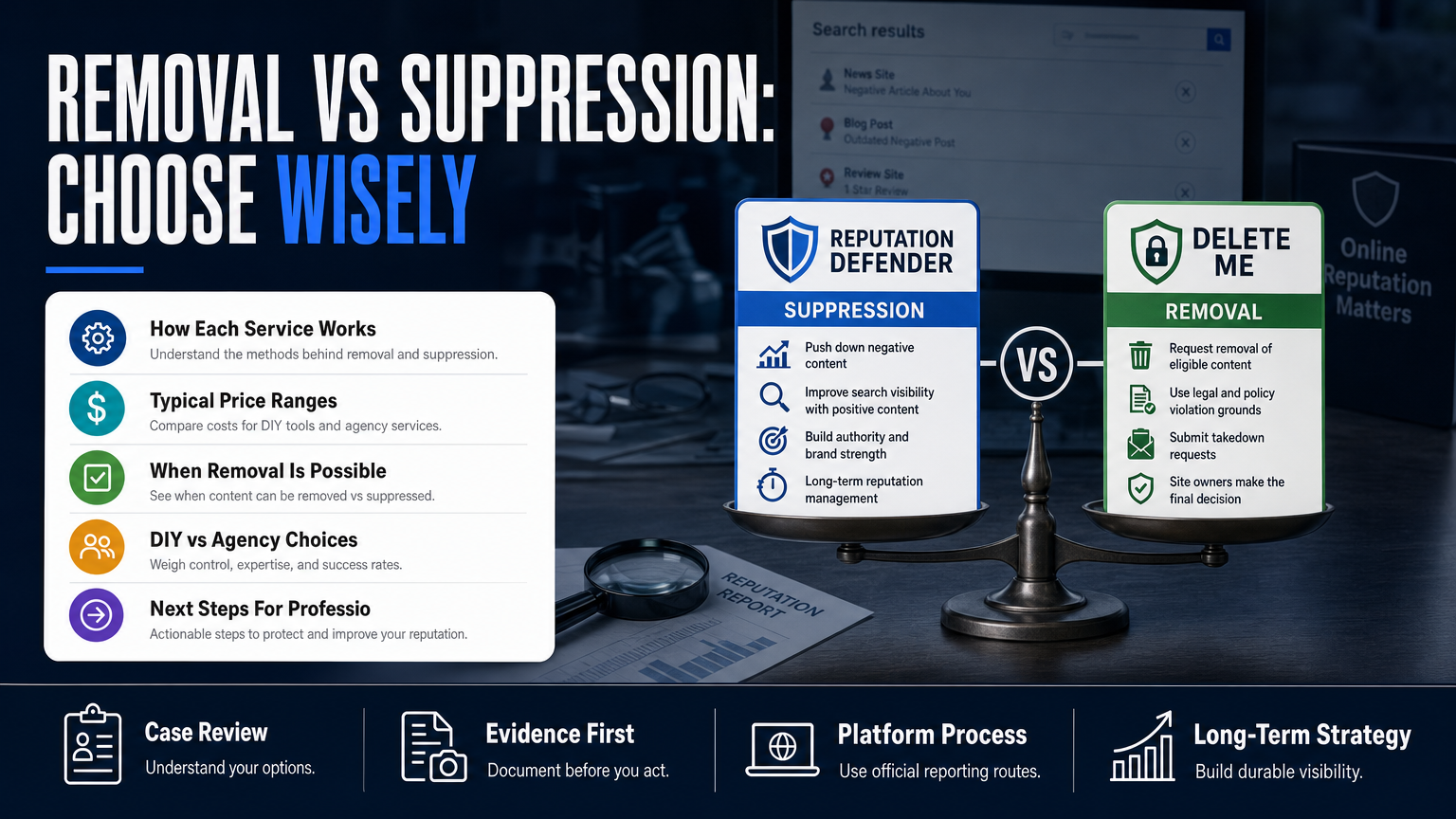
Suppression uses search‑engine optimization (SEO), content creation, PR, and targeted outreach to push negative results out of the first page and replace them with accurate, authoritative content.
- 1) Audit the first two pages of search results for your name and identify priority URLs to suppress.
- 2) Build or strengthen verified profiles (LinkedIn, About.me, company site, licensing boards).
- 3) Produce controlled content (blog posts, interviews, bios) that answers likely queries and uses your name.
- 4) Use targeted link building and citations to those pages so they outrank the negative links over time.
- 5) Monitor and iterate — suppression can take months and requires maintenance.
- Create authoritative pages: professional site, LinkedIn, industry profiles, local directories.
- Publish factual context: corrections, CVs, licensing records, third‑party profiles with trust signals.
- Use guest articles, press releases and targeted citations to build competing authority.
Use the court order where it helps
Even if a publisher won’t remove an article, you can use a court order to demand that search engines de‑index certain government records or that aggregators remove copies. The effect varies by platform and jurisdiction.
If a court judgment won’t leave your public record, see this resource for steps publishers and indexers accept: When a Court Judgment Won’t Leave Your Public Record.
- Provide certified documents when requesting removal or de‑indexing.
- Expect platform decisions to be case-by-case and dependent on policies and jurisdiction.
Address and contact information showing as top result
If your home address or private contact information is the first result, pursue data‑broker opt‑outs and specialized removal requests. For practical guidance on when your address becomes the dominant search result, read this walkthrough: When Your Address Becomes the First Result on Google.
- Address removal often requires multiple opt‑outs and repeat submissions.
- If doxxing or threats are involved, escalate to the platform’s safety teams and consider law enforcement.
Deleted posts and permanent screenshots
Deleted posts frequently persist as screenshots and caches. Plan for this reality rather than hoping content will disappear: see our analysis on why deleted posts still matter: The Screenshot Effect: Why Deleted Posts Still Hurt.
When screenshots exist, focus on takedown requests to the hosting domains and suppression strategies rather than expecting full removal.
- Identify the origin of the screenshot; ask the host to remove if it violates policy.
- Use authoritative content to push cached or screenshot pages down in search results.
Timing, expectations and realistic timelines
There is no universal timeline for expungement or online removal. Each process varies by jurisdiction, court backlog, platform policy, and publisher responsiveness. Be wary of anyone who guarantees a timeline.
Below are typical ranges with important caveats; these are estimates and depend on evidence, complexity, and cooperation from courts and third parties.
- 1) Prioritize urgent threats (harassment, doxxing, threats) for immediate escalation.
- 2) File court petitions as early as eligible; do not delay gathering certified documents.
- 3) Simultaneously begin online takedown and suppression work to accelerate visible improvements.
- Court expungement/sealing: weeks to many months (sometimes a year or more for complex cases).
- Data broker opt‑outs: days to several weeks per site; follow‑ups required.
- Platform takedowns (social networks): 24 hours to several weeks, subject to review.
- SEO suppression: 3–12 months to see meaningful movement on search pages, ongoing maintenance needed.
DIY vs hiring a reputation agency: which path fits your case?
Some straightforward non‑conviction expungements and a few data broker opt‑outs are feasible for do‑it‑yourself efforts. However, complex cases, cross‑jurisdictional issues, coordinated review attacks, or high‑visibility crises benefit from professional support.
An agency provides operational bandwidth, relationships with removal specialists, and experience navigating platform policies and SEO suppression. But agencies cannot guarantee removals or search positions — they provide process and options.
- 1) Inventory your problem — list URLs, data brokers, and the court case number.
- 2) Estimate the time you can commit and the stakes (employment risk, licensing threat).
- 3) Choose self‑help for simple cases; hire professional help for high visibility or multi‑jurisdiction matters.
- DIY is lower cost but requires time, familiarity with court procedure, and ongoing follow‑up.
- Agencies add speed, coordination and a strategic suppression plan; they do not have special platform access.
- Consider a hybrid approach: an attorney for legal filings and an agency for digital suppression and monitoring.
DIY vs Agency: Quick Comparison
Use this two‑column comparison to decide whether to handle removal and suppression yourself or engage an agency.
| DIY | Agency |
|---|---|
| Cost | Higher upfront fee, managed budget |
| Speed | Faster coordination across platforms |
| Complexity handled | Manages multi‑jurisdiction and PR issues |
| Control | Less direct control, more reporting |
| Legal coordination | Coordinates with counsel if needed |
| Long‑term monitoring | Automated alerts and maintenance included |
| Guarantees | No guarantees; provides process and options |
Hypothetical case: A dental practice facing a mugshot and a local news article
A small dental practice discovered a mugshot and arrest record plus a syndicated local news story showing on the first page for the owner’s name. The owner (anonymized) wants the record cleared and patient appointments preserved.
Process taken (hypothetical): a combined legal/digital approach was used: obtain court documents, explore expungement eligibility, submit platform requests, pursue data broker opt‑outs, and implement SEO suppression for professional profiles.
- 1) Inventory: list all negative URLs and data brokers, with screenshots and dates.
- 2) Legal: pursue expungement in the originating court if eligible; collect certified order.
- 3) Digital takedown: send documented requests to publishers and platforms; follow platform appeal flows.
- 4) Suppression: create and promote authoritative pages and press that outrank the negative items.
- 5) Monitor: set Google Alerts and a weekly monitoring cadence to catch re‑uploads or new aggregators.
- Step 1: Order certified disposition from the clerk; confirm the charge was dismissed.
- Step 2: File a Petition for Expunction (where eligible) and keep certified orders.
- Step 3: Submit removal requests to the publisher and Google with the certified order attached.
- Step 4: Opt out of top data brokers, update and verify professional profiles (LinkedIn, professional licensing board).
- Step 5: Publish authoritative content (practice bio, staff interviews, professional achievements) and promote these pages to build authority.
Common mistakes that make matters worse
Avoid these frequent errors — each one slows progress or causes new visibility problems.
Mistake 1 — Assuming everything is removable
Not all court records, accurate news reports or public filings can be removed. Treat removal as a possibility to be proven, not an entitlement. When removal is denied, be ready to pivot to suppression and correction.
Document every denial and use it to support an alternative mitigation plan.
Mistake 2 — Doing nothing while you wait on the court
People assume a pending expungement application means they can pause online work. Start takedowns, data broker opt‑outs, and reputation building in parallel — court orders take time and third‑party content can continue to spread.
Use the time to inventory and pre‑position authoritative content.
Mistake 3 — Using questionable or deceptive tactics
Never use fake identities, false DMCA claims for truthful content, or other deceptive tactics. These can violate platform policies and expose you to legal risk.
Pursue legitimate takedowns, corrections, and legal claims when warranted.
Mistake 4 — Ignoring data brokers and smaller aggregators
Focusing only on big platforms misses the long tail. Smaller brokers and obscure archives will reintroduce data; treat opt‑outs and repeat submissions as part of maintenance.
Automate or systematize repeat opt‑outs to reduce reappearance.
Mistake 5 — Public apologies that admit guilt without counsel
A public statement admitting wrongdoing can create new problems and may be used against you in related venues. When a response is needed, coordinate with legal counsel and communications professionals.
Carefully craft statements that correct factual errors without admitting liability where appropriate.
Best practices for pursuing expungement and online removal
Follow these durable practices whether you’re doing this yourself or working with an agency.
Document every step and preserve evidence
Keep screenshots with timestamps, certified court documents, and records of every communication. Accurate documentation supports legal claims, platform appeals, and follow‑ups.
- Use a structured spreadsheet or case management tool to track URL, host, date, action taken, and next steps.
Start the digital cleanup early
File data broker opt‑outs, platform reports, and publisher correction requests as soon as you can while legal petitions proceed. These parallel tracks shorten overall recovery time.
- Prioritize urgent privacy or safety threats first (doxxing, threats, intimate images).
Use authoritative content to push negatives down
Create and optimize professional pages that you control. High‑quality content on verified domains ranks better and can displace unwanted results.
Link these authoritative pages into local citations and licensing board profiles to strengthen their search performance.
- Maintain updated LinkedIn, company, and licensing board profiles.
Coordinate legal, technical and PR teams
Complex matters need coordinated action: a lawyer to handle court filings, a technical expert for takedown logistics, and PR to manage public narrative. Coordination prevents mixed messages and legal missteps.
If you work with an agency, confirm how they will coordinate with your counsel.
- Set clear roles and a communications protocol before outreach to the media or social channels.
Plan for ongoing monitoring and maintenance
Reputation recovery is rarely one‑and‑done. Subscribe to monitoring, set alerts for name variants, and schedule quarterly audits of search results.
Be prepared to repeat opt‑outs and refresh authoritative content periodically.
- Automate alerts for your name, business name and key variations.
Expert Tips
- Obtain certified court documents early — platforms and data brokers often need official proof.
- When a publisher refuses to remove accurate reporting, request a correction or add context via the comment or response feature.
- Use site:domain.com searches to find archived copies and alternate domains hosting the same content.
- Prioritize removing personal contact and financial info first — those are the highest privacy risks.
- If a piece of content is defamatory, consult counsel before posting public responses.
- Set alerts for nicknames and common misspellings to catch new uploads early.
- Keep a single authoritative bio on your site and point all profiles to it for consistency.
- Use HTTPS and structured data on your site to improve its chances of outranking negative pages.
Conclusion
Searching “Expunge my record online” starts a process that is partially legal and partially technical. Court petitions can change the official status of a record, but they rarely erase every copy on the internet by themselves. Expect parallel work: legal filings, publisher requests, data broker opt‑outs and a suppression strategy.
If removal isn’t available, a focused suppression plan, careful documentation and sustained monitoring are the most reliable ways to restore professional visibility. Do the inventory first, then triage urgent privacy threats, and choose help for the parts that are beyond your bandwidth or expertise.
Why Businesses Choose Your Reputation Agency
Managing your reputation takes more than monitoring reviews or publishing the occasional blog post. It takes a strategy built around your situation, your industry, and what is actually showing up in search.
Your Reputation Agency works with businesses, executives, healthcare professionals, attorneys and growing brands. Our services include:
- Remove or suppress negative Google search results and news articles
- Take down or mitigate negative reviews (Google, Yelp, Trustpilot, industry sites)
- Remove defamatory content, false posts and impersonation accounts
- Remove personal data from people-search and data-broker sites (opt-outs)
- Mugshot and arrest-record removal or suppression
- YouTube and negative video removal / demotion
- Rapid crisis response for viral incidents and online smear campaigns
- Social media impersonation and fake account removal
- Reputation monitoring, alerts and ongoing surveillance
- Search engine reputation repair (SEO to bury negative results)
Frequently Asked Questions
1. How can I get my record expunged in Texas?
Start by ordering certified disposition documents from the county clerk and check eligibility under Texas statutes (expunction vs nondisclosure). File the appropriate petition in the court that handled the case, serve the prosecutor as required, and attend any hearings. Timing and eligibility vary; consult the clerk or a qualified attorney if the case is complex.
2. How do I apply for an expungement in Georgia?
Obtain certified records, complete the county or state petition to expunge or seal, file with the clerk, serve the prosecutor, and await the court’s decision. Georgia’s rules vary by county and by the type of disposition, so review local forms or consult counsel for guidance.
3. What disqualifies you from expungement in Florida?
Florida commonly excludes many convictions — especially those involving sexual offenses, crimes against minors, and violent felonies — from expungement. Often only arrests that did not lead to conviction are eligible. A qualified attorney can review your disposition and explain statutory exclusions and alternative options.
4. Can I get a conviction removed from my record?
Removing a conviction depends on the jurisdiction and the legal remedy available (vacatur, expungement, pardon). Some convictions are not eligible for expungement; others may require petitions, pardon applications, or motions to vacate. Even when legal relief is granted, third‑party copies and news coverage typically require separate takedown or suppression actions.
5. If a court expunges my record, will Google or news sites remove the content?
Not automatically. A court order is powerful evidence for removal requests, but publishers and search engines decide under their own policies. You should submit the certified order to relevant platforms and publishers and follow their removal or de‑indexing procedures; expect case‑by‑case decisions.
6. How long does expungement and online removal take?
There is no fixed timeline. Court petitions can take weeks to many months, data broker opt‑outs typically take days to weeks, platform reviews range from 24 hours to several weeks, and SEO suppression can take 3–12 months. Timing depends on court workloads, platform policies, and the strength of evidence.
7. Is hiring a reputation agency worth it?
That depends on complexity and stakes. DIY can work for straightforward opt‑outs and single‑site issues, while an agency helps coordinate legal filings, mass opt‑outs, platform appeals, and SEO suppression for high‑visibility or multi‑jurisdiction problems. Agencies cannot guarantee removals or rankings; they provide process, resources, and monitoring.
8. Can employers still see expunged records?
Some employers using advanced background checks may discover sealed or expunged records depending on jurisdiction and the type of check. Expungement generally limits public access and official dissemination, but it doesn’t erase every trace. Consult counsel about disclosure obligations and industry‑specific licensing boards.
9. What should I do if a publisher refuses to remove a harmful but accurate article?
Request corrections for factual errors and supply supporting documentation. If the publisher refuses and the article is defamatory, consult an attorney to evaluate possible legal claims. Otherwise, focus on suppression: build authoritative pages and use SEO to push the article off the first page.
This content provides general information and does not constitute legal advice. The available options and likely outcomes depend on the facts, evidence, platform policies, applicable law, jurisdiction, and public-interest considerations.
Past examples do not guarantee future results. Removal, correction, deindexing, and search-position changes depend on third parties and circumstances outside Your Reputation Agency’s control.