Quick answer: CEO reputation management
CEO reputation management aligns executive search results, news, profiles, speaking, company performance, privacy, account security, and crisis communication. The goal is an accurate, credible public record.
Audit name searches, keep biographies consistent, publish useful expertise, correct source errors, monitor impersonation and threats, and prepare a rapid approval process for crises.
A CEO’s reputation has never been more valuable—or more vulnerable. Long before investors schedule a meeting, customers buy a product, or journalists write a story, they search online. Search results, news articles, social media discussions, AI-generated summaries, and review platforms all contribute to how leadership is perceived.
This CEO Reputation Management Guide explains how executives can proactively protect their digital reputation, reduce reputational risks, and build long-term trust. Whether you’re leading a startup, managing a global enterprise, or preparing for investment opportunities, your online presence has become a critical business asset.
Today’s reputation extends beyond Google Search. AI-powered platforms increasingly summarize publicly available information, making accuracy, consistency, and authority more important than ever. A strong reputation strategy helps ensure that the information people discover reflects your expertise rather than outdated, misleading, or negative content.
What Is CEO Reputation Management?
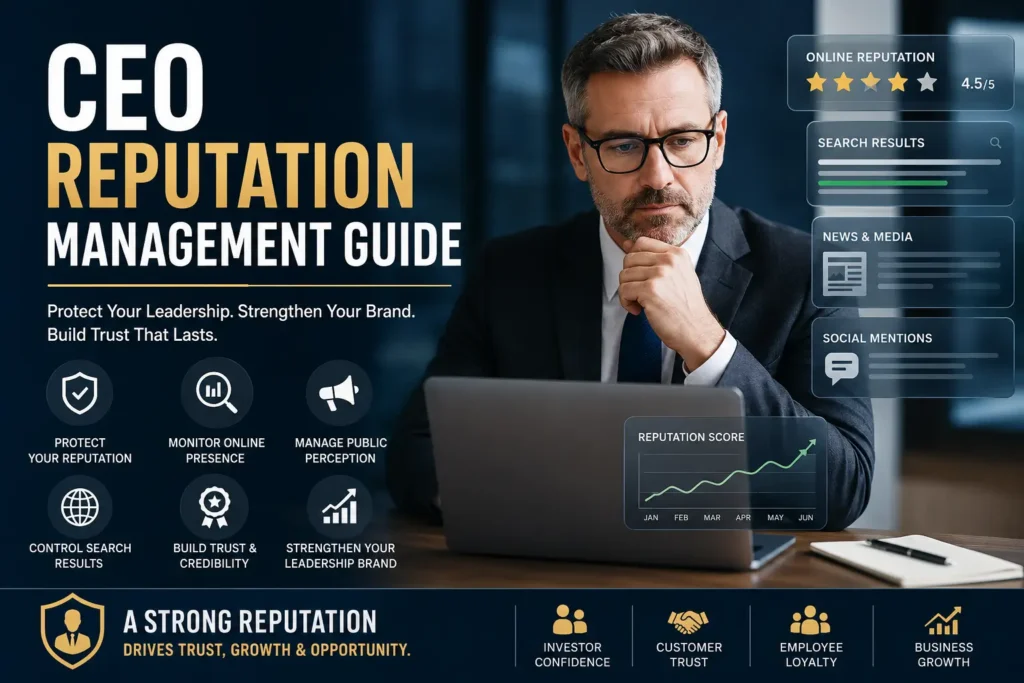
CEO reputation management is the ongoing process of monitoring, protecting, and improving how business leaders are perceived online. It combines strategic communication, search visibility, digital branding, and reputation monitoring to create a trustworthy public image.
A strong executive reputation benefits more than the individual. It influences how customers perceive a company, how investors evaluate leadership, and how employees view organizational stability. Research consistently shows that executive reputation can directly impact brand value and stakeholder confidence.
Professional reputation management often includes:
- Executive brand development
- Search result optimization
- Online reputation monitoring
- Crisis preparedness
- Digital footprint management
- Media visibility strategies
- Review and sentiment monitoring
- Reputation recovery planning
Rather than reacting after a problem occurs, successful CEOs invest in proactive reputation management that strengthens credibility over time.
Why Every CEO Needs a Reputation Strategy
Leadership visibility has increased dramatically over the last decade. Company announcements, interviews, podcasts, conference appearances, LinkedIn activity, and media coverage all contribute to an executive’s digital footprint.
Without a structured strategy, inaccurate information or isolated negative stories may become the first impression people encounter.
A well-planned reputation strategy helps CEOs:
- Build investor confidence
- Increase customer trust
- Strengthen corporate credibility
- Support business development
- Improve media perception
- Enhance recruitment efforts
- Protect long-term brand equity
In addition, executives who actively manage their reputation are often better prepared to respond when unexpected issues arise.
For organizations seeking dedicated executive support, our CEO Reputation Management service provides customized strategies designed specifically for business leaders.
Common Reputation Risks for CEOs
Every executive faces different challenges, but many reputation issues follow similar patterns. Understanding these risks is the first step toward reducing their impact.
Negative Search Results
Old news articles, outdated information, or inaccurate content can dominate branded search results and influence first impressions.
Media Misrepresentation
Comments taken out of context or incomplete reporting can quickly spread across digital publications and social media platforms.
Executive Social Media Activity
Personal posts or controversial discussions can attract unwanted attention and become widely shared, affecting both personal and corporate reputation.
Online Reviews and Public Sentiment
Although reviews typically focus on businesses, dissatisfied customers often mention executives directly, particularly in founder-led companies.
AI-Generated Search Summaries
Modern AI search experiences increasingly summarize publicly available content. If inaccurate or outdated information exists across trusted sources, it may influence how executive profiles are presented.
Crisis Events
Legal disputes, cybersecurity incidents, layoffs, regulatory investigations, or public controversies can quickly shift media attention toward executive leadership.
While no organization can eliminate every risk, a proactive reputation strategy significantly improves preparedness and response.
Why CEO Reputation Matters More Than Ever
Modern businesses are built on trust. Customers want transparency, investors seek stable leadership, and employees prefer organizations led by credible executives.
According to Google’s guidance on creating helpful and trustworthy content, expertise and credibility play a significant role in how users evaluate online information. Likewise, organizations such as the Federal Trade Commission (FTC) emphasize the importance of truthful and transparent business communications.
As digital information continues to shape business decisions, CEOs who invest in reputation management are better positioned to maintain credibility during both periods of growth and moments of challenge.
CEO Reputation Management Guide: A Step-by-Step Framework
Building a strong executive reputation doesn’t happen overnight. It requires consistency, transparency, and a long-term strategy. The most successful CEOs actively shape their digital presence instead of waiting for others to define it.
The following framework outlines the key steps every executive should consider when developing a sustainable reputation strategy.
Audit Your Online Presence
The first step is understanding what already exists online. Search your name, company name, and common variations to see what investors, customers, journalists, and potential partners discover.
Your audit should include:
- Google Search results
- Google Images
- News articles
- Social media profiles
- Business directories
- Review platforms
- AI-generated search summaries
- Industry publications
Identify outdated, inaccurate, or misleading content that could negatively influence first impressions.
Build an Authoritative Digital Footprint
A CEO’s online presence should reflect leadership, expertise, and credibility. Instead of relying on one platform, develop authority across multiple trusted sources.
Focus on creating:
- A professional executive biography
- Company leadership profile
- Speaking engagements
- Podcast appearances
- Industry interviews
- Thought leadership articles
- Professional LinkedIn content
When search engines and AI platforms consistently find authoritative information, they are more likely to present an accurate representation of your leadership.
Monitor Your Reputation Continuously
Reputation management is an ongoing process rather than a one-time project. New content is published every day, and public perception can change quickly.
Regular monitoring helps identify:
- New media mentions
- Emerging negative content
- Brand sentiment
- Search ranking changes
- Executive mentions on forums
- Review platform activity
Early detection allows businesses to respond before minor issues become larger reputation challenges.
Strengthen Positive Search Visibility
One of the most effective long-term strategies is publishing accurate, trustworthy content that demonstrates expertise.
This may include:
- Executive interviews
- Company news
- Industry commentary
- Leadership insights
- Community involvement
- Awards and recognition
- Case studies
- Educational resources
Consistently publishing high-quality content creates stronger digital authority and helps improve overall search visibility.
Prepare for Reputation Crises Before They Happen
Every organization should have a crisis communication plan in place before facing public scrutiny.
Preparation typically includes:
- Internal communication guidelines
- Media response procedures
- Executive spokesperson training
- Reputation monitoring alerts
- Escalation processes
- Stakeholder communication plans
Organizations that prepare in advance generally respond faster and maintain greater stakeholder confidence during difficult situations.
Practical Example: Why Proactive Reputation Management Works
Imagine two technology companies launching similar products.
The first CEO has invested in thought leadership, executive interviews, positive media coverage, and consistent LinkedIn activity over several years.
The second CEO has almost no digital presence beyond a company website.
When unexpected criticism appears online, the first executive already has dozens of authoritative sources supporting their credibility. The second executive has very little positive content available, allowing negative information to dominate search results.
This illustrates why reputation management is a long-term investment rather than an emergency response.
Reputation Management Best Practices for CEOs
Successful executives typically follow several common principles that strengthen both personal and corporate credibility.
Maintain Consistent Executive Branding
Use consistent messaging, professional photography, biographies, and leadership positioning across all platforms.
Communicate Transparently
Honest communication builds trust, particularly during periods of uncertainty or organizational change.
Invest in Thought Leadership
Publishing valuable insights demonstrates expertise while strengthening your executive brand within your industry.
Review Your Digital Footprint Regularly
Search results change constantly. Quarterly reviews help ensure outdated or misleading information doesn’t become your public identity.
Build Relationships with Trusted Media
Credible media coverage strengthens authority while providing reliable sources that search engines and AI systems can reference.
When Professional Reputation Management Makes Sense
While some executives can manage basic reputation activities internally, more complex situations often require specialist support.
Professional assistance may be valuable if you are experiencing:
- Negative news coverage
- Executive reputation crises
- Defamatory online content
- False or misleading information
- Increased media attention
- Investor due diligence
- Executive transition announcements
- Brand reputation challenges
Working with experienced professionals allows leadership teams to remain focused on running the business while reputation specialists develop strategic solutions.
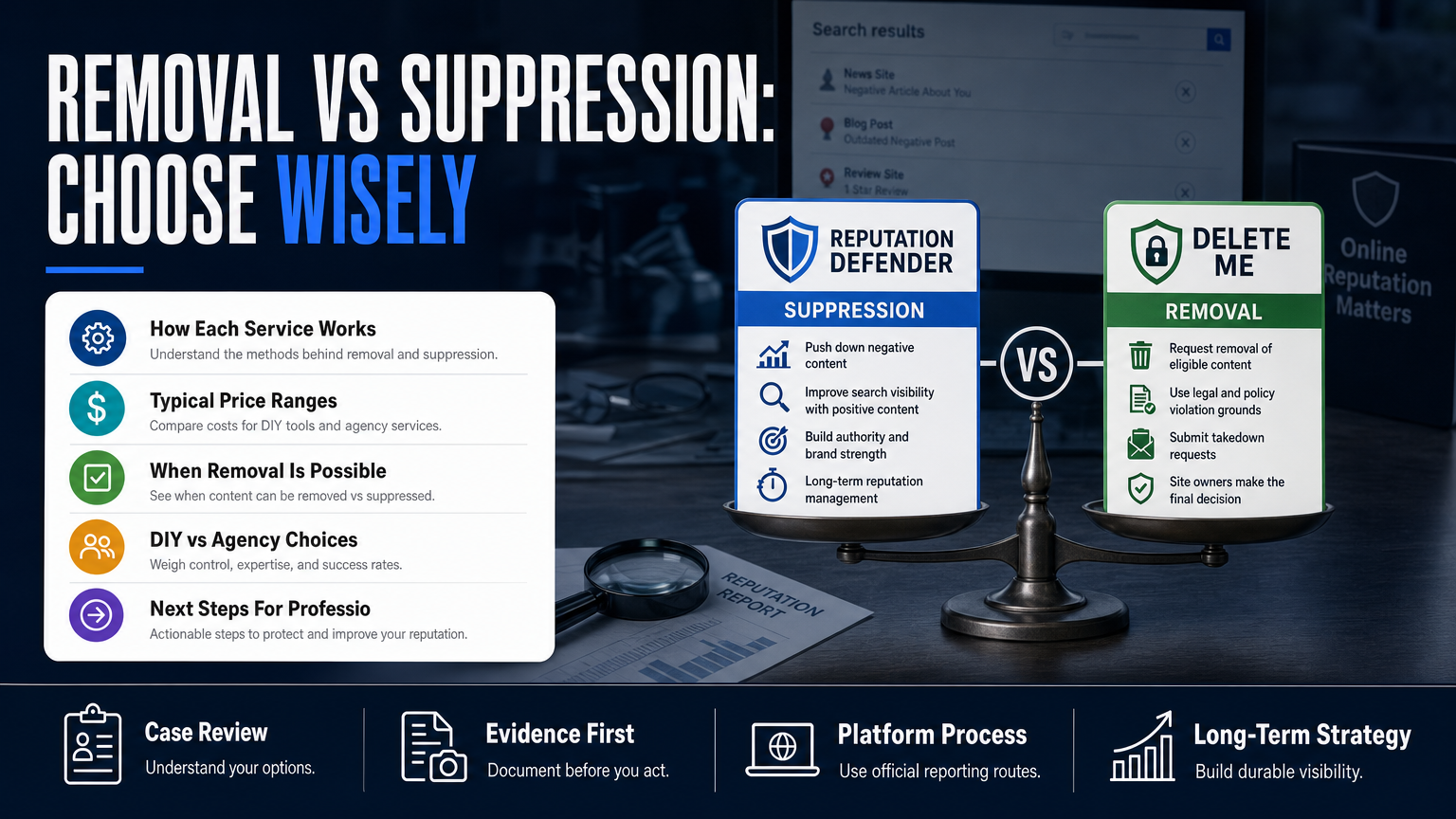
If harmful search results are affecting your executive profile, you may also find our guide on Search Suppression vs Content Removal helpful for understanding the available strategies.
Similarly, if you’re looking to better understand how suppression strategies work, read our detailed resource on What Is Search Result Suppression?
For executives dealing with media exposure, our article on How to Remove Online News About Yourself explains common approaches to managing unwanted online coverage.
Strengthen Your Executive Reputation with Expert Guidance
Managing an executive reputation requires experience, strategy, and ongoing attention. Whether you’re preparing for a funding round, expanding into new markets, responding to negative publicity, or proactively protecting your leadership brand, a structured approach can make a significant difference.
At Your Reputation Agency, we help CEOs, founders, executives, and leadership teams develop customized reputation strategies designed to strengthen credibility, improve search visibility, and protect long-term digital trust.
Our related services include:
We also encourage prospective clients to review our Trustpilot feedback and Google Business Profile to learn more about the experiences of businesses and executives who have chosen to work with us.
Conclusion
A CEO’s reputation is no longer limited to boardrooms, investor meetings, or industry conferences. It is shaped every day by search results, online media, social platforms, and increasingly by AI-powered search experiences.
This CEO Reputation Management Guide highlights why proactive reputation management has become an essential part of modern leadership. By monitoring your online presence, strengthening authoritative content, preparing for potential crises, and maintaining consistent communication, you can build lasting trust with customers, investors, employees, and stakeholders.
Reputation management is not about controlling every conversation—it is about ensuring that accurate, credible, and trustworthy information becomes the strongest representation of your leadership.
Whether you’re an established executive or an emerging founder, investing in your digital reputation today can help protect opportunities tomorrow.
Ready to Protect Your Executive Reputation?
Your leadership reputation influences how people view your company long before they speak with you. A well-planned reputation strategy can strengthen investor confidence, improve customer trust, and position you as a credible industry leader.
If you’re looking for professional guidance, Your Reputation Agency provides confidential reputation management solutions tailored for CEOs, founders, executives, and high-profile professionals.
Our team can help you:
- Protect your executive reputation
- Improve search visibility
- Manage online reputation risks
- Develop long-term leadership authority
- Respond strategically during reputation crises
- Build a stronger digital presence across search engines and AI platforms
Contact Your Reputation Agency today for a confidential consultation and discover how a customized reputation strategy can protect both your personal brand and your business.
Frequently Asked Questions
1. What is CEO reputation management?
CEO reputation management is the process of monitoring, protecting, and improving how business leaders are perceived online. It includes search visibility, media presence, executive branding, reputation monitoring, and crisis management.
2. Why is CEO reputation important?
A CEO’s reputation directly influences customer trust, investor confidence, employee engagement, media perception, and overall brand credibility. Strong executive leadership often strengthens the reputation of the entire organization.
3. How often should CEOs monitor their online reputation?
Executives should review their digital presence regularly, with continuous monitoring recommended for public-facing leaders. Frequent monitoring helps identify emerging issues before they become larger reputation challenges.
4. Can negative search results about a CEO be removed?
Some online content may qualify for removal depending on platform policies or legal considerations. When removal isn’t possible, reputation management strategies such as search result suppression and positive content development can help reduce the visibility of harmful information.
5. How long does reputation management take?
The timeline varies depending on the complexity of the situation, existing online content, and business objectives. Reputation management is generally a long-term strategy focused on sustainable credibility rather than quick fixes.
6. Does CEO reputation affect company reputation?
Yes. Studies consistently show that executive reputation influences public perception of a company’s leadership, stability, trustworthiness, and overall brand value. Strong leadership often contributes to stronger corporate reputation.
7. What should CEOs do during an online reputation crisis?
Respond calmly, communicate transparently, verify facts before making public statements, and implement a structured reputation management plan. Seeking professional guidance can also help organizations navigate complex situations more effectively.
8. How can CEOs build a stronger online reputation?
Executives can strengthen their reputation by publishing thought leadership content, maintaining professional profiles, participating in industry events, earning credible media coverage, and consistently sharing valuable expertise.
9. Is CEO reputation management only for large corporations?
No. Founders, startup leaders, entrepreneurs, nonprofit executives, and small business owners all benefit from proactive reputation management. Leadership visibility matters regardless of company size.
10. Why choose Your Reputation Agency?
Your Reputation Agency combines strategic consulting, executive reputation management, search visibility expertise, and long-term reputation planning to help business leaders protect and strengthen their digital presence with confidentiality and professionalism.