Anatomy of a local business review bombing attack
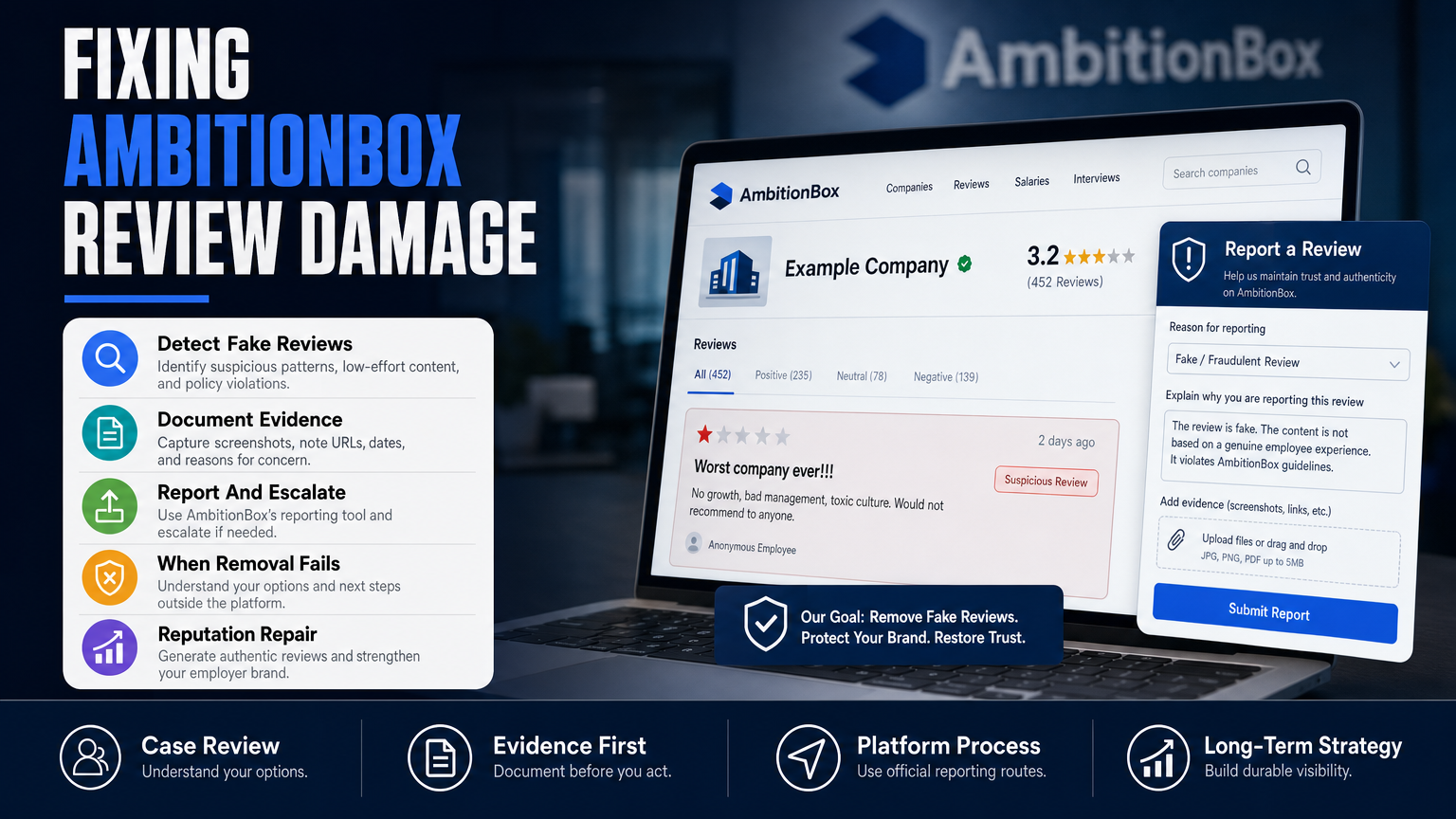
A local business review bombing attack is a coordinated or abnormal burst of ratings intended to punish a company rather than describe genuine customer experiences. Warning signs include sudden timing, copied language, irrelevant claims, and unverifiable transactions.
Seven response steps
- Record the baseline rating and capture each suspicious review.
- Compare reviewers with customer and transaction records.
- Document repeated wording, timing, locations, and account patterns.
- Report each review for the most specific policy violation.
- Escalate the coordinated pattern with organized evidence.
- Use neutral public replies that protect customer privacy.
- Monitor removals and invite genuine, unbiased feedback.
Do not buy positive reviews or organize counterattacks. A precise record of fake engagement is more credible than a broad claim that every negative review is malicious.
You just found a one-star review on Google or a viral TikTok that names your clinic — and you need options fast. This article helps you evaluate reputation repair companies near California so you know what is realistic, what costs to expect, and how to choose a firm for your situation.
Search for ‘reputation repair companies near california’ returns national agencies, boutique local shops, and freelance consultants. This guide explains the differences, typical price ranges, the real processes firms use to remove or suppress content, and how to verify a company’s track record before you sign.
Below you’ll get practical checklists, a direct comparison of DIY vs agency approaches, a hypothetical end-to-end scenario showing timelines and choices, and clear instructions for what to do when removal is not possible.
Table of Contents
- How Much Do Reputation Management Services Typically Cost?
- Which Reputation Management Companies Are Considered Best?
- How Do I Check The Reputation Of A Reputation Company?
- Which Company Has The Best Reputation?
- DIY vs Hiring A Reputation Repair Agency
- What To Do When Removal Is Not Available
- How To Choose A Reputation Repair Company Near California
- Monitoring, Measurement, and Long-Term Protection
- DIY vs Hiring An Agency
- Hypothetical: Bay Area Clinic Hit By A Viral Video And Bad Reviews
- Common Mistakes Companies Make When Hiring Reputation Help
- Best Practices For Working With A Reputation Repair Company
- Expert Tips
- Conclusion
- Why Businesses Choose Your Reputation Agency
- Frequently Asked Questions
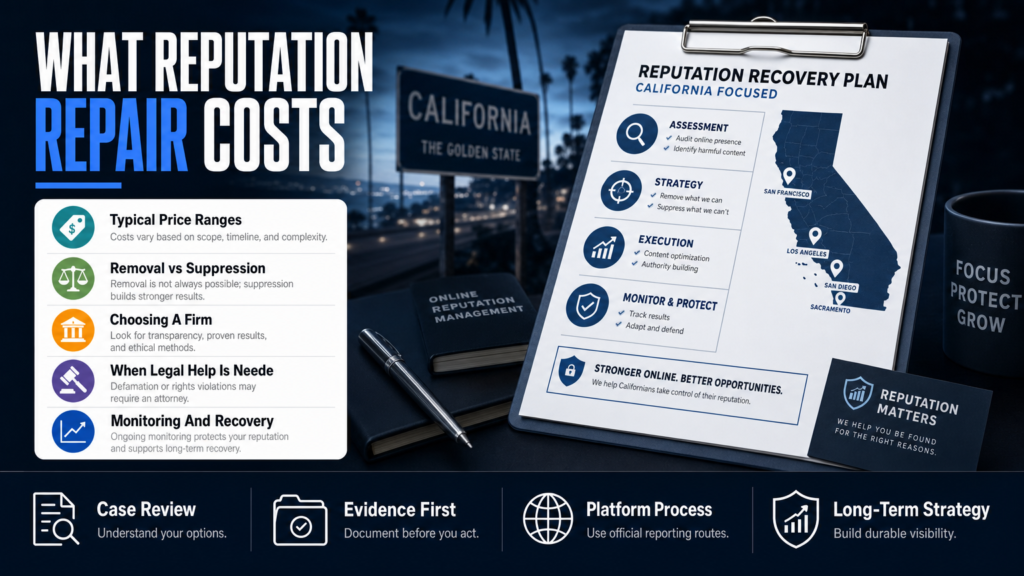
How Much Do Reputation Management Services Typically Cost?
Pricing varies widely depending on the scope (removal, suppression/SEO, review management, crisis PR, legal coordination) and the evidence and jurisdiction involved. Expect a broad range rather than a single fixed fee.
Below are common pricing bands and what they usually cover. These are representative ranges, not guarantees — an assessment is required to give an estimate for your case.
- Get an initial assessment: reputable firms offer a scoped audit (often paid) that maps the negative assets and options.
- Request a written scope and deliverables: identify which platforms, publishers, and legal steps are included.
- Ask about success metrics and reporting cadence: weekly dashboards, search-ranking snapshots, and work logs.
- Small engagements / hourly consultants: $100–$300 per hour — typically for discrete tasks like a takedown request, evidence gathering, or coaching.
- Project-based removals (single article or page): $500–$5,000 — depends on publisher type, relationship building, and complexity.
- SEO suppression campaigns: $1,500–$10,000 per month — sustained content production and link-building to push down negative results.
- Local review remediation programs: $500–$3,000 per month — includes review monitoring, responses, and customer-recovery workflows.
- Full-service crisis and legal coordination: $5,000–$50,000+ (initial phase) — high-visibility incidents requiring PR, legal notices, and intensive monitoring.
Where to learn more about costs
For a detailed breakdown and sample budgets, see our deeper analysis in the Cost of Professional Reputation Repair – Real 2025 Guide. That guide explains line-item costs and when legal expenses are likely to appear.
Which Reputation Management Companies Are Considered Best?
There is no single universal “best” firm — the right company depends on your priorities (legal support, local publisher relationships, healthcare/regulated-industry experience, or SEO depth). Evaluate firms by documented processes, references in your industry, and transparent reporting.
Look for firms that clearly explain which platforms they can pursue (Google, Yelp, Facebook, industry review sites like Healthgrades or Vitals) and what they cannot control (platform decisions, publishers’ editorial judgment).
- Ask for anonymized examples of similar engagements (platform types, not names).
- Request references from clients in your industry.
- Confirm whether the firm manages content removal, suppression SEO, legal takedowns, or all three.
- Specialist vs generalist: specialists (e.g., healthcare or legal reputation teams) know industry review sites and regulatory sensitivities.
- Local presence: California-based firms may have local media and publisher contacts useful for news-based issues; national firms can scale larger suppression campaigns.
- Legal coordination: firms that coordinate with outside counsel are preferable for defamation or privacy claims; verify they do not claim to be a law firm unless they are one.
A short list of evaluation criteria
Use these practical checkpoints during calls: documented process for takedown attempts, sample reporting, escalation procedures for large publishers, and evidence-handling protocols.
- Does the firm run monitoring and alerts?
- How do they handle evidence and chain-of-custody?
- Will they draft retraction or cease-and-desist letters or coordinate with counsel?
How Do I Check The Reputation Of A Reputation Company?
Because reputation firms sell trust, do your due diligence before hiring. Confirm their claims with independent sources and avoid making decisions based on marketing language alone.
Practical checks below will help you separate legitimate providers from vendors who overpromise or use risky tactics.
- Run a searches for “company name + scam,” “company name + lawsuit,” and “company name + BBB complaint.”
- Request a sample engagement plan tailored to your case and compare it against other proposals.
- Confirm contract terms: cancellation rights, confidentiality clauses, and scope limitations.
- Check third-party reviews on Google, Better Business Bureau, and industry forums — read negative reviews to see recurring patterns.
- Ask for a list of past industries served and anonymized case studies showing process (not names).
- Verify any legal claims and ensure they don’t imply attorney status unless they disclose licensed counsel.
- Search for the firm’s own online reputation: suspicious patterns may include unverified testimonials, duplicate content on multiple sites, or aggressive link schemes.
When reviews become the crisis itself
If the core issue is Google or Yelp reviews, read our focused analysis in When Google Reviews Become a Brand’s Biggest Crisis. That piece explains platform policies and escalation paths you can expect.
Which Company Has The Best Reputation?
Asking which company has the best reputation is reasonable, but the answer varies by metric: client retention, ratings, published case studies, industry specialization, or legal preparedness.
Use objective measures when possible — how they handle adverse outcomes, transparency about limitations, and whether they document platform-compliant methods.
- Score shortlisted firms on: Transparency (1–5), Industry Experience (1–5), Legal Coordination (1–5), Reporting (1–5), and Price Transparency (1–5).
- Ask for a sample contract and a scope that lays out deliverables and measurable checkpoints.
- Look for consistent, recent third-party reviews and long-term client relationships.
- Prioritize firms that describe failures and limitations candidly — trustworthy vendors acknowledge when removal is unlikely.
- Prefer vendors who offer monitoring, documented escalation, and coordination with outside counsel for legal options.
DIY vs Hiring A Reputation Repair Agency
Some tasks are reasonable to handle internally (monitoring, customer response workflows), while others—like complex takedowns, multi-platform suppression campaigns, or legal evidence collection—benefit from professional resources.
Below is a side-by-side comparison to help decide whether to DIY or hire an agency.
What To Do When Removal Is Not Available
Removal is not always an option — publishers may lawfully publish true statements, or platforms may decline takedown requests. When removal is unavailable, mitigation and correction become the priority.
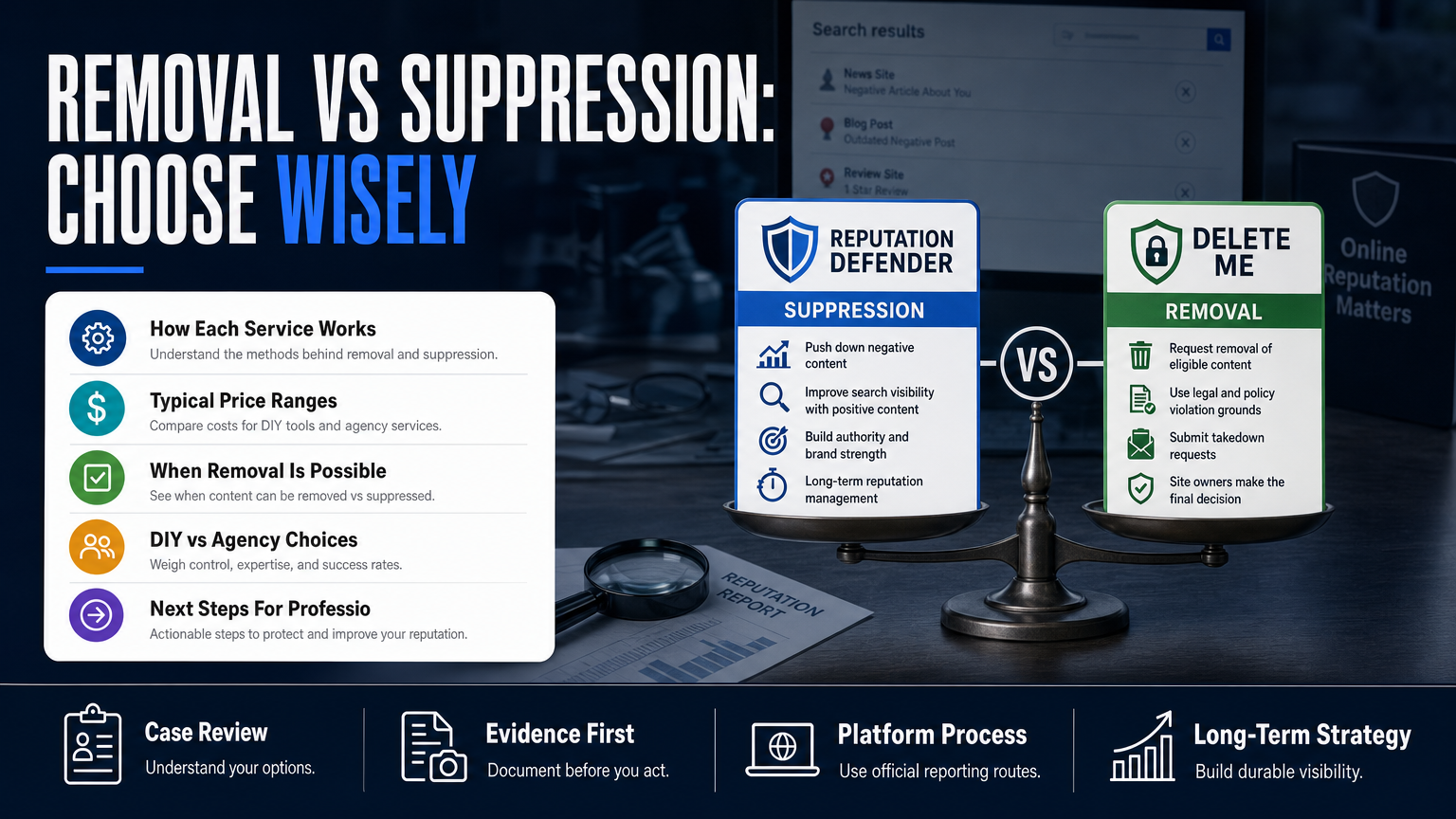
Mitigation includes targeted SEO to suppress the result, publishing authoritative content that provides context, and using reputation PR to correct factual errors publicly when appropriate.
- Map the negative assets and rank them by impact (search volume, referral traffic, platform authority).
- Prioritize suppression targets and produce a content calendar for 90–180 days of authoritative content.
- Set up monitoring and alerts to measure movement in visibility and citations.
- SEO suppression: create and promote positive, authoritative pages (LinkedIn, press releases, professional profiles, guest posts) to outrank negative assets.
- Correction and context: ask publishers for corrections or clarifications when factual errors exist — provide documented evidence.
- Reputation PR: proactive media outreach and earned coverage to present your side on credible outlets.
When legal action may be required
If content includes false statements that amount to defamation, or if private data has been published (doxxing), the content may warrant legal review. A qualified attorney can evaluate whether a legal claim is available.
Reputation firms commonly coordinate with outside counsel to draft litigation-ready evidence and takedown letters; this does not mean litigation will succeed, and outcomes depend on law and jurisdiction.
A place to learn about rebuilding after public incidents
For strategic recovery after negative publicity, see our framework in Rebuilding Trust: Reputation Repair Strategies After Negative Publicity. It covers messaging cadence, stakeholder outreach, and monitoring.
How To Choose A Reputation Repair Company Near California
Selecting a firm near California adds benefits (local media contacts, understanding of state-specific regulations) but proximity is only one factor. Focus on demonstrated process, industry experience, and clearly defined deliverables.
Below is a checklist you can use during selection calls and when comparing proposals.
- Request a scoped audit with a written plan and estimated timeline ranges.
- Compare 2–3 proposals using the same scoring grid (cost, transparency, legal coordination, industry fit).
- Confirm contract terms: termination rights, confidentiality protections, and non-disparagement clauses.
- Verify local/regulatory experience if you are in a regulated field (healthcare, legal, finance).
- Confirm what is included: removal attempts, SEO suppression, review remediation, legal coordination, monitoring frequency, and reporting format.
- Ask about subcontractors, overseas labor, and how they secure sensitive evidence.
Interview questions to ask
Use these concrete questions on introductory calls: How often will you report progress? Who will be my point of contact? What effects do you expect in 30, 90, and 180 days (estimated ranges only)?
- Describe a case where removal failed — what did you do next?
- How do you document authorizations and evidence?
- Do you coordinate with outside counsel, and on what billing basis?
Monitoring, Measurement, and Long-Term Protection
Reputation management is rarely a single transaction. Ongoing monitoring, alerts, and periodic audits are necessary to detect new threats and measure progress.
Decide in advance what constitutes success for you: fewer mentions on page one, improved sentiment, faster response to reviews, or reduced referral traffic to negative pages.
- Establish KPIs relevant to your objectives (e.g., reduce negative page-one mentions by X over Y months — treat this as a goal, not a guaranteed outcome).
- Schedule quarterly audits to reassess search results and third-party profiles.
- Train staff on review-handling scripts and escalation paths to stop problems at the source.
- Set up real-time alerts for brand mentions (Google Alerts, platform alerts, third-party monitoring).
- Monthly reporting should include visibility metrics, resolved items, and active suppression or removal attempts.
- Implement customer service fixes and NPS/recovery flows to reduce future negative reviews.
DIY vs Hiring An Agency
A quick reference comparing common tradeoffs between doing reputation work yourself and hiring a specialist.
| DIY | Agency |
|---|---|
| Cost Up-Front | Higher monthly/project fees |
| Control Over Messaging | Professionalized, documented messaging |
| Speed For Simple Fixes | Faster on complex takedowns and SEO |
| Legal Coordination | Access to legal workflows and counsel coordination |
| Monitoring Tools | Integrated monitoring and reporting |
| Scalability | Can scale suppression and multi-platform efforts |
Hypothetical: Bay Area Clinic Hit By A Viral Video And Bad Reviews
Situation: A mid-sized cosmetic clinic in the Bay Area sees a viral TikTok claiming negligence, plus three one-star reviews posted on Google and Yelp in the same week. The clinic’s staff panic but the owners want a measured plan.
Initial assessment (week 0–1): A reputation firm performs a scoped audit: inventory of all negative assets, search visibility mapping, review origin checks (are reviewers patients?), and whether the TikTok contains private medical information or patient images.
Tactical plan (weeks 1–12): The firm recommends a mixed approach: immediate review responses and customer outreach, platform reporting for policy violations where present, a targeted SEO suppression campaign, and coordination with outside counsel to prepare evidence and demand letters where statements are demonstrably false.
- 1. Audit: document all negative items, collect evidence, and classify items by removability and impact.
- 2. Short-term containment: scripted review responses, direct outreach, and platform policy reports.
- 3. Legal review: prepare evidence and coordinate with counsel if defamation or privacy violations are suspected.
- 4. Suppression and repair: produce authoritative content, manage SEO, and monitor movement.
- 5. Long-term prevention: implement review-generation workflows and staff training.
- Week 1: Contain — respond professionally to reviews, send outreach to reviewers offering to resolve, and flag the TikTok for review if it violates privacy policies.
- Weeks 2–6: Pursue platform reporting for any policy violations, draft retraction or correction requests for the author/publisher, and begin publishing authoritative content (press release, staff bios, professional profiles).
- Weeks 6–12: Ramp SEO suppression by publishing guest posts, optimizing high-authority pages, and building links to push negative assets lower in search.
- Months 3–6: Monitor visibility; continue customer-recovery programs and consider paid media if earned coverage is slow.
Common Mistakes Companies Make When Hiring Reputation Help
Avoidable errors slow progress and increase cost. Below are frequent mistakes and how to prevent them.
Hiring On Price Alone
Cheapest vendors often cut corners (automated spam, fake reviews, or risky link schemes). Choose firms that explain methods and accept accountability through measurable reporting.
Believing Removal Is Guaranteed
Some firms imply easy removals; reputable providers will evaluate removability and explain platform/jurisdiction limits. Treat removal as one possible outcome, not a promise.
Ignoring Industry Experience
Regulated professionals (doctors, attorneys) need firms familiar with HIPAA, state medical-board processes, or professional-review sites. Lack of specialization can create legal exposure.
Skipping Contract Details
Not clarifying deliverables, reporting cadence, termination rights, and confidentiality leads to disputes. Insist on written scopes and avoid vague ‘best-effort’ terms without KPIs.
Retaliatory Or Deceptive Tactics
Some vendors recommend fake reviews or impersonation — these violate platform rules and risk penalties. Only use legal, platform-compliant, and ethical strategies.
Best Practices For Working With A Reputation Repair Company
Adopt these durable practices to improve outcomes and reduce surprises.
Get A Clear Audit First
An evidence-backed audit establishes priorities and prevents scope creep. Require an itemized plan showing which assets will be targeted and why.
Insist On Transparent Reporting
Weekly or biweekly reports should show completed actions, platform responses, search visibility changes, and next steps. Ask how they measure movement and request raw screenshots as evidence.
Coordinate Legal And Technical Teams
When legal options exist, coordinate written demands through counsel and preserve evidence. Technical teams should support forensic capture of pages, video, and metadata.
Prioritize Prevention
Fix underlying customer-service problems, implement review-gathering processes, and train staff on escalation. Prevention reduces the need for costly remediation later.
Plan For Long-Term Visibility Work
Suppression and reputation rebuilding take ongoing content and SEO work. Budget at least 3–6 months for meaningful movement on search results for most cases.
Expert Tips
- Start with a scoped audit — it prevents wasted spend on low-impact actions.
- Document everything: screenshots, timestamps, and the URL of every offensive item.
- Do not promise customers outcomes; set expectations about process and timelines.
- If the content includes private personal data, prioritize platform reporting and legal review.
- Use authoritative third-party content (news outlets, professional directories) for suppression.
- Never purchase fake reviews or use impersonation — platforms penalize those actions.
- Ask for monthly search-results snapshots as evidence, not only narrative updates.
- Train staff in review response scripts to reduce reputational escalation.
Conclusion
Finding reputable reputation repair companies near California requires an evidence-based approach: audit first, compare transparent proposals, and prioritize firms that coordinate with legal counsel when needed. Local presence can help for media relations, but documented process and ethical methods matter more than proximity alone.
If removal is unlikely, focus on suppression, correction, and rebuilding trust through authoritative content and improved customer experience. When in doubt about potential legal claims or privacy breaches, consult a qualified attorney to assess whether legal action is appropriate before pursuing takedowns.
Why Businesses Choose Your Reputation Agency
Managing your reputation takes more than monitoring reviews or publishing the occasional blog post. It takes a strategy built around your situation, your industry, and what is actually showing up in search.
Your Reputation Agency works with businesses, executives, healthcare professionals, attorneys and growing brands. Our services include:
- Remove or challenge defamatory content and false posts across news sites, blogs and social platforms
- Remove negative reviews from Google, Yelp, Facebook, Trustpilot, Glassdoor and industry review sites (e.g., Healthgrades, RateMDs, RealSelf, Vitals, Angi)
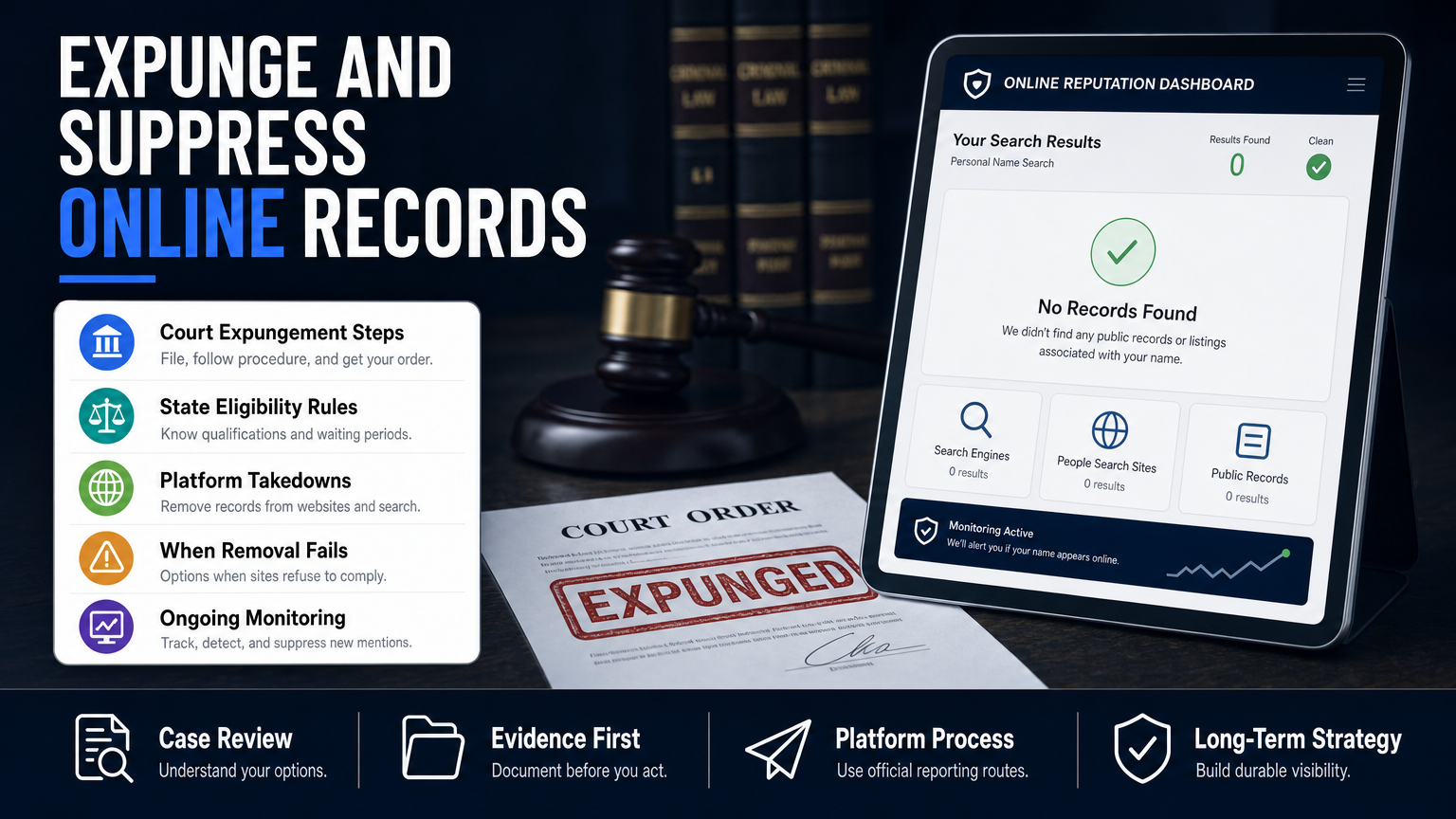
- Mugshot and arrest-record removal and remediation
- Remove or takedown negative videos, YouTube content, TikTok clips and other harmful multimedia
- Remove or suppress negative search results and implement search-engine suppression strategies (SEO to bury bad results)
- Remove personal information and opt-out from people-search and data-broker sites (address, phone, phone number removal)
- Social media impersonation and fake account takedown (reporting and removal on Facebook, Instagram, Twitter/X, LinkedIn, TikTok)
- Reddit and community forum post/comment removal and visibility reduction
- Online crisis management and reputation PR to respond to viral incidents
- Monitoring and alerting for negative content, fake reviews and emerging reputation threats
Frequently Asked Questions
1. How much do reputation management services typically cost?
Costs vary by scope and complexity. Expect hourly consultants at $100–$300, project removals from $500–$5,000, SEO suppression $1,500–$10,000 per month, and full crisis engagements that can run higher depending on legal work and media needs.
2. What are the best companies for reputation management?
There isn’t a single ‘best’ firm for every case. The right company depends on your industry, whether you need legal coordination, and the platforms involved. Shortlist firms with recorded processes, relevant industry experience, and transparent reporting.
3. How to find out the reputation of a company?
Check third-party reviews, Better Business Bureau records, and industry forums. Ask for anonymized case examples, request references, and search for complaints or litigation involving the company. Verify contract terms and reporting commitments before hiring.
4. What company has the best reputation?
Reputation should be measured against objective criteria (client retention, transparency, case types handled). Prioritize firms that describe limitations clearly and show how they act when removals fail or platform appeals are denied.
5. How long does it take to remove or suppress negative content?
Timing depends on the platform, publisher, evidence, and jurisdiction. Some platform policy removals can occur in days; publisher corrections or legal outcomes can take weeks or months. SEO suppression often requires several months of sustained effort — estimates should be framed as ranges, not promises.
6. Can a reputation company guarantee removal from Google?
No reputable company can guarantee removal or search rankings. Platform decisions are under the control of publishers and search engines. Firms can evaluate whether content may qualify for removal and pursue technical, legal, and platform-based options, but results vary.
7. What should I do if a review is defamatory?
Document the review, preserve evidence (screenshots with timestamps and URLs), and consult a qualified attorney to assess whether a defamation claim is feasible. Coordinate with your reputation firm to prepare takedown requests and legal notices when appropriate.
8. Are local California firms better than national agencies?
Local firms can offer advantages for region-specific media relationships and knowledge of state laws, but national agencies may have greater scale for multi-platform SEO suppression. Evaluate firms by process, not just geography, and confirm they have experience in your industry.
9. What happens if removal is not available?
When removal is not available, focus on mitigation: SEO suppression, publishing authoritative content, requesting corrections, and reputation PR. Legal review may still be appropriate if the content includes false statements or private data.
This content provides general information and does not constitute legal advice. The available options and likely outcomes depend on the facts, evidence, platform policies, applicable law, jurisdiction, and public-interest considerations.
Past examples do not guarantee future results. Removal, correction, deindexing, and search-position changes depend on third parties and circumstances outside Your Reputation Agency’s control.