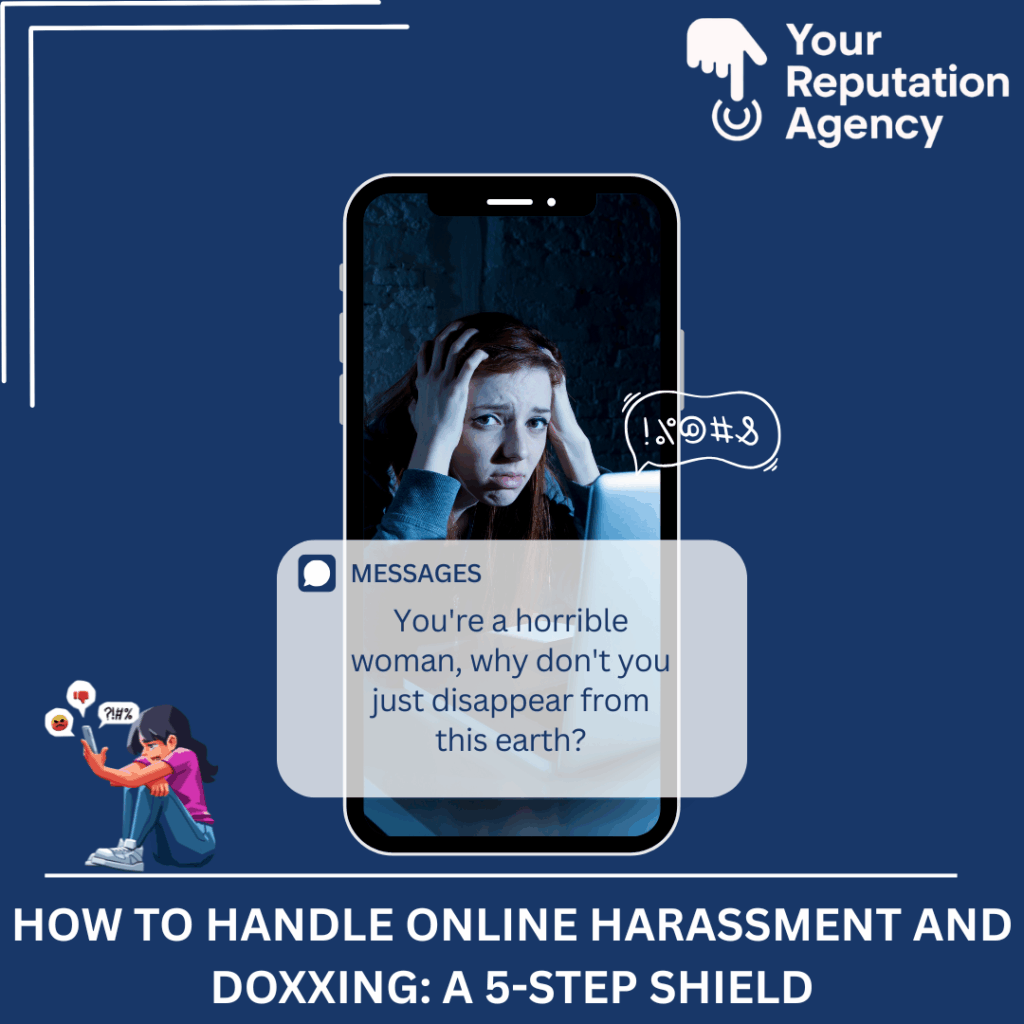
Imagine opening your phone to find your address, private photos, and family details circulating online, accompanied by a flood of threatening messages.
This isn’t a plot from a thriller; it’s the terrifying reality of harassment and doxxing, a form of online that is becoming disturbingly common.
For American business leaders, public figures, and even private citizens, the digital landscape has become a new frontier for personal and professional risk, because the harassment and doxxing.
The question is no longer if you might be targeted, but whether you are prepared when it happens.
Understanding how to handle online harassment and doxxing is no longer a niche concern but a fundamental aspect of modern leadership and personal security.
The New American Crisis: When the Digital World Turns Hostile
Why does a seemingly personal attack like online harassment demand a strategic, almost corporate response?
The American economic and political environment magnifies these threats exponentially.
Consider a tech CEO whose home address is leaked during a contentious product launch, leading to protests and security scares.
Or a state legislator targeted by coordinated disinformation campaigns aimed at swaying public opinion.
These are not hypotheticals. The line between personal safety and professional stability has blurred.
When your personal data becomes a weapon, the impact ripples through stock prices, consumer confidence, and electoral outcomes.
Consequently, learning how to handle online harassment and doxxing is akin to corporate crisis management—it requires a pre-emptive, systematic plan.
Building Your Digital Shield: A Proactive Framework
The most critical mistake is waiting for the attack to happen. The first step in understanding how to handle online harassment and doxxing is building your defenses before you need them.
This begins with a personal digital audit. What information about you is readily available online?
From property records and voter registration to family members’ social media accounts, this data forms the ammunition for attackers.
Many professionals are now employing services to systematically remove their personal information from data broker sites, effectively reducing the surface area for an attack.
This proactive step is not about having something to hide; it’s about strategically managing your digital footprint in an era where information is power—and vulnerability.

When the Attack Begins: Navigating the Immediate Aftermath
So, the worst has happened. You’re facing a torrent of abuse or have discovered your private information on a public forum.
What is the first, most crucial move? Panic is the enemy of strategy. The immediate priority is containment.
This involves documenting everything with screenshots and records, reporting the content to the respective platforms under specific harassment policies, and then, critically, securing your accounts.
Enabling two-factor authentication and changing passwords can prevent a bad situation from escalating into a full-scale account takeover.
But here a deeper question emerges: when does one involve law enforcement? The answer is complex, as laws across different states vary significantly.
However, immediate threats of violence or the release of sensitive financial information should always prompt a call to both local police and the FBI’s Internet Crime Complaint Center.
The Long Game: Legal and Reputational Recovery
What many fail to anticipate is the long tail of these events. The initial shock of the attack may fade, but the digital scars can remain, affecting your reputation and mental resilience for years.
This is where the strategic part of how to handle online harassment and doxxing truly unfolds.
Engaging a legal team well-versed in cyber-harassment laws can help you explore avenues for civil litigation, sending a powerful message to perpetrators.
Simultaneously, a public relations strategy may be necessary to reclaim your narrative.
This isn’t about a press release; it’s about a sustained effort to reinforce your professional credibility and community standing through positive content and strategic communication, ensuring that a search of your name reveals your achievements, not your victimization.

Frequently Asked Questions
What is the most common legal mistake people make after being doxxed?
Many individuals immediately post a public, emotional response. This often fuels the fire and provides the harassers with the reaction they seek.
The correct legal and strategic course is to document quietly and report methodically before making any public statements.
Can a company be held liable if an employee is doxxed due to a corporate data breach?
Absolutely. This falls under data privacy laws like the California Consumer Privacy Act (CCPA).
If employee data is leaked due to inadequate corporate security, the company could face significant legal penalties and reputational damage, highlighting the need for robust cybersecurity protocols.
Does free speech protect online harassers in the U.S.?
While the First Amendment protects offensive speech, it does not protect true threats, incitement to violence, defamation, or the publication of private facts for a malicious purpose.
These are legally actionable offenses, and perpetrators can be prosecuted.
How does political polarization in the U.S. fuel doxxing?
Highly charged political environments create “in-groups” and “out-groups,” making individuals associated with a particular ideology targets for harassment by their opponents.
We’ve seen this with school board members, local officials, and journalists, where policy disagreements quickly devolve into personal attacks and digital exposure.
Is it possible to completely erase my data from the internet after a doxxing?
Conclusion
Complete erasure is nearly impossible, but effective suppression is achievable.
Through a combination of legal takedowns, search engine de-indexing requests, and proactive content creation, you can push the harmful information so far down in search results that it becomes functionally invisible to most people.
The challenge of how to handle online harassment and doxxing ultimately forces us to confront a fundamental tension in modern American life: the desire for digital connection versus the imperative of personal safety.
There is no perfect, impenetrable shield. The solution lies not in a single tactic but in a shift in mindset—from being a passive user of digital platforms to being the active, strategic guardian of your own digital identity.
In the end, your online presence is an extension of your home and your office; it demands the same vigilance, the same boundaries, and the same unwavering commitment to protection.
Follow us on social media:
Don’t forget to read our blog. Here is a link to our previous post: Bury Bad Search Results – 5 Steps to Fight Back