What determines doctor online reputation repair cost?
Doctor online reputation repair cost varies because a single inaccurate directory listing is very different from a widespread news, review, privacy, or impersonation problem. A credible estimate should be based on evidence, scope, and measurable work.
Seven pricing factors
- The number and authority of harmful search results.
- Whether facts are inaccurate, outdated, or policy-violating.
- The number of review platforms and business locations involved.
- Content, technical SEO, and profile work required.
- Privacy, legal, or cybersecurity complexity.
- The competitive difficulty of the doctor’s name and specialty.
- The monitoring period and reporting depth.
Ask providers to explain deliverables, ownership of content and accounts, reporting, cancellation terms, and realistic timelines. Avoid anyone guaranteeing a specific ranking or removal without reviewing the underlying source.
How much does NetReputation cost: How much does NetReputation cost? Public pricing may vary by service and campaign, so prospective customers should request a written proposal. Costs generally depend on the number and authority of harmful results, desired outcome, competition, urgency, and duration.
How Much Does NetReputation Cost?
- Number of URLs or search terms involved.
- Removal, correction, monitoring, or suppression scope.
- Authority and age of competing results.
- Content production and promotion requirements.
- Urgency and reporting frequency.
- Legal or technical coordination.
- Contract length, renewal, and cancellation terms.
Use current platform policies, authoritative records, and qualified legal or professional advice where appropriate. Outcomes controlled by publishers, platforms, courts, or search engines cannot be guaranteed.
You found a damaging article, mugshot, or a cluster of one-star reviews and you’re asking: how much does net reputation cost? You need an answer that matches the real-world stakes — lost patients, licensing risk, hiring problems — not a marketing brochure.
This article breaks down where money actually goes in online reputation work: removal attempts and legal coordination, review challenges, SEO suppression, monitoring, and post-crisis PR. We use the primary keyword “How much does NetReputation cost?” to compare likely ranges and explain what affects price.
You’ll get practical ranges for one-off removals, ongoing monthly programs, and full incident response; alternatives to NetReputation; clear questions to ask vendors; and a plain-language plan if removal isn’t possible.
Read on for step-by-step decision criteria, a side-by-side DIY vs agency comparison, a hypothetical end-to-end example, common mistakes, and expert tips you can act on today.
Table of Contents
- How much is NetReputation?
- Is NetReputation legit?
- How much does online reputation management cost?
- What are some alternatives to NetReputation?
- When removal is not available: mitigation and suppression
- How to budget and evaluate quotes
- DIY vs Agency: Quick Comparison
- Hypothetical: A Clinic With A Viral Complaint Article
- Common Costing And Tactical Mistakes
- Best Practices When Budgeting For Reputation Work
- Expert Tips
- Conclusion
- Why Businesses Choose Your Reputation Agency
- Frequently Asked Questions
How much is NetReputation?
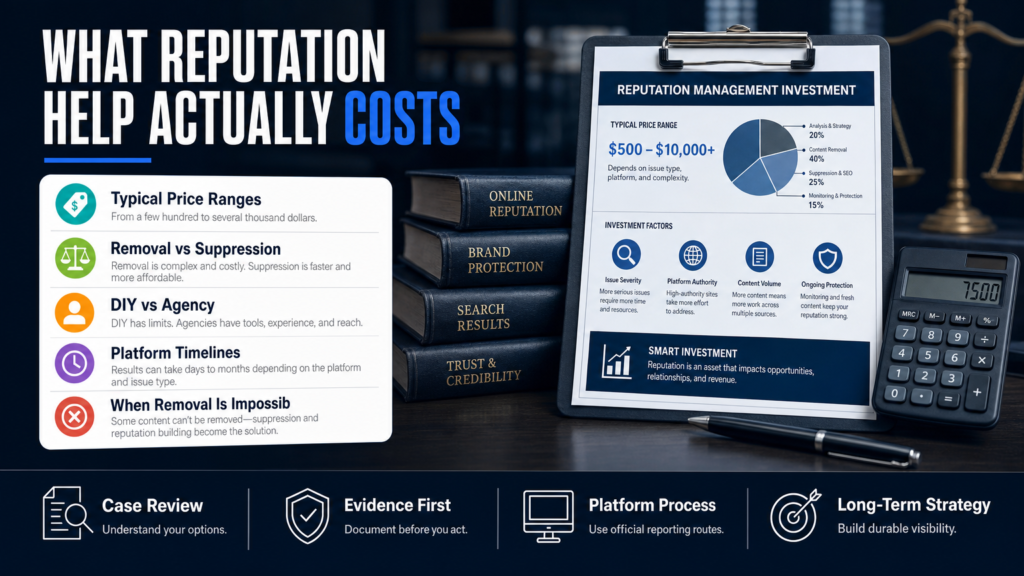
NetReputation’s published pricing has varied by year and by the type of service. Publicly available reports and user-shared invoices place many of their standard offerings in two buckets: one-time removal projects and ongoing monthly programs. For a single-content removal (for example, a specific article, mugshot page, or video) expect quoted ranges from a few hundred dollars to several thousand depending on complexity.
Blanket monthly management plans commonly quoted for companies like NetReputation typically start in the low thousands per month and scale up with the client’s risk profile, the number of negative assets to suppress, and required services (SEO, PR, legal coordination). That means typical monthly retainers often fall between $1,500 and $10,000 per month for businesses and higher for public figures or complex cases.
Exact pricing depends on evidence, platform, jurisdiction, and the mix of tactics proposed; there is no single fixed price. We evaluate whether the content may qualify for removal or review and propose a plan and estimated ranges after an intake assessment.
- Get an intake assessment that lists exact URLs and platforms.
- Ask the provider to separate one-time fees from ongoing monthly costs.
- Request an itemized scope showing legal, technical, SEO, and PR work.
- Single-URL takedown requests: $300–$3,000+ depending on publisher and evidence
- Mugshot/booking removal: commonly quoted $500–$4,000 per site depending on opt-out complexity
- Monthly ORM retainers: $1,500–$10,000+/month depending on scope and urgency
- Full incident response (rapid crisis): project fees often $5,000–$30,000+ for immediate, cross-channel intervention
How to get a realistic quote
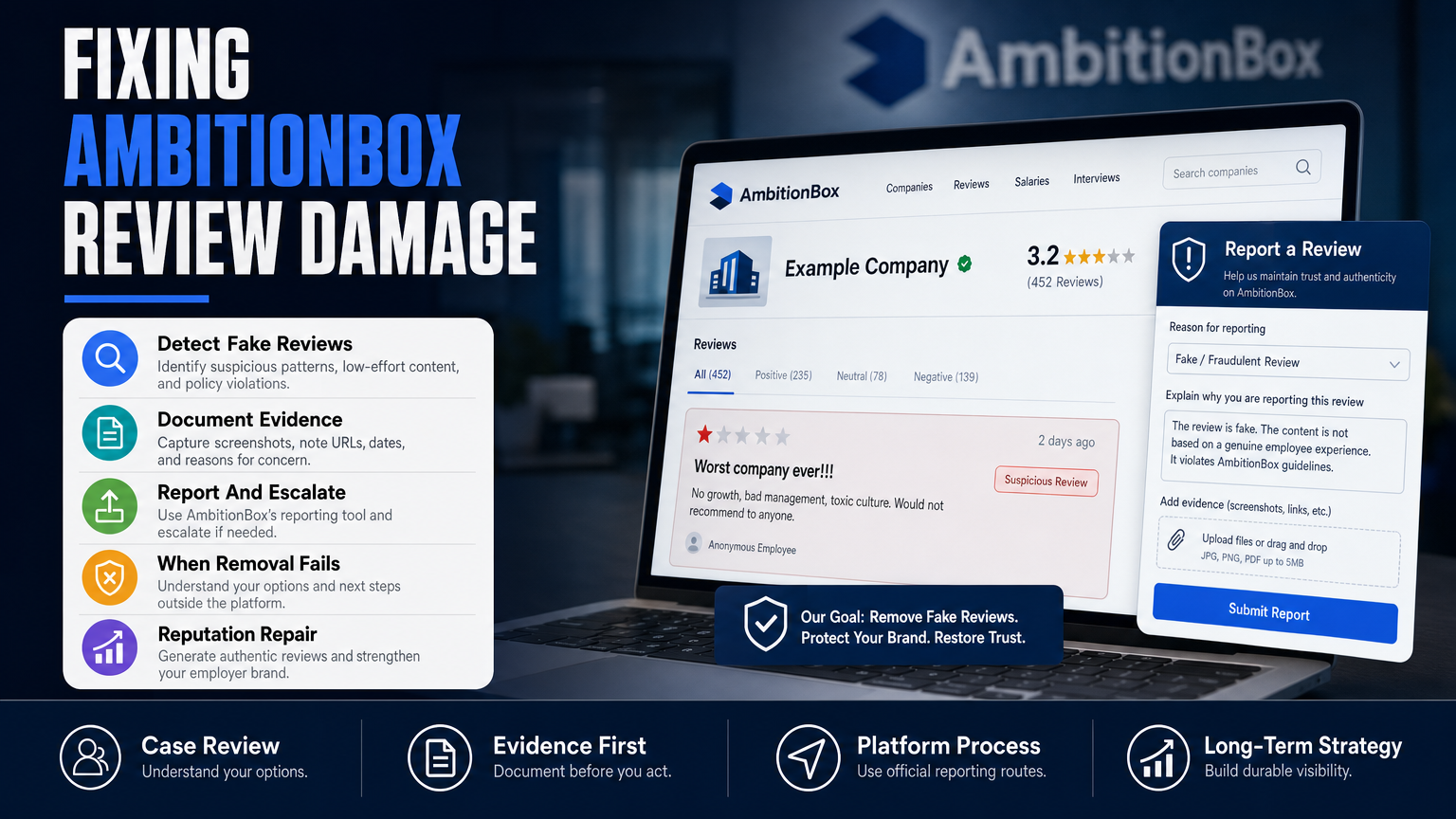
A realistic quote requires a short audit: the provider should review search results for your name and organization, list the negative URLs by priority, and mark which items are probably removable (policy/legal) versus those that require suppression.
Quotes that arrive without a URL list or a platform-by-platform plan should be treated skeptically.
- Provide the vendor with a list of affected searches and key target keywords.
- Ask for estimated timelines as ranges, not promises.
Is NetReputation legit?
NetReputation is a commercially established reputation management company with public reviews and customer feedback online. Legitimacy here means: they operate as a private company offering ORM services, they use platform reporting, SEO, PR and legal coordination, and they charge for those services.
But legitimacy does not imply guaranteed results. Platform decisions remain under the platform’s control, and outcomes vary with the nature of the content, evidence available, and legal constraints. We develop SEO reputation strategies intended to improve the visibility of relevant and credible information, but we do not — and cannot — guarantee removals or specific search rankings.
When evaluating any company, including NetReputation, check independent reviews, ask for a clear scope, confirm they will coordinate with counsel if needed, and demand a written contract that defines confidentiality terms and measurable activities.
- Request a sample action plan for one of your negative URLs.
- Ask how they handle refusals by platforms and how escalation to legal counsel is managed.
- Confirm billing structure, cancellation terms, and confidentiality provisions.
- Check for transparent scopes of work and clear deliverables.
- Look for policies on evidence handling and coordination with counsel.
- Verify references and real, verifiable case examples (not fabricated testimonials).
Red flags to watch for
Avoid vendors who promise guaranteed removal or fixed timelines, or who recommend fake reviews or deceptive tactics. These practices create legal and reputational risk for you.
If a company asks you to post false statements, share passwords, or file fraudulent DMCA claims, stop and consult counsel.
- Guaranteed removal or ranking promises
- Requests to provide false information to platforms
- Insistence on up-front large payments with no itemized plan
How much does online reputation management cost?
The broader market for online reputation management (ORM) follows similar patterns: one-off fees for specific takedowns and monthly retainers for ongoing suppression, monitoring, and PR. Cost drivers are number of negative assets, platforms involved (news outlets vs social media vs data brokers), legal complexity, and the client’s tolerance for risk.
Typical price bands across the industry are: low-cost DIY/entry-level services under $1,500/month, mid-tier agency retainers $1,500–$7,000/month, and high-touch enterprise or celebrity services $7,000+/month. One-off urgent projects (rapid response) often start between $5,000–$20,000 depending on intensity and legal work.
If you want a deeper breakdown of the professional cost components, see Cost of Professional Reputation Repair – Real 2025 Guide for a line-item view of typical agency invoices.
- Inventory the negative assets and tag by platform (Google, Yelp, news, data brokers).
- Estimate cost per asset for removal attempts versus suppression work.
- Decide the right mix based on business risk and available budget.
- DIY monitoring tools: $0–$100/month (basic)
- Data-broker opt-outs (manual): usually low per site, but time-intensive
- Professional removal attempts: often $300–$4,000/site depending on publisher
- SEO suppression campaigns: monthly SEO work plus content creation costs
Where most of the budget goes
Legal and takedown work can be expensive because it involves evidence collection and counsel review. SEO suppression requires time and quality content creation and link-building — not a quick fix. PR and messaging to repair trust after an incident may require additional media outreach budgets.
Monitoring and alerting are relatively small monthly costs but are essential to avoid surprise new incidents.
- Counsel coordination and legal notices
- Platform reporting and appeals
- Content creation (pages, profiles, press)
- Link building and SEO work
What are some alternatives to NetReputation?
Alternatives fall into four categories: other full-service ORM firms (like ReputationDefender, Phoenix, etc.), boutique specialty firms (mugshot removal specialists, review specialists), DIY approaches (manual opt-outs, direct dispute submission), and legal-first approaches (retain counsel to file demands or suits). The right alternative depends on your budget, urgency, and the type of content.
If you are focused on Google Reviews, a provider with proven review-response and escalation experience may be better than a generalist. For data-broker opt-outs, a manual, low-cost schedule might work. For a complex defamatory article by a publisher, you may need a mix of counsel and agency coordination.
- Match the vendor’s specialty to your primary problem (reviews vs articles vs personal data).
- Ask for references for similar clients (industry and issue type).
- Compare pricing, escalation paths, and what’s included in monitoring.
- Full-service ORM firms (competing agencies)
- Specialist vendors (mugshots, review removal services)
- DIY: manual opt-outs and SEO suppression
- Legal counsel for cease-and-desist or litigation
Comparing vendor types quickly
For a quick comparison of the pros and cons of handling work yourself versus hiring an agency, see the DIY vs Agency comparison below.
Also review independent complaint forums (like Trustpilot, Reddit threads) carefully — but remember those are a mixture of verified and unverified experiences.
- Specialists may be cheaper for a narrow problem
- Full-service firms cover legal, PR and SEO in one package
- DIY saves money but costs your time and increases risk
When removal is not available: mitigation and suppression
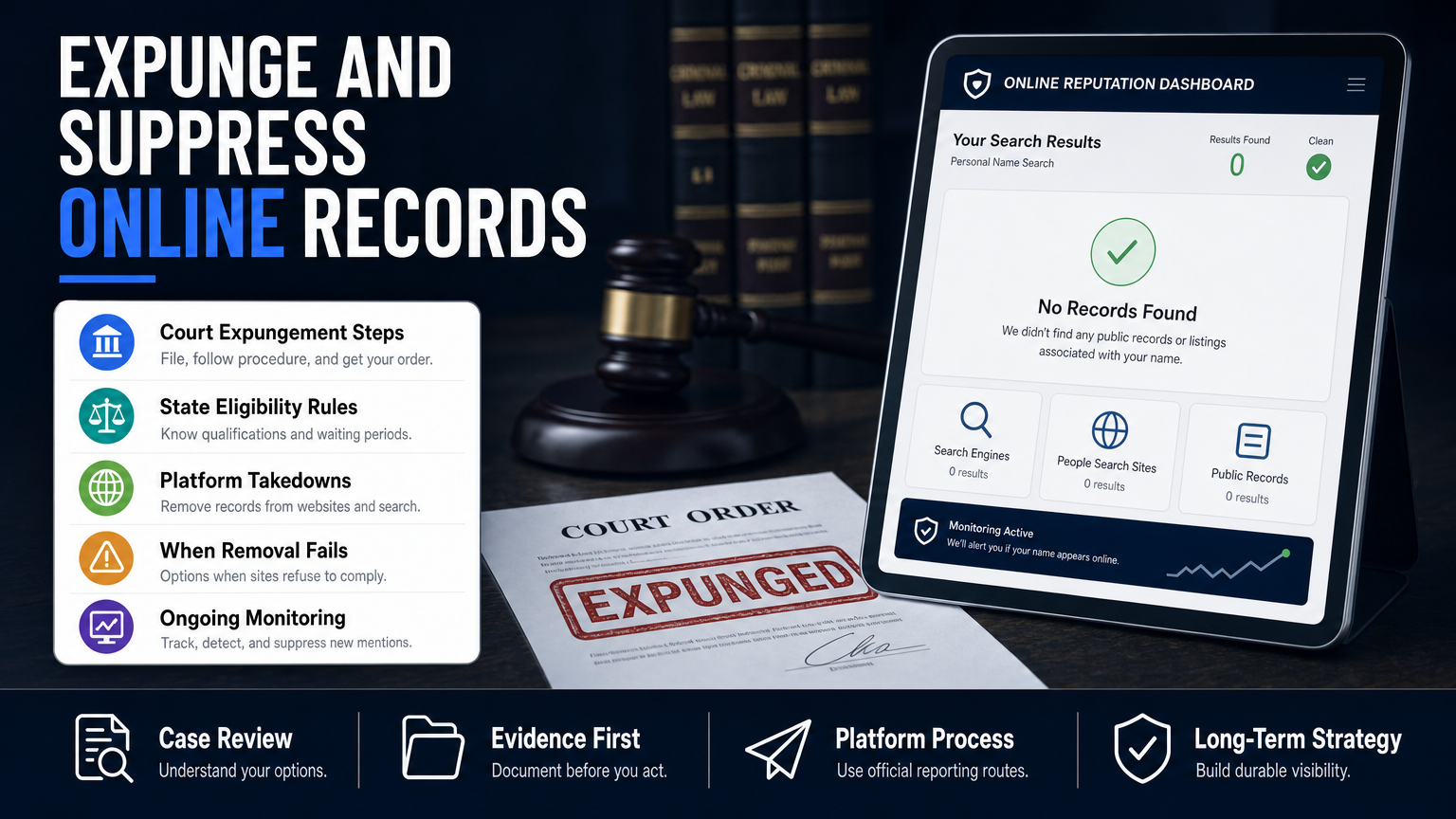
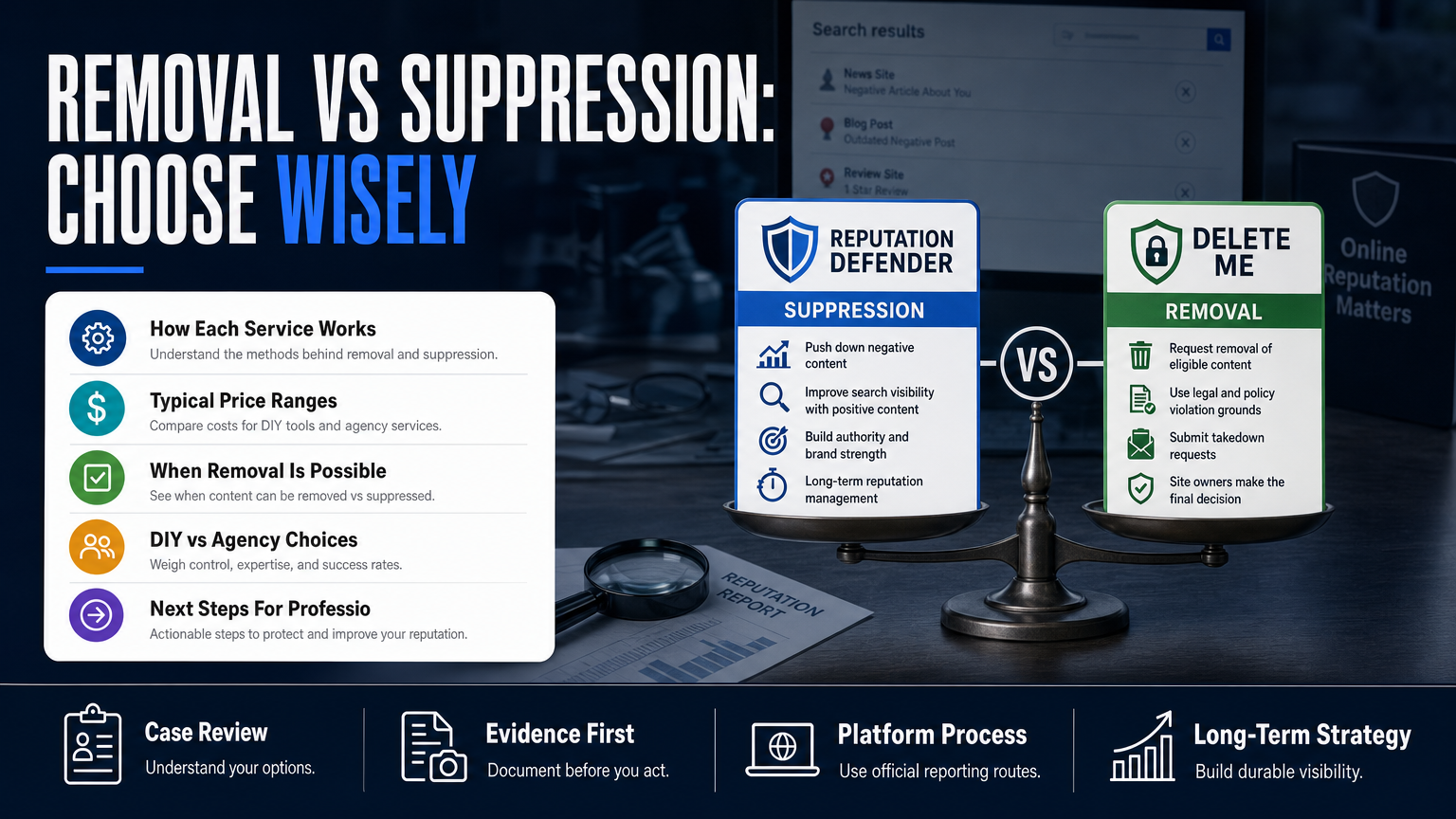
Not all harmful content is removable. Truthful public records, court filings, or posts that don’t violate platform policy may stay online. When removal is unavailable, we pursue mitigation: correct factual errors where possible, push for updates, and use SEO strategies to reduce visibility.
We pursue the legal, technical, platform-based, and reputational options available. When removal is unavailable, we may recommend mitigation, correction, or reduced visibility through authoritative content and targeted SEO.
Mitigation is often the more realistic and longer-term strategy for professionals whose negative content is a public record or constituted as an opinion rather than defamation.
- Document the negative asset and why removal is unlikely (public record, policy-compliant).
- Develop a suppression plan that targets page-one results for your name + title.
- Measure progress with weekly rank checks for priority keywords.
- Correct or annotate factual errors with credible sources
- Create prioritized positive pages (profiles, articles, press)
- Use targeted SEO to push negative URLs off page one
- Apply ongoing monitoring and alerting to detect regressions
Tactical suppression checklist
Suppression mixes content creation (new pages you control), on-site SEO, link-building, and occasionally paid placements (press distribution or sponsored content). Results vary and require maintenance.
Search results may change because algorithms, competitors, publishers, and user behavior are outside our control.
- Secure authoritative profiles: LinkedIn, Healthgrades, state licensing pages
- Publish corrective or explanatory content on owned domains
- Request removals of duplicates, scraped copies, or policy-violating republishing
How to budget and evaluate quotes
Create a realistic budget by combining one-off removal estimates with monthly suppression/monitoring costs. Ask vendors to present a prioritized plan: top 3 URLs to tackle, expected methods (platform reports, legal demand, SEO), and a baseline monthly cost for ongoing work.
When comparing proposals, insist on itemized tasks rather than vague promises. A proper proposal separates platform appeals, counsel time, content creation, and link-building so you can see where money is allocated.
If you are deciding whether to hire a firm or pursue a DIY route, consider the cost of your time and the business risk. For example, slow action on a licensing threat can cost more than an ORM retainer.
- Get at least three written proposals with the same URL list.
- Check that one proposal includes rapid response options for new incidents.
- Negotiate a short pilot phase before committing to long retainers.
- Ask for itemized quotes with URL-level actions
- Compare hourly legal rates if counsel is required
- Request reporting cadence and success metrics (not guarantees)
How to use a pilot engagement
A 30–60 day pilot focusing on the top 1–3 URLs lets you evaluate vendor responsiveness and early indicators of progress without committing to long-term fees.
Ensure the pilot has clear deliverables (appeals filed, content published, rank reports) and an agreed cancellation point.
- Set measurable pilot goals (e.g., 3 DMCA/platform appeals filed, 2 new owned pages created)
- Require weekly reporting during the pilot
- Include a convert option to a longer retainer with predefined rates
DIY vs Agency: Quick Comparison
A concise look at trade-offs when deciding to handle reputation work yourself or hire an agency.
| DIY (You Do It) | Agency (Professional) |
|---|---|
| Cost Up Front | Higher Monthly Fees |
| Time Investment | Saves Your Time |
| Effectiveness on Complex Cases | Better For Complex/Legal Issues |
| Control Over Messaging | Professional PR Coordination |
| Technical SEO Skills Needed | SEO And Link Building Included |
| No Counsel Coordination | Can Coordinate With Counsel |
Hypothetical: A Clinic With A Viral Complaint Article
Scenario: A small clinic discovers a local blog post alleging malpractice and multiple one-star Google reviews after a viral Facebook post. The clinic’s first-page search results include the blog post, two review listings, and an aggregator that scraped the post. The clinic wants removal but is willing to pursue suppression and PR if removal fails.
Process followed (hypothetical, anonymized):
- 1. Preserve evidence: screenshots, links, timestamps.
- 2. Run a policy-based takedown attempt for reviews and a publication correction request for the blog.
- 3. If removal is denied, launch SEO-driven suppression with new owned content and link-building.
- 4. Coordinate PR messaging to address patient concerns and publish a clinic statement.
- 5. Maintain monitoring and adjust until search visibility stabilizes.
- Intake & Audit: Agency lists URLs, classifies by removability (policy violation, falsehood, public record), and estimates costs.
- Rapid Response: Agency files platform appeals for reviews and contacts the blog’s host with a correction request while preserving evidence.
- Legal Coordination: Counsel reviews the blog content for defamation potential and drafts a demand letter where applicable.
- Suppression: Agency creates two authoritative pages (press release and staff bios) and optimizes them for target keywords to push the blog off page one.
- Monitoring: Ongoing alerts for new mentions and weekly rank reports are established.
Common Costing And Tactical Mistakes
Avoid predictable errors that waste budget or create new liabilities. Below are several named mistakes with explanations and corrective actions.
Mistake: Chasing Guaranteed Removal
Why it happens: Clients want certainty and sign on to vendors promising removal or fast results.
Why it’s wrong: No vendor can guarantee removals or fixed timelines because platforms and publishers control outcomes.
What to do instead: Demand a realistic action plan, documented escalation paths, and measurable activities.
- Insist on language that says removal depends on platform/publisher decisions.
- Require itemized activities rather than performance guarantees.
Mistake: Paying for Fake or Risky Tactics
Why it happens: Quick fixes like fake positive reviews or sock-puppet content promise immediate suppression.
Why it’s wrong: These tactics violate platform terms and can lead to penalties or legal exposure.
What to do instead: Use legitimate SEO and PR tactics and avoid any service that instructs deception.
- Refuse any vendor recommending false statements or astroturfing.
- Verify the vendor’s ethics and contract terms.
Mistake: Ignoring Review Response Strategy
Why it happens: Clinics focus on removal and neglect visible review responses which shape public perception.
Why it’s wrong: Thoughtful, documented responses to negative reviews can reduce reputational damage and sometimes resolve disputes.
What to do instead: Combine removal attempts with consistent, compliant review-response protocols.
- Draft templated, personalized responses that de-escalate and invite offline resolution.
- Coordinate responses with legal counsel when allegations may have legal implications.
Mistake: Not Prioritizing High-Impact URLs
Why it happens: Clients want every negative mention removed immediately.
Why it’s wrong: Spending budget evenly across 20 low-impact URLs reduces effectiveness; a single page on Google’s page one can do most damage.
What to do instead: Prioritize by traffic, search visibility, and business risk, then target the top 3–5 assets first.
- Run a simple traffic and rank assessment to identify top threats.
- Allocate most budget to the few URLs that drive searches.
Mistake: Skipping Documentation
Why it happens: Clients assume platforms will accept oral claims or change content quickly.
Why it’s wrong: Platforms and publishers demand evidence; missing documentation weakens removal chances and legal arguments.
What to do instead: Preserve screenshots, links, dates, and any communications related to the harmful content.
- Use time-stamped screenshots and export search console or analytics data if available.
- Log all correspondence with platforms and the publisher.
Best Practices When Budgeting For Reputation Work
These durable steps help you spend wisely and increase the chance of meaningful improvement without chasing unrealistic guarantees.
Document First, Spend Second
Collect evidence and a prioritized URL list before shopping for services. A vendor cannot provide a realistic quote without this information.
That documentation speeds up legal review and platform appeals.
- Create a simple spreadsheet with URLs, platform, date, and why it’s harmful.
- Gather screenshots and copies of any communications.
Insist On Itemized Proposals
A good proposal separates legal, platform appeals, SEO, PR, and monitoring costs so you can evaluate trade-offs.
Itemized scopes make pilot projects and cost control possible.
- Require URL-level actions and estimated hours.
- Set deliverables for the pilot phase.
Prioritize High-Impact Outcomes
Focus first on page-one search results for name + title and on platforms that drive customers (Google, Facebook, Yelp, industry sites).
Low-traffic mentions can be handled later or through routine monitoring.
- Identify the top 3 search queries that matter (e.g., ‘Dr. Smith malpractice’).
- Target content removal or suppression for the URLs that rank for those queries.
Coordinate With Counsel When Needed
Legal advice is essential when content could be defamatory, privacy-violating, or when a publisher refuses to cooperate.
We coordinate with qualified legal professionals when a matter requires legal analysis.
- Have counsel ready for demand letters or takedown litigation assessments.
- Use counsel to validate legal grounds before filing threats or public statements.
Budget For Ongoing Monitoring
Reputation work is maintenance as much as repair. A modest monitoring retainer reduces risk of sudden new incidents.
Monitoring costs are typically small relative to removals and suppression.
- Set alert thresholds for new mentions of your name and organization.
- Review monitoring reports monthly and adjust priorities.
Expert Tips
- Always get URL-level quotes; lump-sum proposals hide the true cost per asset.
- Use a short paid pilot (30–60 days) to validate responsiveness before committing long-term.
- Prioritize assets that appear in the ‘name + title’ first-page results — they cause most damage.
- Preserve evidence immediately: screenshots, cached copies, and time stamps.
- Ask vendors how they coordinate with legal counsel instead of promising litigation outcomes.
- Avoid vendors who recommend fake reviews or deceptive tactics; those escalate risk.
- Negotiate monthly caps on outreach/legal hours to control runaway fees.
- Track ROI: measure appointment bookings or conversions tied to improved search visibility.
Conclusion
How much does net reputation cost depends on the type of content, platforms involved, legal complexity, and your risk tolerance. Single-URL removals can be relatively inexpensive; incident response and sustained suppression are what drive larger retainers. There is no universal price because outcomes depend on platform policies, evidence, and jurisdiction.
Your best approach is to prioritize what matters, collect evidence, get itemized proposals, and use a short pilot to test a provider’s process. If removal is unlikely, allocate budget to smart suppression, PR, and monitoring — those tactics often deliver durable reductions in harm even when removal isn’t possible.
Why Businesses Choose Your Reputation Agency
Managing your reputation takes more than monitoring reviews or publishing the occasional blog post. It takes a strategy built around your situation, your industry, and what is actually showing up in search.
Your Reputation Agency works with businesses, executives, healthcare professionals, attorneys and growing brands. Our services include:
- Remove defamatory content and false posts (news, blogs, listings)
- Remove or challenge negative reviews (Google, Yelp, TripAdvisor, industry sites)
- Mugshot and arrest record removal
- Remove videos, images, and other multimedia that damage reputation
- Remove personal data from people‑search and data‑broker sites (opt‑outs)
- Search result suppression (SEO to bury negative links)
- Social media takedowns and impersonation removal
- Rapid online crisis management and incident response
- Ongoing monitoring and alerting of reputation signals
- Coordination with legal counsel and use of legal tactics when required
Frequently Asked Questions
1. How much is NetReputation?
NetReputation typically quotes in two formats: one-off fees for specific takedowns and monthly retainers for ongoing management. Publicly shared pricing places one-off removals from a few hundred to several thousand dollars and monthly retainers commonly between $1,500 and $10,000+, depending on scope, urgency, and services included.
2. Is NetReputation legit?
NetReputation is a legitimate, commercial reputation management company with public reviews and clients. Legitimacy means they provide ORM services, but it does not imply guaranteed removals or outcomes — platforms and publishers control final decisions.
3. How much does online reputation management cost?
Industry ranges: entry-level or DIY under $1,500/month, mid-tier agency retainers $1,500–$7,000/month, and high-touch or enterprise services $7,000+/month. One-off urgent projects commonly start at $5,000 and up depending on legal needs and intensity.
4. What are some alternatives to NetReputation?
Alternatives include other full-service ORM firms, boutique specialists (reviews or mugshot removal), DIY opt-outs and SEO, or a legal-first route through counsel. Match the provider’s specialty to your core problem—for instance, choose a review specialist for a reviews crisis.
5. How much does net reputation cost per year?
Annual costs vary widely: a minimal program might run $5,000–$10,000/year (basic monitoring and occasional interventions), while sustained suppression and crisis readiness can cost $30,000–$120,000+/year for mid-to-high risk professionals or businesses.
6. How much does NetReputation cost in California?
Geography rarely changes a vendor’s core pricing structure, but legal costs can vary by jurisdiction. California clients should budget for possible higher counsel hourly rates and media costs; otherwise, the agency fees are similar to national ranges.
7. Does insurance cover reputation management?
Some cyber incident or crisis policies include reputation and crisis PR expenses, but coverage varies by policy. Review your insurance documents and discuss with your broker; a qualified attorney or your agency can help document a claim if applicable.
8. Can you remove mugshots or arrest records?
Mugshots and arrest records present special challenges. Many aggregator sites will accept opt-outs for a fee or follow a process; removal depends on site policies, public-record laws, and jurisdiction. We evaluate whether the content may qualify for removal or review and pursue platform-based and legal options when appropriate.
9. Are there reputable user reviews about NetReputation?
Yes — there are mixed public reviews and discussions on sites like Trustpilot and Reddit. Read them critically: look for verified experiences, specifics about scope and results, and how the company handled disputes. For review-focused crises specifically, our article When Google Reviews Become a Brand’s Biggest Crisis explains common pitfalls and vendor roles.
This content provides general information and does not constitute legal advice. The available options and likely outcomes depend on the facts, evidence, platform policies, applicable law, jurisdiction, and public-interest considerations.
Past examples do not guarantee future results. Removal, correction, deindexing, and search-position changes depend on third parties and circumstances outside Your Reputation Agency’s control.