
Bury bad search results and quickly regain control of your name, your reputation, and your peace of mind.
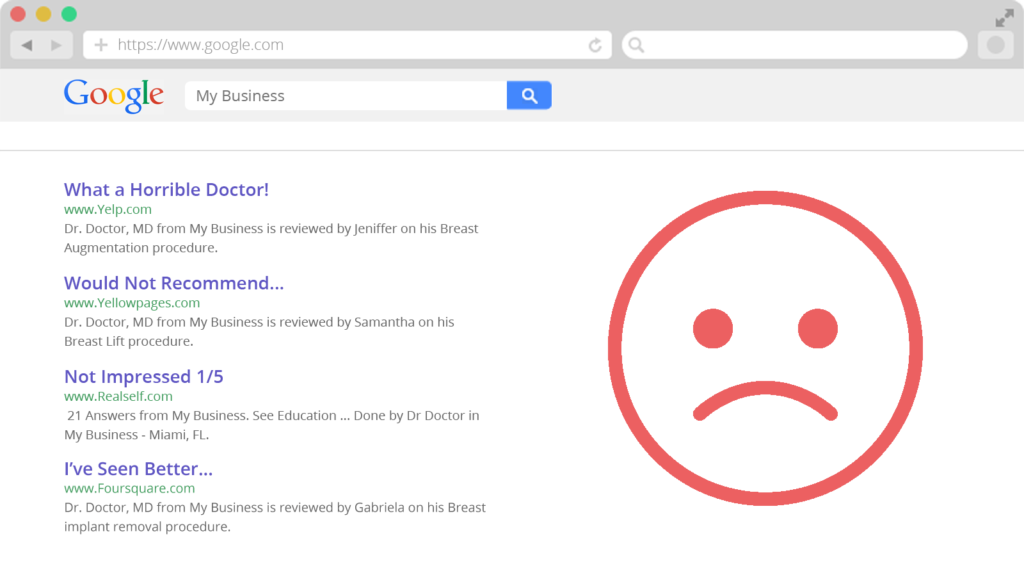
The shock of seeing a false article, an angry review, or a misleading blog post ranking on page one of Google is something no business owner, politician, or professional forgets.
And the most frustrating question that immediately follows is always the same: How can one negative link have so much power over my life and work?
The answer is simple but uncomfortable: Google rewards relevance and engagement, not truth. Harmful content can spread faster than facts, shaping public opinion in hours.
In the United States, where consumers, voters, and investors rely on search results to form opinions, reputational damage quickly becomes economic damage.
Meanwhile in Mexico, similar digital attacks often carry personal, political, or competitive motivations, reminding us that reputation is now a global battlefield.
If negative content can’t be deleted, then the smartest solution is to bury bad search results with stronger, optimized, and credible information.
Why Bad Search Results Hurt More Today?
Trust has become currency. In the U.S., one negative headline affects not only your credibility, but also sales, partnerships, and public perception.
Data shows that 90% of Americans don’t go past page one of Google.
So if your name, brand, or company is tied to a damaging link, you don’t get the benefit of explanation or context—only judgment.
This raises an urgent question: Is it fair that outdated or false content can decide a person’s future?
In Mexico, where misinformation often spreads through social networks before traditional media reacts, reputational harm tends to strike emotionally. In contrast, the U.S. reacts economically.
Yet in both cultures, reputation equals opportunity. That is why deciding to bury bad search results is not about vanity—it is about protecting dignity, livelihood, and long-term stability.
How to Bury Bad Search Results Strategically
When deletion is not possible, suppression becomes a powerful strategy. To bury bad search results, you must outrank them with higher-quality, SEO-driven content.
Google prioritizes credibility, frequency, and relevance. That is why publishing optimized press releases, thought-leadership columns, interviews, business profiles, and positive content on media outlets works.
Over time, strong pages push harmful links down where few will ever see them.
However, suppression is not instant. It requires strategy, patience, and consistency.
Businesses and public figures in the U.S. often partner with reputation management agencies to accelerate results, while in Mexico many still try to fight these battles alone—usually with poor outcomes.
The algorithm doesn’t reward emotion; it rewards structure, optimization, and persistence.
When Politics, Business, and Perception Collide
Think about U.S. elections, where a candidate’s name searches can decide momentum.
Or picture a small business in Chicago that loses contracts after a misleading report goes viral.
Meanwhile, a CEO in Monterrey might face similar defamation, but with fewer institutional tools to defend themselves. In both nations, narrative now equals influence.
And if you don’t control your narrative, someone else will.
Frequently Asked Questions (U.S. Audience)
- Can I delete negative Google results?
Only in specific legal cases. When removal isn’t possible, suppression is the best strategy. - How long does it take to bury bad search results?
Anywhere from 60 days to several months, depending on the strength of the negative content. - Will suppression make the problem disappear forever?
It works long-term if you continue publishing positive, optimized content. - Is it legal to bury negative results?
Yes. Suppression is ethical and legal because it adds truthful content instead of manipulating data. - Can one article really hurt revenue?
Absolutely. One result can influence consumer decisions, investor confidence, and media narratives.
Final Reflection
Reputation is no longer built in conference rooms—it is built on search bars. To bury bad search results is to defend your story against a system that rewards noise over nuance.
The task requires clarity, strategy, and emotional intelligence.
You cannot control what others publish, but you can control what the world sees first.
In both Mexico and the United States, the lesson is the same: silence is not a strategy.
If you fight back with smart content, consistent messaging, and a long-term plan, your digital presence will recover and your reputation can emerge stronger, resilient, and reinvention-proof.
Follow us on social media:
Don’t forget to read our blog. Here is a link to our previous post: Erase Yelp Reviews – Powerful Guide for 2025