Quick answer: how to do online reputation management
Start online reputation management with a search, review, profile, media, and privacy audit. Prioritize safety issues, factual errors, high-visibility sources, and recurring customer concerns.
Correct sources, respond professionally, publish useful content, strengthen official profiles, earn trusted references, secure accounts, and measure rankings with leads, retention, hiring, and sentiment.
Your online reputation influences nearly every business decision your customers make. Before contacting your company, people often search Google, read reviews, browse social media, and compare what others say about your brand. Those first impressions can determine whether someone chooses your business—or a competitor.
If you’ve been wondering how to do online reputation management, you’re not alone. Business owners, CEOs, doctors, lawyers, entrepreneurs, and agency owners all face the same challenge: maintaining a trustworthy digital presence in an era where information spreads instantly.
Effective online reputation management isn’t about hiding criticism or manipulating search results. Instead, it’s about building credibility through transparency, quality content, positive customer experiences, and consistent brand communication. When done correctly, it helps attract new customers, strengthen existing relationships, and protect your business from future reputation risks.
In this complete guide, you’ll learn the proven strategies professionals use to monitor, improve, and maintain a strong online reputation. Whether you’re starting from scratch or recovering from negative publicity, these practical steps will help you create a reputation that supports long-term business growth.
Table of Contents
- What Is Online Reputation Management?
- Why Online Reputation Management Matters
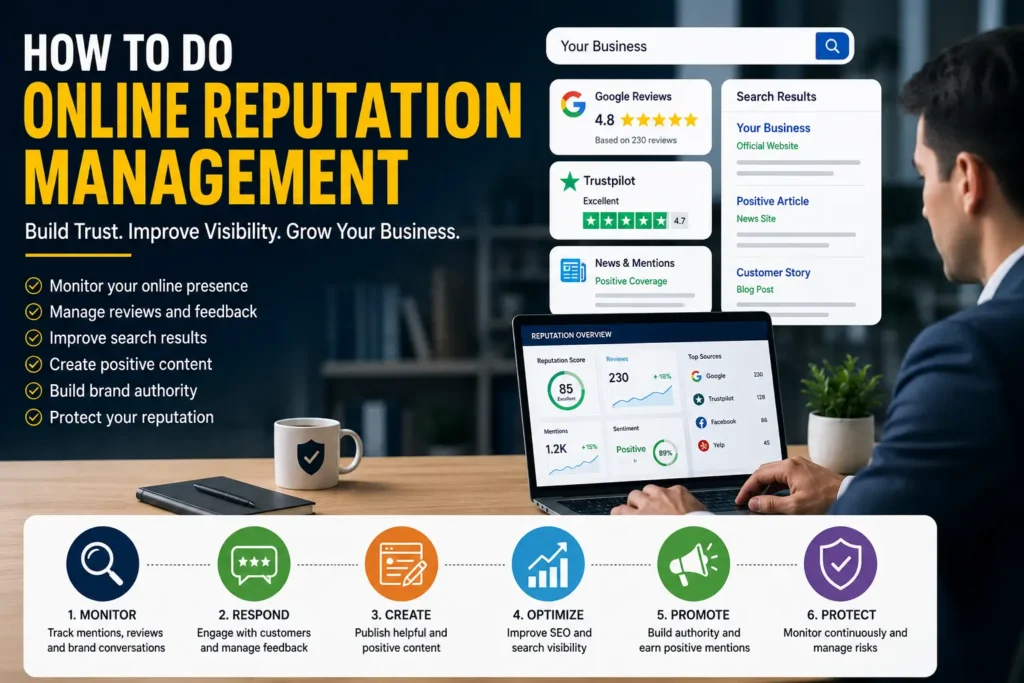
- How to Do Online Reputation Management Step by Step
- Monitor Your Online Presence
- Manage Customer Reviews Professionally
- Improve Google Search Results
- Create High-Quality Content
- Build Brand Authority
- Handle Reputation Crises Effectively
- Real-World Example
- Common ORM Mistakes
- Best Practices for Long-Term Success
- Expert Tips
- Frequently Asked Questions
What Is Online Reputation Management?
Online Reputation Management (ORM) is the ongoing process of monitoring, influencing, and improving how your business or personal brand appears across the internet.
It includes everything people see when they search for your name or company, including:
- Google Search results
- Customer reviews
- News articles
- Social media profiles
- Blog posts
- Videos
- Online forums
- Business directories
Rather than focusing on one platform, ORM takes a comprehensive approach to your entire digital footprint.
A successful strategy combines SEO, content marketing, customer service, public relations, and brand monitoring to ensure your online presence reflects the quality and professionalism of your business.
For companies facing more complex challenges, working with a professional Reputation Management team can provide strategic guidance and long-term support.
Why Online Reputation Management Is More Important Than Ever
Today’s consumers research before they buy.
According to multiple industry studies, most customers read online reviews, compare businesses, and evaluate search results before making purchasing decisions. That means your digital reputation directly affects your revenue, customer trust, and long-term growth.
A strong online reputation helps you:
- Build customer confidence
- Increase conversion rates
- Strengthen brand authority
- Improve search visibility
- Attract better business opportunities
- Reduce the impact of negative content
- Support long-term marketing efforts
On the other hand, unmanaged search results, unanswered reviews, or outdated information can discourage potential customers before they ever contact your business.
Online reputation management isn’t just about solving problems—it’s about creating a trustworthy digital presence that works in your favor every day.
How to Do Online Reputation Management: Start With Monitoring
Before you can improve your reputation, you need to understand what people are already saying about your business.
Monitoring your online presence helps identify both opportunities and potential risks before they become larger problems.
Start by searching:
- Your business name
- Your personal name
- Executive names
- Product names
- Brand variations
Then review the first few pages of Google search results carefully.
Pay attention to:
- Review websites
- Google Business Profile
- Social media mentions
- News coverage
- Industry blogs
- Forum discussions
- Video platforms
- Business directories
Don’t limit your monitoring to Google alone. Customers often discover brands through Bing, AI-powered search assistants, YouTube, LinkedIn, Reddit, and social media platforms.
Creating a monthly reputation audit allows you to identify negative trends early and respond before they impact customer trust.
A proactive monitoring strategy is the foundation of every successful online reputation management campaign.
Monitor More Than Just Reviews
Many businesses make the mistake of focusing only on customer reviews.
While reviews are important, your overall reputation also depends on many other digital signals.
These include:
- Search engine visibility
- Brand mentions
- Media coverage
- Employee feedback
- Executive reputation
- Customer testimonials
- Industry recognition
- Social engagement
Looking at the complete picture gives you a much more accurate understanding of how your audience perceives your brand.
Building that awareness is the first and most important step in learning how to do online reputation management successfully.
How to Do Online Reputation Management Step by Step
Building a strong online reputation doesn’t happen by accident. It requires a structured process that combines reputation monitoring, customer engagement, search engine optimization, and consistent brand communication.
Below are the steps our reputation specialists recommend for businesses that want to build long-term credibility online.
Step 1: Audit Your Current Online Reputation
Before making improvements, you need to understand where your reputation stands today.
Start by searching for:
- Your business name
- Your brand name
- Your CEO or founder’s name
- Your products or services
- Your company plus words like “reviews,” “complaints,” or “scam”
Then evaluate what appears on the first two pages of search results.
Look for:
- Google Business Profile
- Review websites
- News articles
- Social media profiles
- Videos
- Images
- Business directories
- Customer discussions
This audit helps identify strengths, weaknesses, and opportunities for improvement.
Step 2: Respond to Customer Reviews Professionally
Online reviews play a significant role in shaping customer trust.
Whether feedback is positive or negative, responding professionally demonstrates that your business values customer experience.
For positive reviews:
- Thank the customer.
- Personalize your response.
- Encourage future engagement.
For negative reviews:
- Stay calm and professional.
- Acknowledge the concern.
- Offer to resolve the issue privately.
- Avoid arguments or defensive language.
Never purchase fake reviews or post misleading testimonials. Authentic customer feedback is far more valuable for both trust and long-term SEO.
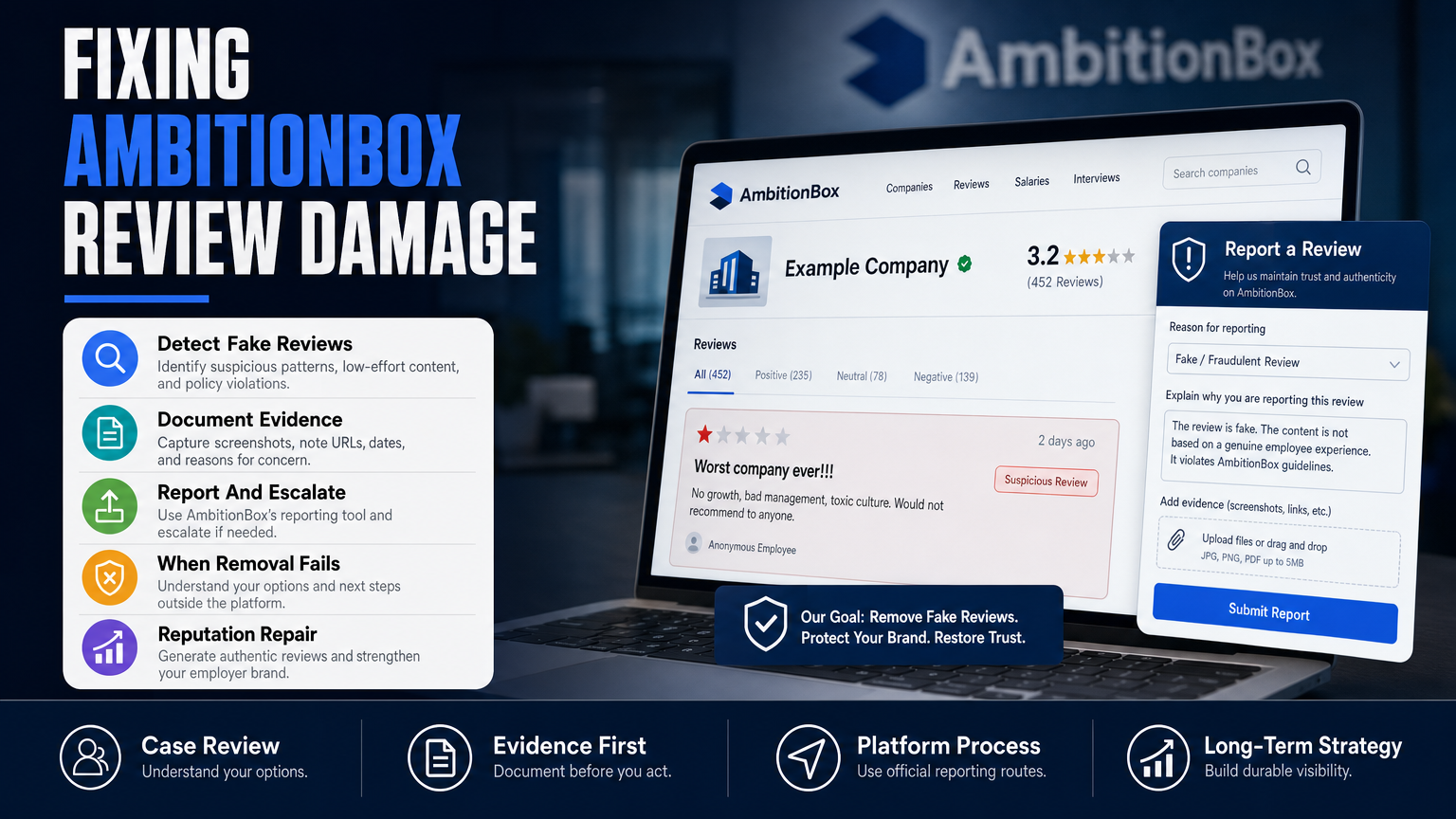
If your business is dealing with policy-violating or fake reviews, our Remove Google Reviews service explains the available options:
Step 3: Improve What Appears in Google Search Results
For many customers, Google search results create the very first impression of your business.
That means your branded search results should accurately represent your expertise, credibility, and professionalism.
Focus on strengthening positive assets such as:
- Your website
- Service pages
- Blog content
- Google Business Profile
- LinkedIn Company Page
- Executive profiles
- Industry directories
- Media mentions
High-quality content gradually becomes a stronger signal to search engines, helping authoritative pages gain more visibility over time.
Remember, reputation management isn’t about hiding information—it’s about making trustworthy content easier to find.
Step 4: Publish Helpful, High-Quality Content
One of the most effective ways to strengthen your online reputation is by consistently publishing content that genuinely helps your audience.
Create content that answers common questions, solves real problems, and demonstrates your expertise.
Examples include:
- Educational blog articles
- Industry guides
- Case studies
- FAQs
- Videos
- Research reports
- Expert interviews
- Customer success stories
Helpful content not only improves SEO but also establishes your brand as a trusted source of information.
Google’s Helpful Content system rewards websites that prioritize people-first content over content written solely for search engines.
Step 5: Build Authority Across Multiple Platforms
Your reputation isn’t determined by your website alone.
Customers often evaluate businesses across several trusted platforms before making a decision.
Maintain accurate and active profiles on:
- Google Business Profile
- YouTube
- Industry directories
- Professional associations
- Local business listings
Consistency is essential.
Your business name, address, phone number, branding, and messaging should remain accurate across every platform.
A consistent digital presence reinforces trust with both search engines and potential customers.
Reputation Management Is More Than SEO
Many people believe online reputation management is simply another form of SEO.
While SEO is certainly an important component, reputation management involves much more.
A comprehensive ORM strategy combines:
- Search engine optimization
- Customer service
- Public relations
- Content marketing
- Brand monitoring
- Review management
- Executive branding
- Crisis communication
- Digital PR
When these elements work together, they create a stronger and more resilient online presence.
Businesses facing significant public challenges should also understand how a dedicated Crisis Reputation Management strategy differs from everyday reputation maintenance.
Consistency Is the Secret to Long-Term Success
Many companies only think about their reputation after a crisis.
The most trusted brands take a different approach.
They continuously:
- Monitor their online presence.
- Publish valuable content.
- Encourage genuine customer feedback.
- Respond professionally to reviews.
- Update business information.
- Strengthen their digital authority.
These ongoing efforts make it much easier to maintain trust and recover from occasional negative publicity.
Successful reputation management isn’t a one-time project—it’s an ongoing investment in your brand’s future.
Real-World Example: How Online Reputation Management Works
Imagine a regional law firm that begins receiving several negative reviews after a highly publicized legal dispute. Although many long-term clients remain satisfied, potential clients searching the firm’s name primarily see unfavorable reviews and outdated news articles.
Instead of reacting emotionally or attempting to remove every negative mention, the firm adopts a structured online reputation management strategy.
The process includes:
- Auditing search results
- Responding professionally to legitimate reviews
- Publishing educational legal resources
- Optimizing attorney profiles
- Improving Google Business Profile
- Earning positive media coverage
- Monitoring new online mentions
Over the following months, helpful content, authoritative profiles, and authentic client feedback become more visible. As a result, potential clients encounter a more balanced and accurate representation of the firm’s expertise.
This example demonstrates that effective ORM focuses on building long-term trust rather than seeking quick fixes.
Common Online Reputation Management Mistakes
Many businesses unintentionally damage their reputation by making avoidable mistakes.
Understanding these pitfalls can help you build a stronger, more credible online presence.
Ignoring Negative Reviews
Some businesses never respond to negative feedback.
Silence may give potential customers the impression that the company doesn’t value customer concerns.
Even when you disagree with a review, responding politely and professionally demonstrates accountability.
Posting Low-Quality Content
Publishing content simply to rank in search engines rarely produces lasting results.
Instead, create content that genuinely answers customer questions, demonstrates expertise, and provides practical value.
High-quality content supports both SEO and customer trust.
Being Inconsistent Across Platforms
Customers expect consistent business information everywhere they look.
Different addresses, outdated phone numbers, or inconsistent branding can create confusion and reduce credibility.
Regularly review your website, Google Business Profile, LinkedIn, Facebook, and other business listings to ensure accuracy.
Waiting Until a Crisis Happens
One of the biggest ORM mistakes is assuming reputation management is only necessary after negative publicity appears.
Businesses with proactive reputation strategies recover faster because they already have strong digital authority and trusted online assets.
Think of ORM as preventive maintenance rather than emergency repair.
Buying Fake Reviews
Fake reviews might seem like a shortcut, but they create serious risks.
Review platforms actively detect fraudulent activity, and fake testimonials can damage customer trust if discovered.
Authentic customer experiences remain the most valuable form of social proof.
Online Reputation Management vs Traditional Public Relations
Although both disciplines aim to build trust, they focus on different areas.
| Online Reputation Management | Traditional Public Relations |
|---|---|
| Improves Google search visibility | Focuses on media exposure |
| Manages online reviews | Builds relationships with journalists |
| Optimizes digital presence | Promotes brand awareness |
| Monitors online mentions | Handles press releases |
| Improves search results | Coordinates public communication |
| Long-term digital strategy | Campaign-based communication |
The strongest organizations often combine both approaches to build a comprehensive brand reputation.
Best Practices for Long-Term Reputation Success
Successful online reputation management isn’t built through isolated campaigns.
It becomes part of your company’s everyday operations.
Follow these proven best practices:
Publish Helpful Content Consistently
Regularly publish blog articles, FAQs, guides, case studies, and educational resources.
Consistent publishing demonstrates expertise while creating additional opportunities to rank in search engines.
Encourage Genuine Customer Feedback
Satisfied customers are often willing to leave reviews—they simply need to be asked.
Create a simple process for requesting reviews after successful projects or positive customer interactions.
Never pressure customers or offer incentives for positive reviews.
Monitor Your Brand Regularly
Reputation monitoring should become part of your monthly marketing routine.
Track:
- Search results
- Customer reviews
- Social media mentions
- News coverage
- Industry discussions
- Competitor activity
Early detection makes reputation issues much easier to manage.
Invest in Executive Reputation
Customers increasingly research leadership before doing business.
Professional executive profiles, interviews, thought leadership articles, and conference participation strengthen both personal and corporate credibility.
For executives and business owners, reputation begins long before the first sales conversation.
Expert Tips from Reputation Specialists
Experienced reputation professionals recommend focusing on sustainable growth rather than short-term tactics.
Here are several proven recommendations:
- Prioritize transparency over perfection.
- Respond quickly, but thoughtfully.
- Create more helpful content than promotional content.
- Build authority before you need it.
- Monitor your reputation continuously.
- Use customer feedback to improve your services.
- Keep business information consistent across every platform.
- Treat reputation management as an ongoing business investment rather than a temporary marketing campaign.
Businesses that follow these principles often develop stronger customer relationships and greater resilience during challenging situations.
Conclusion
Learning how to do online reputation management is no longer optional for modern businesses—it’s an essential part of building trust, attracting customers, and protecting your brand. Every Google search, online review, social media mention, and news article contributes to how people perceive your business before they ever contact you.
The good news is that a strong reputation can be built with consistency, transparency, and the right strategy. By monitoring your online presence, responding professionally to feedback, creating valuable content, improving search visibility, and maintaining accurate business information, you can establish lasting credibility that supports long-term growth.
Online reputation management isn’t about creating a perfect image. It’s about ensuring that the information people find online accurately reflects your expertise, values, and commitment to your customers.
If you’re serious about growing your business, investing in your digital reputation today will continue to deliver value tomorrow.
Why Businesses Choose Your Reputation Agency
Managing your reputation requires more than monitoring reviews or publishing occasional blog posts. It demands a strategic approach backed by experience, data, and proven digital marketing practices.
At Your Reputation Agency, we help businesses, executives, healthcare professionals, attorneys, entrepreneurs, and growing brands build stronger online reputations through ethical and sustainable reputation management.
Our services include:
- Online Reputation Management
- Reputation Monitoring
- Search Result Suppression
- Crisis Reputation Management
- Executive Reputation Management
- Google Review Management
- Digital PR Strategy
- Personal Brand Protection
- Content Strategy & SEO
- Reputation Recovery Planning
Every business faces unique reputation challenges. That’s why we develop customized strategies based on your goals, industry, competitors, and current online presence instead of relying on one-size-fits-all solutions.
Many of our clients first learn about us through our Google Business Profile and Trustpilot reviews, where genuine customer feedback reflects our commitment to transparency, professionalism, and long-term client success.
If you’re ready to strengthen your online reputation, improve search visibility, and build greater customer trust, we’re here to help.
For a personalized strategy or to discuss your reputation goals, Contact Us today:
Frequently Asked Questions
1. What is online reputation management?
Online reputation management (ORM) is the process of monitoring, improving, and protecting how a business or individual appears across search engines, review platforms, social media, and other online channels.
2. Why is online reputation management important?
A strong online reputation helps build customer trust, improve search visibility, increase conversions, and protect your business from the impact of negative reviews or misleading online information.
3. How long does it take to improve an online reputation?
The timeline depends on the complexity of your situation. Some improvements can be seen within a few months, while comprehensive reputation management is an ongoing process that delivers long-term results.
4. Can negative search results be removed?
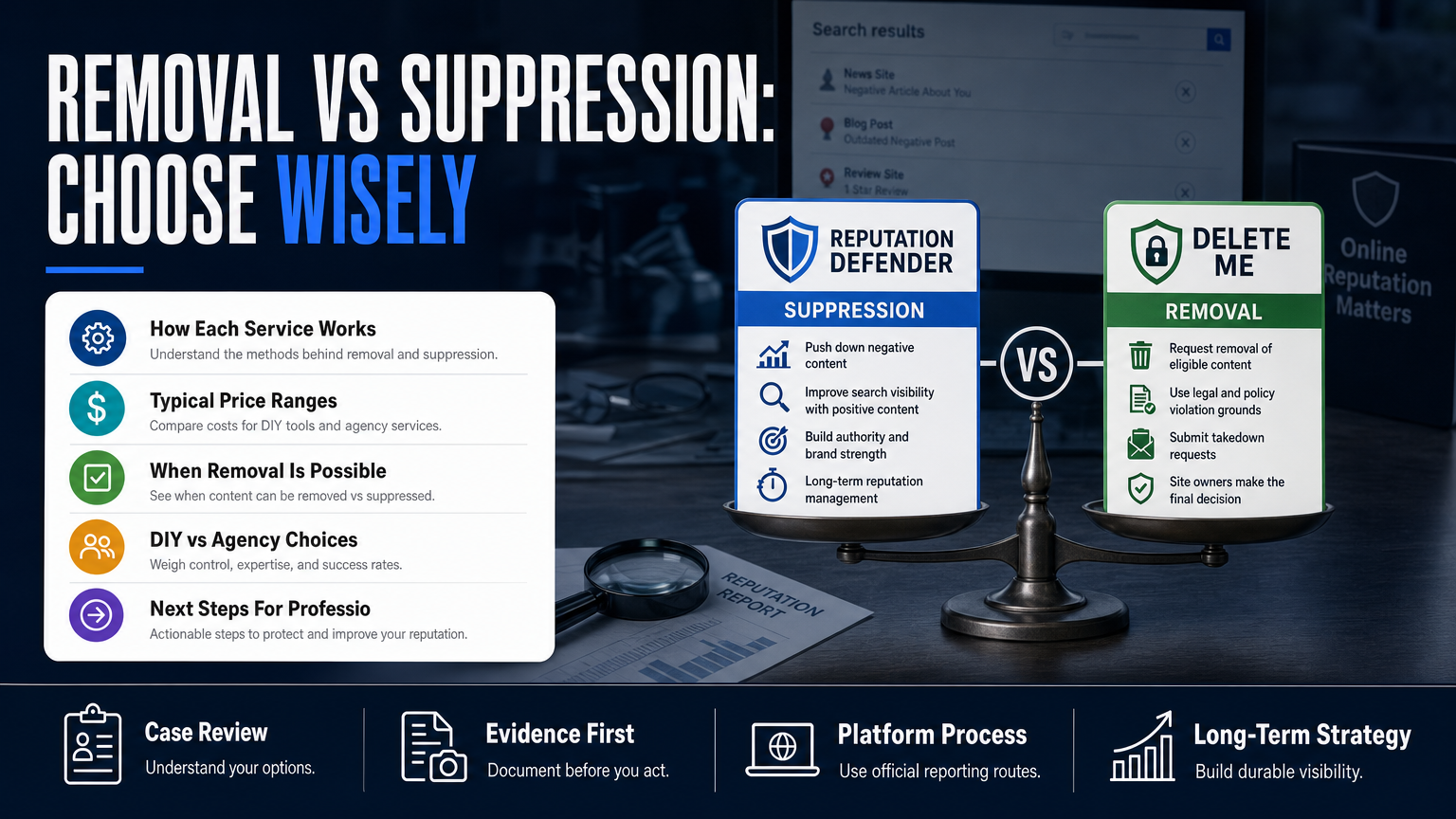
Some content may qualify for removal if it violates platform policies or applicable laws. When removal isn’t possible, strategies such as search suppression and positive content development can help reduce its visibility.
5. How often should I monitor my online reputation?
Businesses should review their online presence regularly. Monthly audits and continuous monitoring help identify potential issues before they become larger reputation problems.
6. Is SEO part of online reputation management?
Yes. Search engine optimization plays an important role by improving the visibility of positive, authoritative content and strengthening your digital presence. However, ORM also includes review management, customer communication, public relations, and brand monitoring.
7. Who needs online reputation management?
ORM benefits:
- Business Owners
- CEOs
- Entrepreneurs
- Doctors
- Lawyers
- Real Estate Professionals
- Public Figures
- Agencies
- Local Businesses
- Growing Brands
Anyone whose reputation influences customer decisions can benefit from a proactive ORM strategy.
8. Why should I hire a professional reputation management agency?
Professional agencies provide experience, proven strategies, advanced monitoring tools, SEO expertise, and customized solutions that help businesses protect and strengthen their reputation more efficiently than handling everything internally.