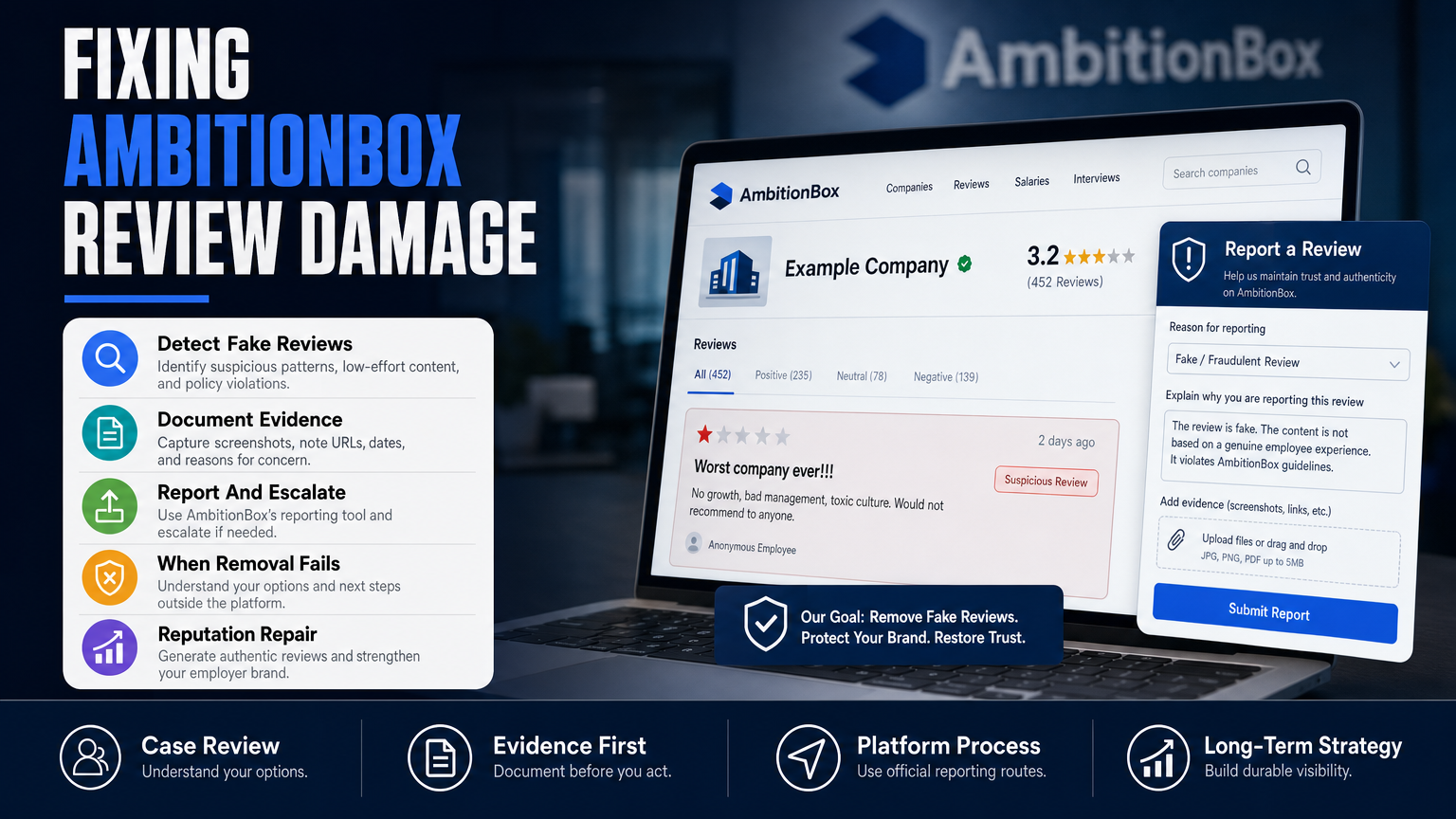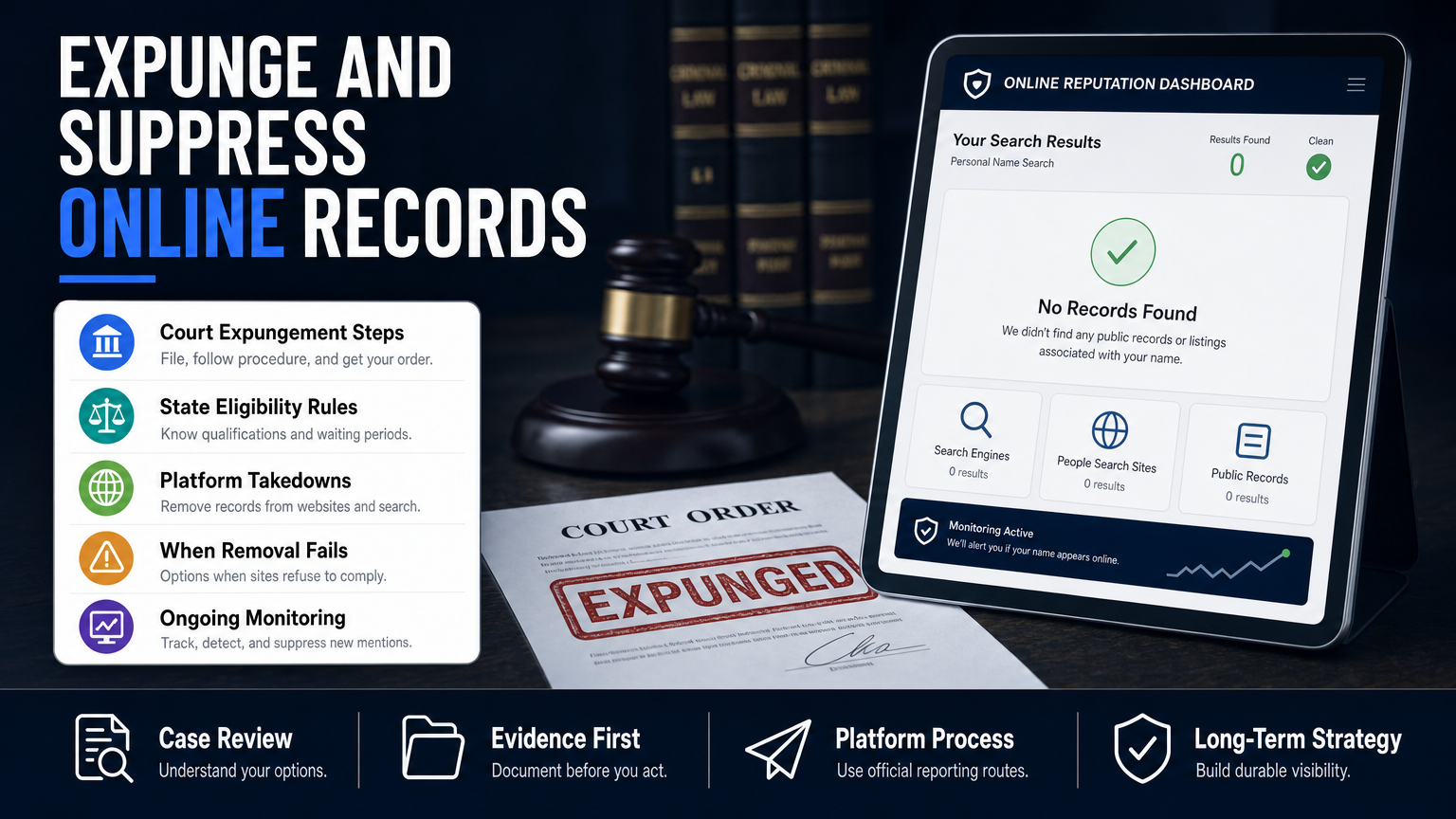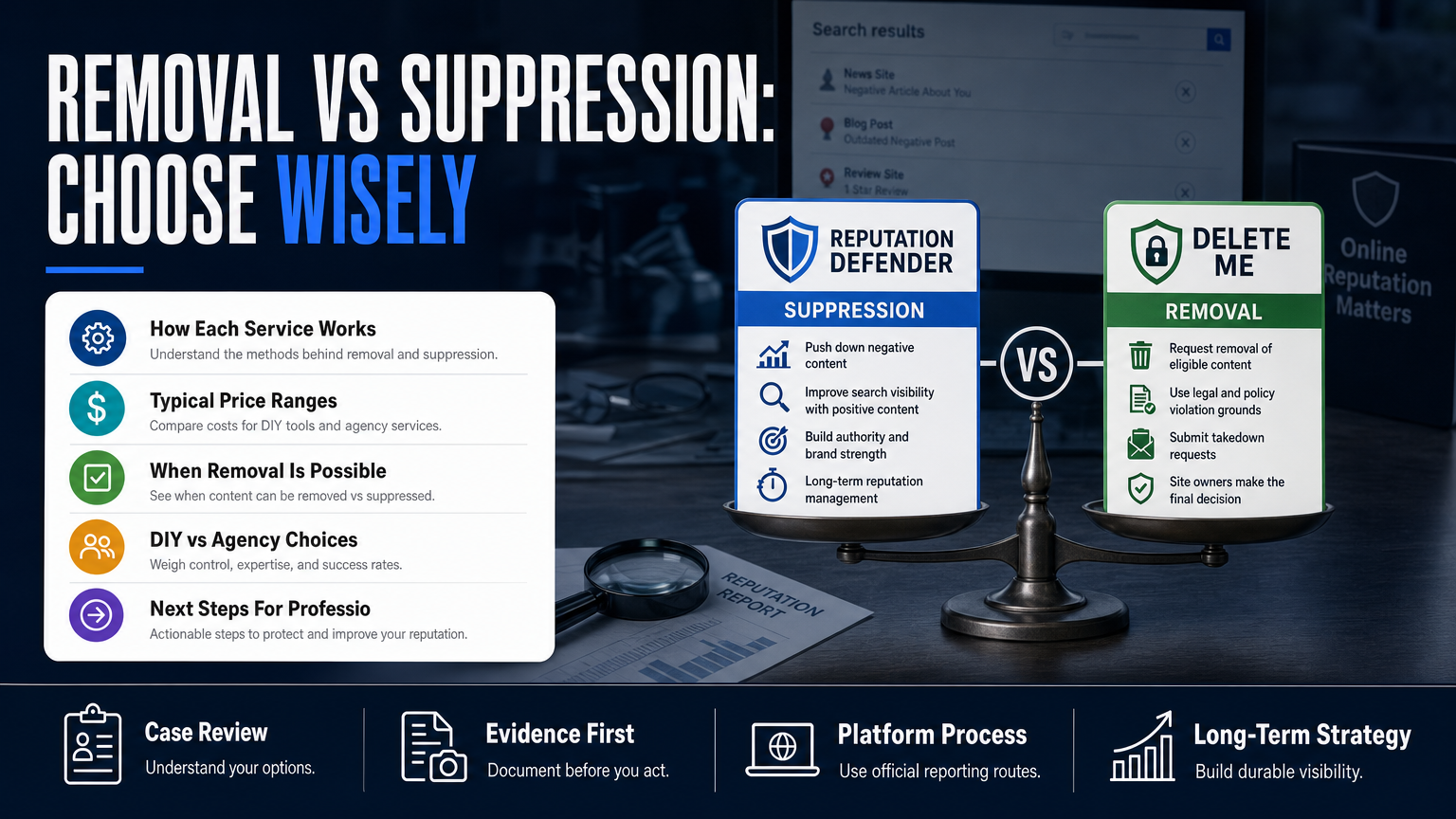
Quick answer: remove defamatory content and protect reputation
Remove defamatory content by preserving the exact statement and context, documenting falsity and harm, requesting correction or deletion, reporting applicable platform violations, and using legal remedies when justified.
Protect reputation with accurate authoritative content, trusted profiles, evidence procedures, monitoring, and a response plan. Seek qualified legal advice for serious continuing harm.
How to Remove Defamatory Content Without Damaging Your Reputation
False statements published online can spread quickly and leave lasting damage to your personal or business reputation. A single defamatory article, review, forum post, or social media comment may influence customers, employers, investors, or business partners before they ever contact you.
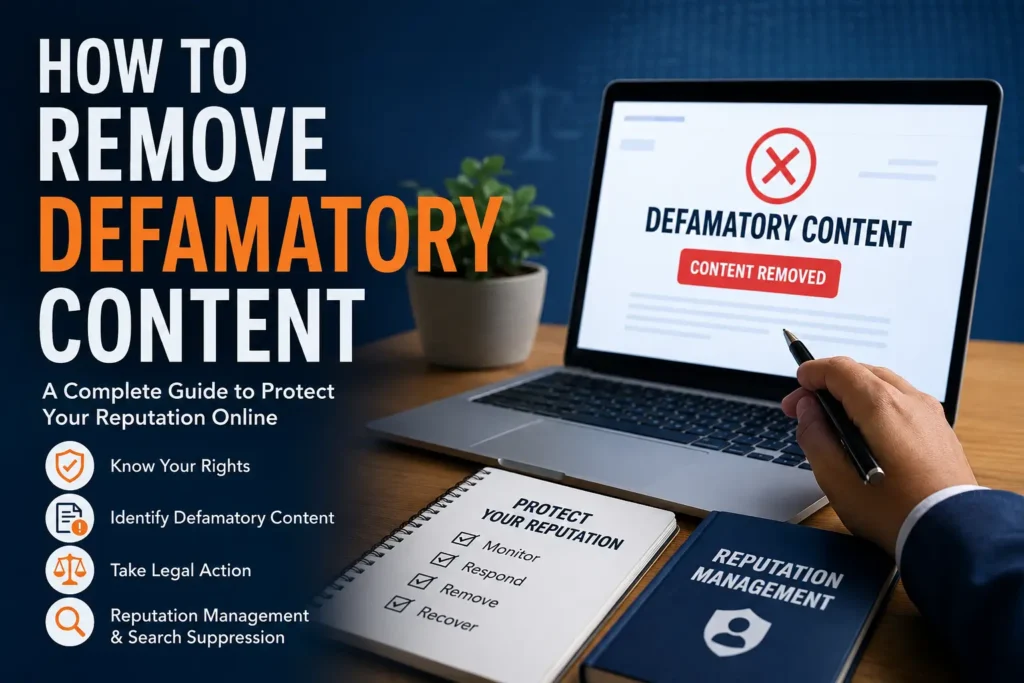
Understanding How to Remove Defamatory Content is the first step toward protecting your digital reputation. While not every negative statement qualifies as defamation, content that is false, harmful, and presented as fact may violate platform policies or applicable laws. The good news is that there are ethical and effective ways to address these situations without making the problem worse.
In this guide, you’ll learn how defamatory content is defined, when it can be removed, what actions you should take first, and when professional online reputation management becomes the most effective solution.
What Is Defamatory Content?
Defamatory content refers to false statements presented as facts that damage the reputation of an individual, executive, or business. Unlike opinions, defamatory statements claim something untrue that can negatively affect trust, credibility, or professional opportunities.
Examples include:
- False accusations of criminal activity
- Fabricated allegations against a business
- Misleading blog articles
- Fake news stories
- False claims published on forums
- Manipulated online reviews based on fabricated events
- Social media posts containing knowingly false information
Not every negative review or critical article is defamatory. Honest opinions, fair criticism, and truthful reporting are generally protected. The key distinction is whether the statement is false, presented as fact, and capable of causing measurable reputational harm.
According to Google’s policies, certain types of harmful or policy-violating content may qualify for removal under specific circumstances, although many disputes must first be resolved with the publisher or through legal channels.
Why Defamatory Content Can Be So Damaging
Today’s consumers research people and businesses before making important decisions. Search engines and AI-powered search experiences often surface publicly available information, meaning false content can influence perceptions almost immediately.
Common consequences include:
- Loss of customer trust
- Reduced sales and business opportunities
- Damage to executive credibility
- Difficulty attracting investors
- Negative media attention
- Lower search visibility for positive content
- Long-term brand reputation issues
For executives and business owners, even one highly visible defamatory page can outweigh years of positive achievements.
This is why many organizations combine legal guidance with strategic reputation management to reduce the visibility and impact of harmful content while strengthening authoritative, trustworthy information online.
Understanding the Difference Between Defamation and Negative Content
One of the biggest misconceptions is assuming every negative mention can be removed.
In reality, there is an important distinction.
Defamatory Content
Defamatory content typically includes:
- False factual statements
- Misleading accusations
- Fabricated evidence
- Intentional misinformation
- Content that causes reputational harm
Legitimate Negative Content
Legitimate negative content may include:
- Honest customer reviews
- Editorial opinions
- Verified news reporting
- Fair criticism
- Personal experiences
Knowing this difference helps determine the most appropriate response. In many situations, content removal is possible. In others, search suppression or reputation improvement strategies may provide better long-term results.
For a detailed comparison, read our guide on Search Suppression vs Content Removal
First Steps to Take Before Requesting Removal
Before contacting a publisher or submitting a removal request, gather clear evidence supporting your claim.
Create a record that includes:
- Screenshots of the content
- URLs where it appears
- Publication dates
- Evidence showing why the statements are false
- Any documents that contradict the allegations
- Records of financial or reputational harm, when applicable
Having organized documentation makes communication with publishers, legal professionals, and online platforms much more effective.
Rather than responding emotionally, approach every situation professionally and objectively. A well-prepared response often leads to better outcomes than immediate confrontation.
Proven Methods for How to Remove Defamatory Content
Once you’ve gathered evidence, the next step is choosing the right removal strategy. The most effective approach depends on where the defamatory content appears, who published it, and whether it violates platform policies or applicable laws.
Contact the Website Publisher
In many cases, the fastest solution is to contact the website owner directly.
Keep your request professional and include:
- The exact URL containing the defamatory content
- A clear explanation of why the information is false
- Supporting evidence
- A polite request to correct or remove the content
Avoid emotional language or threats. Publishers are often more willing to cooperate when approached respectfully with verifiable facts.
Report Content That Violates Platform Policies
Many websites, review platforms, and social media networks allow users to report content that violates their community guidelines.
If the defamatory material includes harassment, impersonation, privacy violations, or fabricated information, the platform may remove it after review.
Google also provides several reporting tools for content that qualifies under specific removal policies. However, Google generally does not remove content simply because it is negative. Instead, it evaluates whether the content violates its published policies.
For Google’s official guidance, visit:
https://support.google.com/websearch
Consider Legal Advice When Necessary
If defamatory content causes significant financial or reputational damage, consulting an attorney may be appropriate.
A legal professional can determine whether the content meets the legal definition of defamation in your jurisdiction and advise whether a takedown request, cease-and-desist letter, or legal action is appropriate.
Every situation is different, so avoid assuming that every negative statement qualifies for legal removal.
When Search Suppression Is the Better Solution
Sometimes the publisher refuses to remove the content, or legal removal is not practical.
In these situations, search suppression can be one of the most effective long-term strategies.
Instead of attempting to delete existing pages, search suppression focuses on improving the visibility of accurate, authoritative, and positive content so harmful pages become less prominent in search results.
This approach is widely used because it works within search engine guidelines and contributes to a stronger long-term digital reputation.
To understand how this strategy works, read our guide:
What Is Search Result Suppression? | Complete Guide
Professional Reputation Management Makes a Difference
Managing defamatory content often requires more than submitting removal requests.
Professional online reputation management combines multiple strategies, including:
- Reputation audits
- Search result analysis
- Content strategy
- Authority building
- Search suppression
- Publisher outreach
- Brand monitoring
- Executive reputation protection
Rather than focusing on a single negative page, experienced reputation specialists evaluate your entire online presence and develop a long-term strategy to strengthen your digital credibility.
Businesses, executives, healthcare professionals, attorneys, and public figures often benefit from this comprehensive approach because their online reputation directly influences public trust.
If you’re a business leader or executive, our CEO Reputation Management Guide explains additional strategies for protecting professional credibility:
Common Mistakes to Avoid
Many people unintentionally make a reputation issue worse by reacting too quickly.
Avoid these common mistakes:
- Responding emotionally on social media
- Threatening publishers without legal advice
- Creating public arguments that attract more attention
- Paying unverified “instant removal” services
- Ignoring defamatory content for months
- Publishing large amounts of low-quality content simply to hide negative results
A thoughtful, strategic response is usually far more effective than reacting impulsively.
Build a Stronger Reputation Before Problems Occur
The best reputation strategy is proactive rather than reactive.
Organizations with strong digital authority are generally more resilient when negative content appears.
Consider investing in:
- Regular reputation monitoring
- High-quality thought leadership content
- Positive media coverage
- Optimized executive profiles
- Consistent brand messaging
- Accurate business listings
- Customer review management
According to the U.S. Federal Trade Commission (FTC), businesses should actively monitor and respond appropriately to online reviews while avoiding deceptive practices that could undermine consumer trust.
Need Professional Help Removing Defamatory Content?
If false online content is affecting your personal reputation or your business, you don’t have to manage the situation alone.
At Your Reputation Agency, we help individuals, executives, and organizations develop ethical, long-term reputation strategies tailored to their specific circumstances. Our team evaluates each case individually and recommends the most appropriate combination of content removal, search suppression, reputation monitoring, and digital brand protection.
Many prospective clients first explore our Google Business Profile and Trustpilot reviews to better understand our client experience and commitment to transparent, professional service.
You can also learn more about our specialized services:
Whether you’re facing false allegations, misleading articles, or damaging online content, taking action early often leads to better long-term outcomes.
Learning How to Remove Defamatory Content begins with understanding that not every negative statement qualifies for removal. The most effective approach depends on whether the content is false, violates platform policies, or meets the legal definition of defamation.
If the content is genuinely defamatory, act promptly. Document the evidence, contact the publisher professionally, report policy violations where appropriate, and seek legal guidance when necessary. If direct removal isn’t possible, ethical search suppression and online reputation management can help reduce the visibility of harmful content while strengthening accurate, trustworthy information.
The sooner you respond, the greater your chances of minimizing reputational damage and protecting your personal or business credibility for the long term.
Protect Your Online Reputation with Your Reputation Agency
Defamatory content can affect customer confidence, professional relationships, career opportunities, and long-term business growth. Taking the right action early is often the difference between a manageable issue and a lasting reputation crisis.
Your Reputation Agency, we provide tailored online reputation management solutions for individuals, executives, professionals, and organizations. Our team develops ethical, data-driven strategies that align with search engine best practices while focusing on sustainable, long-term results.
Our services include:
- Defamatory content strategy
- Search result suppression
- Reputation monitoring
- Executive reputation management
- Google review management
- Digital brand protection
- Crisis reputation management
If you’re dealing with false or misleading online content, our specialists are ready to evaluate your situation and recommend the most effective path forward.
Frequently Asked Questions
1. What is defamatory content?
Defamatory content is false information presented as fact that harms the reputation of an individual or organization. It differs from opinions or truthful reporting because it contains inaccurate factual claims that may cause measurable damage.
2. Can defamatory content be removed from Google?
Google generally does not remove content simply because it is negative. However, if content violates Google’s policies or applicable laws, it may qualify for removal. In many cases, addressing the content with the original publisher is the first step.
3. How long does it take to remove defamatory content?
The timeline varies depending on the platform, publisher, legal circumstances, and complexity of the case. Some requests may be resolved within days, while others require several weeks or months.
4. What should I do if a website refuses to remove false information?
If direct removal isn’t possible, consider legal advice and professional reputation management. Search suppression strategies can also help reduce the visibility of harmful content in search results.
5. Is every negative review considered defamation?
No. Honest customer opinions and truthful experiences are generally protected. Defamation usually involves false factual statements that damage someone’s reputation.
6. Can businesses recover from defamatory online content?
Yes. Many businesses successfully rebuild trust through a combination of content removal efforts, search suppression, reputation management, high-quality content creation, and proactive brand monitoring.
7. Should I respond publicly to defamatory content?
In many situations, responding emotionally can make the issue worse. It’s usually better to gather evidence, evaluate your options carefully, and seek professional advice before taking public action.
8. When should I hire an online reputation management agency?
You should consider professional assistance when defamatory content begins affecting your business, career, executive reputation, customer trust, or search visibility, especially if removal efforts have been unsuccessful.
9. What is search suppression?
Search suppression is an ethical reputation management strategy that improves the visibility of positive, authoritative content so harmful or outdated pages become less prominent in search results.
10. How can Your Reputation Agency help?
Your Reputation Agency provides comprehensive online reputation management services, including reputation assessments, search suppression, executive reputation management, review management, reputation monitoring, and strategic digital brand protection. Every strategy is customized to your specific goals and circumstances.