Quick answer: search suppression versus content removal
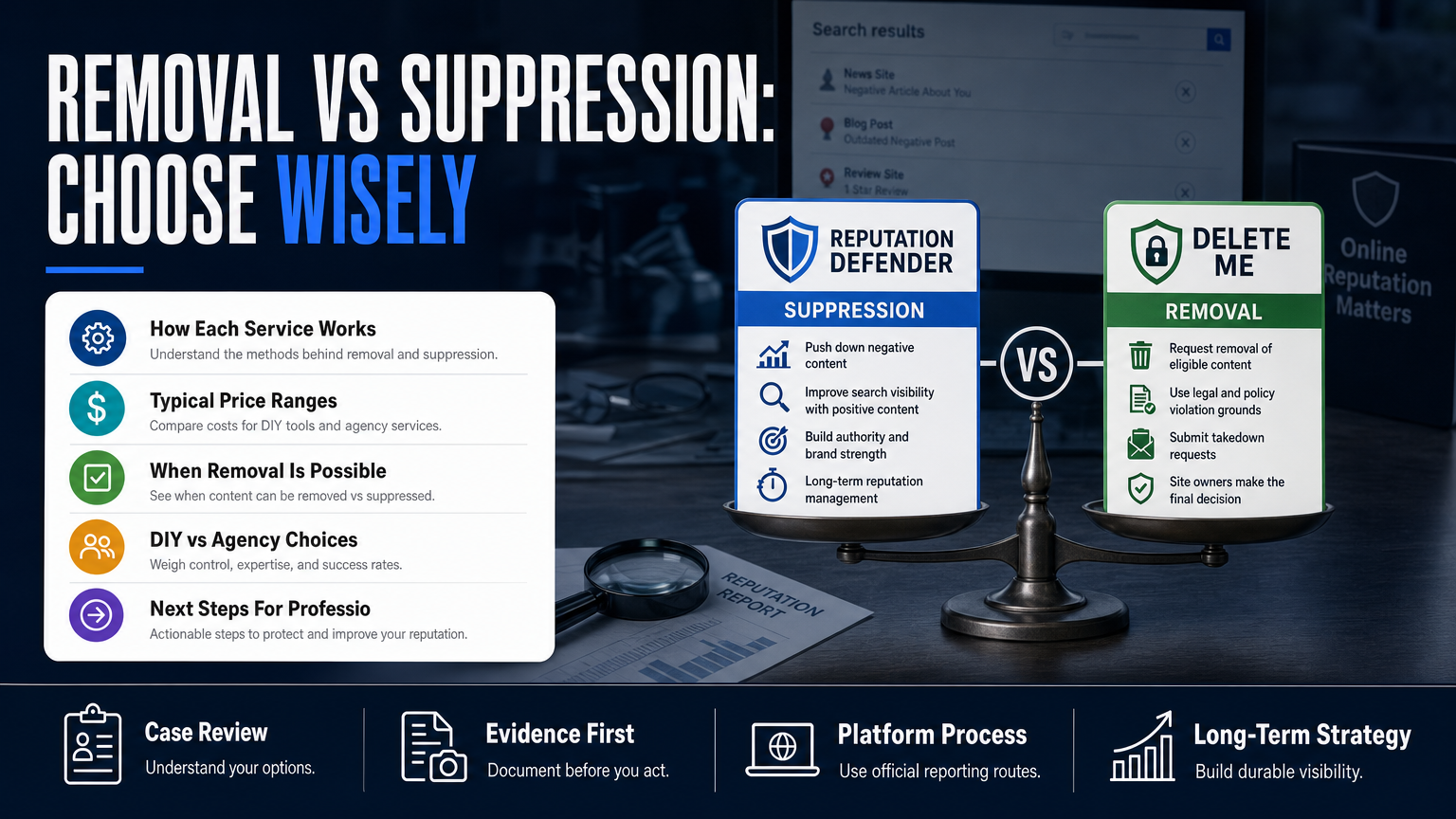
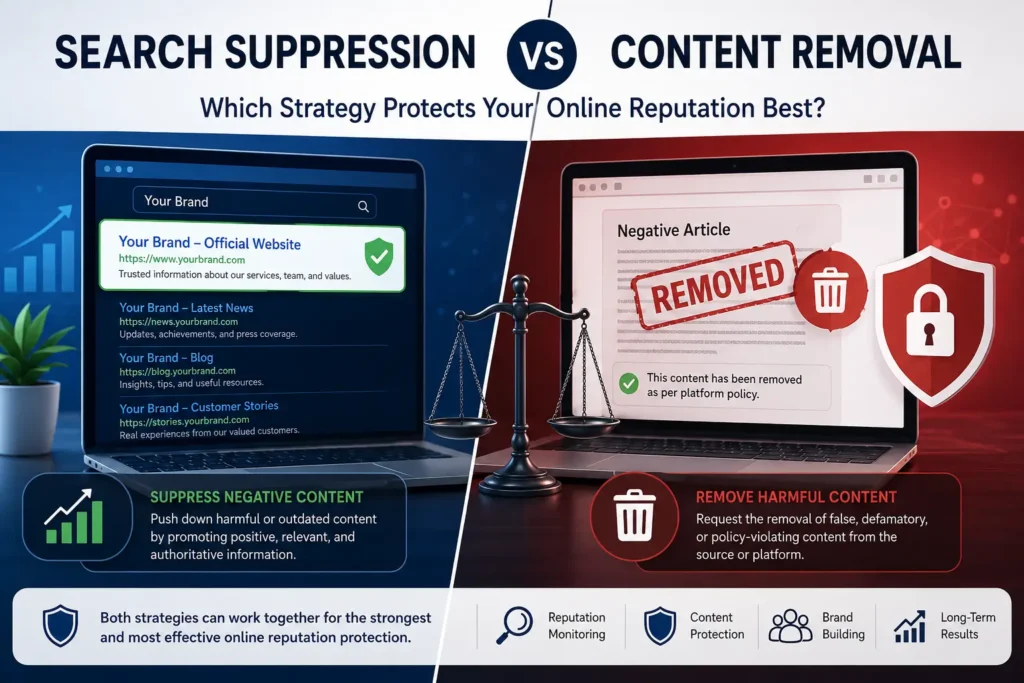
Content removal deletes or de-indexes a specific source when a publisher, platform, search engine, or legal process permits it. Search suppression improves other pages so the harmful result ranks lower.
Removal can be decisive when eligible; suppression is broader and ongoing. The best plan may combine source correction, eligible removal, authoritative content, and monitoring.
Search Suppression vs Content Removal: Which Strategy Protects Your Reputation Best?
Your online reputation influences how customers, employers, investors, and even search engines perceive you. A single negative article, misleading review, or outdated webpage can remain visible for years, affecting opportunities long after the original issue has passed.
When harmful content appears online, many people immediately ask, “Can this be removed?” The answer depends on several factors, including where the content is published, whether it violates platform policies, and if there are legal grounds for removal.
This is where understanding Search Suppression vs Content Removal becomes essential. While both strategies aim to reduce the impact of damaging online content, they work in very different ways and are suitable for different situations.
In this guide, we’ll explain how each approach works, when to use them, and how businesses and individuals can choose the most effective reputation management strategy.
What Is Content Removal?
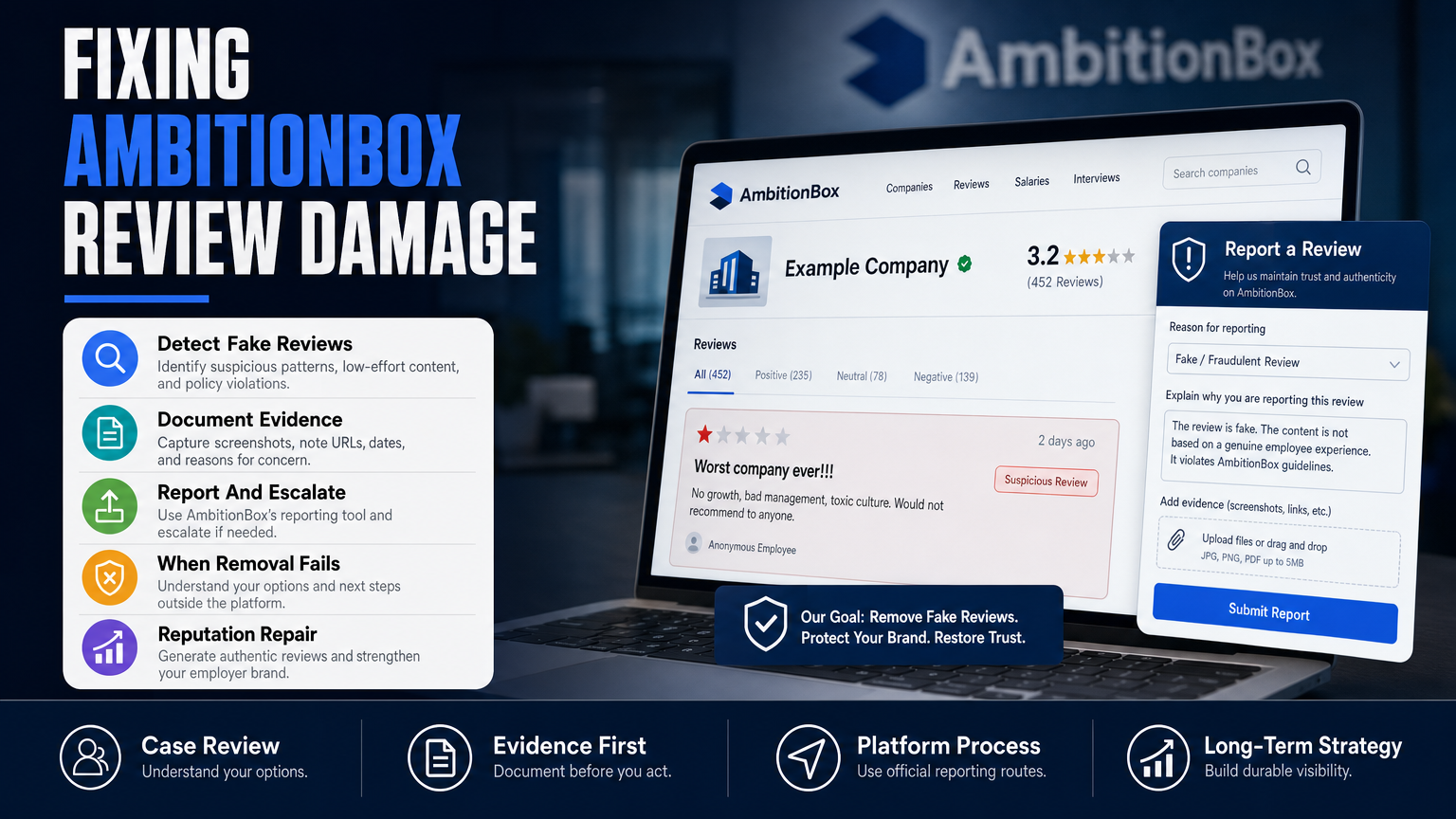
Content removal is the process of requesting that harmful, inaccurate, defamatory, or policy-violating content be taken down from the internet.
Depending on the situation, removal requests may be submitted to:
- Website owners
- News publishers
- Forum administrators
- Social media platforms
- Review websites
- Search engines (where applicable)
Successful content removal usually depends on whether the content violates the platform’s policies, infringes copyright, exposes private information, or contains defamatory material.
It’s important to understand that not all negative content qualifies for removal. If the content is legally published and does not violate any policies, websites are generally not required to delete it.
What Is Search Suppression?
Search suppression is a reputation management strategy designed to reduce the visibility of harmful content rather than removing it completely.
Instead of deleting a webpage, search suppression works by strengthening positive, authoritative, and relevant content so it gradually outranks negative search results in Google and other search engines.
This strategy may include:
- Publishing authoritative content
- Optimizing branded web pages
- Building high-quality backlinks
- Improving entity recognition
- Strengthening positive media coverage
- Expanding trusted online profiles
The goal is simple: make positive and accurate information more visible than outdated or harmful content.
Unlike content removal, search suppression does not rely on the cooperation of the website that published the negative material.
Search Suppression vs Content Removal: The Key Differences
Although these strategies are often discussed together, they solve different problems.
| Content Removal | Search Suppression |
|---|---|
| Removes content from its source whenever possible | Reduces the visibility of harmful content in search results |
| Depends on platform policies or legal grounds | Uses SEO and digital authority to improve positive visibility |
| Can deliver immediate results if approved | Produces gradual, long-term improvements |
| Not always possible | Can be applied in most reputation cases |
| Best for false, defamatory, or policy-violating content | Best for lawful but damaging or outdated content |
Understanding these differences helps businesses choose the right solution instead of wasting time pursuing removal requests that may never succeed.
When Is Content Removal the Best Option?
Content removal is usually the preferred solution when harmful information clearly violates legal standards or platform policies.
Examples include:
- Defamatory or false accusations
- Copyright infringement
- Leaked confidential information
- Non-consensual intimate content
- Doxxing or exposed personal information
- Fake reviews that violate platform guidelines
- Impersonation accounts
- Court-ordered removals
In these situations, taking prompt action often provides the fastest route to protecting your online reputation.
However, successful removal typically requires well-documented evidence and a structured approach rather than simply submitting a basic complaint.
When Is Search Suppression the Better Choice?
Not every piece of negative content can be removed. In many cases, the information is legally published, factually accurate, or protected by editorial policies. This is where Search Suppression vs Content Removal becomes an important decision.
Search suppression is often the better option when:
- Negative news articles remain online
- Old court records appear in search results
- Outdated blog posts continue ranking
- Critical reviews cannot be removed
- Forum discussions damage your reputation
- Competitors publish unfavorable but lawful content
Rather than fighting to delete content that may never be removed, search suppression focuses on improving what people see first. By promoting positive, authoritative content, harmful search results gradually lose visibility and influence.
Can Both Strategies Work Together?
Absolutely.
One of the biggest misconceptions is that you must choose either search suppression or content removal. In reality, the most successful reputation management campaigns often combine both strategies.
For example, if a misleading article violates a publisher’s editorial guidelines, the first step may be to request its removal. While waiting for a response, a search suppression campaign can begin building stronger, positive search results.
This dual approach helps reduce reputational damage immediately while increasing the likelihood of long-term success.
Professional reputation management agencies regularly combine legal review, policy-based removal requests, SEO, digital PR, and content marketing to create a comprehensive reputation recovery strategy.
Real-World Example
Imagine a business owner discovers an old newspaper article ranking on the first page of Google. The story is several years old and no longer reflects the current business, but the publisher refuses to remove it because it was factually accurate when published.
Content removal may no longer be possible.
Instead, a search suppression strategy can help by promoting:
- Updated company information
- Positive news coverage
- Customer success stories
- High-authority business profiles
- Industry publications
- Optimized service pages
Over time, these trusted assets can outrank the outdated article, making it far less visible to potential customers.
If you’re dealing with outdated media coverage, our guide on How to Remove Online News About Yourself provides additional insights
Factors That Determine the Right Strategy
Every reputation issue is different, so there isn’t a universal solution. Before deciding between Search Suppression vs Content Removal, experienced reputation professionals evaluate several factors:
Source Authority
Content published by major news organizations usually requires a different approach than posts on small blogs or forums.
Legal & Policy Considerations
Some content may violate privacy laws, copyright, or platform guidelines, making removal possible.
Search Visibility
If harmful content ranks highly on Google, suppression may provide faster and more practical results.
Reputation Impact
A single negative article affecting customer trust requires a different strategy than multiple low-visibility mentions.
Long-Term Goals
Businesses often benefit from ongoing reputation management rather than focusing only on removing one specific page.
A professional assessment helps determine which combination of strategies offers the highest chance of protecting your online reputation while delivering sustainable results.
Need Professional Help?
Every online reputation challenge is unique, and choosing the wrong strategy can waste valuable time.
At Your Reputation Agency, we help individuals, executives, and businesses evaluate whether content removal, search suppression, or a combination of both is the most effective solution.
Our team develops ethical, customized reputation management strategies designed to protect your credibility while strengthening your digital presence.
You can also learn more about why proactive reputation protection matters by reading our guide:
Why Reputation Management Matters for Business Growth
Why Professional Reputation Management Matters
Managing harmful online content is about more than protecting search rankings. It is about protecting trust.
Customers, employers, investors, and journalists often make decisions based on the first page of search results. Even one misleading article or outdated webpage can influence how your business or personal brand is perceived.
Professional reputation management combines strategic planning, technical expertise, and ethical practices to reduce reputational risk while strengthening positive online visibility. Instead of reacting after damage occurs, proactive reputation management helps create a stronger and more resilient digital presence for the future.
Search Suppression vs Content Removal: Which One Is Right for You?
Choosing between Search Suppression vs Content Removal depends on the nature of the content and your long-term objectives.
Generally, content removal is the best option when information clearly violates legal standards, privacy rights, or platform policies. Search suppression is often more effective when content cannot be removed but still negatively impacts your reputation.
In many situations, combining both strategies delivers the strongest results. An experienced reputation management team can evaluate your situation, identify available options, and recommend the most effective course of action.
If your situation involves public records, you may also find our Court Record Removal Services helpful.
If harmful caller ID comments are affecting your personal or business reputation, learn more about our Mr Number Comments Removal Services.
Why Clients Trust Your Reputation Agency
Reputation challenges require discretion, experience, and a long-term strategy. At Your Reputation Agency, we work with executives, business owners, professionals, and organizations that understand how valuable trust has become in today’s digital world.
Clients choose us because we provide:
- Confidential reputation assessments
- Customized reputation strategies
- Ethical and transparent practices
- Search suppression and content removal expertise
- Long-term online reputation management
- Ongoing monitoring and strategic guidance
Our goal isn’t simply to reduce the visibility of harmful content—it is to help clients build stronger digital credibility that supports lasting success.
We are also proud that many clients share their experiences through our Trustpilot reviews and Google Business Profile, providing independent feedback about our professionalism and client-focused approach.
Ready to Protect Your Online Reputation?
If negative search results, misleading articles, or damaging online content are affecting your reputation, acting early can make a significant difference.
At Your Reputation Agency, we provide professional Online Reputation Management Services designed to help individuals, executives, and businesses evaluate the best solution—whether that’s search suppression, content removal, or a comprehensive reputation management strategy.
Contact our team today for a confidential consultation and discover how we can help you regain control of your online reputation before a small issue becomes a larger challenge.
- Contact Your Reputation Agency
- Reputation Management Services
- Remove Online News Articles
- Court Record Removal Services
Frequently Asked Questions
1. What is the difference between Search Suppression vs Content Removal?
Content removal aims to delete harmful content from its original source, while search suppression reduces the visibility of that content by improving the rankings of positive and authoritative pages.
2. Can all negative content be removed from Google?
No. Google generally indexes content published by other websites. Unless content violates Google’s policies or legal requirements, removal may not be possible. In many cases, search suppression is the more practical solution.
3. How long does search suppression take?
Search suppression is a long-term SEO strategy. Depending on competition and the authority of existing search results, noticeable improvements may take several weeks to several months.
4. Is content removal guaranteed?
No ethical reputation management company can guarantee content removal. Success depends on publisher policies, applicable laws, and the specific circumstances of each case.
5. Which strategy is better for businesses?
Businesses often benefit from combining search suppression with content removal whenever possible. This approach protects both short-term reputation and long-term search visibility.
6. Can reputation management help with negative news articles?
Yes. Depending on the situation, a combination of removal requests, search suppression, SEO, and digital PR may reduce the visibility and impact of negative news coverage.
7. How do I know which solution is right for my situation?
A professional reputation assessment can determine whether your case is best suited for content removal, search suppression, or a combination of both strategies.
8. Why should I hire a professional reputation management agency?
Experienced professionals understand search engine behavior, publisher policies, legal considerations, and ethical SEO practices. A strategic approach increases the likelihood of protecting and improving your online reputation while avoiding unnecessary risks.