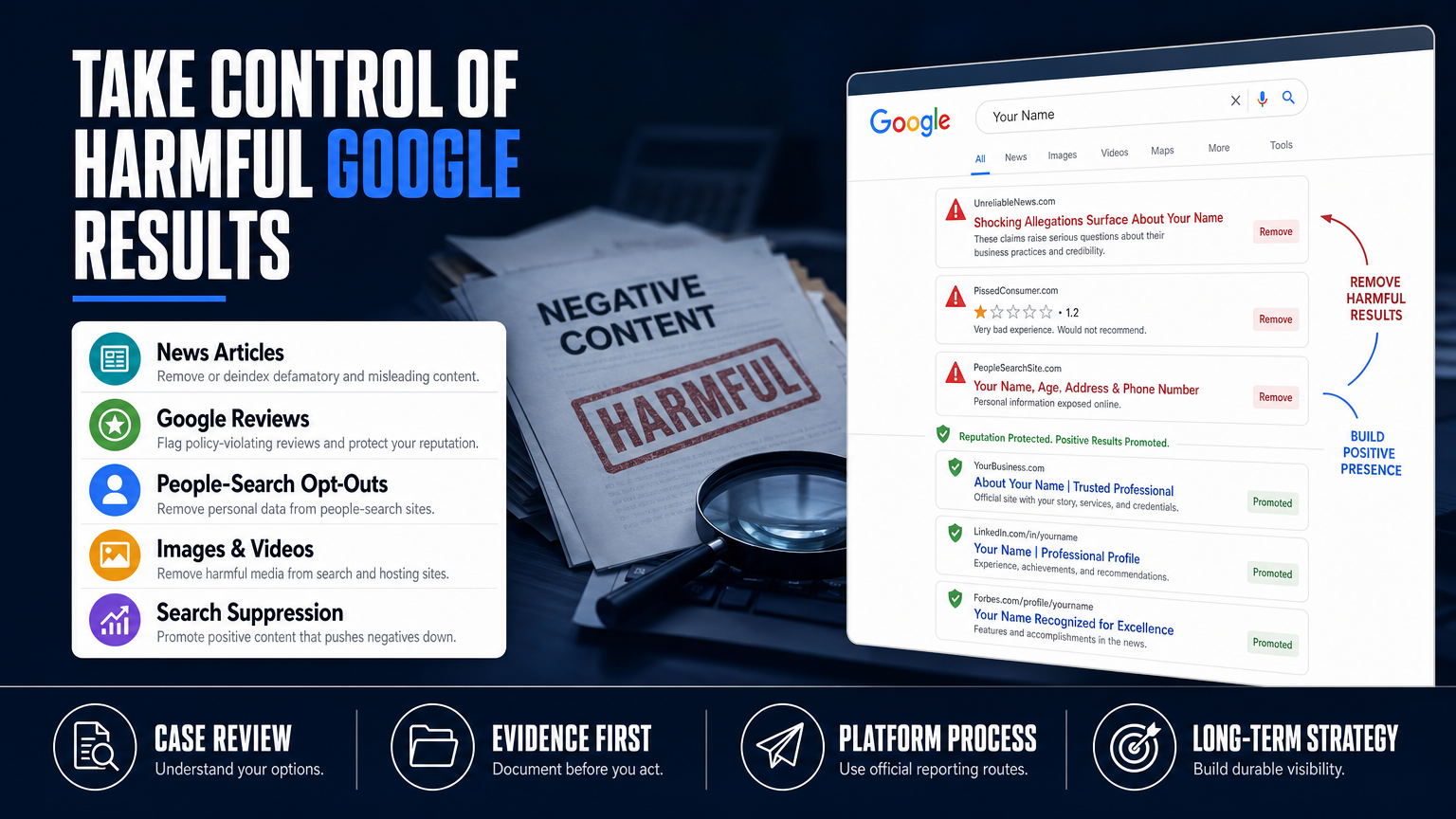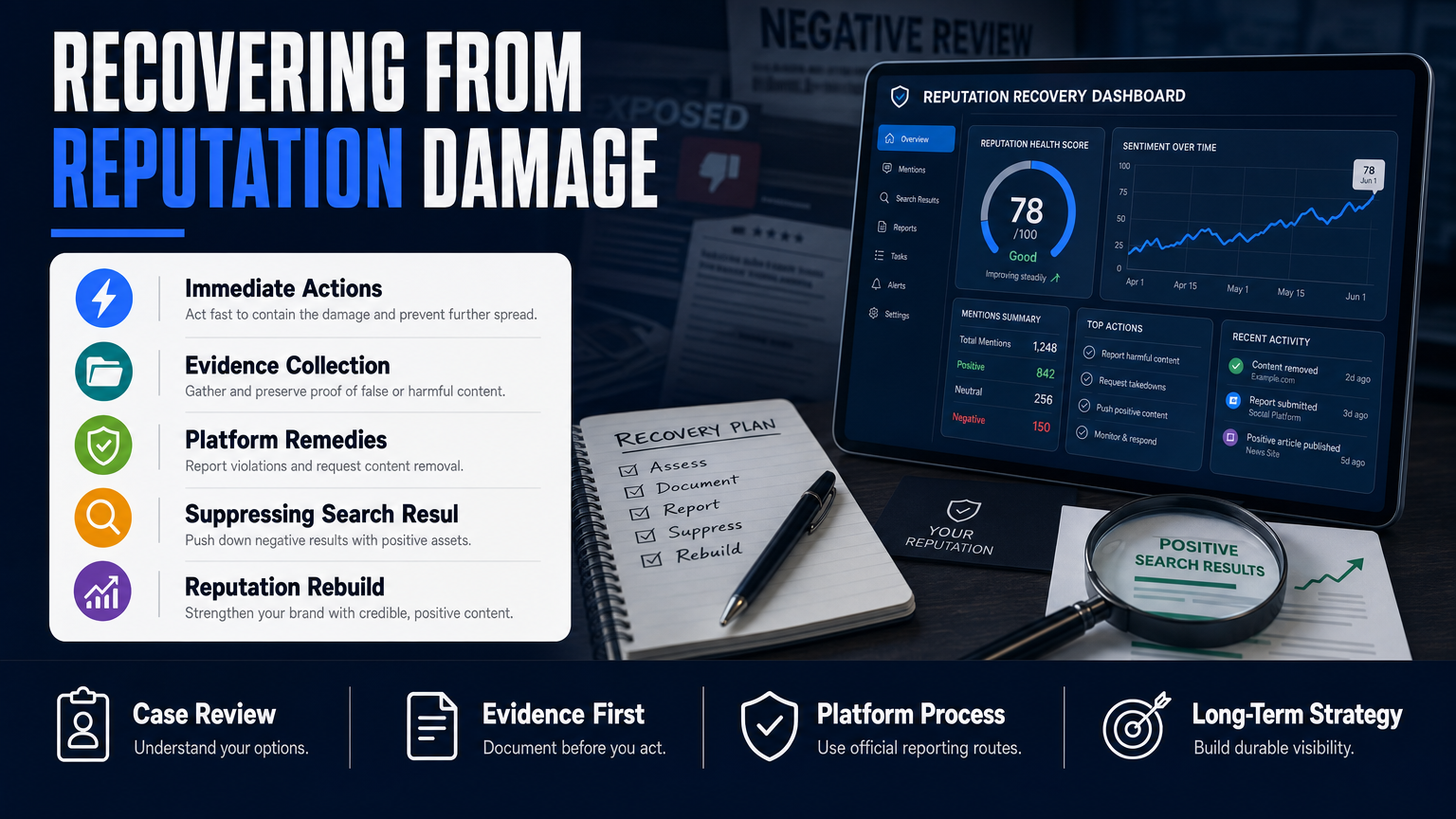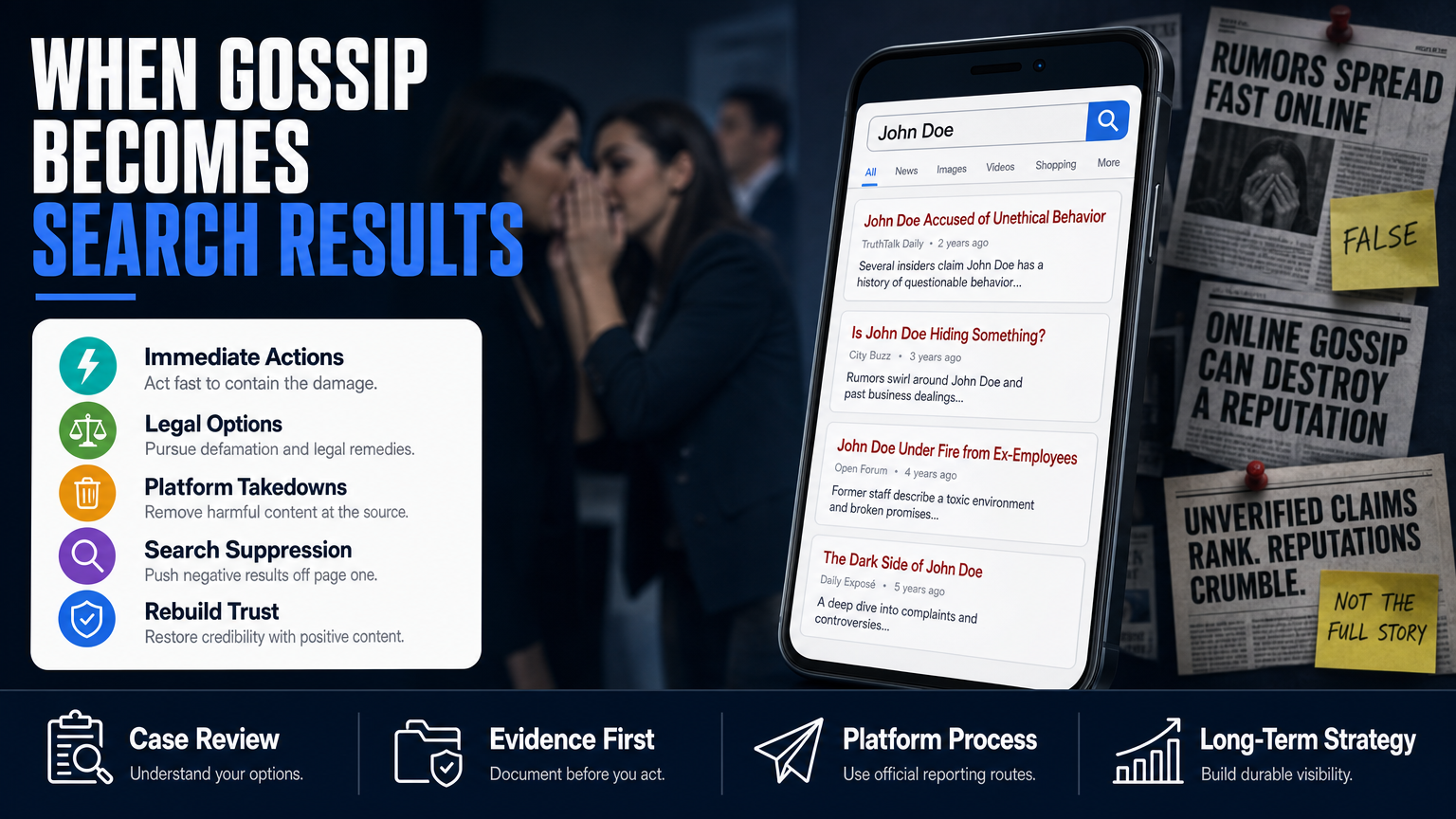
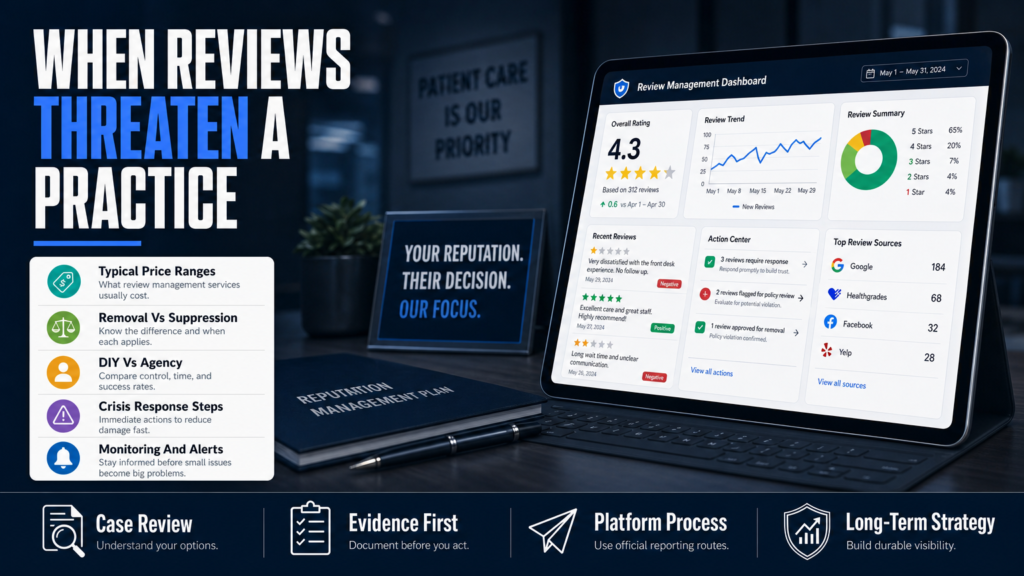
You opened this because a review, a short thread, or a bad Google result is costing appointments, contracts, or trust. Review management services are the industry answer to that exact problem — they mix platform takedowns, SEO suppression, review responses, and crisis coordination to limit damage and restore credible information.
This article explains how review management services operate, what realistic cost ranges look like, when removal may be possible, and what to do when removal is not available. You’ll get platform‑specific actions, a clear DIY vs agency comparison, and concrete next steps you can start today.
If you’re a physician, lawyer, hospital manager, restaurateur, or small business owner facing a damaging review or a sudden burst of negative ratings, this guide shows which tactics work for Google, Yelp, TripAdvisor, industry sites, and data‑broker listings — and how agencies coordinate legal and PR channels when needed.
Table of Contents
- How review management services work: channels and tactics
- How much do reputation and review management services typically cost?
- Can you really get paid to review products?
- Is ReviewFame (and similar services) legit?
- What companies pay you to write reviews — the landscape
- When removal is not available: mitigation and suppression strategies
- DIY vs agency: what to handle in‑house and what to outsource
- Rapid response for viral reviews and review‑bombing
- DIY vs Agency: Quick Comparison
- Hypothetical case: Clinic hit by a defamatory review and a local blog post
- Common mistakes companies make with reviews
- Best practices for managing reviews over the long term
- Expert Tips
- Conclusion
- Why Businesses Choose Your Reputation Agency
- Frequently Asked Questions
How review management services work: channels and tactics
Review management services combine four core tactics: (1) platform reporting and policy escalation, (2) legal review and written demands where appropriate, (3) search‑engine suppression (SEO) to push negative links down, and (4) proactive reputation building and review generation to restore balanced ratings.
We evaluate whether the content may qualify for removal or review, pursue the legal, technical, platform‑based, and reputational options available, and provide monitoring so you know when a result changes.
- Step 1: Triage — identify the platforms, the content type (review, article, image), and whether it’s factual, opinion, or potentially defamatory.
- Step 2: Evidence collection — archive the page, save screenshots, and capture metadata (URL, author, timestamps).
- Step 3: Platform takedown attempt — submit reports per the platform’s policy and follow the escalation path.
- Step 4: Mitigation — begin SEO and content creation to suppress the negative results while coordinating legal/PR if necessary.
- Step 5: Monitor and iterate — track visibility and continue outreach or legal steps as advised.
- Platform reporting: use platform policies for harassment, impersonation, spam, or privacy violations.
- Legal coordination: send DMCA or cease‑and‑desist letters when applicable, and coordinate with your counsel if defamation may apply.
- SEO suppression: create authoritative pages and profiles that outrank the negative item.
- Review strategy: request legitimate reviews from verified customers following platform rules.
- Monitoring: set alerts for new reviews, mentions, and changes to search results.
Platform escalation paths (common places to look)
Different platforms have different reporting options and evidence thresholds. For example, Google provides a ‘remove content’ flow for harassment and privacy violations; Yelp requires proof for business owner appeals; TripAdvisor and industry listing sites often have business support portals.
Use the platform’s official processes first — platform decisions remain under the platform’s control, and successful outcomes usually follow documented policy violations.
- Google Business Profile → owner responses, privacy reports, and legal removal forms.
- Yelp → owner response, ‘business owner support’, and content flagging for TOS violations.
- Industry sites (medical boards, licensing directories) → direct contact or legal notice may be necessary.
How much do reputation and review management services typically cost?
Pricing varies with scope, risk, and urgency. Below are typical ranges and what they buy. Timing depends on the platform, publisher, evidence, legal complexity, and search‑engine behavior, so budgets should factor in multi‑month engagements.
If you need to justify spend internally, include both the operational cost (hourly or project) and the opportunity cost of lost business. For medical practices, see how a single review can cascade into lost bookings in What One-Star on Google Can Cost a Medical Practice.
- Estimate risk: count traffic, lost conversions, and regulatory exposure.
- Obtain a scoped proposal: ask for itemized deliverables, escalation paths, and an estimated timeline range.
- Build in contingency: complex removals or litigation increase costs.
- Single-issue takedown request (one review or post): $250–$1,500 one‑time, depending on research and escalation.
- Standard monthly management (monitoring, response templates, SEO suppression): $700–$3,000/month.
- Crisis rapid response (24–72 hour mobilization with PR/legal coordination): $3,000–$15,000+ initial retainer depending on the team involved.
- Comprehensive long‑term program (annual suppression, continuous monitoring, review generation): $18,000–$80,000/year depending on volume and complexity.
- Legal costs (outside agency): attorney fees vary—retain counsel for defamation or subpoenas; agencies coordinate but do not provide legal representation.
What affects price
Complexity drives cost: impersonation, doxxing, or multimedia takedowns (video) require more work than a single fake review. Evidence availability, the publisher’s jurisdiction, and whether legal coordination is needed are big factors.
Turnaround expectations (e.g., urgent 24‑hour response) increase fees because they require senior staff and prioritized access to legal and PR resources.
- Number of affected pages and platforms
- Need for legal demands or subpoenas
- SEO workload to suppress multiple links
- Urgency and 24/7 response needs
Can you really get paid to review products?
Yes — there are legitimate programs that compensate reviewers, but there are strict rules and material disclosure requirements. Paid product review programs are common for bloggers, influencers, and reviewers, but they must comply with FTC guidelines requiring clear disclosure of payment or free products.
Professionals should be cautious: accepting payment to review in fields regulated by licensing boards (medicine, law, real estate) can create ethical issues or violate platform terms.
- If you consider paid reviews: confirm disclosure rules, platform TOS, and any licensing‑board ethics rules that apply to your profession.
- Keep documentation of contracts and disclosures to defend against platform or regulatory inquiries.
- Legitimate paid opportunities include affiliate programs, sponsored reviews with disclosure, and product testing panels.
- Micro‑tasks or incentive platforms that reward reviews without disclosure can violate platform terms and the FTC’s endorsement rules.
- Never use paid reviews to falsify business ratings; platforms ban incentivized reviews that are not clearly disclosed per their policy.
How to find reputable paid review work
Look for audited panels, established review sites that list compensation transparently, and opportunities that require product testing rather than anonymous star‑ratings.
Avoid services that promise inflated five‑star reviews in exchange for payment — those are typically against platform rules and can lead to penalties.
- Check for FTC disclosure language in the program materials
- Prefer programs that route payment via invoices or verifiable platforms
- Avoid offers that ask you to post fake positive reviews on major platforms
Is ReviewFame (and similar services) legit?
Third‑party services vary widely. Some provide legitimate review solicitation platforms and monitoring tools; others may offer gray‑market tactics that risk platform penalties. Each service should be evaluated by its transparency, TOS compliance, and client references.
We do not endorse specific third parties. Always verify whether a service encourages any activity that could violate platform terms (fake reviews, review swapping, undisclosed incentives).
- Step 1: Ask for a written description of their review‑generation process.
- Step 2: Request references and examples of work in your industry.
- Step 3: Confirm they follow FTC disclosure rules and platform TOS.
- Markers of a legitimate provider: clear disclosure of methods, documented processes for consented review solicitation, and a willingness to explain compliance with FTC and platform policies.
- Red flags: promises to ‘guarantee’ five‑star ratings, use of fake accounts, or requests to post reviews in exchange for payment without disclosure.
What to do if a vendor used risky tactics
If a white‑label partner or vendor used questionable review tactics, preserve evidence and consider correcting the record with the platform and clients. See the risks when third parties mishandle reviews in When White‑Label Partners Leave You With Google Reviews.
An agency can help unwind the problem by documenting the vendor’s actions and engaging platforms with corrective evidence.
- Audit the vendor’s activity logs
- Collect saved communications and payment records
- Prepare a corrective statement for platforms if necessary
What companies pay you to write reviews — the landscape
Companies that pay reviewers range from product testing sites and affiliate platforms to market research firms. Major retailers and brands occasionally run vetted reviewer programs, but legitimate programs require disclosure and often tax reporting.
Platforms that list paid review work should be vetted carefully; legitimate firms will not ask reviewers to post undisclosed, incentivized five‑star reviews on major review platforms.
- Research the company offering payment, look for clear program terms, and confirm disclosure obligations.
- If in a regulated profession, check with your licensing board before accepting paid review work.
- Market research panels and product testing companies (compensated focus groups, sampled product tests).
- Affiliate and influencer programs that compensate for content and require disclosure.
- Retailers with official reviewer programs that provide discounts or freebies in exchange for honest reviews.
How to verify a paid‑review opportunity
Ask for the program contract, sample disclosure language, and whether the company has public testimonials from other reviewers.
Avoid programs that insist on anonymity or that instruct you to post on platforms with fabricated identities.
- Ask for contactable references
- Confirm whether payments are declared on 1099 or other tax forms
- Insist on written disclosure examples
When removal is not available: mitigation and suppression strategies
Removal depends on the content, publisher, platform policies, evidence, jurisdiction, and circumstances. If platform removal is denied or the content is on an uncooperative publisher, the primary options are mitigation (correction, counter‑publication) and suppression (SEO to push content down).
We develop SEO reputation strategies intended to improve the visibility of relevant and credible information, but search results may change because algorithms, competitors, publishers, and user behavior are outside our control.
- Step 1: Identify which pages are ranking and why (backlinks, anchors, domain authority).
- Step 2: Create a prioritized content plan: high‑authority pages first (LinkedIn, Better Business Bureau, press outlets), then microsites and blog posts.
- Step 3: Monitor SERP movement and adjust keywords and link building.
- Correction: contact the publisher for updates or corrections with documented evidence.
- Context: publish your response on authoritative channels, such as your practice website or a press release.
- Suppression: create and optimize high‑authority pages (staff bios, news coverage, professional profiles) to outrank the negative item.
- Review rebuilding: encourage legitimate, clearly disclosed reviews from recent clients to dilute the impact.
Quick suppression checklist
Prioritize owned assets you can publish quickly (practice site pages, staff bios, Google Business Profile), then move to earned media (local press, industry associations).
Suppression is a process; an estimated timeline can be provided after an individual assessment, and some cases may begin to show changes within a general estimated range.
- Update and optimize Google Business Profile and key website pages
- Publish a clear, factual statement if appropriate
- Earn local press coverage or citations to authoritative directories
- Generate legitimate customer reviews within platform rules
DIY vs agency: what to handle in‑house and what to outsource
Some businesses can handle basic review responses, reporting, and routine monitoring in‑house. Higher‑risk matters (defamation concerns, doxxing, video takedowns, or coordinated review‑bombs) typically require agency coordination with legal and PR resources.
Below is a side‑by‑side comparison to help decide whether to escalate to a specialist.
- If you can’t confidently map an escalation path, document evidence, or engage in cross‑platform suppression, consider an agency engagement.
- Request a scoped proposal that lists deliverables, escalation steps, and communication cadence before you sign.
- Do‑it‑yourself strengths: lower cost, immediate responses, internal knowledge of clients and operations.
- Agency strengths: platform experience, legal and PR coordination, SEO suppression expertise, and 24/7 rapid response teams.
Essential tasks to keep in‑house
Routine review responses, client outreach for legitimate reviews, and basic monitoring can be managed internally with clear policies and staff training.
For regulated professionals, have a legal review step before publishing responses that could disclose client details.
- Daily monitoring and flagging of new negative reviews
- Standardized response templates approved by legal
- Documenting client permission to contact reviewers
When to hire an agency
Hire an agency when removal is complex, content is spreading across platforms, or you need coordinated SEO and PR work. Agencies also fill 24/7 crisis windows and liaise with counsel and publishers.
If your business relies on steady bookings or licensure, the costs of delay often outweigh the engagement fee.
- Coordinating takedowns across multiple platforms
- Multiplatform SEO suppression campaigns
- Legal and PR escalation for high‑risk cases
Rapid response for viral reviews and review‑bombing
A viral negative review may require an immediate multidisciplinary response: platform reporting, public statement planning, and search suppression. Rapid responses prioritize containment — slowing the spread while preparing corrections and outreach.
For worst‑case scenarios like coordinated review‑bombs, an agency can implement temporary measures (blocking new reviews via platform features where possible) and begin review acquisition in unaffected channels.
- Hour 0–24: Triage and evidence collection; activate crisis contacts.
- Day 1–3: Platform reporting and controlled external communication with counsel/PR.
- Week 1–4: Deploy suppression strategy and begin sustained review acquisition.
- Immediate actions: archive and timestamp the content, issue an internal holding statement, and start platform reporting.
- Short term: optimize owned pages, publish a clear factual response, and alert key referral partners and insurers if revenue risk is substantial.
- Medium term: SEO suppression and earned media to reduce the review’s visibility.
Example escalation playbook
A clear checklist ensures speed and consistency: preservation, platform report, legal review of the content, public messaging, and SEO suppression priorities.
If you manage hospitality, travel, or retail operations, consider specific playbooks — for a hospitality example of rapid reputational fallout, read When One Viral Google Review Can Empty A Hotel’s Bookings.
- Preserve the content and screenshots
- Assign a single internal spokesperson
- Prepare a measured public response that corrects facts without admitting liability
- Launch SEO and review replenishment concurrently
DIY vs Agency: Quick Comparison
Choose the right approach based on risk, scale, and urgency.
| DIY | Agency |
|---|---|
| Cost | Higher upfront, scoped fees |
| Speed | Faster for complex escalations |
| Legal coordination | Coordinates counsel and written demands |
| SEO suppression | Specialized multi‑channel campaigns |
| Monitoring | 24/7 alerts and incident teams |
| Platform relationships | Experienced escalation paths |
Hypothetical case: Clinic hit by a defamatory review and a local blog post
Scenario: A small surgical clinic receives a one‑star review from a patient making false factual claims about sterilization practices. A local blog republishes the review and adds commentary, amplifying reach and causing immediate appointment cancellations.
Process: below is a step‑by‑step example of how review management services would respond. This is a hypothetical scenario to illustrate the workflow — not a real client case.
- Step 0 — Triage: archive the review and the blog post, capture timestamps, and log referrals. Notify the clinic’s counsel.
- Step 1 — Platform reporting: submit the review to the platform with evidence that it contains demonstrably false factual statements (if evidence supports that claim). Use Google Business Profile and the blog’s contact form to request correction or removal.
- Step 2 — Legal/PR coordination: if counsel advises, send a targeted legal demand to the blog publisher documenting inaccuracies and requesting correction; prepare a factual public statement for the clinic’s website and Google Business Profile.
- Step 3 — Suppression & rebuild: optimize clinic website pages, publish staff bios and procedure explanations, secure local press coverage correcting facts, and start a legitimate review solicitation campaign for recent verified patients.
- Step 4 — Monitoring and follow‑up: watch search results and platform responses; if removal is achieved, confirm and document; if not, continue suppression while counsel evaluates further legal options.
- Immediate impact: drop in weekly bookings, concerned staff, and a social post spreading the link.
- Primary goals: contain spread, correct factual inaccuracies, preserve licensure protections, and restore patient confidence.
Common mistakes companies make with reviews
Avoid these frequent errors — they prolong damage and sometimes make platforms less likely to cooperate.
Mistake 1: Over‑reacting publicly
Posting an angry or defensive reply can escalate the situation and provide new material for critics. Responses should be calm, factual, and compliant with privacy rules.
When a matter may involve patient or client privacy, consult counsel before responding publicly.
- Draft responses using neutral language
- Avoid admitting fault or repeating allegations verbatim
Mistake 2: Using fake or paid reviews to retaliate
Buying or fabricating positive reviews is a short‑term illusion that violates platform policies and can result in penalties or removal of your listings.
Legitimate review acquisition always follows platform rules and FTC guidelines.
- Don’t use undisclosed incentives for positive reviews
- Use verified solicitation methods and document consent
Mistake 3: Failing to preserve evidence
Platforms and publishers may change content; if you plan to escalate, archive everything immediately (screenshots, page source, and scraped metadata).
Lack of evidence can dramatically limit legal and platform options.
- Use time‑stamped screenshots and archive services
- Log communications with the reviewer or publisher
Mistake 4: Ignoring the SEO dimension
Treating a negative review as only a customer service issue misses the visibility problem. If the review ranks on page one, it will continue to cause harm until suppressed or corrected.
Combine response and takedown attempts with a suppression plan.
- Optimize positive content and owned pages
- Earn authoritative citations to outrank negatives
Mistake 5: Not coordinating with counsel when facts are disputed
If a review contains factual allegations that could affect licensure or legal exposure, bring in legal counsel early. An unvetted public response can create additional liability.
An agency should coordinate with counsel rather than act alone in these circumstances.
- Delay public statements until legal review when necessary
- Document all internal findings and communications
Best practices for managing reviews over the long term
Durable reputation resilience is a mix of prevention, rapid response, and consistent visibility work. The following subsections are practical, repeatable playbooks you can implement.
Practice consistent monitoring
Set up automated alerts for mentions, new reviews, and changes to top search results. Weekly manual audits catch context that automated tools miss.
Monitoring lets you act before a single negative review becomes a pattern.
- Use multiple alert sources (Google Alerts, platform APIs, third‑party tools)
- Review search results monthly for brand phrases and top personnel names
Standardize review response templates
Create templated responses that are customizable and legally vetted. Templates save time and keep messaging consistent across staff.
Train staff on when to escalate to senior management or counsel.
- Have an escalation rubric tied to phrase triggers (threats, privacy details, regulatory claims)
- Store templates in a central, version‑controlled location
Prioritize authoritative content
Invest in high‑quality pages that reflect your expertise: team bios, case studies, press coverage, and industry profiles. These assets are the primary tools for SEO suppression.
Authority is built slowly; start before you need it.
- Optimize meta titles, schema, and backlinks for key pages
- Seek local press and industry association listings
Document and preserve evidence
Whenever you encounter potentially removable material, archive it immediately and keep a written log of steps taken to resolve it. This helps if legal action or escalated platform appeals become necessary.
Use time‑stamped archives and back them up.
- Screenshots with timestamps
- Copies of communication with platforms and publishers
Train staff on review solicitation and compliance
Make sure any staff who ask clients for reviews follow a compliant script: no incentives unless disclosed, no asking for removal of negative reviews, and clear permission when contacting reviewers.
Regulated professionals should include a legal check on outreach templates.
- Use opt‑in templates and transparent disclosure
- Maintain records of who was asked and how
Expert Tips
- Always archive a harmful review immediately — platforms may change or remove content without warning.
- Don’t post lengthy emotional replies; use a short, factual reply and offer offline contact.
- Measure the cost of remediation against projected lost revenue from cancellations or client loss.
- If a vendor used risky review tactics, document everything and stop the vendor before contacting platforms.
- Invest in authoritative assets (press, industry profiles) before a crisis — they’re the fastest way to suppress bad links.
- Use legal review early when allegations could affect licensure or compliance.
- For urgent incidents, prioritize preserving evidence and assigning one internal point of contact.
- Track competitor activity — sometimes third parties amplify negatives; understanding motives changes the response.
Conclusion
Review management services are not a silver bullet, but they are a structured, multidisciplinary response to a pressing business risk. The choice between DIY and agency depends on the scale, the legal/regulatory exposure, and how much visibility the negative item already has.
If removal is possible, we evaluate whether the content may qualify for removal or review and pursue the available platform, legal, and reputational options. When removal is unavailable, mitigation and search‑engine suppression become primary tools — and those require time, resources, and a clear plan.
Start with a calm triage: archive the content, estimate immediate revenue risk, and choose either an internal rapid response or an agency engagement that includes legal and PR coordination.
Why Businesses Choose Your Reputation Agency
Managing your reputation takes more than monitoring reviews or publishing the occasional blog post. It takes a strategy built around your situation, your industry, and what is actually showing up in search.
Your Reputation Agency works with businesses, executives, healthcare professionals, attorneys and growing brands. Our services include:
- Remove defamatory content and false posts (news, blogs, listings)
- Remove or challenge negative reviews (Google, Yelp, TripAdvisor, industry sites)
- Mugshot and arrest record removal
- Remove videos, images, and other multimedia that damage reputation
- Remove personal data from people‑search and data‑broker sites (opt‑outs)
- Search result suppression (SEO to bury negative links)
- Social media takedowns and impersonation removal
- Rapid online crisis management and incident response
- Ongoing monitoring and alerting of reputation signals
- Coordination with legal counsel and use of legal tactics when required
Frequently Asked Questions
1. How much do reputation management services typically cost?
Costs vary by scope and urgency: single‑issue takedowns can run $250–$1,500; monthly management commonly ranges $700–$3,000; crisis retainers and coordinated legal/PR responses often start in the low thousands and can be higher depending on complexity. Exact pricing should be provided in a scoped proposal after assessment.
2. Can you really get paid to review products?
Yes, through legitimate product testing panels, affiliate programs, and sponsored content—provided you comply with FTC disclosure rules and platform terms. Avoid any program that asks you to post undisclosed incentivized reviews on major platforms.
3. Is ReviewFame legit?
We don’t endorse specific third parties. Evaluate any vendor by reviewing their methods, asking for references, and confirming they follow platform TOS and FTC rules. Red flags include promises of guaranteed five‑star ratings or use of fake accounts.
4. What companies pay you to write reviews?
Market research firms, product testing panels, some retailers, and influencer/affiliate programs offer compensation. Legitimate programs provide written terms, disclosure language, and usually tax documentation; always vet for compliance and avoid programs that instruct undisclosed platform posting.
5. How long does it take for a bad review to be removed?
There is no universal timeline. Platform decisions and legal processes differ; some removals happen in days, others take weeks or longer. Timing depends on the platform, evidence, legal complexity, and publisher cooperation. An estimated timeline can be provided after assessment, but no fixed promises should be made.
6. Can negative reviews be suppressed instead of removed?
Yes. When removal is unavailable, suppression via SEO is the standard option: create and promote authoritative content to push the negative item lower in search results. Results vary and depend on the strength of opposing content and search‑engine behavior.
7. Should I respond to a fake or defamatory review?
Responding publicly with a short, factual reply that offers to resolve the issue offline is usually appropriate. Avoid engaging in heated exchanges or admitting fault. If the review contains false factual claims that could harm licensure or business, consult legal counsel before responding.
8. What should I do if a white‑label partner left fake reviews on my listings?
Stop the vendor, preserve evidence, and prepare a corrective statement for the platform. Document the vendor’s activity and coordinate with an agency or counsel to present the platform with proof. See potential issues with third‑party partners in When White‑Label Partners Leave You With Google Reviews.
9. How can a single review affect a business’s revenue?
A prominently ranked one‑star review can significantly reduce conversions for appointment‑driven businesses. For medical practices and hospitality, a negative review on Google or TripAdvisor can materially reduce bookings and referrals; for an illustration of that dynamic, see What One-Star on Google Can Cost a Medical Practice.
This content provides general information and does not constitute legal advice. The available options and likely outcomes depend on the facts, evidence, platform policies, applicable law, jurisdiction, and public-interest considerations.
Past examples do not guarantee future results. Removal, correction, deindexing, and search-position changes depend on third parties and circumstances outside Your Reputation Agency’s control.