If you searched for remove bad google reviews uk because a negative or fake review is showing up in searches for your business or name, you’re probably seeing direct impacts: lost calls, cancelled bookings, or professional risk. This article tells you which reviews Google will take down, which ones you must mitigate with SEO or PR, and practical next steps you can start today.
This guide explains how to report reviews, what evidence platforms require, realistic cost ranges for professional help, and what to do if removal isn’t an option. It uses the phrase remove bad google reviews uk because the platform and publisher rules can differ by jurisdiction; where UK-specific notes matter, we mark them clearly.
You’ll get clear, actionable steps for: reporting policy-violating or illegal reviews to Google; assembling documentation for a legal takedown; options for suppression and repair when removal isn’t available; and prevention and monitoring to stop future attacks.
Table of Contents
- Is it illegal to delete bad reviews on Google?
- How to report reviews and request removal through Google
- How to remove illegal or policy‑violating Google reviews
- How much does it cost to get a bad Google review removed?
- Can I be sued for leaving a bad review on Google?
- What to do when removal is NOT available
- When to engage an agency, PR or legal team (coordination)
- Preventing future fake reviews and continuous monitoring
- DIY vs Agency: What to expect
- Hypothetical scenario: A bogus review threatens a clinic’s bookings
- Common mistakes that make matters worse
- Best practices for handling negative Google reviews
- Expert Tips
- Conclusion
- Why Businesses Choose Your Reputation Agency
- Frequently Asked Questions
Is it illegal to delete bad reviews on Google?
Short answer: No — deleting reviews you received on your own Google Business Profile because they’re negative is generally not a crime, but there are important ethical, contractual and platform-policy boundaries to respect.
If you attempt to remove or alter reviews by deceptive means (creating fake reviewer accounts, paying for removal that involves false statements, or pretending to be the reviewer), you risk violating Google’s Terms of Service and, in some jurisdictions or situations, consumer-protection laws or contract terms with reviewers.
Distinguish the types of action: asking a reviewer to edit or remove their review after a legitimate resolution is common and lawful; trying to impersonate the reviewer and delete the review yourself is not lawful and violates platform rules.
- Document the review and any relevant interaction you had with the reviewer.
- Attempt to resolve the underlying issue with the reviewer and request an edit or removal in writing.
- If you cannot resolve it, proceed to platform reporting or professional escalation.
- Permissible: politely asking the reviewer to amend or remove a review after resolving their complaint.
- Permissible: flagging the review to Google if it violates policy (spam, hate speech, personal data).
- Improper/illegal: hacking the reviewer’s account, impersonation, or using fraudulent identities to manipulate reviews.
- Risky: offering incentives for removal without transparent disclosure can violate platform rules and consumer-protection laws.
When review removal requests cross legal lines
If a review includes alleged criminal threats, doxxing, or other content that may be a separate crime, preserve evidence and contact local law enforcement. That’s different from asking Google to remove a poor but lawful review.
If you’re uncertain whether a request could be seen as coercive, seek legal advice before offering money or incentives to a reviewer.
- Preserve timestamps, screenshots, and URLs.
- Avoid direct payment offers for removal without counsel.
How to report reviews and request removal through Google
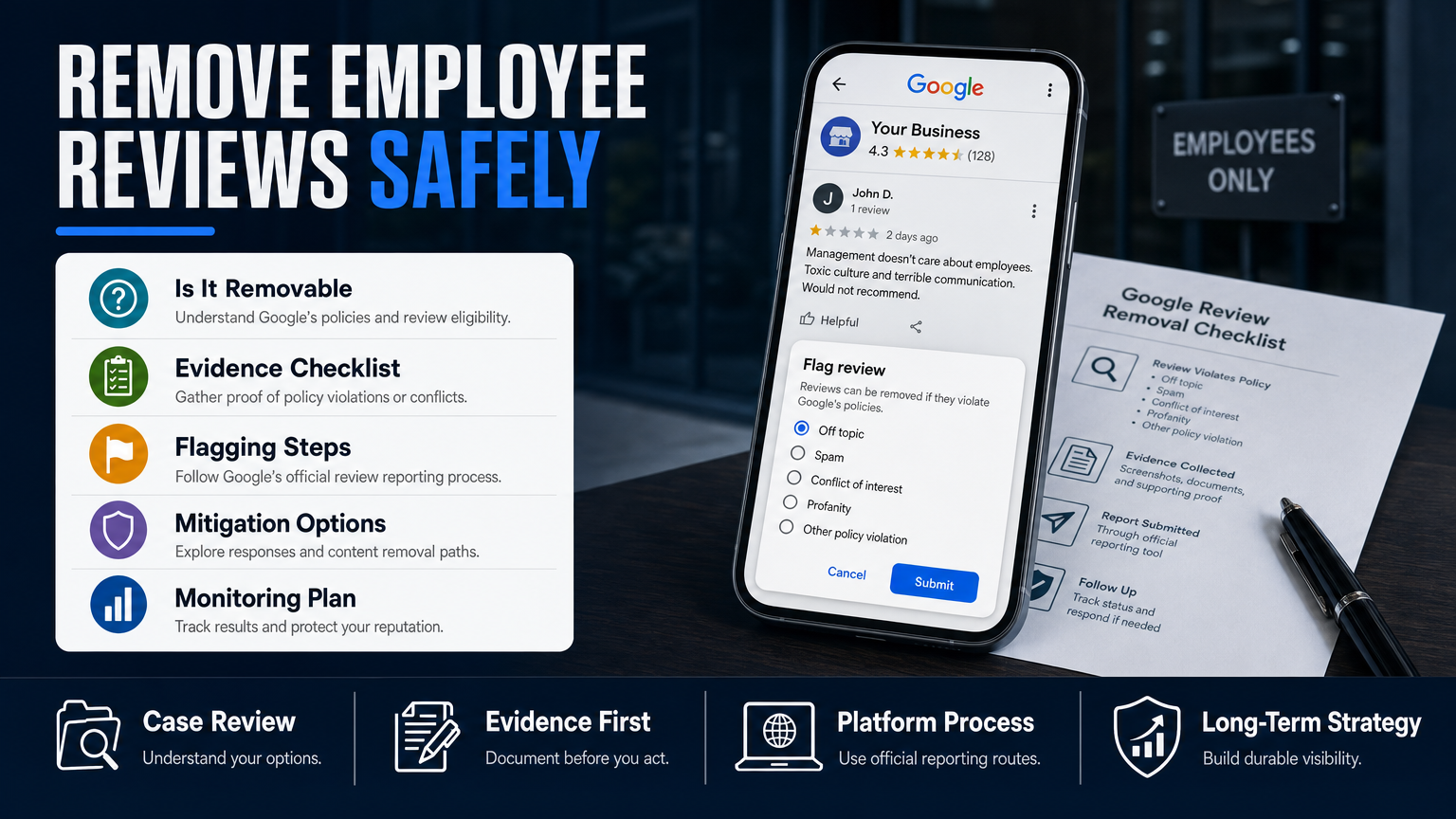
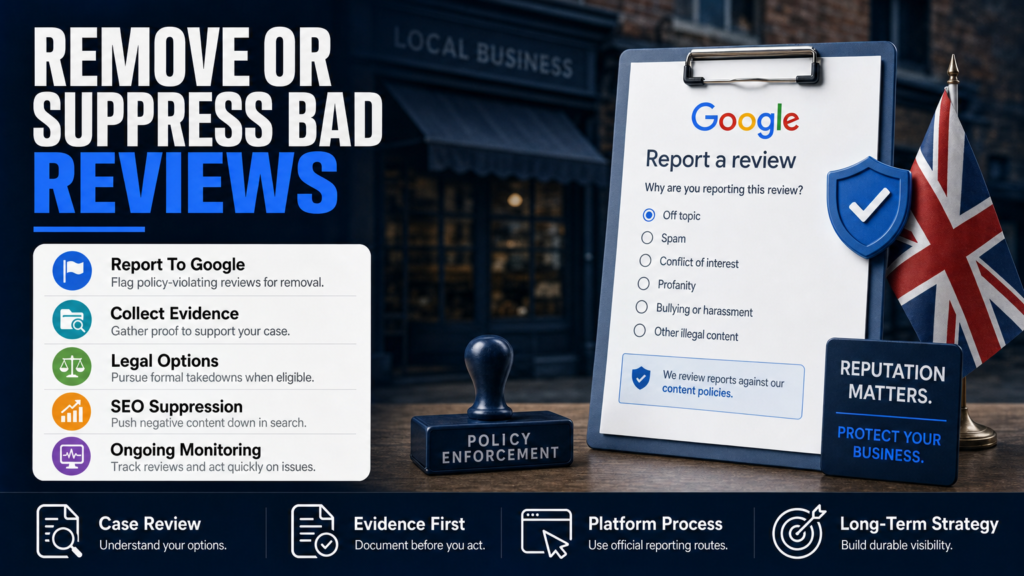
Google provides built-in reporting for reviews on your Business Profile (formerly Google My Business). If a review violates Google’s review policies — spam, hate speech, impersonation, explicit personal data — you can flag it for Google to review.
Follow these platform steps carefully and keep records of every submission. Automated flags often require a follow-up with more documentation if the content is borderline.
- Open your Business Profile and locate the review.
- Click the three dots or flag tool, then choose a reason.
- Submit and note the case ID or take a screenshot; follow up if Google asks for more info.
- Flag the review inside the Google Business Profile dashboard or directly from the review on Maps/Search.
- Select the specific policy violation (spam, offensive content, conflict of interest, impersonation, etc.).
- Keep screenshots and a copy of the review URL for your records.
If you can’t flag from the Business Profile
Use the public review link and the ‘Report a policy violation’ flow in Google Maps or Search. If you have a support relationship through Google Business Profile support, you may also contact support directly and escalate.
If Google declines removal, note their explanation and consider whether the review meets the threshold for legal action or suppression.
- Keep copies of all Google support responses.
- If the review contains personal data (national ID, medical records), preserve that evidence for escalation.
How to remove illegal or policy‑violating Google reviews
Some reviews are removable because they break Google’s rules or because they include unlawful content. Examples: threats, doxxing (posting private data), explicit hate speech, or forged reviews by competitors.
Removal depends on the type of violation, the evidence you can provide, and Google’s current policy interpretation. We evaluate whether the content may qualify for removal or review, and pursue the platform, legal, and technical options available.
- Document the evidence and flag the review on Google.
- If removal is denied and the content is illegal (doxting/threats), consider a court order or legal notice — coordinate with counsel.
- If the reviewer is impersonating your business or staff, collect proof and submit an impersonation report to Google.
- Gather evidence: screenshots, URLs, timestamps, account links, related communications, and whether the reviewer has a history of suspicious posts.
- If the review includes private personal data (addresses, medical details), that increases the chance of platform removal or legal takedown in many jurisdictions.
- If the review is obviously fake (no transaction, competitor account patterns), collect signals of inauthenticity to present to Google.
Using legal options when platform reporting fails
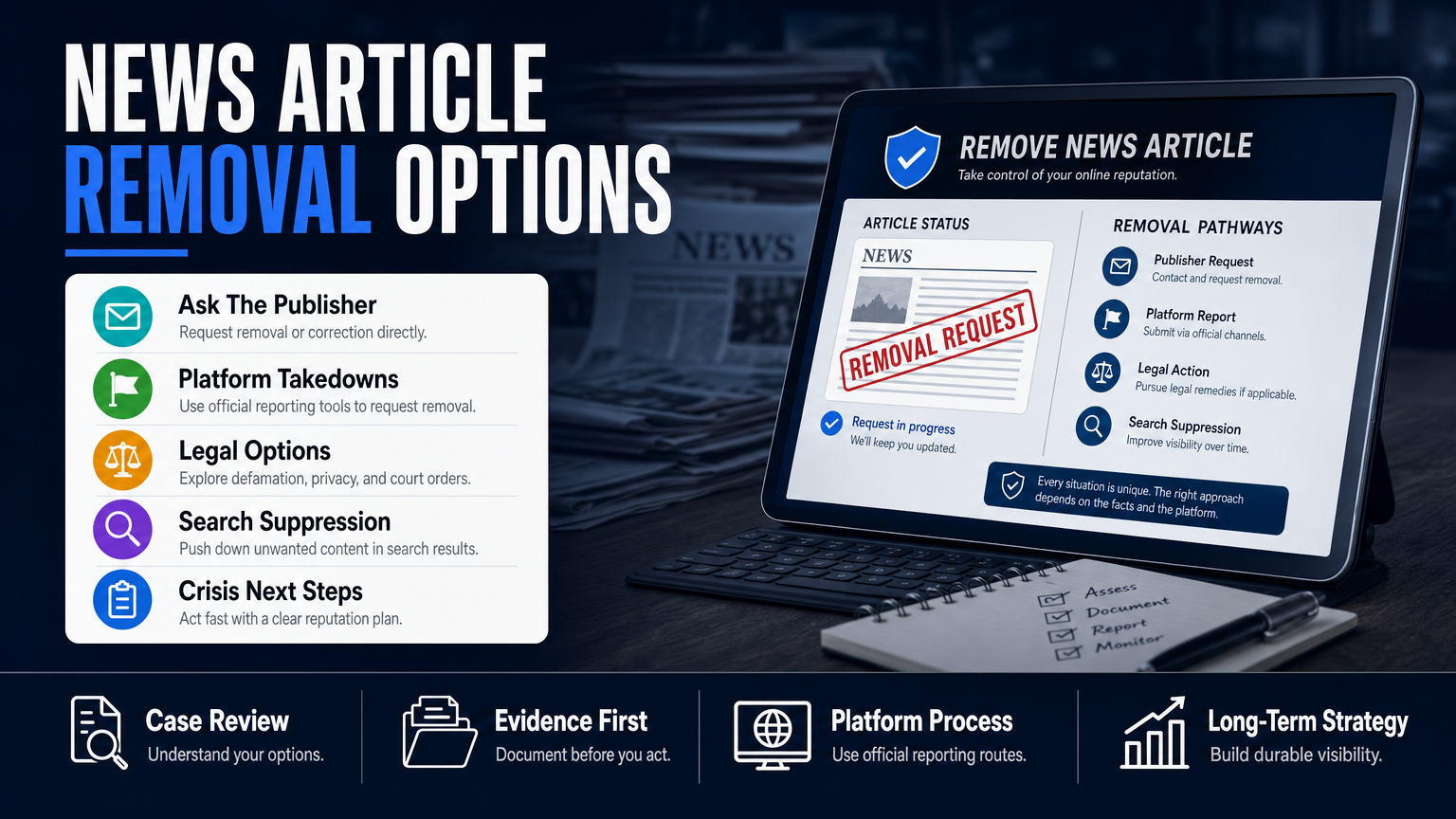
In some cases, a formal legal demand or court order is the appropriate next step. The content may warrant legal review. A qualified attorney can determine whether a claim (defamation, privacy violation, or other) may be available.
We coordinate with qualified legal professionals when a matter requires legal analysis, but response times, outcomes, and platform compliance vary by jurisdiction and case specifics.
- Legal steps can include cease-and-desist letters, DMCA notices (for copyrighted material), or filing in local courts for injunctive relief.
- Courts may issue orders requiring Google to remove content, but this is case-specific and not guaranteed.
How much does it cost to get a bad Google review removed?
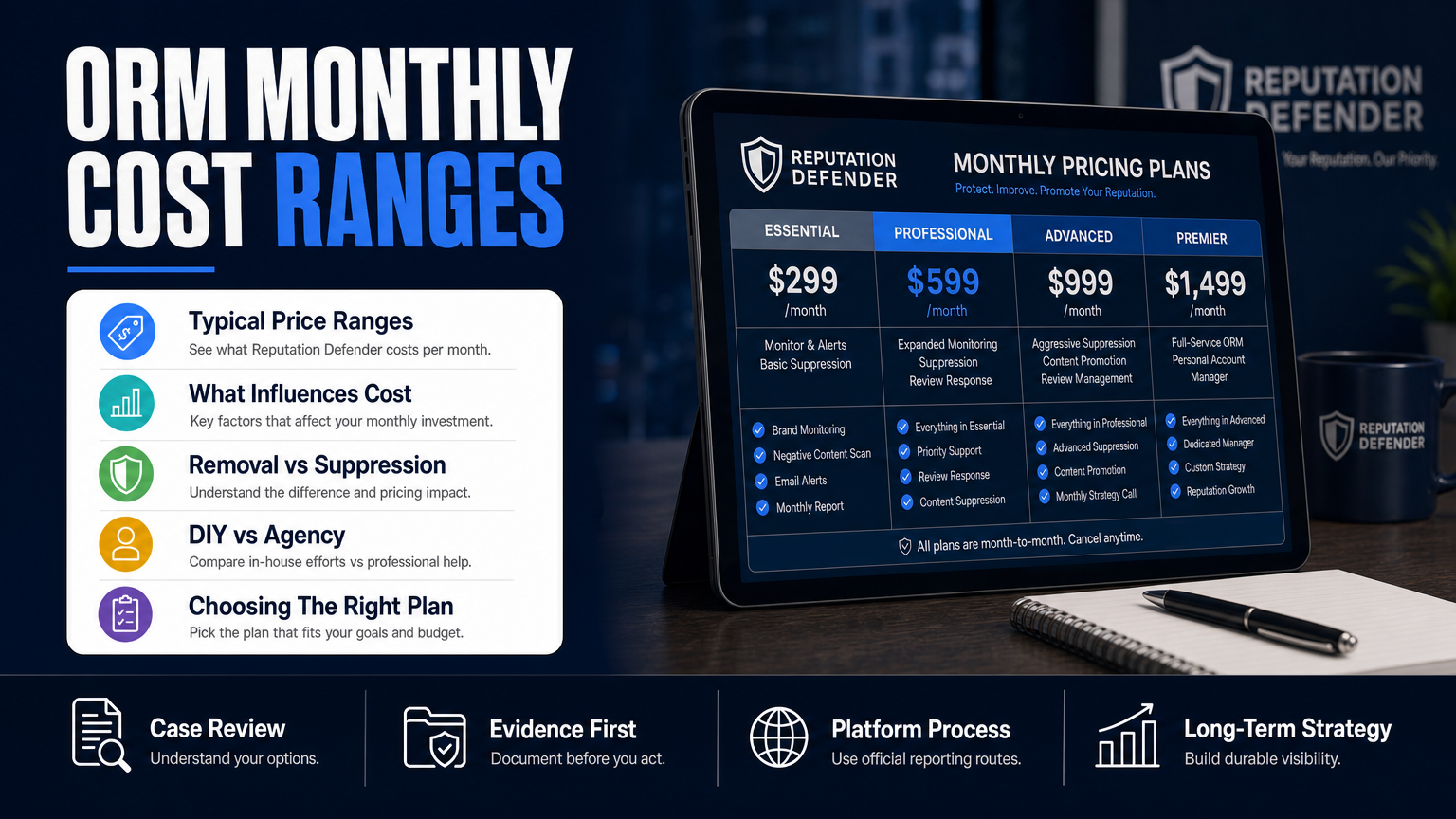
There is no single price for removal because outcomes depend on the content, evidence, platform response, and whether legal steps are necessary. Costs can range from zero (DIY reporting) to several thousand dollars for professional evidence collection, legal letters, or court applications.
If you hire a specialist agency or attorney, expect a different fee structure: hourly legal fees, flat-fee takedown packages, or ongoing reputation management retainers. Timing also varies; an estimated timeline can be provided after an individual assessment.
- Start with free reporting and documentation.
- If removal isn’t granted, request an estimate from an agency that explains what they will do and what evidence is needed.
- If legal action is recommended, obtain a written fee estimate and a scope of work from counsel.
- DIY reporting: free (time-cost only).
- Agency review + escalations: several hundred to a few thousand dollars depending on complexity.
- Legal letters or filings: legal fees typically start in the low thousands and can escalate with court proceedings.
- SEO suppression campaigns: ongoing monthly retainers (ranges vary by scope and keywords).
Assessing value: cost vs. risk
Decide based on the likely commercial and regulatory impact of the review. For example, a single false review that threatens licensure or causes serious revenue loss may justify faster, more expensive escalation.
See our analysis on the commercial impact in What a One-Star Google Review Really Costs a Practice, which helps you weigh the upfront spend against potential losses.
- Estimate lost customers or referrals attributable to the review.
- Factor in indirect costs: staff time, regulatory scrutiny, and marketing damage control.
Can I be sued for leaving a bad review on Google?
Yes — in rare cases. Leaving a truthful review of a consumer experience is typically protected speech; however, publishing false factual claims that harm a business can expose the reviewer to defamation claims in many jurisdictions.
Most litigation happens only when the review makes specific, false factual assertions about criminal behavior, professional incompetence, or other provably untrue statements that cause measurable harm.
- If you receive a threatening review or extortion demand, preserve evidence and consult counsel.
- If you suspect a reviewer could be sued for defamation, coordinate with qualified legal counsel to assess whether a claim is viable.
- Opinion vs. false factual claim: Stating ‘I had a terrible experience’ is usually opinion; claiming ‘they stole from me’ is a factual allegation that must be true or provable.
- Businesses sometimes pursue legal claims for serial fake reviews, review extortion (threatening to post negative reviews unless paid), or coordinated review-bombing campaigns.
- Courts also consider whether the reviewer acted with malice or reckless disregard for truth when evaluating defamation.
What reviewers should know
If you are considering posting a negative review, stick to verifiable facts and personal experience, avoid false assertions, and avoid identifying medical or other private information about individuals.
If you are unsure whether a factual statement is safe, consider neutral language or consult legal guidance.
- Do not post private data or allegations that would be defamatory if false.
- If you’re a business responding to a review publicly, avoid accusatory language that could escalate legal exposure.
What to do when removal is NOT available
Removal is not always possible. When Google declines to remove a negative — or when the review is truthful but damaging — build a mitigation plan: push down the negative result with positive content, respond professionally, and use PR to correct context.
We develop SEO reputation strategies intended to improve the visibility of relevant, credible information. Search results may change because algorithms, competitors, publishers, and user behavior are outside our control.
- Respond publicly to the review with a concise, professional statement offering to resolve the issue offline; this helps future readers assess the dispute.
- Launch an SEO suppression campaign that builds and promotes trusted pages under your name or business.
- Monitor results and adjust: suppression is a long-term project, not an instant fix.
- Create authoritative content pages (service pages, staff profiles, press statements) targeting the same name or keywords to outrank the negative review.
- Request legitimate reviews from satisfied clients to dilute the impact (never pay for reviews or solicit only positive reviews).
- Use legal correction letters if the review contains demonstrably false factual statements and counsel advises it.
Example mitigation channels
Priority channels include your own website (service pages, blog posts), professional profiles (LinkedIn, industry directories), and third-party trusted sites (press coverage, accredited directories).
We recommend a mix: technical SEO, fresh content, and citation/authority building to increase the odds that credible pages outrank the review.
- Homepage and About pages targeting your name.
- Press or response statements on reputable sites.
- Optimised YouTube videos, LinkedIn articles, and industry listings.
When to engage an agency, PR or legal team (coordination)
Escalate when a review threatens licensure, causes measurable revenue loss, contains private personal data, or is part of a coordinated attack. We coordinate with legal counsel and PR when a matter requires legal or messaging expertise.
An agency brings technical experience (reporting, evidence collection, SEO suppression) and can coordinate with counsel and PR. Selection should be based on documented processes, clear scopes, and written fee estimates.
- Collect all evidence and a timeline of events.
- Speak with counsel about legal remedies while an agency assesses platform and SEO options.
- If you engage an agency, require a written scope that states they evaluate removal potential and pursue available technical, platform, legal, and reputational options.
- Typical triggers for escalation: regulator contact, threats, doxxing, or repeated fraudulent reviews.
- Ask any vendor for a clear evaluation of the likely options and success criteria before engagement.
- Avoid agencies that promise guaranteed removal or claim special access to platforms.
Cost/benefit and internal approvals
In businesses with compliance obligations (medical practices, lawyers), include compliance officers when deciding whether to pursue aggressive mitigation or legal steps.
For revenue-driven decisions, compare projected losses (bookings, client churn) against the cost of agency retainers or legal action; our post on What a One‑Star Review Can Cost Your Business’s Bottom Line helps with that calculation.
- Get written fee estimates from agencies and counsel.
- Set measurable goals (takedown, reduced visibility, new review targets).
Preventing future fake reviews and continuous monitoring
Prevention and monitoring are cheaper than constant remediation. Set up alerts, regular searches for your name, and a process for asking satisfied customers to leave reviews after legitimate service.
We handle ongoing monitoring and alerting of reputation signals so you can act fast on suspicious review patterns or repeat offenders.
- Create a review-response template bank and escalation matrix.
- Schedule weekly checks of Google Business Profile and major review sites.
- Consider a lightweight customer-survey program to catch dissatisfied customers before they post publicly.
- Set Google Alerts for your business name and key staff.
- Use a review-monitoring tool or a managed service to aggregate new reviews across platforms.
- Train staff on review-handling policy: never share private patron details publicly and escalate extortion or threats to leadership.
Automated monitoring setup
Monitoring tools range from free Google Alerts to paid reputation platforms that track Google, Yelp, TripAdvisor, and industry sites. Compare costs to internal time spent managing incidents.
If you prefer agency support, ask for an SLA on alerting times and a documented escalation path.
- Free: Google Alerts, manual checks.
- Paid: reputation platforms with cross‑site aggregation and reporting.
DIY vs Agency: What to expect
Quick comparison to decide whether to handle a bad Google review yourself or hire professionals.
| DIY | Agency |
|---|---|
| Cost | Upfront low, time cost; agency fees vary |
| Speed | Depends on your availability; agencies can act faster |
| Platform escalation | May lack experience with complex cases |
| Legal coordination | Often coordinates with counsel and PR |
| SEO suppression | Requires technical skills; agencies offer continuous campaigns |
| Documentation & evidence | You collect; agencies help structure and present it |
| Guaranteed outcome | No guarantees; agencies set realistic plans and KPIs |
Hypothetical scenario: A bogus review threatens a clinic’s bookings
Situation: A small physiotherapy clinic in London (hypothetical) receives a one‑star Google review alleging unprofessional conduct. The clinic’s booking calls drop by 20% over two weeks. The clinic owner searches for options to remove the review under UK rules.
Process taken (anonymised, hypothetical): The owner screenshots the review and pulled the reviewer’s profile (which had only one review, posted the same day). They flagged it to Google as spam and for impersonation because the account used a business logo and no verified transaction history.
When Google didn’t remove the review on the first pass, the owner engaged an agency to document inauthentic patterns and attempt a second escalation. Simultaneously, the clinic published a measured public response explaining the clinic’s complaints process and offered direct contact to resolve the matter.
- Step 1 — Collect evidence: timeline, booking stats, reviewer account history.
- Step 2 — Platform reporting: flag on Google with detailed supporting notes.
- Step 3 — Simultaneous mitigation: post verified information, gather positive reviews, and optimize clinic pages to outrank the review.
- Step 4 — Escalate legally if the review contained private medical data or threats (consult counsel).
- Document: screenshots, calendar bookings before/after the review, staff statements.
- Platform report: flagged as inauthentic and impersonation, noting account history.
- Mitigation: published authoritative content (staff bios and FAQs) and requested honest reviews from satisfied patients.
Common mistakes that make matters worse
Avoid these frequent errors — they either violate platform rules or increase legal risk and public exposure.
1. Publicly attacking the reviewer
Many businesses respond emotionally, publicly accusing the reviewer of lying or using rude language. That escalates the issue and looks poor to searchers. A calm, professional reply that offers to resolve offline is far better.
- Never disclose the reviewer’s private data in your response.
- Avoid threats or trying to “dox” the reviewer publicly.
2. Offering money for removal
Paying for removal or offering incentives without full disclosure can violate platform rules and consumer laws. If you consider a settlement, document it and get legal advice first.
- Document any settlement offer in writing and consult counsel.
- Be aware of rules that prohibit review manipulation.
3. Ignoring contestable evidence
If a review includes false factual assertions (wrong dates, fake staff names), collect evidence that disproves it. Ignoring provably false claims reduces your options later.
- Keep booking logs, CCTV timestamps, or transaction records that can refute false claims.
- Share this evidence in your platform appeal or with counsel.
4. Relying solely on takedown promises
Some vendors promise quick removal. No vendor — nor Google — can guarantee outcomes. Expect an evaluation and a described plan rather than a guarantee.
- Request a written scope that uses cautious language about outcomes.
- Demand transparent billing and documented steps.
5. Skipping monitoring after resolution
A removed review can be reposted or mirrored elsewhere. Continuous monitoring prevents recurrence and helps maintain ranking improvements.
- Set alerts and a review-check schedule.
- Keep copies of all communications and removal confirmations.
Best practices for handling negative Google reviews
These are durable actions that reduce risk and improve long-term online reputation.
Respond professionally and quickly
A short, non-confrontational public reply that acknowledges the complaint and offers an offline contact builds credibility. Do not discuss private facts publicly.
- Use templated responses tailored to common complaint types.
- Include a single contact point for escalation (email or phone).
Collect and preserve evidence immediately
Screenshots, URLs, booking logs, and staff notes are essential if you later pursue a platform appeal or legal action.
- Time-stamp and store evidence securely.
- Record any interactions with the reviewer.
Use documented escalation paths
Follow Google’s reporting workflow first. If that fails and the content appears unlawful, consult counsel before escalating to legal measures.
- Track each escalation and the platform’s response.
- Avoid extrajudicial actions that could create legal exposure.
Build a positive review pipeline
Encourage satisfied clients to leave reviews through legitimate, non-incentivised channels. More authentic positive reviews reduce the relative impact of negatives.
- Automate polite review requests after service completion.
- Focus on quality and authenticity, not quantity alone.
Maintain monitoring and readiness
Set alerts and regular checks for new reviews. A quick response reduces damage and gives you more options earlier in the lifecycle.
- Use a dashboard or managed service for cross-platform monitoring.
- Review results periodically and adjust your strategy.
Expert Tips
- Screenshot the review and the reviewer’s profile immediately; links and content can be removed or changed.
- If a review contains private personal data, highlight that to Google and counsel — privacy violations are more likely to be removed.
- A concise public response that offers offline resolution improves public perception even if the review stays up.
- When engaging vendors, demand a written plan that explains steps, not promises of guaranteed removal.
- For high-risk professions, include compliance and legal teams early in the escalation decision.
- Suppressive SEO campaigns should prioritise owned assets (your site, staff pages) first.
- Don’t delete or edit past responses to reviews without documenting why; preservation may matter legally.
- If an extortion demand accompanies a review, preserve evidence and involve counsel and law enforcement as appropriate.
Conclusion
Removing a negative Google review in the UK (or anywhere) is a process that depends on the review’s content, the platform’s policies, and applicable law. There is no universal fix; some reviews can be removed quickly for policy violations, while others require mitigation through SEO, PR, or legal routes.
Start with calm documentation and the platform’s reporting tools, then escalate thoughtfully: collect evidence, consult counsel when necessary, and weigh the cost of removal against commercial risk. If removal isn’t achievable, a coordinated suppression and reputation‑repair strategy — backed by monitoring — often restores public trust over time.
Why Businesses Choose Your Reputation Agency
Managing your reputation takes more than monitoring reviews or publishing the occasional blog post. It takes a strategy built around your situation, your industry, and what is actually showing up in search.
Your Reputation Agency works with businesses, executives, healthcare professionals, attorneys and growing brands. Our services include:
- Remove defamatory content and false posts (news, blogs, listings)
- Remove or challenge negative reviews (Google, Yelp, TripAdvisor, industry sites)
- Mugshot and arrest record removal
- Remove videos, images, and other multimedia that damage reputation
- Remove personal data from people‑search and data‑broker sites (opt‑outs)
- Search result suppression (SEO to bury negative links)
- Social media takedowns and impersonation removal
- Rapid online crisis management and incident response
- Ongoing monitoring and alerting of reputation signals
- Coordination with legal counsel and use of legal tactics when required
Frequently Asked Questions
1. Is it illegal to delete bad reviews on Google?
Deleting reviews from your own profile because they are negative is not automatically illegal, but attempting to remove reviews by impersonation, hacking, or deception can violate laws and Google’s terms. Asking a reviewer to remove a review after resolving their complaint is normally acceptable; offering deceptive incentives or manipulating accounts is not.
2. How to remove unwanted illegal Google reviews?
If a review contains illegal content (threats, doxxing, or stolen private data), flag it to Google and preserve evidence. If platform reporting fails, consult qualified legal counsel about takedown letters or court orders; outcomes depend on jurisdiction, evidence, and the publisher.
3. How much does it cost to get a bad Google review removed?
Costs vary widely: DIY reports are free, agency escalations can run from a few hundred to several thousand dollars, and legal filings may start in the low thousands. Ask for written estimates and weigh cost against the review’s commercial and regulatory impact.
4. Can I be sued for leaving a bad review on Google?
Yes — if a review makes false factual claims that harm a business, the reviewer could face defamation claims. Truthful opinions about personal experiences are generally protected, but avoid false assertions and private data to reduce legal risk.
5. How do I report a review on Google Business Profile?
Log into your Business Profile, locate the review, click the three-dot menu or flag icon, select the policy violation, and submit. Keep a record of the submission and any responses; if the review isn’t removed, collect evidence and consider further escalation.
6. What if Google refuses to remove the review?
If Google declines removal, build a mitigation plan: respond professionally, publish authoritative content to outrank the review, solicit legitimate positive reviews, and consider legal escalation only if counsel advises it. Suppression is a longer-term SEO and PR effort.
7. Are fake Google reviews illegal?
Fake reviews can violate platform policies and, in some cases, consumer-protection or anti-fraud laws. Businesses subjected to coordinated fake reviews may have grounds for action, but remedies vary by jurisdiction and proof. Document patterns of inauthenticity for appeals and legal consultation.
8. How do I choose between DIY, an agency, or legal help?
Choose DIY for minor incidents with clear policy violations; hire an agency when you need technical escalation, evidence collection, and SEO suppression; involve legal counsel for privacy breaches, extortion, or allegations that threaten licensure. Ask vendors for a written scope and realistic success criteria before engagement.
9. Can an agency guarantee removal of my Google review?
No reputable agency can guarantee removal. Platform decisions and legal outcomes depend on evidence, policy interpretations, and jurisdiction. A good provider explains options, presents realistic timelines, and documents their process.
This content provides general information and does not constitute legal advice. The available options and likely outcomes depend on the facts, evidence, platform policies, applicable law, jurisdiction, and public-interest considerations.
Past examples do not guarantee future results. Removal, correction, deindexing, and search-position changes depend on third parties and circumstances outside Your Reputation Agency’s control.