Negative publicity can spread faster than ever before. A single news article, viral social media post, negative review, or misleading online discussion can damage years of hard-earned trust within hours. Whether you’re a business owner, CEO, healthcare professional, attorney, entrepreneur, or public figure, protecting your reputation has become a critical part of long-term success.
Understanding How to Recover After Negative Publicity isn’t just about repairing your image after a crisis. It’s about responding strategically, communicating honestly, and rebuilding credibility with customers, partners, employees, and search engines. A well-managed response can reduce long-term damage and even strengthen your reputation over time.
In this guide, you’ll learn practical, ethical, and proven reputation recovery strategies used by professional online reputation management experts. We’ll also explain how to avoid common mistakes, restore public confidence, and build a stronger digital presence that supports sustainable business growth.
Table of Contents
- What Is Negative Publicity?
- Why Negative Publicity Can Damage Your Business
- Common Causes of Reputation Crises
- How to Recover After Negative Publicity: Step-by-Step Guide
- Monitor and Assess the Situation
- Respond Quickly and Professionally
- Correct False Information
- Communicate with Transparency
- Rebuild Trust with Positive Content
- Strengthen Your Online Reputation
- Real-World Reputation Recovery Example
- Common Mistakes to Avoid
- Best Practices for Long-Term Reputation Management
- Expert Tips from Reputation Professionals
- Comparison: Reactive vs. Proactive Reputation Management
- Frequently Asked Questions
- Final Thoughts
- Contact Your Reputation Agency
Negative publicity doesn’t always define a business—but how you respond almost always does.
Some organizations recover quickly because they take immediate, strategic action. Others experience long-term reputational damage because they ignore the issue, respond emotionally, or fail to communicate effectively.
The good news is that most reputation challenges can be managed with the right approach. Whether the issue involves negative reviews, unfavorable media coverage, social media criticism, or misleading online content, there are proven methods that help restore trust while improving your long-term digital presence.
Throughout this guide, you’ll discover how experienced reputation management professionals approach these situations, when reputation repair takes time, and why ethical, long-term strategies consistently outperform quick fixes.
What Is Negative Publicity?
Negative publicity is any unfavorable information about a person, business, or organization that becomes visible to the public and influences how others perceive them. It can spread through news websites, social media, online reviews, blogs, forums, videos, or even search engine results.
Not every piece of negative publicity is based on facts. Sometimes it results from genuine customer dissatisfaction, while in other cases it may involve misinformation, false allegations, outdated content, or coordinated attacks. Regardless of the cause, public perception often forms quickly, making it essential to respond with a clear strategy rather than emotion.
For business owners and professionals, reputation has become one of the most valuable assets. A damaged reputation can affect sales, partnerships, hiring, investment opportunities, and long-term growth.
Why Negative Publicity Can Damage Your Business
Today’s customers rarely make decisions without researching a company online first.
Before contacting your business, they may read Google reviews, browse social media profiles, search your company name, or read news articles. If the first impression they encounter is negative, they may choose a competitor before giving you an opportunity to explain your side of the story.
Negative publicity can affect:
- Customer trust
- Brand credibility
- Search visibility
- Revenue and sales
- Employee confidence
- Investor relationships
- Media perception
- Business partnerships
The longer harmful content remains unanswered, the greater its potential impact.
That is why many organizations now treat reputation management as an essential part of risk management rather than simply a marketing activity.
Common Causes of Negative Publicity
Understanding the source of a reputation issue helps determine the best recovery strategy.
Customer Complaints
Unresolved customer experiences remain one of the most common causes of negative publicity. A single dissatisfied customer can share their experience across multiple review platforms and social media channels within minutes.
Responding professionally and demonstrating a genuine commitment to resolving concerns often helps reduce long-term reputational damage.
Negative Media Coverage
Journalists may publish stories based on public records, investigations, interviews, or developing events.
Even when an issue has been resolved, older news articles can continue appearing in search results and influence public perception years later.
Social Media Controversies
Social platforms amplify conversations rapidly.
A misunderstood statement, viral video, employee incident, or customer complaint can receive thousands of views before a company has an opportunity to respond.
Businesses that monitor social conversations regularly are generally better prepared to manage these situations.
False or Misleading Information
Not every online claim is accurate.
False accusations, fake reviews, impersonation, manipulated content, or misleading blog posts can seriously damage a reputation if left unaddressed.
When appropriate, businesses should document the issue carefully and explore ethical options for correcting or removing inaccurate information.
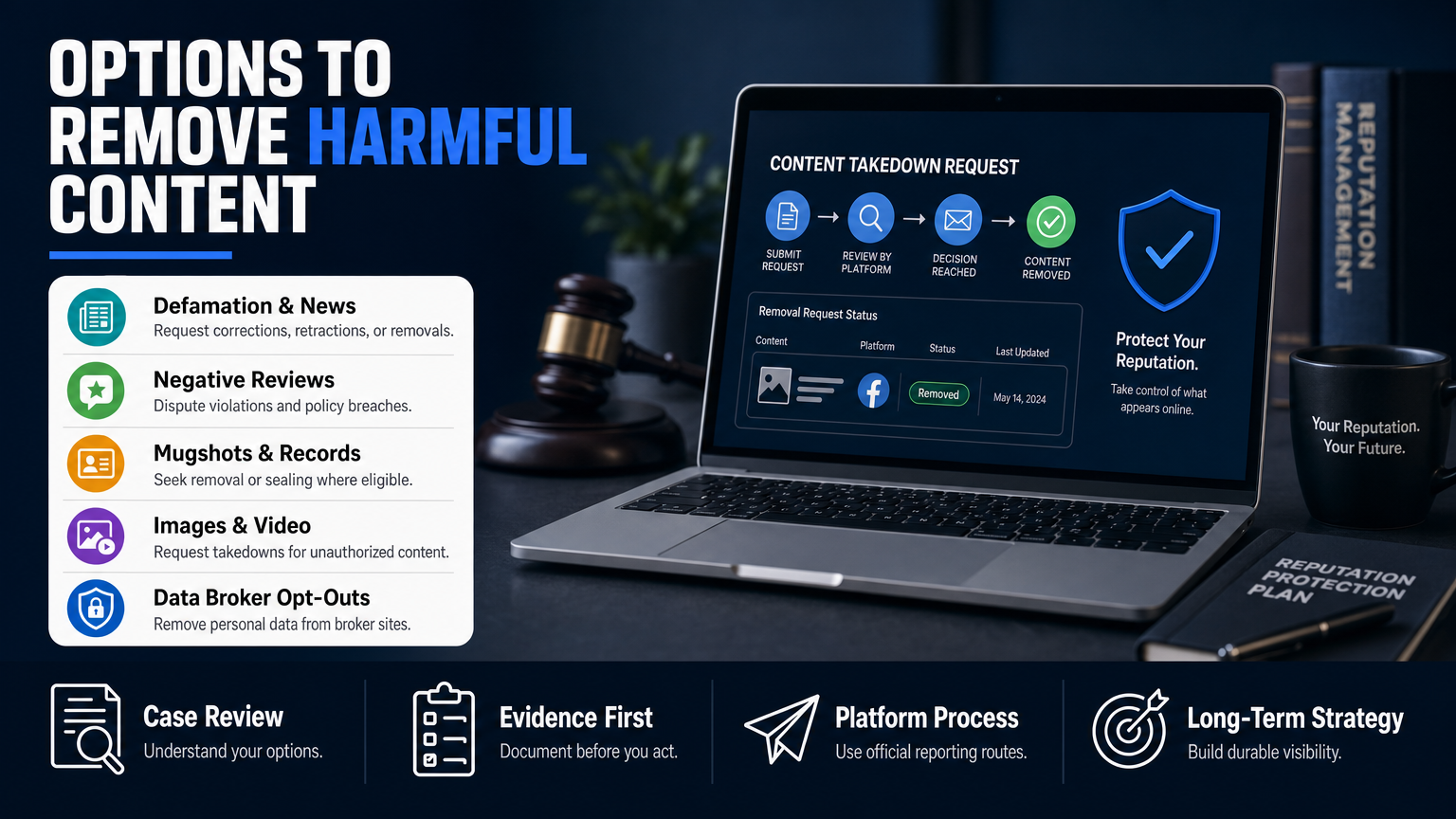
Our guide on What Is Negative Content Removal? Complete Guide to Protect Your Online Reputation explains when harmful online content may be eligible for removal and when alternative reputation strategies are more effective.
Internal Business Issues
Sometimes negative publicity begins inside the organization.
Examples include:
- Poor customer service
- Employee misconduct
- Leadership communication failures
- Data security incidents
- Product quality concerns
- Service disruptions
Addressing the root cause—not just the public reaction—is essential for rebuilding trust.
Different Types of Negative Publicity
Not all reputation challenges require the same response.
| Type | Typical Impact | Recommended Response |
|---|---|---|
| Negative Reviews | Customer trust | Respond professionally and improve customer experience |
| News Articles | Brand credibility | Public communication, SEO, reputation management |
| Social Media Backlash | Public perception | Timely, transparent engagement |
| False Information | Search reputation | Documentation, correction requests, ORM strategies |
| Executive Criticism | Leadership credibility | Executive reputation management |
| Viral Online Discussions | Long-term visibility | Reputation monitoring and strategic content development |
Identifying the type of publicity helps prioritize actions and allocate resources more effectively.
Why Acting Quickly Matters
One of the biggest mistakes organizations make is waiting too long before responding.
Negative publicity often gains momentum during the first few hours or days. Without a thoughtful response, inaccurate narratives can spread across search engines, news websites, forums, and social media platforms.
Acting quickly allows you to:
- Demonstrate accountability
- Prevent misinformation from spreading
- Maintain customer confidence
- Reduce unnecessary speculation
- Protect search visibility
- Reassure employees and stakeholders
Speed is important, but accuracy is even more important. A rushed response that lacks facts can create additional challenges.
Start by Monitoring Before Responding
Before publishing a statement or contacting the media, take time to understand exactly what is being said.
Professional reputation teams typically begin by evaluating:
- Search engine results
- News coverage
- Social media discussions
- Online reviews
- Industry forums
- Customer feedback
- Brand mentions
This broader perspective helps identify the source of the issue and determine whether it is isolated or part of a larger reputation challenge.
Continuous monitoring also makes it easier to detect emerging risks before they become full-scale crises.
If your organization wants to build a proactive reputation strategy rather than reacting after problems arise, our guide on How to Do Online Reputation Management provides practical insights into protecting your digital presence over the long term.
How to Recover After Negative Publicity: Step-by-Step Guide
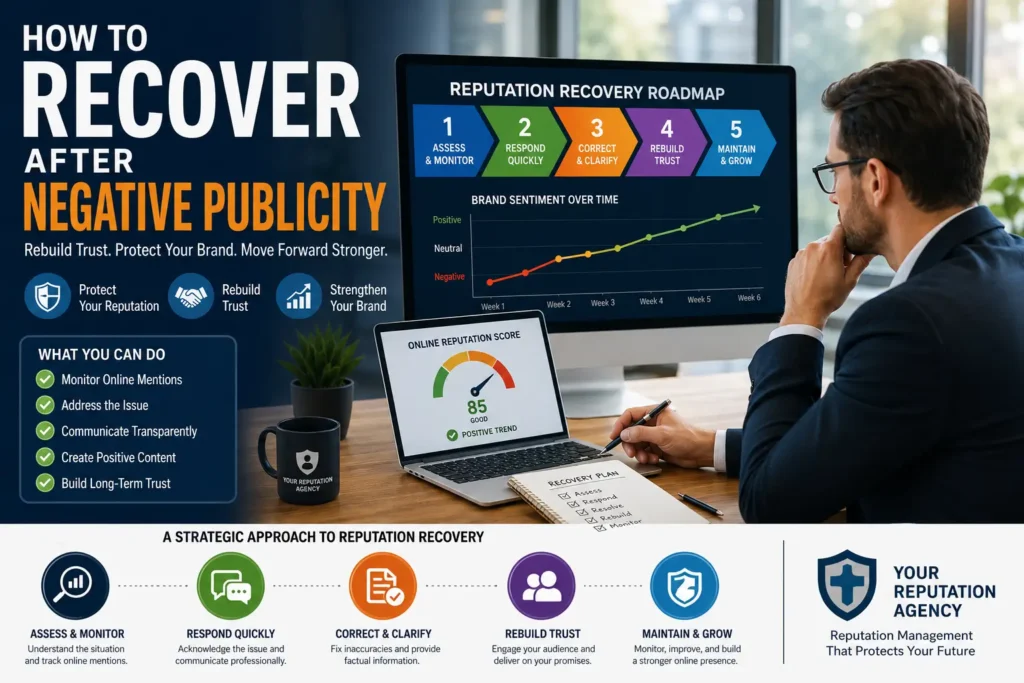
Recovering from negative publicity requires more than issuing a public statement. It involves a structured process that addresses the root cause, restores trust, and strengthens your online reputation over time.
The following steps are used by experienced reputation management professionals to help businesses and individuals recover ethically and effectively.
Step 1: Assess the Situation Before You Respond
Your first reaction can shape the entire outcome.
Instead of responding immediately, gather accurate information about what happened. Determine whether the publicity is based on verified facts, misinformation, customer complaints, media reporting, or online speculation.
Ask questions such as:
- What triggered the negative publicity?
- Is the information accurate?
- Which platforms are spreading the story?
- Who is discussing it?
- How serious is the potential impact?
A careful assessment helps prevent emotional decisions that could worsen the situation.
Step 2: Monitor Every Online Mention
You cannot manage what you cannot see.
Track conversations across:
- Google Search
- News websites
- Social media platforms
- Review websites
- Reddit and discussion forums
- Industry blogs
- Video platforms
Monitoring reveals how quickly the issue is spreading and helps identify the most influential sources.
Professional reputation monitoring also allows businesses to measure whether public sentiment improves over time.
Step 3: Respond Quickly—But Thoughtfully
Silence often creates uncertainty.
Customers appreciate organizations that communicate honestly during difficult situations. Even if you don’t yet have every answer, acknowledging the issue demonstrates accountability.
An effective response should:
- Be factual
- Remain professional
- Avoid emotional language
- Show empathy when appropriate
- Explain what actions are being taken
- Keep stakeholders informed
The goal is not to win an argument—it’s to rebuild confidence.
Step 4: Correct False or Misleading Information
Sometimes negative publicity is based on inaccurate or outdated information.
If this happens:
- Document the false claims.
- Contact the publisher politely.
- Provide supporting evidence.
- Request corrections where appropriate.
- Follow platform reporting procedures if policies have been violated.
When direct removal isn’t possible, reputation management strategies such as search suppression and authoritative content development can help reduce the visibility of misleading information over time.
Step 5: Communicate With Transparency
Trust grows through honesty.
If your organization made a mistake, acknowledge it without making unsupported promises or assigning blame.
Explain:
- What happened
- What you’ve learned
- What actions are being taken
- How customers will benefit moving forward
Transparent communication often earns more respect than attempting to ignore the issue.
Customers are generally willing to forgive organizations that demonstrate genuine accountability and meaningful improvement.
Real-World Example
Imagine a regional healthcare provider experiences negative publicity after a patient’s complaint goes viral on social media.
Instead of deleting comments or arguing publicly, the organization takes a structured approach.
First, it investigates the incident internally and contacts the patient privately to better understand the situation. Leadership then publishes a clear public statement acknowledging the concerns, explaining the steps being taken, and reaffirming its commitment to patient care.
Over the following months, the organization strengthens its online presence by publishing educational healthcare content, highlighting community initiatives, encouraging genuine patient feedback, and improving customer communication.
As positive content grows and trust is rebuilt, branded search results begin reflecting a more balanced and accurate picture of the organization. This example illustrates how a proactive, long-term strategy can reduce the lasting impact of negative publicity.
Reactive vs. Proactive Reputation Management
| Reactive Reputation Management | Proactive Reputation Management |
|---|---|
| Responds after a crisis occurs | Prevents issues before they escalate |
| Focuses on damage control | Focuses on building long-term trust |
| Limited monitoring | Continuous reputation monitoring |
| Short-term communication | Consistent brand messaging |
| Responds to negative reviews | Encourages authentic positive reviews |
| Addresses isolated incidents | Builds lasting digital authority |
| Higher business risk | Greater reputation resilience |
Organizations that invest in proactive reputation management are generally better prepared to handle unexpected challenges and maintain public confidence.
Negative publicity doesn’t have to define your business. With a thoughtful response, transparent communication, and a long-term reputation strategy, it’s possible to rebuild credibility and emerge stronger than before.
Common Mistakes to Avoid After Negative Publicity
Recovering from negative publicity is often more challenging when organizations make rushed or emotional decisions. Avoiding these common mistakes can significantly improve your chances of rebuilding trust.
Ignoring the Situation
Hoping the issue will disappear on its own is rarely an effective strategy. Unanswered criticism often leads to speculation, allowing negative narratives to spread further.
Instead, assess the situation quickly and develop a clear response plan.
Responding Emotionally
Public arguments with customers, journalists, or social media users rarely improve a company’s reputation.
Avoid:
- Defensive statements
- Personal attacks
- Blaming customers
- Emotional social media posts
- Public disputes
Professional, fact-based communication demonstrates confidence and leadership.
Providing Inaccurate Information
Sharing information before verifying the facts can create additional credibility issues.
Before making any public statement:
- Confirm the facts.
- Coordinate internally.
- Ensure consistency across all communication channels.
Accuracy should always take priority over speed.
Deleting Legitimate Customer Feedback
Removing genuine criticism simply because it’s negative can reduce public trust.
Instead:
- Respond professionally.
- Acknowledge concerns.
- Explain how you’re resolving the issue.
- Encourage offline communication when appropriate.
Prospective customers often judge a business by how it responds to criticism—not whether criticism exists.
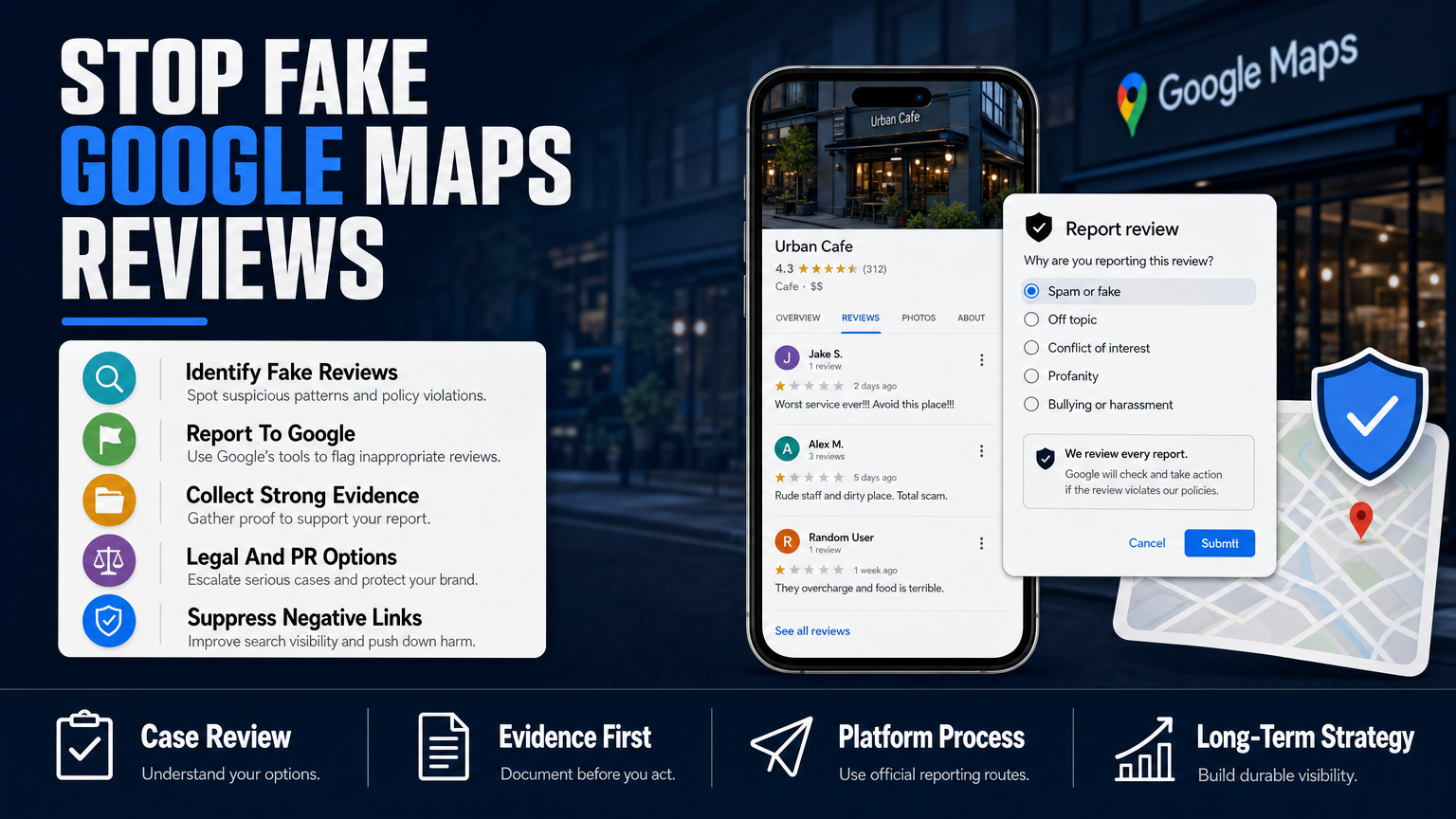
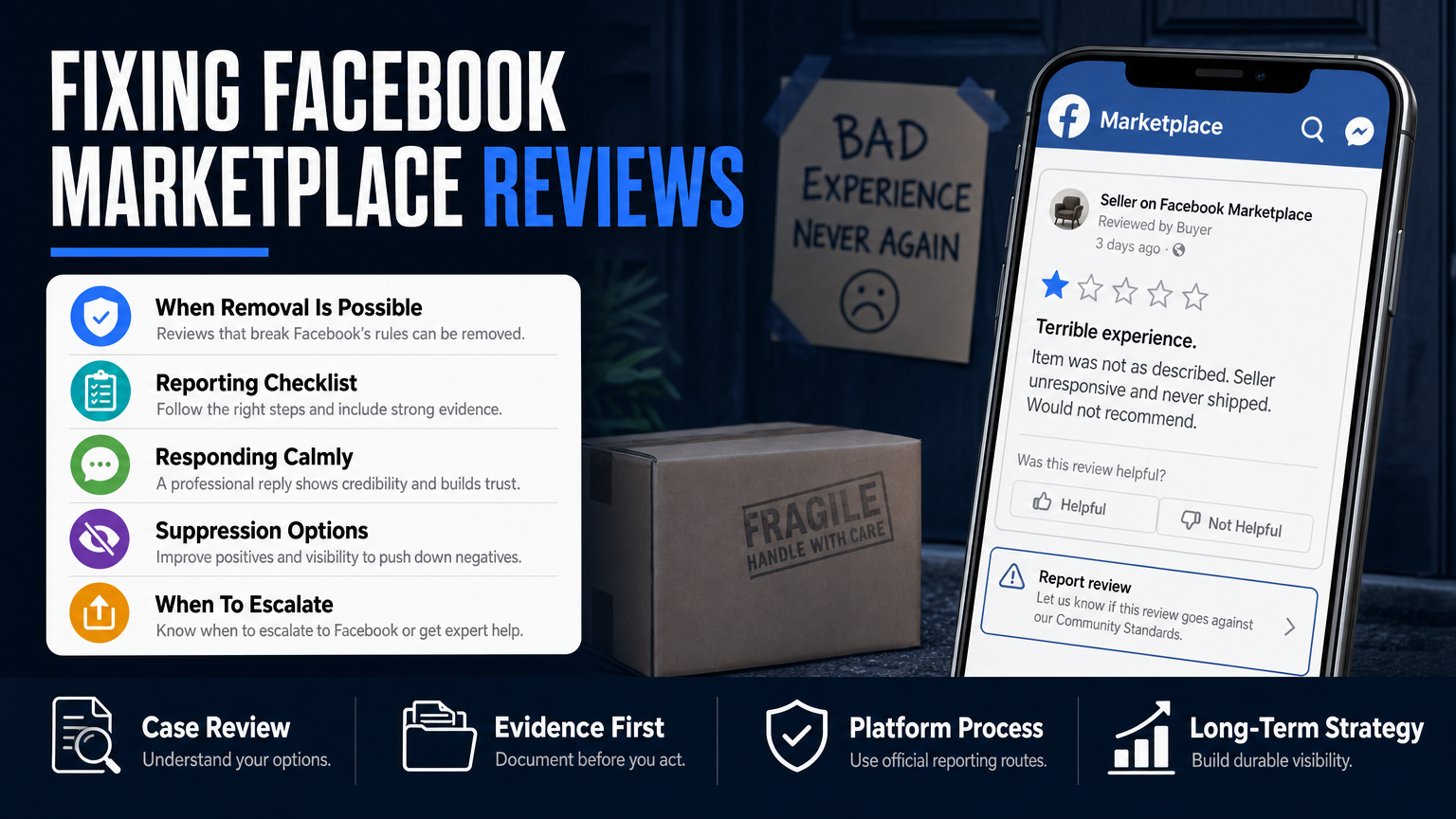
If false or policy-violating reviews are affecting your business, our Remove Negative Reviews service explains when reviews may qualify for removal and how to approach the process ethically.
Focusing Only on Damage Control
Many businesses stop working on their reputation once the immediate crisis passes.
However, reputation recovery doesn’t end when media attention fades.
Long-term success requires:
- Reputation monitoring
- High-quality content
- Customer engagement
- Positive brand storytelling
- Ongoing SEO improvements
Organizations that continue investing in their reputation are better prepared for future challenges.
Best Practices for Long-Term Reputation Recovery
Successful reputation management extends far beyond responding to one incident.
The following best practices help organizations build resilience and strengthen public trust over time.
Build Helpful, Authoritative Content
Publishing educational, experience-driven content demonstrates expertise while improving search visibility.
Examples include:
- Industry guides
- Case studies
- Frequently asked questions
- Customer success stories
- Expert insights
- Thought leadership articles
Consistently publishing valuable content helps establish authority with both users and search engines.
Monitor Your Brand Regularly
Early detection prevents small issues from becoming major crises.
Monitor:
- Search engine results
- Review platforms
- News websites
- Social media
- Brand mentions
- Industry discussions
Regular monitoring allows businesses to respond before negative conversations gain momentum.
Encourage Genuine Customer Reviews
Satisfied customers are often willing to share positive experiences—but they may simply need to be asked.
Authentic reviews:
- Increase trust
- Improve local SEO
- Strengthen credibility
- Balance occasional negative feedback
Always follow platform guidelines and avoid offering incentives that violate review policies.
Strengthen Your Executive Brand
Customers increasingly research company leaders before making business decisions.
Maintaining accurate executive profiles, professional biographies, interviews, speaking engagements, and thought leadership content strengthens overall brand credibility.
Executive reputation management is especially valuable for founders, CEOs, physicians, attorneys, and entrepreneurs whose personal reputation directly influences business success.
Expert Tips From Online Reputation Specialists
Experienced reputation professionals approach every situation strategically rather than emotionally.
Here are several recommendations used by leading ORM specialists.
Act Before a Crisis Happens
The strongest reputations are built before they’re tested.
Develop:
- Crisis communication plans
- Reputation monitoring systems
- Internal response procedures
- Executive communication guidelines
Preparation significantly reduces response time during unexpected events.
Think Long-Term
Quick fixes rarely create lasting trust.
Instead, focus on:
- Consistent messaging
- Ethical SEO
- Positive customer experiences
- Transparent communication
- Continuous brand improvement
Long-term consistency creates stronger search visibility and greater public confidence.
Invest in Reputation as a Business Asset
Your reputation influences far more than public perception.
A strong reputation supports:
- Higher customer retention
- Better conversion rates
- Increased referrals
- Improved hiring
- Stronger partnerships
- Greater investor confidence
Treat reputation management as an ongoing investment rather than a temporary expense.
How Your Reputation Agency Helps Businesses Recover
Every reputation challenge is different, which is why generic solutions rarely deliver meaningful results.
At Your Reputation Agency, we develop customized online reputation management strategies based on your industry, business goals, and current digital presence.
Our services include:
- Online Reputation Management
- Crisis Reputation Management
- Executive Reputation Management
- Search Result Suppression
- Negative Content Strategy
- Review Management
- Reputation Monitoring
- Digital Brand Protection
Rather than relying on shortcuts, our team focuses on ethical strategies that align with Google’s best practices while helping clients strengthen long-term credibility.
If you’re facing a reputation challenge or want to proactively protect your brand, our team is here to help.
Learn more or speak with one of our specialists through our Contact Us page.
Conclusion
Experiencing negative publicity can feel overwhelming, but it doesn’t have to define your future. Knowing How to Recover After Negative Publicity means taking a strategic, transparent, and long-term approach rather than reacting emotionally or looking for quick fixes.
Every reputation challenge is different. Some situations require clear communication and customer engagement, while others benefit from search result suppression, high-quality content creation, or ongoing online reputation management. The key is to respond early, communicate honestly, and consistently demonstrate your commitment to improvement.
Remember, trust isn’t rebuilt overnight—but with the right strategy, it can be rebuilt. Organizations that focus on transparency, customer satisfaction, and ethical reputation management often emerge stronger, more resilient, and more trusted than before.
Whether you’re a business owner, CEO, entrepreneur, healthcare professional, attorney, or personal brand, investing in your reputation today helps protect your opportunities tomorrow.
Protect Your Reputation with Your Reputation Agency
Your online reputation influences how customers, investors, employees, and business partners perceive your brand. A single negative incident can impact years of hard work—but with the right support, recovery is possible.
At Your Reputation Agency, we specialize in helping businesses and professionals navigate reputation challenges through ethical, data-driven online reputation management strategies. Our experienced team creates customized solutions designed to restore trust, improve search visibility, and strengthen your digital presence for the long term.
Our reputation management services include:
- Crisis Reputation Management
- Online Reputation Management
- Executive Reputation Management
- Search Result Suppression
- Negative Content Strategy
- Review Management
- Reputation Monitoring
- Brand Protection
- Digital PR Strategy
Whether you’re responding to negative publicity or building a proactive reputation strategy, we’re here to help.
Ready to protect your reputation? Contact Your Reputation Agency today for a confidential consultation and discover how our tailored reputation management solutions can help your business move forward with confidence.
FAQs – How to Recover After Negative Publicity
1. How do you recover after negative publicity?
The best way to recover after negative publicity is to assess the situation, communicate transparently, correct misinformation when appropriate, address legitimate concerns, and strengthen your online reputation through consistent, ethical reputation management.
2. How long does reputation recovery take?
The timeline depends on the severity of the issue. Some businesses see positive improvements within a few months, while larger reputation challenges may require ongoing effort over a longer period.
3. Should a business respond publicly to negative publicity?
Yes, when appropriate. A professional, factual, and empathetic response demonstrates accountability and helps maintain customer confidence. Avoid emotional or defensive communication.
4. Can negative publicity be removed from Google?
Not all negative content can be removed. If content violates platform policies or applicable laws, removal may be possible. Otherwise, reputation management and search suppression strategies often help reduce its visibility.
5. What industries benefit most from reputation management?
Almost every industry can benefit, especially:
- Healthcare
- Legal services
- Financial services
- Real estate
- Hospitality
- Professional services
- E-commerce
- Corporate leadership
- Personal brands
6. What is the difference between crisis management and reputation management?
Crisis management focuses on responding to immediate incidents, while reputation management is a long-term strategy that builds trust, improves search visibility, and protects brand credibility before, during, and after a crisis.
7. Can positive content improve online reputation?
Yes. Publishing authoritative, helpful, and relevant content helps strengthen your digital presence and supports a more balanced representation of your brand in search results.
8. Why is reputation monitoring important?
Continuous monitoring allows businesses to identify potential issues early, respond quickly, and reduce the likelihood of small problems becoming major reputation crises.
9. When should I hire an online reputation management agency?
If negative publicity is affecting customer trust, search visibility, business growth, or your professional reputation, working with an experienced reputation management agency can provide a structured and effective recovery strategy.
10. Why choose Your Reputation Agency?
Your Reputation Agency provides customized online reputation management services built on ethical SEO practices, transparency, and long-term reputation protection. We help businesses, executives, and professionals strengthen their digital presence while following Google’s Helpful Content and E-E-A-T guidelines.
Final Thoughts
Your reputation is one of your most valuable business assets. Protecting it requires consistency, transparency, and a commitment to earning trust every day.
By understanding How to Recover After Negative Publicity and implementing a proactive reputation management strategy, you can turn challenging situations into opportunities to demonstrate integrity, improve customer relationships, and build a stronger brand for the future.