
Deepfake Videos and Voice Cloning: The Next Reputation Nightmare
In 2026, the phrase “seeing is believing” is officially dead. The rapid evolution of Generative AI has made Deepfake Videos and Voice Cloning the most potent weapons in the arsenal of reputation attackers. For executives, public figures, and business leaders, a single fabricated video or a perfectly cloned voice memo can trigger a stock price collapse, a PR crisis, or a legal investigation before the truth can even be verified.
1. The Technology of Deception
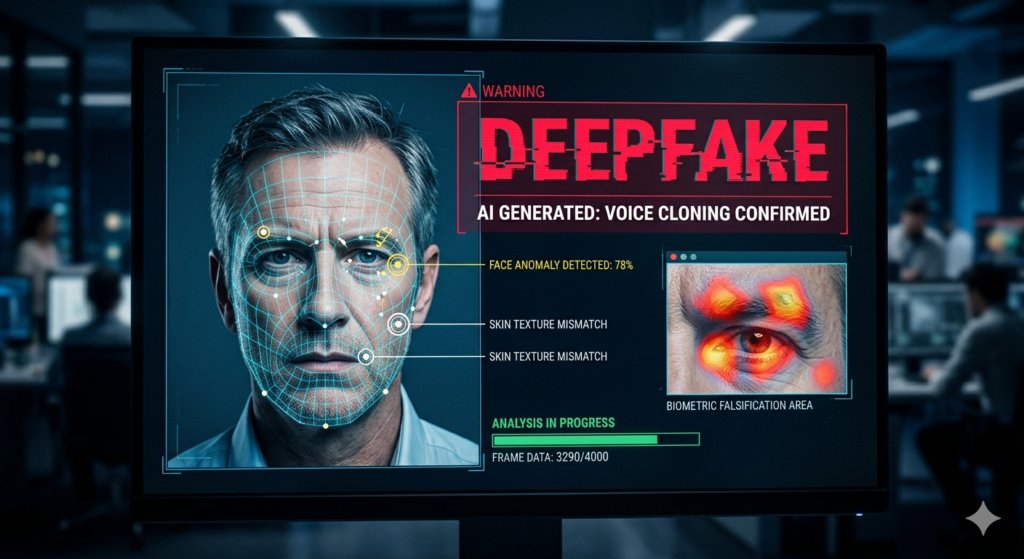
Deepfakes utilize neural networks to overlay a person’s likeness or voice onto a source video or audio file with terrifying precision. While these tools were once the domain of Hollywood studios, in 2026, they are available to anyone with a laptop. A “Reputation Hit Squad” can now create a video of a CEO making offensive remarks or a voice memo of a founder authorizing a fraudulent transaction. These aren’t just “fakes”—they are high-fidelity digital forgeries designed to bypass our natural skepticism.
2. The Speed of "Synthetic Scandals"
The real danger of a deepfake is not just its realism, but its velocity. In a hyper-connected world, a synthetic scandal can go viral in minutes. By the time a forensic analysis proves the video is a deepfake, the reputational damage is often already done. As we’ve noted in our analysis of the Reputation Blackmail Industry, attackers often release these deepfakes during high-stakes moments, such as product launches or earnings calls, to maximize the pressure for a ransom payment.
3. Defense: AI-Watermarking and Digital Provenance
Fighting AI with AI is the only way forward. In 2026, protecting your reputation requires “Digital Provenance”—a system of cryptographic watermarking that proves a video or audio file is authentic. At Your Reputation, we help leaders implement these layers of protection, ensuring that their official communications are verifiable and that any unauthorized “synthetic” content can be flagged by search engine algorithms as fraudulent immediately.
FAQ
How can I spot a deepfake video?
In 2026, look for “artifacts” in high-movement areas: unnatural blinking, mismatched lighting on the skin, or slight audio desyncing during fast speech. However, professional-grade deepfakes often require specialized AI detection software to be identified.
Can deepfake creators be prosecuted?
Laws are evolving rapidly, but the decentralized nature of the internet makes it difficult to track creators who use VPNs and encrypted networks. The focus must be on suppression and debunking rather than just legal retaliation.
What is the first step if I am targeted by a deepfake?
Do not engage with the content publicly until you have a forensic report in hand. A reactive, emotional response can inadvertently spread the video further. Secure professional help to issue a “provenance-backed” denial and coordinate with platforms for removal.
We are entering an era of “Synthetic Reality.” When your voice and face can be cloned, your reputation becomes your most vulnerable surface area. Deepfake Videos and Voice Cloning are the next frontier of reputation management, and only those with a proactive digital defense will survive the transition.
Is your digital likeness secured for the AI era?
Don’t wait for a synthetic scandal to take control of your narrative. Protect your voice, your face, and your future today.