Digital Reputation Management for Businesses: Protecting Your Brand from TikTok
The rise of short-form video has fundamentally altered the landscape of brand perception, turning every patient or customer into a potential broadcaster. In this section, we examine the mechanics of viral exposure and why modern firms must treat their digital narrative as a top-tier operational priority.
In the modern era, digital reputation management for businesses has become the primary defense against the sudden, unpredictable volatility of social media virality. When a TikTok video showcasing a minor operational failure or a perceived injustice goes viral, it does not merely garner views; it serves as a catalyst for a global perception shift. For high-end medical practices and premium restaurants, this can translate into an immediate loss of prestige and a drastic decline in new patient or customer acquisition. The speed at which an algorithm can distribute damaging content means that traditional public relations strategies—which often move at a glacial pace—are rendered largely ineffective.

The psychological impact of such a digital crisis is profound, as the platform’s “relatable” video style makes viewers feel as though they are witnessing an objective truth. When a creator records an unfiltered opinion, the lack of corporate polish is interpreted as authenticity, which the audience trusts implicitly. Unfortunately, this creates a situation where the business owner is forced into a defensive posture, attempting to address a narrative that has already been accepted by millions as fact.
To navigate this, companies must understand that digital reputation management for businesses is no longer a luxury but an existential requirement. By the time a video reaches a significant view count, the “persistence factor” of the internet ensures that the fallout is not just a temporary annoyance, but a long-term threat to enterprise value. Owners must recognize that the algorithm is indifferent to the truth; it only cares about engagement, which means they must act with technical precision to safeguard their brand equity from being dismantled by a single, poorly managed interaction. You can learn more about managing these digital threats by reviewing Google’s policies on content transparency.
The Viral Vulnerability: Why TikTok is Different
Unlike traditional media outlets, which generally operate with editorial oversight, TikTok’s ecosystem thrives on raw, unfiltered, and often hyperbolic content. For a restaurant, this might mean a viral video showcasing a minor service slip-up; for a medical clinic, it could be a patient’s subjective account of a consultation. Because TikTok content is inherently “relatable,” viewers tend to trust the creator’s narrative instantly, often without verifying the facts. This creates a unique challenge for digital reputation management for businesses, as the barrier to entry for criticism is effectively zero.
This algorithmic amplification can turn a local incident into a global PR crisis within a matter of hours. By the time a business owner realizes what is happening, the video may have millions of views, and the damage—both to revenue and long-term brand equity—is already underway. The nature of these platforms means that once a narrative takes root, it is extremely difficult to displace, as the platform’s design incentivizes further discussion and user commentary.
Ultimately, this vulnerability highlights the inadequacy of traditional reactive PR. To survive in this environment, businesses must adopt a sophisticated approach to digital reputation management for businesses. This includes monitoring for spikes in negative sentiment and having a pre-planned technical strategy to manage the fallout. Relying on organic growth is no longer sufficient; leaders must be prepared to protect their professional image proactively to ensure that one bad viral experience does not become the defining feature of their brand.

The Financial Fallout of Digital Neglect
The operational cost of failing to manage a digital crisis is staggering and can be felt across the entire business lifecycle. Once a negative narrative takes hold on TikTok, it does not stay confined to that platform; it migrates to Google Search, impacts your business reviews, and eventually dictates the search suggestions your brand is associated with. When investors or potential partners perform digital due diligence, these viral events serve as red flags that can deter high-level collaborations. Investing in digital reputation management for businesses is an investment in the long-term financial health of the organization.
The financial damage is often twofold: a direct decline in customer traffic and a hidden, long-term erosion of trust. In the medical field, for example, a damaged reputation can lead to a drop in patient referrals, while in the restaurant industry, it can lead to boycotts and a loss of vendor trust. Leaders who ignore this risk often find that they must spend exponentially more to repair their image than they would have spent on preventive measures.
By ignoring these threats, companies leave their enterprise value exposed to the whims of an algorithm. Effective digital reputation management for businesses necessitates a shift toward a technical strategy focused on content dilution and de-indexing. This approach ensures that while you cannot erase the internet, you can maintain control over your digital narrative and prevent a minor public relations annoyance from escalating into a systemic threat that hampers growth and profitability.
Proactive Defense: Managing Your Digital Ecosystem
Building a robust digital ecosystem requires more than just professional social media management; it requires a deep, technical understanding of how data flows across the web. You cannot control what people film in your establishment, but you can control how that content is indexed and perceived by the broader public. The goal of digital reputation management for businesses is not to engage in censorship, but to manage your digital footprint so that isolated, often inaccurate incidents do not become the defining feature of your brand.
1. Controlling the Search Narrative
When a negative video trends, it often manipulates search autocomplete suggestions, associating your brand name with damaging keywords. Utilizing Google auto-complete suggestions management is a critical technical step to ensure that your practice or restaurant maintains a professional profile. Without these measures, a business may find its name perpetually linked to defamatory searches, which hinders its ability to recover.
2. Addressing Subjective Reviews
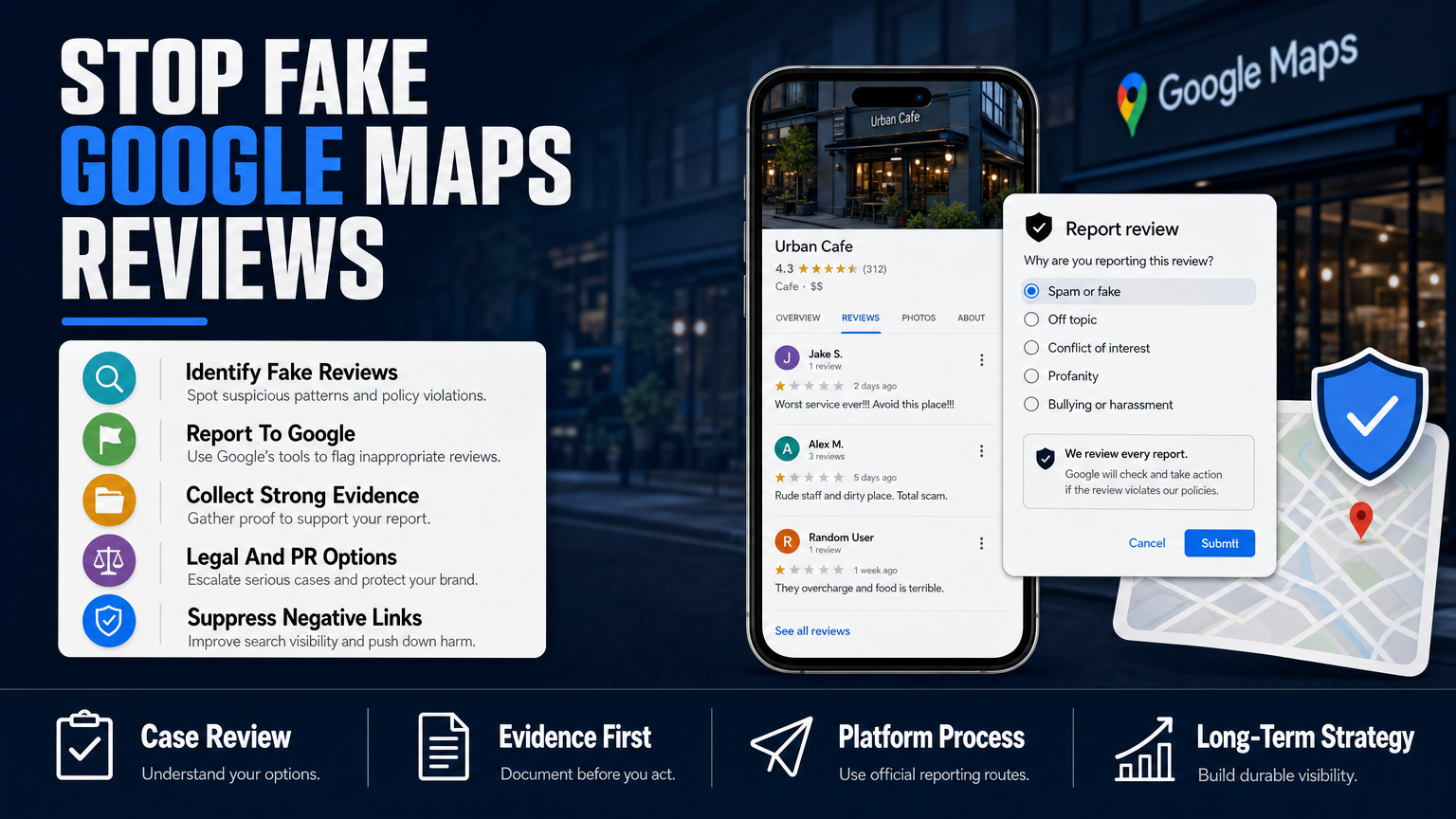
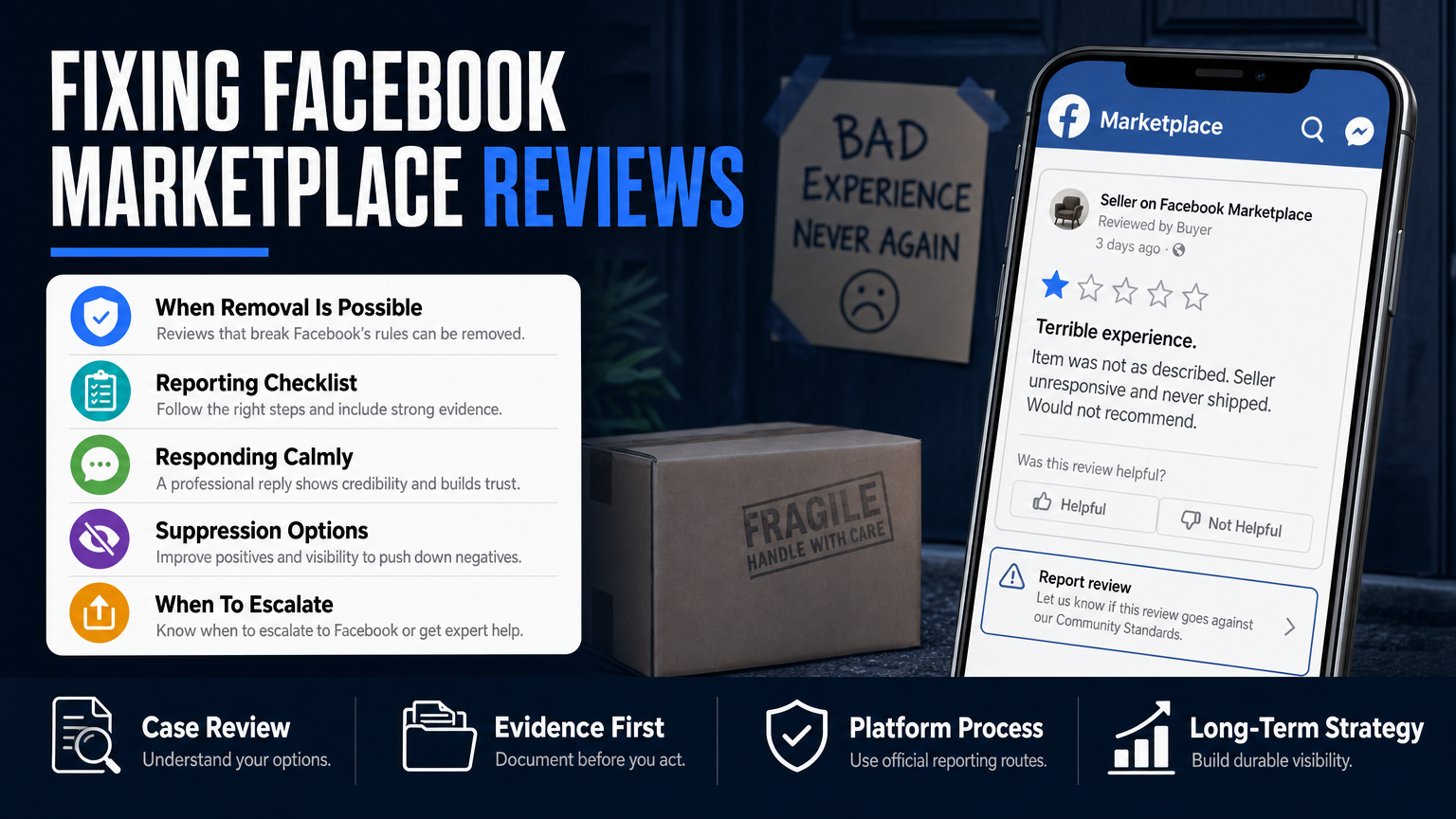
Often, a TikTok video serves as a catalyst for a wave of review-bombing across platforms like Google and Yelp. When your reputation is under attack, you need specialized intervention to mitigate the damage. Our team can help remove negative reviews that violate platform policies or are part of a coordinated campaign against your business, ensuring your rating reflects actual quality.
3. Eliminating Persistent Negative Content
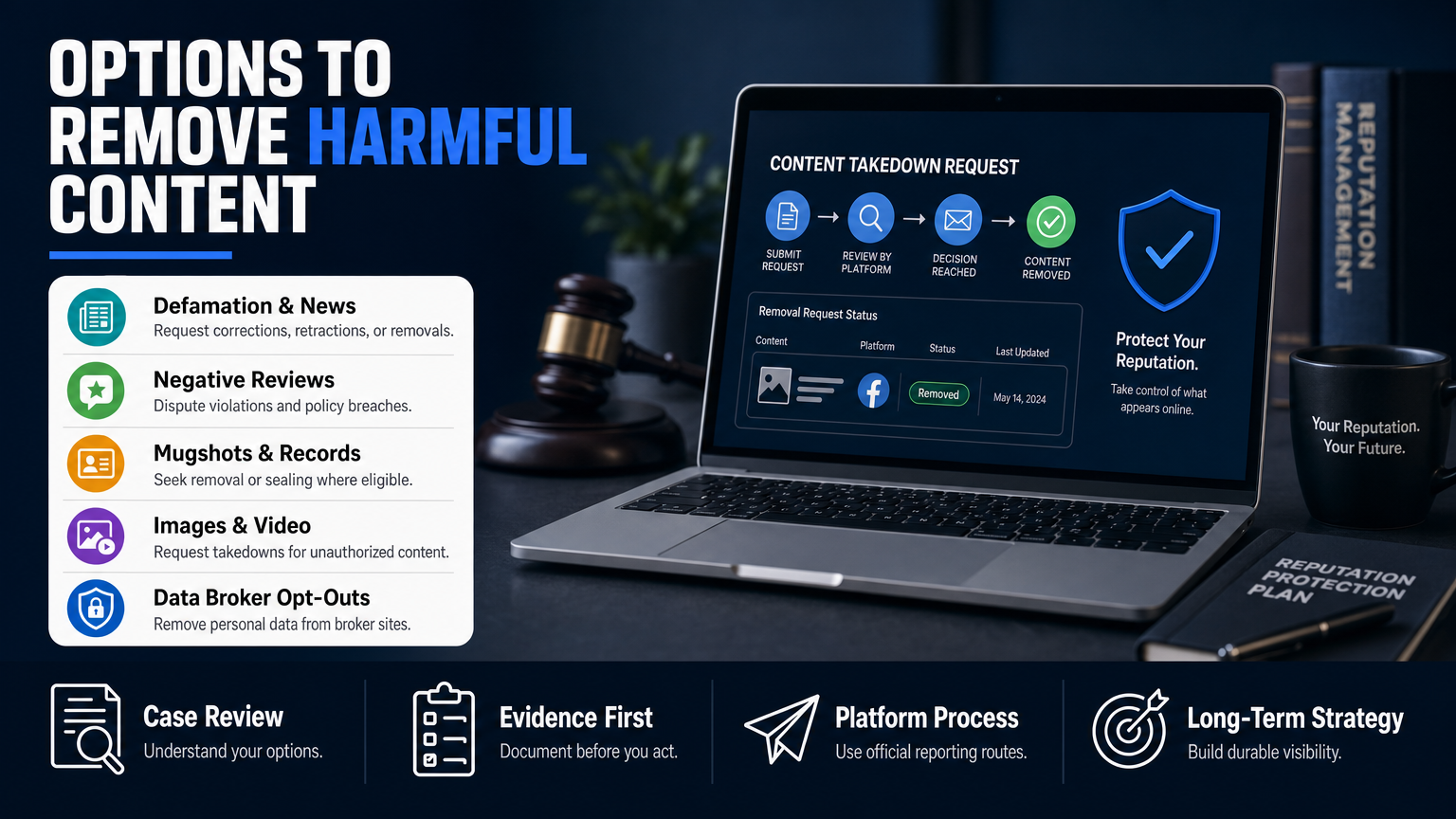
If the viral video has been reposted or covered by secondary media sites, it creates a “feedback loop” that keeps the negative content in the public eye. In these instances, you may need to look into remove negative videos tactics to ensure the original harmful content is de-indexed, effectively breaking the chain of viral amplification and restoring your brand’s authority.
Why Legal Alone Isn't the Answer
Many business owners immediately turn to legal counsel when they see a defamatory video, hoping that a cease-and-desist letter will resolve the matter. However, litigation is often too slow and expensive for the TikTok era. By the time a court order is processed, the damage is already done, and in many cases, the legal threat only draws more attention to the original content—a phenomenon known as the Streisand Effect. Therefore, digital reputation management for businesses must prioritize technical solutions over purely legal ones.
A more sophisticated approach involves a combination of legal oversight and technical reputation management—such as court record removal services—to handle the situation from an algorithmic standpoint. By working with experts who understand the nuances of digital de-indexing, businesses can often achieve results that are far faster and more permanent than traditional litigation. This strategic flexibility is vital for protecting a brand’s longevity.
Ultimately, leaders must understand that the internet is a technical landscape, not a courtroom. Relying solely on the law to manage your reputation leaves you vulnerable to the rapid nature of content dissemination. True digital reputation management for businesses integrates the legal with the technical, ensuring that you can suppress unwanted content while maintaining a low-profile approach that protects your practice or restaurant from further scrutiny.
Protecting Your Personal Privacy
It is important to remember that when a clinic or restaurant is targeted during a viral incident, the owner’s personal information is often exposed, leading to doxxing or targeted harassment. Ensuring you remove your personal information from data brokers is not just a privacy measure; it is a defensive strategy to keep your professional and personal lives separate during a crisis. For those focused on digital reputation management for businesses, the security of the leadership team is just as critical as the public image of the entity.
When the lines between your personal and professional identity blur, the damage can become personal, affecting your ability to function as a leader. By aggressively scrubbing personal data from public databases, you minimize the risk that a disgruntled customer or malicious actor can weaponize your private life against your practice. This is a proactive step that every high-level professional should take before a crisis occurs, as it builds a layer of insulation around the brand.
Furthermore, this practice supports long-term resilience by preventing the accumulation of digital breadcrumbs that could be used in future smear campaigns. Implementing a comprehensive policy of digital reputation management for businesses means that you are constantly monitoring not just your company, but the individuals behind it. By keeping your private details off public lists, you ensure that you retain the freedom to operate and lead without the fear of personal intimidation.
The Architecture of Digital Resilience
Building a resilient digital presence is akin to maintaining a high-end property; it requires consistent, preventative maintenance rather than sporadic repairs. True digital reputation management for businesses focuses on creating a “moat” of positive, authoritative content around your brand. By regularly publishing high-quality thought leadership, securing verified media placements, and optimizing your official profiles, you create a baseline of trust that makes it harder for a single negative incident to penetrate your reputation.
When your digital ecosystem is built on a foundation of verified, positive information, you are better equipped to weather social media volatility. This architecture does not just exist to suppress noise; it exists to project your professional standards and clinical excellence at all times. By diversifying your online footprint, you ensure that potential patients or customers searching for your name encounter a comprehensive, professional narrative that reflects your expertise.
Moreover, a well-architected digital presence allows you to recover faster. When you have established authority across multiple platforms, search engines are more likely to prioritize your official content over transient, negative viral chatter. Leaders who view their online presence as a strategic asset—rather than a secondary marketing channel—are the ones who remain resilient in the face of the inevitable challenges that 2026’s digital landscape presents.
Assessing Your Risk Profile: When to Act
Many business owners make the mistake of waiting for an crisis to reach its peak before seeking professional assistance, but in the realm of digital reputation management for businesses, timing is everything. It is crucial to perform periodic risk assessments of your digital landscape. Are there outdated articles that show up in your brand search? Are there unaddressed negative reviews that have been ignored for months? Identifying these vulnerabilities before a viral event occurs is the ultimate competitive advantage.
Assessing your risk involves looking at your brand through the lens of a potential critic. By auditing your current search engine results pages (SERPs) and identifying potential points of failure, you can implement proactive measures to neutralize those threats. This is not about paranoia; it is about objective strategic planning. When you know where your weaknesses lie, you can prioritize your resources toward shielding those specific areas before they are exploited.
Taking this proactive stance transforms your reputation strategy from a reactive burden into a calculated operational success. If you find that your brand is already showing signs of vulnerability, such as negative auto-complete suggestions or lingering unfavorable press, the time to act is immediately. Implementing a specialized approach to digital reputation management for businesses now can prevent the massive capital and time expenditure required to undo damage that has already been indexed and amplified.
Frequently Asked Questions (FAQ)
How long does it take to see results in digital reputation management?
The timeline varies based on the complexity of the issue. While some aspects of digital reputation management for businesses, such as review mitigation, can show progress in days or weeks, de-indexing negative content or shifting search suggestions is a longer, technical process that can take several months to fully stabilize.
Can I handle a TikTok crisis entirely on my own?
While you can manage the initial social media response, the algorithmic fallout (Google results, auto-complete, and secondary media) usually requires professional technical intervention. Attempting to handle a complex viral crisis without expertise can often lead to the “Streisand Effect,” where your efforts inadvertently draw more attention to the negativity.
Is it possible to completely erase information from the internet?
“Erasing” is rarely possible, but “suppressing” and “de-indexing” are highly effective. Our approach to digital reputation management for businesses focuses on pushing negative content out of sight and replacing it with authoritative, relevant information that represents your actual brand values.
Does a TikTok viral incident affect my long-term business valuation?
Yes. In 2026, digital due diligence is standard for investors, partners, and even potential high-end patients. A persistent negative narrative associated with your brand name in search results can lower the perceived value of your practice or restaurant and decrease your overall enterprise value.
The New Reality of Brand Stewardship
A TikTok crisis is not a death sentence, but it is a wake-up call for modern entrepreneurs. In 2026, managing your digital reputation is just as important as managing your physical location or your clinical quality. By integrating technical suppression strategies, monitoring sentiment, and acting decisively, you can ensure that your brand’s integrity remains intact, regardless of what the algorithm throws your way. The evolution of digital reputation management for businesses has reached a point where it must be a core operational competency.
If your practice is currently facing damaging coverage in the press, utilizing a professional news articles removal service is a critical operational step to safeguard your enterprise value. This proactive approach prevents temporary setbacks from becoming permanent barriers to your success. The goal is to move from a state of constant reaction to a state of strategic control, where your digital footprint is a reflection of your actual expertise and standards rather than a repository of viral moments.
As you look toward the future, remember that the most successful organizations are those that treat their reputation as a dynamic, living asset. Continuous investment in digital reputation management for businesses will pay dividends by maintaining the trust of your patients and clients even in the face of inevitable digital challenges. Take command of your digital narrative today, because once you lose the ability to shape your own story, you lose the ability to lead in the marketplace.
Your brand’s digital integrity is its most valuable asset. Do not wait for a viral incident to threaten your livelihood. Contact our team today for a confidential, executive-level reputation audit and begin the process of reclaiming your narrative.