Your online reputation can change faster than you think. A new Google review, social media post, news article, forum comment, or search result can influence how customers and professional contacts perceive you.
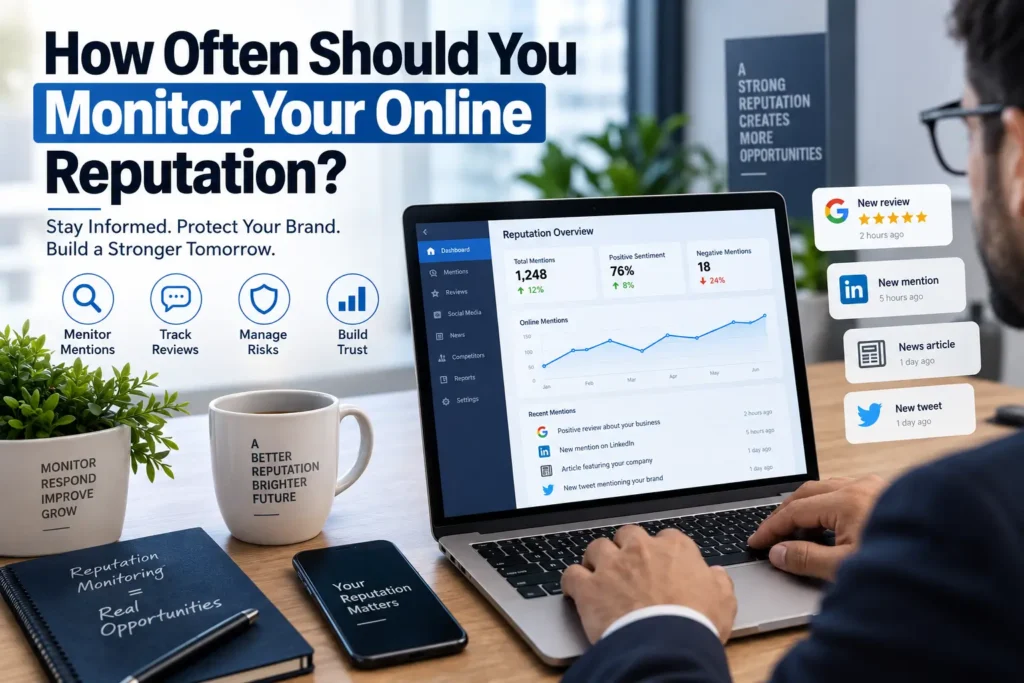
So, how often should you monitor your online reputation? For most businesses and public-facing professionals, checking once in a while is not enough. A consistent monitoring schedule helps you identify problems early, respond appropriately, and protect the digital assets that support your credibility.
For businesses with high visibility or active customer feedback, daily alerts combined with a weekly review are often more practical than manually searching everything every day.
Featured Snippet Answer
How often should you monitor your online reputation? Businesses, executives, and personal brands should ideally monitor important reputation signals daily through alerts and conduct a deeper review at least weekly. High-risk brands may need real-time monitoring for reviews, mentions, news, and social media.
Table of Contents
- Why Online Reputation Monitoring Matters
- How Often Should You Monitor Your Online Reputation?
- What You Should Monitor
- Daily Reputation Monitoring
- Weekly Reputation Reviews
- Monthly Reputation Audits
- Monitoring by Industry
- Step-by-Step Monitoring Process
- Common Reputation Monitoring Mistakes
- Best Practices for Long-Term Protection
- When to Hire a Reputation Management Professional
- Conclusion and CTA
- Frequently Asked Questions
Why Online Reputation Monitoring Matters
Your reputation is shaped by information you do not completely control. Customers can leave reviews, journalists can publish stories, and third-party websites can create pages that appear when someone searches your name.
Google explains that its systems consider factors such as relevance, usability, expertise, and other signals when organizing search results.
That makes monitoring important for more than finding negative comments. It helps you understand what information people encounter when researching your business, leadership team, or personal brand.
How Often Should You Monitor Your Online Reputation?
There is no single schedule that works for every organization. A local business with dozens of daily customers has different monitoring needs from a CEO, lawyer, doctor, or entrepreneur with limited public mentions.
A practical framework is:
| Monitoring Level | Recommended Frequency | Best For |
|---|---|---|
| Real-time alerts | As mentions appear | High-risk brands |
| Daily checks | Every business day | Active businesses |
| Weekly review | Once per week | Most brands |
| Monthly audit | Once per month | Strategic review |
| Quarterly assessment | Every 3 months | Long-term planning |
For most businesses, daily alerts plus a weekly reputation review and monthly audit provide a strong balance between responsiveness and efficiency.
What Should You Monitor Online?
Reputation monitoring should go beyond your Google Business Profile.
Search Results
Search your:
- Business name
- Founder or CEO name
- Brand variations
- Product names
- Key executives
- Common misspellings
Look at the first page as well as emerging results that could become more visible over time.
Reviews and Ratings
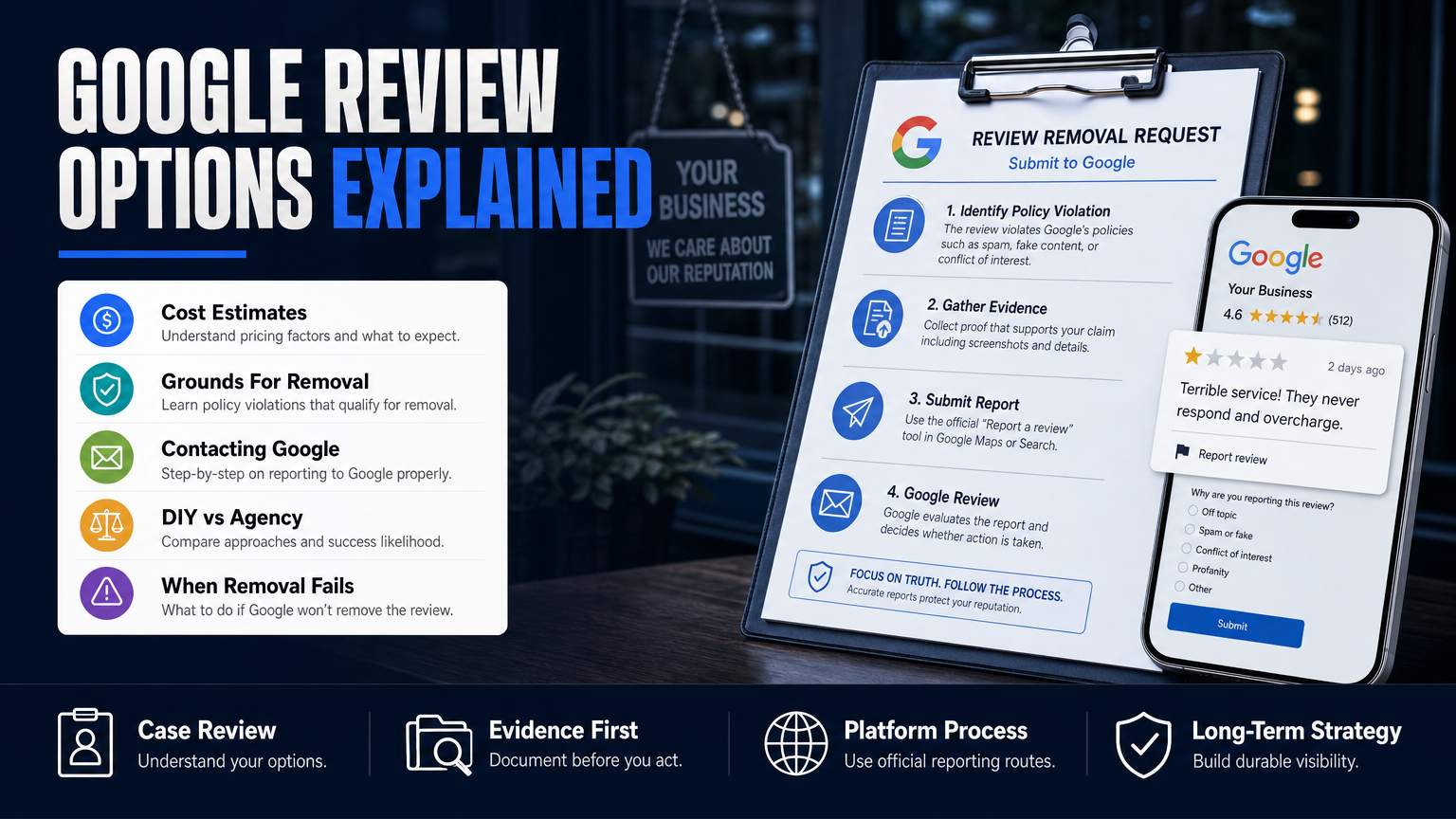
Monitor platforms where customers can discuss your business. Google reviews are especially important for many local companies because reviews appear alongside business information in Google Search and Maps.
However, don’t focus exclusively on your star rating. Watch recurring complaints, response patterns, review velocity, and changes in customer sentiment.
Social Media
Monitor mentions, comments, tagged posts, and discussions involving your brand.
A complaint that receives little attention today could gain visibility tomorrow if other users begin sharing it.
Daily Reputation Monitoring
Daily monitoring is particularly valuable for businesses that receive frequent customer feedback or operate in industries where reputation issues can escalate quickly.
A daily check can take only a few minutes when properly organized.
Look for:
- New Google reviews
- Brand mentions
- Executive mentions
- New negative search results
- Social media complaints
- News coverage
- Forum discussions
- Unexpected website or profile changes
The goal is not to obsessively search your name. Instead, use alerts and structured checks to identify meaningful changes quickly.
Weekly Reputation Reviews
A weekly review should go deeper than a daily notification check.
Set aside time to examine how your reputation is developing across platforms. Compare this week’s results with previous weeks and look for patterns rather than isolated comments.
Ask:
- Are new negative mentions appearing?
- Are customers repeating the same complaint?
- Has search visibility changed?
- Are positive pages becoming stronger?
- Are competitors receiving better visibility?
- Are there emerging issues that need attention?
A weekly review turns individual signals into useful business intelligence.
Monthly Reputation Audits
A monthly audit provides a broader view of your digital reputation.
Search your most important branded queries from different devices and locations where appropriate. Review your website, social profiles, review platforms, business listings, news coverage, and other prominent results.
Monthly audits should also identify outdated information.
For example, an old executive biography, incorrect business listing, or outdated social profile may not be negative, but inaccurate information can still weaken trust.
Monitoring Needs Differ by Industry
Not every professional needs the same level of monitoring.
Business Owners
Businesses with frequent customer interactions should monitor reviews and brand mentions regularly. Daily alerts are useful when review volume is high.
CEOs and Executives
Executives should monitor their names, company associations, interviews, media mentions, and professional profiles. A dedicated approach to CEO Reputation Management can help protect leadership credibility.
Doctors and Healthcare Professionals
Healthcare professionals should pay close attention to reviews, directory profiles, inaccurate information, and public discussions while respecting privacy and professional obligations.
Lawyers
Law firms and attorneys should monitor reviews, legal directories, media coverage, and branded search results. Reputation can directly influence whether prospective clients decide to make contact.
Real Estate Professionals
Agents should regularly monitor Google reviews, property-related discussions, social media mentions, and search results connected with their name and brokerage.
Personal Brands and Entrepreneurs
A personal brand often depends heavily on the individual’s name. For these professionals, Personal Reputation Management can help coordinate monitoring, content, search visibility, and reputation protection.
A Step-by-Step Reputation Monitoring Process
A consistent process makes monitoring easier and more useful.
Step 1: Identify Your Reputation Assets
Create a list of your business name, executive names, domains, social profiles, review platforms, products, and important keywords.
Step 2: Set Up Alerts
Use appropriate search and social monitoring tools to receive notifications when your name or brand appears online.
Step 3: Review Search Results
At least weekly, examine important branded searches and record meaningful changes.
Step 4: Categorize Mentions
Separate mentions into positive, neutral, negative, inaccurate, and potentially harmful categories.
Step 5: Evaluate Risk
Not every negative mention deserves a response. Consider the source’s authority, audience, accuracy, visibility, and potential impact.
Step 6: Respond Appropriately
Respond professionally when a response can genuinely help. Avoid emotional arguments or public disputes.
Step 7: Escalate Serious Issues
Defamatory claims, coordinated attacks, privacy concerns, or rapidly spreading negative content may require professional or legal evaluation.
Real Example: A Growing Professional Services Firm
Consider a law firm that receives five new reviews in one week. Four are positive, while one contains a serious accusation that the firm believes is inaccurate.
A basic monitoring system would identify the review quickly. The firm could then determine whether it violates the platform’s policies, whether a factual response is appropriate, and whether further action is necessary.
Without monitoring, the issue could remain unnoticed for weeks.
With structured monitoring, the firm has an opportunity to assess the situation while it is still relatively contained.
Common Reputation Monitoring Mistakes
Only Checking When Something Goes Wrong
Reactive monitoring creates unnecessary risk. By the time you discover a damaging result, it may already have gained visibility.
Monitoring Only Google
Google is important, but your reputation exists across social networks, review platforms, news websites, directories, forums, and industry-specific websites.
Treating Every Negative Comment as a Crisis
Some criticism is legitimate and useful. Treating every complaint as an attack can create unnecessary conflict.
Responding Emotionally
Public arguments can attract more attention to an issue. Take time to assess the situation before responding.
Ignoring Positive Signals
Monitoring is not only about finding problems. Positive reviews, media coverage, customer stories, and authoritative content can reveal opportunities to strengthen your reputation.
Best Practices for Online Reputation Monitoring
Effective monitoring is consistent, organized, and proportionate to your risk level.
Follow these practices:
- Monitor your most important branded searches regularly.
- Set alerts for your name and company.
- Track major review platforms.
- Maintain a record of significant reputation events.
- Review executive and employee-facing profiles.
- Watch for inaccurate business information.
- Respond to legitimate complaints professionally.
- Escalate serious issues promptly.
- Review competitors periodically.
- Measure trends rather than isolated comments.
Your monitoring strategy should evolve as your business grows.
Search Monitoring vs. Reputation Management
Monitoring tells you what is happening. Reputation management focuses on what to do about it.
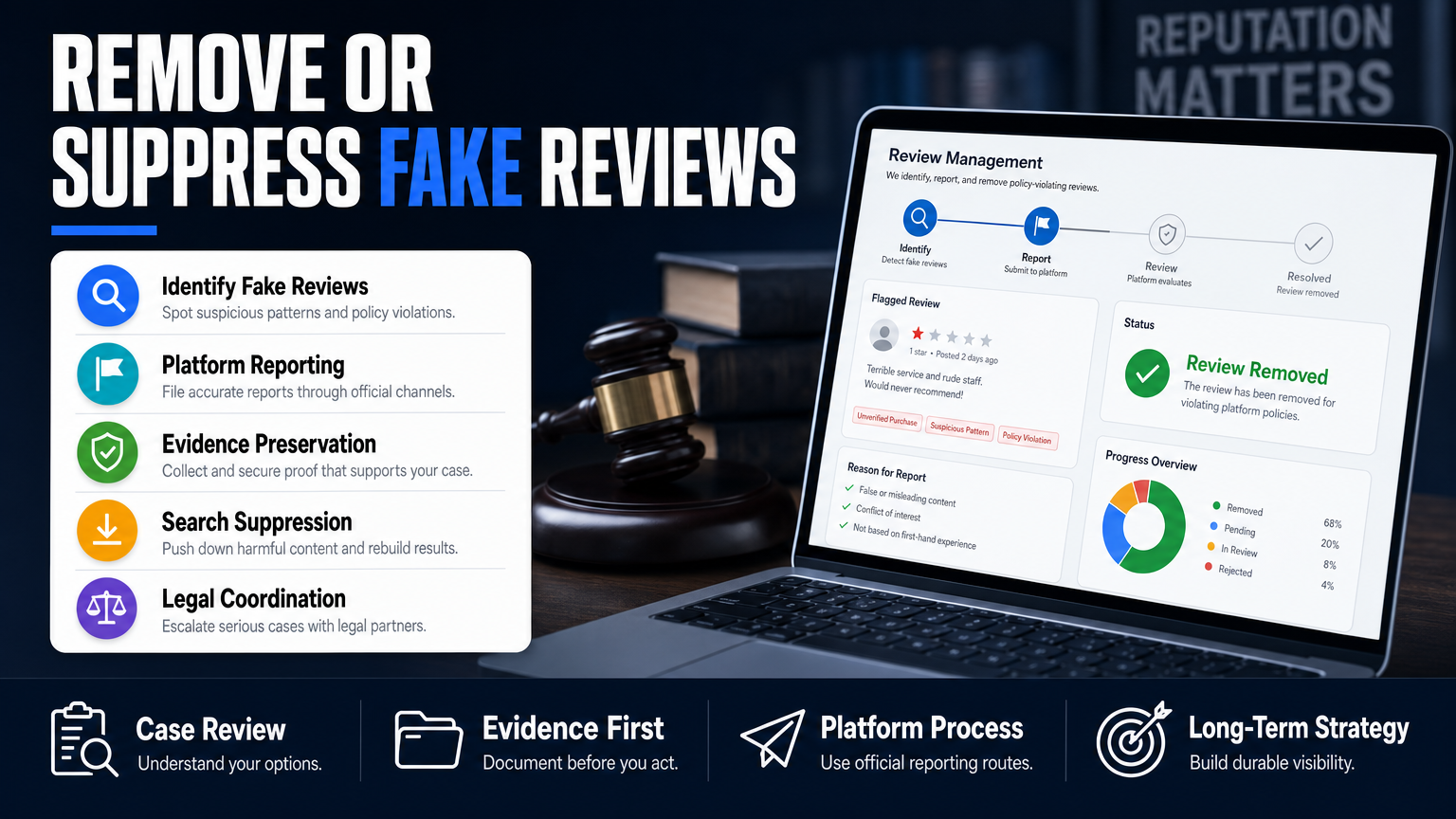
For example, a monitoring system might identify a negative article ranking for your company name. A reputation strategy could then evaluate whether removal, correction, publisher outreach, content development, or search suppression is appropriate.
This distinction is important because simply knowing about a problem does not solve it.
Our Reputation Monitoring service focuses on identifying meaningful reputation signals so potential issues can be addressed strategically.
What to Do When You Find Negative Content
Don’t immediately assume that negative content should be removed.
First determine:
- Is the information accurate?
- Is it an opinion or factual claim?
- Does it violate a platform policy?
- Is the source authoritative?
- How visible is the content?
- Is it generating meaningful reputational harm?
- Can the publisher correct the information?
- Would a professional response be more appropriate?
Google notes that content removal from Search generally occurs only in limited circumstances, such as certain legal requirements, policy violations, or requests from the website owner.
This is why an informed assessment should come before any aggressive removal strategy.
When Should You Hire a Reputation Management Professional?
DIY monitoring can work for straightforward situations. However, professional help becomes more valuable when the issue is complex, highly visible, or potentially damaging.
Consider professional assistance when:
- Negative content ranks prominently.
- Your name is connected with false information.
- A reputation crisis is developing.
- Multiple platforms are involved.
- Your executive reputation is at risk.
- Negative reviews are becoming a pattern.
- You don’t have time to monitor everything.
- You need a long-term reputation strategy.
A professional Reputation Management Agency can evaluate the entire search landscape instead of focusing on a single result.
Reputation Monitoring Should Be Proactive
The strongest reputation strategies don’t wait for a crisis.
Proactive monitoring gives business owners and professionals an opportunity to identify emerging issues, improve weak areas, and strengthen positive digital assets before a problem becomes highly visible.
That can include publishing useful content, maintaining accurate profiles, building legitimate authority, encouraging authentic customer feedback, and keeping important digital properties current.
Google’s guidance emphasizes reliable, helpful information and signals of expertise, authoritativeness, and trustworthiness when discussing search quality.
How Your Reputation Agency Can Help
Monitoring becomes much easier when you have a structured strategy and professional support behind it.
Reputation Management Consultants can help evaluate your digital footprint, identify reputation risks, and determine which issues require immediate attention.
For broader needs, Reputation Management Services can combine monitoring with content strategy, search visibility, review management, and long-term reputation protection.
For organizations seeking a dedicated partner, a Reputation Management Firm can provide ongoing strategic oversight.
Reputation Monitoring Tools and Resources
Technology can make monitoring more efficient, but tools should support human judgment rather than replace it.
Depending on your needs, monitoring may include:
- Search alerts
- Review monitoring platforms
- Social listening tools
- Brand mention tracking
- SEO monitoring software
- Analytics platforms
- Manual search reviews
Our guide to Best Tools for Monitoring Online Reputation provides additional information about selecting the right monitoring approach.
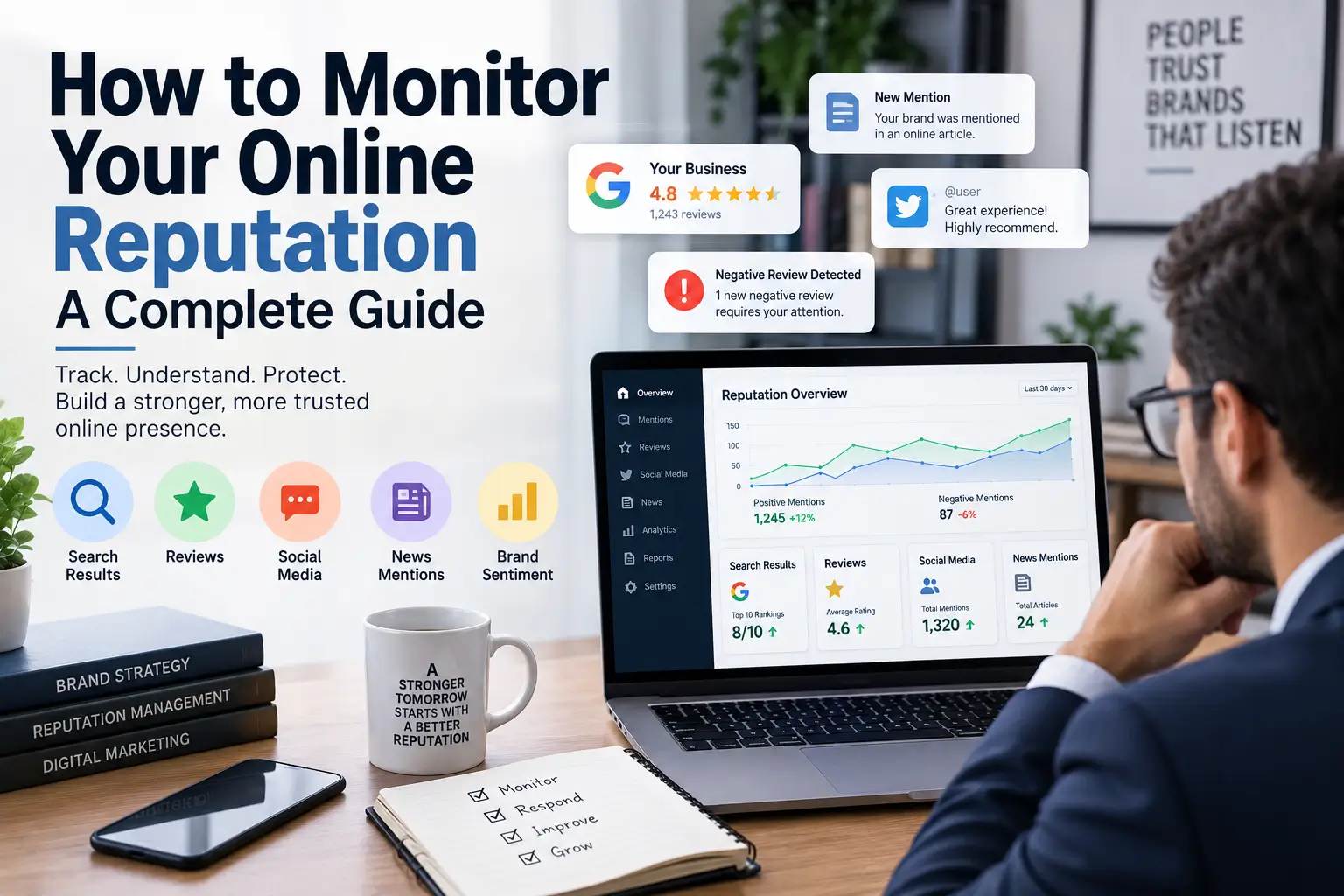
You can also explore our How to Monitor Your Online Reputation: A Complete Guide for a more detailed monitoring framework.
How Reputation Monitoring Fits Into ORM
Monitoring is one component of a broader reputation strategy.
A complete approach can involve monitoring, content development, review management, search optimization, executive positioning, social media management, and crisis response.
Our guide to How Reputation Management Works explains how these activities work together.
For brands facing social media-specific challenges, Social Media Reputation Management can provide a more focused strategy.
Stronger Reputation Starts With Consistent Monitoring
There is no universal answer to How Often Should You Monitor Your Online Reputation? The right frequency depends on your visibility, industry, customer volume, and risk level.
For most organizations, daily alerts, weekly reviews, and monthly audits provide a practical foundation. High-profile executives, public figures, rapidly growing companies, and brands facing active reputation issues may require more frequent monitoring.
The key is consistency. You cannot protect a reputation you rarely examine.
Take Control of Your Online Reputation
If you discover a serious issue, don’t wait for it to become more visible before taking action.
Your Reputation Agency helps businesses, executives, entrepreneurs, doctors, lawyers, real estate professionals, and personal brands understand what is appearing online and develop strategic solutions based on their specific reputation risks.
Our approach focuses on ethical reputation management, accurate information, sustainable search visibility, and long-term digital credibility rather than unrealistic promises.
If you need a professional assessment, Contact Us to discuss your online reputation and determine what should be monitored, prioritized, and improved.
What Our Clients Say
Your online reputation deserves a partner you can trust. At Your Reputation Agency, we focus on professional communication, strategic reputation management, and solutions tailored to each client’s situation.
Before choosing an ORM partner, we encourage prospective clients to review independent customer feedback on our Trustpilot profile. These reviews provide additional insight into client experiences and the service standards we aim to maintain.
Conclusion
Understanding How Often Should You Monitor Your Online Reputation is less about checking Google every hour and more about creating a reliable system.
For most brands, daily alerts, weekly reviews, and monthly audits provide a sensible foundation. More sensitive situations may require real-time monitoring and professional oversight.
Your reputation is an ongoing business asset. By identifying problems early, responding thoughtfully, and continuously strengthening your digital presence, you can build greater resilience and confidence among the people who matter most.
Frequently Asked Questions
1. How often should you monitor your online reputation?
Most businesses should use daily alerts for important mentions, conduct a deeper weekly review, and complete a broader reputation audit each month. High-risk brands may need real-time monitoring.
2. Is checking Google once a week enough?
A weekly search review can be useful, but it should not be your only monitoring method. Reviews, social media, news, forums, and business listings can change between searches.
3. What should I monitor online?
Monitor your business name, personal name, CEO and executive names, reviews, social media mentions, news coverage, branded search results, business listings, and important product or service terms.
4. Should CEOs monitor their personal reputation?
Yes. Executives often have a strong connection between their personal name and company reputation. Monitoring can identify inaccurate information, negative coverage, or emerging issues before they become more visible.
5. Can online reputation monitoring prevent a crisis?
Monitoring cannot guarantee that a crisis will never occur. However, early detection can give you more time to evaluate an issue and respond appropriately before it escalates.
6. What is the difference between reputation monitoring and reputation management?
Reputation monitoring identifies and tracks online mentions and reputation signals. Reputation management uses that information to develop strategies for addressing risks and strengthening positive digital visibility.
7. Should I respond to every negative review?
No. Responses should be strategic and appropriate. Legitimate customer concerns may deserve a professional response, while abusive, fraudulent, or policy-violating content may require reporting or escalation.
8. How can a reputation management company help?
A professional firm can monitor multiple sources, assess reputation risks, analyze search visibility, develop response strategies, and implement broader reputation protection initiatives when needed.
9. How often should I audit my Google search results?
A monthly audit is a practical starting point for most businesses. If you’re experiencing active negative coverage or a reputation crisis, more frequent reviews may be appropriate.
10. When should I seek professional reputation management?
Consider professional help when negative content is ranking prominently, false information is spreading, reviews are becoming difficult to manage, or your reputation is directly affecting business opportunities.