Every day, millions of people search online before making important decisions. They research businesses before becoming customers, employers before accepting job offers, professionals before scheduling appointments, and executives before entering partnerships. Because of this, your online reputation has become one of your most valuable digital assets.
Unfortunately, not everything that appears online is accurate, fair, or even current. False accusations, outdated news articles, fake reviews, defamatory blog posts, misleading social media content, and harmful search results can significantly impact trust and credibility. When negative information dominates search results, it can influence purchasing decisions, reduce business opportunities, and damage personal or corporate reputations.
This is where What Is Negative Content Removal? becomes an important question for business owners, executives, entrepreneurs, healthcare professionals, attorneys, and public figures.
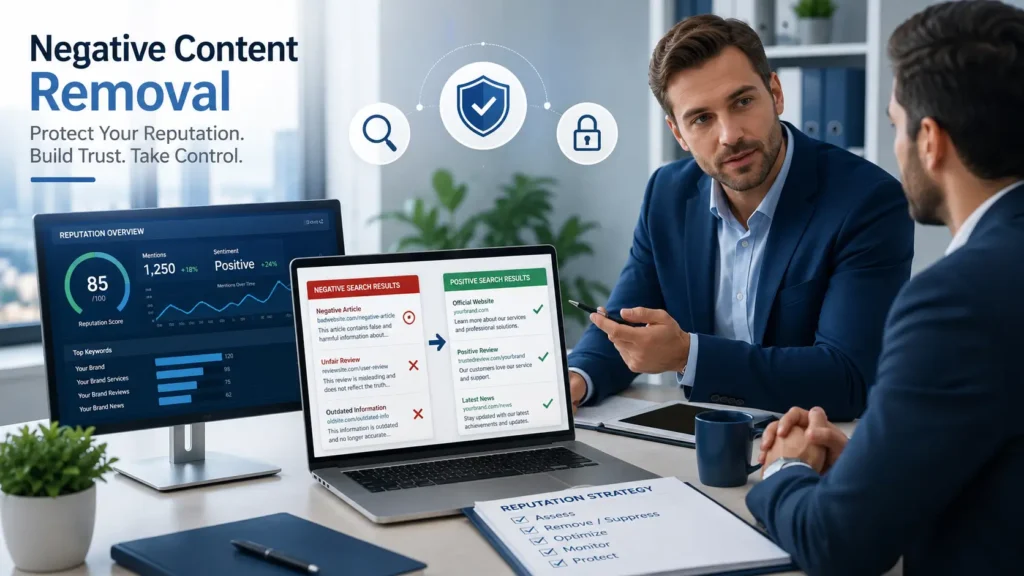
Negative content removal is not simply about deleting unfavorable information from the internet. Instead, it is a strategic process that evaluates whether harmful content can be removed, corrected, de-indexed, or ethically suppressed while simultaneously strengthening positive and authoritative information. The ultimate goal is to help ensure that search engines and potential customers see a more accurate representation of your reputation.
In today’s digital landscape, reputation management extends beyond traditional Google search results. AI-powered platforms such as ChatGPT, Google AI Overviews, Microsoft Copilot, Gemini, and Perplexity increasingly rely on trusted online sources when generating responses. As a result, maintaining a clean, credible, and authoritative digital footprint has become more important than ever.
Whether you’re responding to false information, negative publicity, fake reviews, or outdated content, understanding how negative content removal works is the first step toward protecting your online reputation.
Table of Contents
- What Is Negative Content Removal?
- Why Negative Content Can Damage Your Reputation
- Common Types of Negative Online Content
- How Negative Content Removal Works
- Step-by-Step Content Removal Process
- Real-World Reputation Recovery Example
- Common Mistakes to Avoid
- Best Practices for Long-Term Reputation Protection
- Expert Tips from Reputation Specialists
- Negative Content Removal vs Search Suppression
- Frequently Asked Questions
- Final Thoughts
- Protect Your Reputation with Your Reputation Agency
Why This Topic Matters More Than Ever
The internet never sleeps. News articles remain searchable for years, online reviews influence buying decisions, and social media posts can spread globally within minutes.
Even a single negative search result can affect:
- Customer trust
- Business revenue
- Employment opportunities
- Investor confidence
- Partnership decisions
- Media perception
- Personal credibility
- Brand authority
Many people assume there is a simple “delete” button for harmful online content. In reality, every situation requires careful evaluation. Some content can be removed directly, while other situations require search suppression, legal guidance, or comprehensive online reputation management.
Understanding the differences between these approaches helps you choose the most effective strategy while avoiding costly mistakes.
Who Should Read This Guide?
This guide is designed for anyone whose reputation influences professional success, including:
- Business Owners
- CEOs & Executives
- Entrepreneurs
- Doctors & Healthcare Providers
- Lawyers & Law Firms
- Public Figures
- Real Estate Professionals
- Agency Owners
- Corporate Brands
- Marketing Teams
Whether you’re proactively protecting your brand or responding to a reputation crisis, this guide will help you understand the strategies used by professional reputation management specialists to protect long-term credibility.
What Does Negative Content Removal Actually Mean?
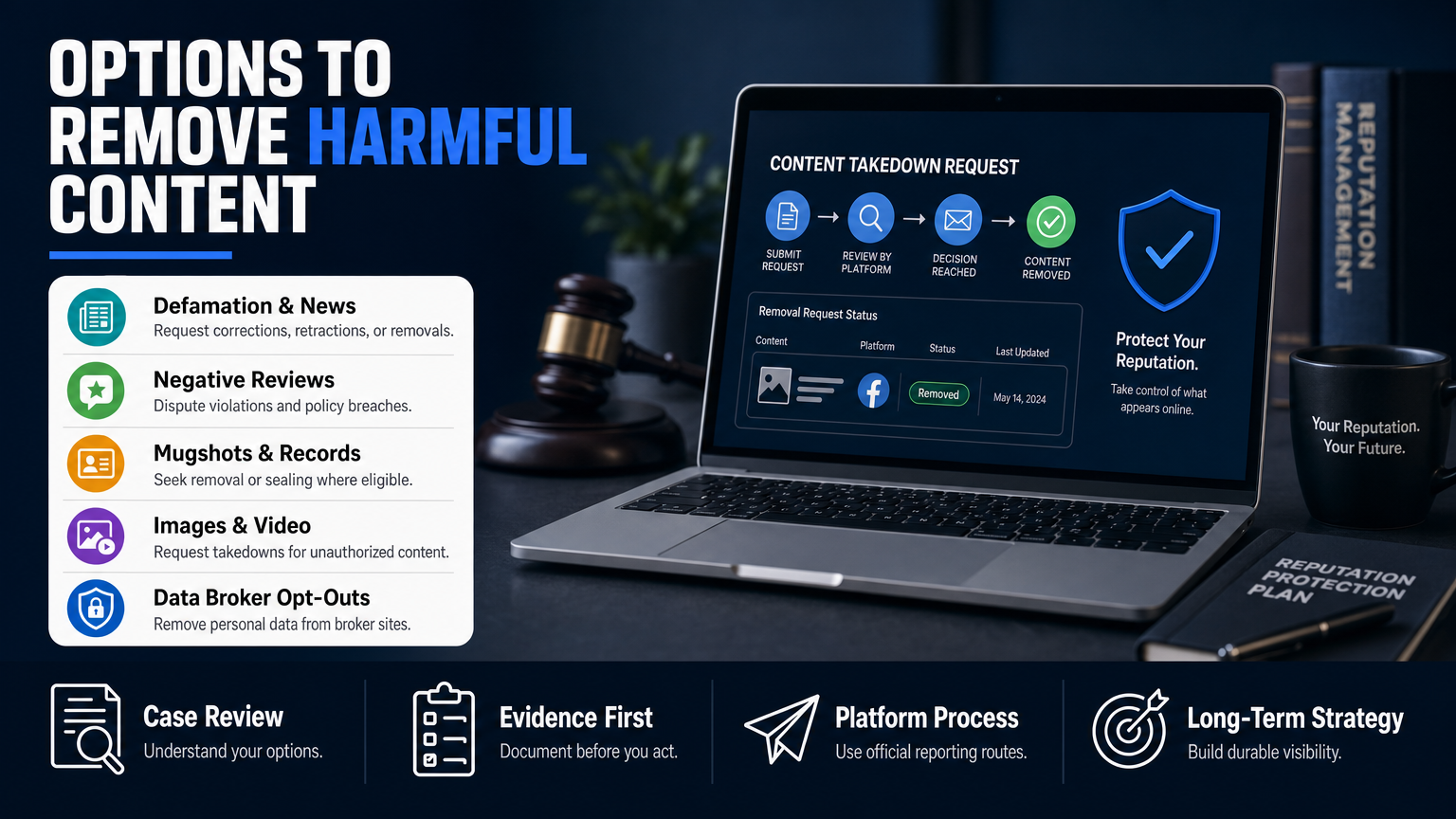
Negative content removal is the process of identifying and addressing online content that unfairly damages an individual’s or organization’s reputation. Depending on the nature of the content, this may involve requesting removal from the publisher, reporting policy violations, correcting inaccurate information, pursuing legal remedies when appropriate, or reducing the visibility of harmful pages through ethical search suppression.
The objective isn’t to erase legitimate criticism or manipulate public opinion. Instead, it’s to ensure that false, outdated, misleading, or policy-violating content doesn’t unfairly define how people perceive your brand.
Professional reputation management always begins with understanding whether the content can actually be removed and determining the most effective strategy based on the circumstances.
Not All Negative Content Can Be Removed
One of the biggest misconceptions about online reputation management is that every negative article, review, or social media post can simply be deleted.
The reality is much more nuanced.
Some content may qualify for removal because it violates platform policies or contains false information. Other content is legally protected and cannot be removed, even if it’s unfavorable.
Understanding the difference is essential before deciding on the next step.
Content That May Qualify for Removal
Examples include:
- Defamatory or false statements
- Fake reviews
- Copyright infringement
- Privacy violations
- Impersonation
- Doxxing or exposed personal information
- Harassment or abusive content
- Non-consensual intimate images
- Certain outdated legal records (depending on jurisdiction)
Each platform has its own policies, meaning removal opportunities vary depending on where the content is published.
Content That Usually Cannot Be Removed
Some online content is generally protected, including:
- Honest customer reviews
- Personal opinions
- Editorial commentary
- Verified news reporting
- Court records
- Public government documents
- Factually accurate criticism
In these situations, search suppression and reputation management often become more effective than attempting direct removal.
Types of Negative Content That Affect Online Reputation
Negative content appears in many different forms. Each requires a different strategy.
Negative Reviews
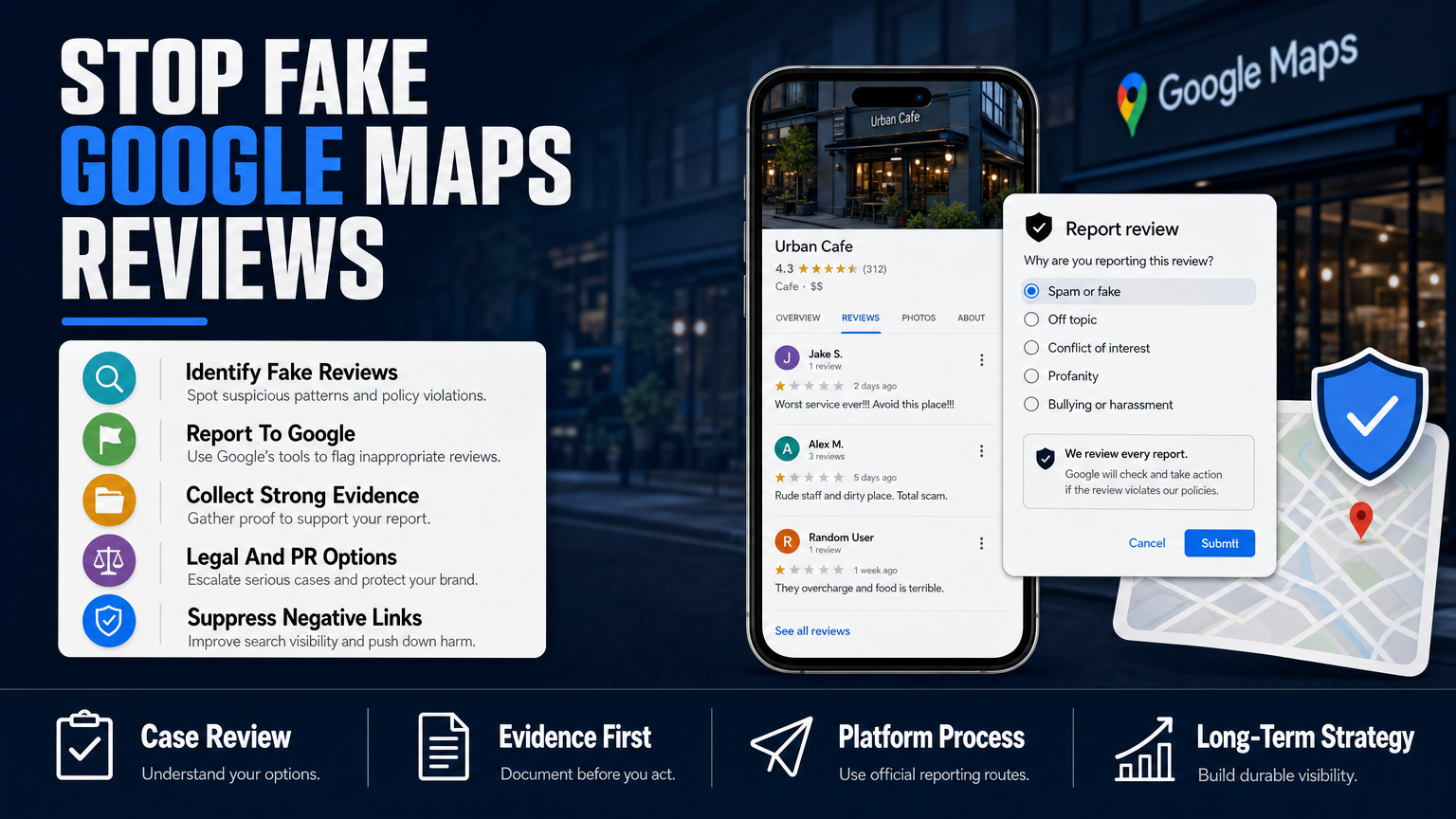
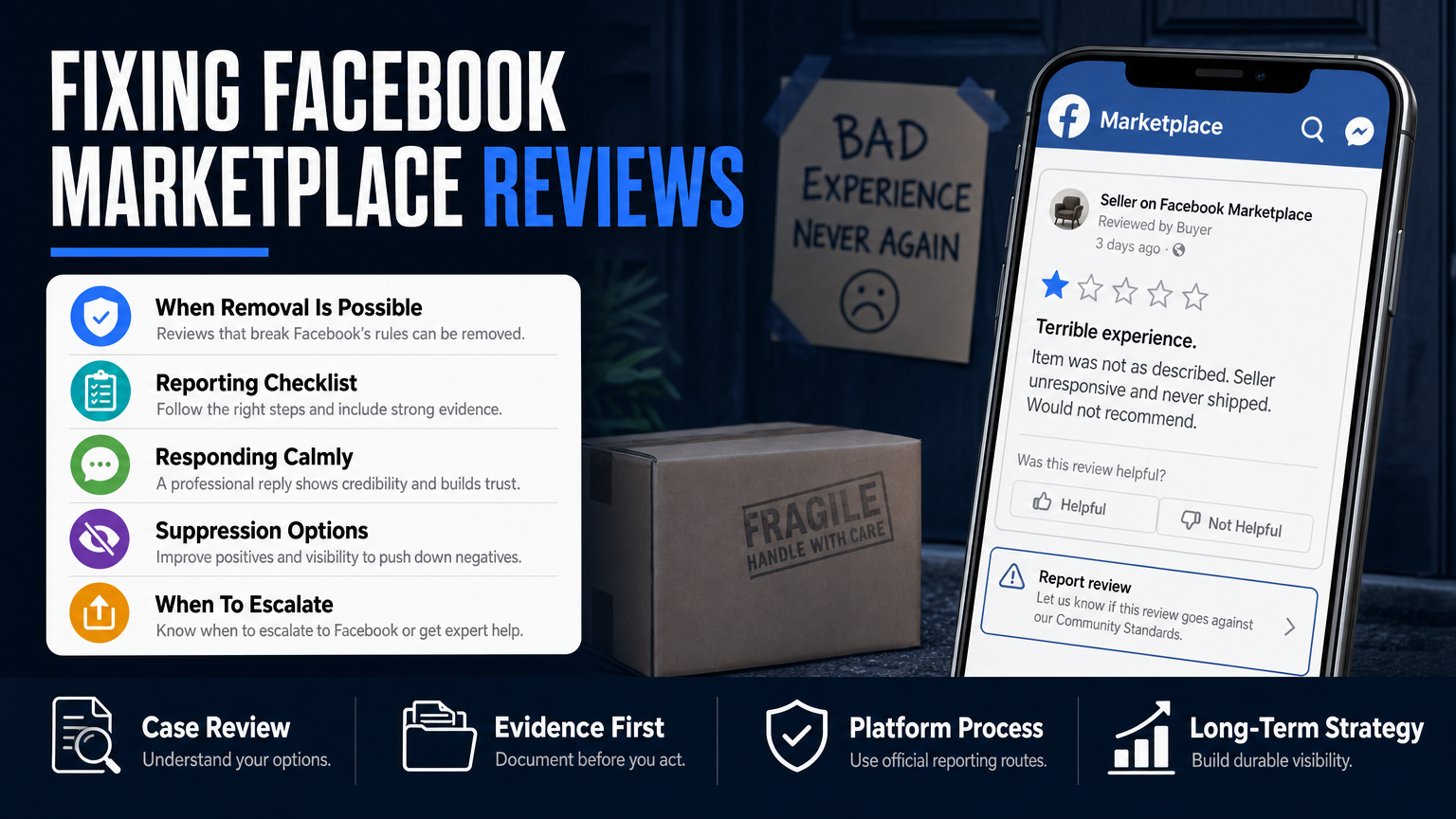
Poor reviews on platforms like Google Business Profile, Yelp, Facebook, or industry directories can discourage potential customers.
While legitimate reviews should be addressed professionally, fake or policy-violating reviews may qualify for removal.
Negative News Articles
Media coverage can remain visible for years, even after the situation has changed.
Older articles may continue appearing on the first page of Google long after they’ve lost relevance, influencing public perception.
Defamatory Blog Posts
Blogs sometimes publish inaccurate or misleading information that unfairly damages businesses or individuals.
When factual inaccuracies exist, content removal requests or legal review may become appropriate.
Forum Discussions
Content posted on Reddit, Quora, niche forums, or community websites often ranks well because these platforms have strong domain authority.
Even anonymous discussions can influence purchasing decisions.
Social Media Content
Posts on Facebook, X (formerly Twitter), Instagram, TikTok, LinkedIn, and YouTube can spread rapidly before businesses have an opportunity to respond.
Monitoring these platforms is an important part of modern reputation management.
Fake News
False stories published online can spread quickly across multiple websites.
Removing fake news often requires a combination of publisher outreach, policy enforcement, legal evaluation, and search suppression strategies.
Search Engine Results
Sometimes the issue isn’t the content itself—it’s what appears first when someone searches your name or business.
Improving branded search results through ethical SEO and authority building is often the most sustainable solution.
How Negative Content Affects Businesses and Professionals
Negative online content influences far more than search rankings.
It directly affects trust.
Potential customers frequently research businesses before making purchasing decisions. Investors review executive backgrounds. Employers evaluate job candidates. Journalists verify information before publishing stories.
When negative information dominates search results, it may lead to:
- Lost sales opportunities
- Reduced customer confidence
- Lower conversion rates
- Declining brand authority
- Difficulty attracting investors
- Damaged executive credibility
- Negative media perception
- Reduced partnership opportunities
- Recruitment challenges
For professionals operating in competitive industries, reputation often becomes a deciding factor.
Negative Content Removal vs Search Suppression
Many people confuse these two strategies.
Although they work together, they’re designed for different situations.
| Negative Content Removal | Search Suppression |
|---|---|
| Attempts to remove harmful content | Reduces visibility of harmful content |
| Best for policy violations or false information | Best when removal isn’t possible |
| May involve publisher outreach | Uses SEO and authoritative content |
| Often depends on platform policies | Builds stronger positive search results |
| Can provide permanent removal in some cases | Creates sustainable reputation improvement |
Neither strategy is universally better.
Professional reputation management begins by determining which approach—or combination of approaches—offers the greatest long-term benefit.
For a more detailed explanation, read our guide:
Search Suppression vs Content Removal | Key Differences
Why Professional Evaluation Matters
Many people spend weeks attempting removal requests that were never likely to succeed.
An experienced reputation management specialist evaluates:
- Whether removal is realistic
- Which platforms are involved
- Applicable policies
- Search visibility
- Content authority
- Reputation risks
- Long-term recovery opportunities
This prevents wasted effort and helps prioritize strategies with the highest likelihood of success.
Businesses looking for a comprehensive long-term solution often benefit from working with a dedicated Reputation Management team.
Learn more about our Reputation Management Company services.
How Negative Content Removal Works: A Step-by-Step Process
Every reputation challenge is unique, but successful negative content removal usually follows a structured process. Rather than reacting emotionally, professional reputation specialists investigate the situation, determine the best course of action, and implement strategies that comply with search engine guidelines and platform policies.
Understanding this process helps businesses make informed decisions and avoid costly mistakes.
Step 1: Conduct a Reputation Audit
The first step is identifying every piece of harmful content affecting your online reputation.
A comprehensive audit typically includes:
- Google search results
- News articles
- Blog posts
- Review platforms
- Social media mentions
- Images and videos
- Business directories
- AI-generated search summaries
The goal is to understand not only what appears online but also how visible and influential each piece of content is.
Step 2: Classify the Content
Not every negative result requires the same strategy.
Professional reputation managers categorize content into different groups, such as:
- False or defamatory information
- Outdated articles
- Fake customer reviews
- Policy violations
- Privacy issues
- Legitimate criticism
- News coverage
- User-generated discussions
This classification determines whether content removal, correction, suppression, or reputation building is the most appropriate solution.
Step 3: Evaluate Removal Opportunities
Once harmful content has been identified, specialists determine whether direct removal is realistic.
Possible removal options include:
- Contacting the website owner
- Requesting corrections
- Reporting policy violations
- Copyright claims (when applicable)
- Privacy-related removal requests
- Legal review for defamatory content
Every platform has different requirements, which is why a customized strategy is far more effective than sending generic removal requests.
Step 4: Implement Search Suppression When Necessary
Sometimes removal simply isn’t possible.
In these cases, search suppression becomes an essential part of reputation management.
Rather than focusing on deleting existing pages, search suppression improves the visibility of positive, authoritative content that better represents your business or personal brand.
This often includes:
- Publishing high-quality content
- Optimizing branded pages
- Building trusted digital assets
- Strengthening entity authority
- Improving website SEO
- Enhancing social profiles
Search suppression is an ethical strategy that aligns with Google’s Helpful Content and Search Quality principles.
Step 5: Monitor and Protect Your Reputation
Online reputation isn’t static.
New reviews, news articles, blog posts, and social media conversations appear every day.
That’s why ongoing monitoring is essential.
Professional monitoring helps identify potential reputation issues before they become major problems while ensuring positive content continues gaining visibility over time.
Real-World Example
Imagine a law firm discovers that an outdated blog post containing misleading information ranks on the first page of Google.
Potential clients searching for the firm’s name repeatedly encounter the article, leading to fewer consultation requests and declining trust.
Instead of relying on a single tactic, the firm adopts a comprehensive reputation management strategy.
The process includes:
- Conducting a full reputation audit
- Requesting factual corrections from the publisher
- Optimizing the firm’s website
- Publishing legal insights and educational resources
- Strengthening attorney profile pages
- Improving Google Business Profile visibility
- Building authoritative backlinks
- Monitoring branded search results
Over time, more accurate and trustworthy content becomes prominent, helping prospective clients find reliable information first.
This example demonstrates that reputation recovery is usually achieved through consistent strategic improvements rather than quick fixes.
Common Mistakes to Avoid
Businesses often make reputation problems worse by responding too quickly or choosing ineffective solutions.
Avoid these common mistakes.
Ignoring Negative Content
Many organizations hope harmful content will disappear on its own.
Unfortunately, search engines may continue displaying it for years if no action is taken.
Responding Emotionally
Public arguments with reviewers, journalists, or social media users often attract more attention to the issue.
Professional, measured communication is almost always more effective.
Believing Every Page Can Be Removed
Some content is legally protected and cannot be deleted simply because it’s unfavorable.
Understanding the difference between removable and non-removable content saves time and frustration.
Hiring Agencies That Promise Instant Results
No ethical reputation management company can guarantee immediate removal of negative search results.
Be cautious of unrealistic promises or agencies using tactics that violate search engine guidelines.
Ignoring SEO
Many businesses focus exclusively on removal requests while neglecting their own digital presence.
Without positive, authoritative content, search engines have fewer trustworthy alternatives to display.
Failing to Monitor Online Mentions
Reputation management isn’t a one-time project.
Regular monitoring helps identify new issues before they significantly affect search visibility or customer trust.
Best Practices for Long-Term Reputation Protection
The strongest online reputations are built proactively rather than reactively.
Organizations that consistently invest in their digital presence are far better prepared to handle unexpected reputation challenges.
Best practices include:
- Publish helpful, authoritative content regularly
- Encourage genuine customer reviews
- Keep business information accurate across platforms
- Monitor branded search results
- Strengthen executive profiles
- Respond professionally to customer feedback
- Maintain active social media profiles
- Update website content frequently
- Invest in ongoing SEO
- Build trust through transparency
Businesses seeking proactive protection often benefit from dedicated Reputation Protection Services that combine monitoring, strategic content development, and long-term reputation management.
Learn more about our services here: Reputation Protection Services
Expert Tips from Reputation Specialists
Years of experience managing online reputations have shown that successful reputation recovery follows a few consistent principles.
Our recommendations include:
- Act early before negative content gains momentum.
- Document every issue before taking action.
- Focus on building authority, not just removing content.
- Treat reputation management as a long-term investment.
- Avoid shortcuts that violate platform or search engine guidelines.
- Combine SEO, content marketing, and brand monitoring into one strategy.
- Build a positive digital footprint before a crisis occurs.
- Review your branded search results regularly to identify emerging risks.
Following these practices helps create a stronger, more resilient online reputation that supports long-term business growth.
Negative Content Removal vs Other Reputation Strategies
Choosing the right strategy depends on the nature of the online content and your long-term goals. While negative content removal is effective in certain situations, it is often combined with other reputation management techniques to achieve the best results.
| Strategy | Best Used For | Primary Goal | Long-Term Value |
|---|---|---|---|
| Negative Content Removal | False, defamatory, or policy-violating content | Remove harmful content where possible | High |
| Search Suppression | Content that cannot be removed | Reduce visibility of negative results | Very High |
| Online Reputation Management | Ongoing brand protection | Improve overall digital reputation | Excellent |
| Review Management | Customer feedback platforms | Build trust and improve ratings | High |
| Digital PR | Brand authority and media visibility | Increase positive media coverage | High |
| SEO & Content Marketing | Search visibility | Rank authoritative content higher | Excellent |
Rather than relying on a single tactic, professional reputation management combines multiple strategies based on your unique circumstances. This integrated approach delivers stronger, more sustainable results.
Conclusion
Understanding What Is Negative Content Removal? is essential for anyone who values their online reputation. Whether you’re a business owner, executive, healthcare professional, attorney, or entrepreneur, the information that appears online influences how people perceive your credibility and make decisions about working with you.
While some harmful content can be removed through publisher requests or platform policies, not every situation has a straightforward solution. In many cases, a combination of ethical content removal, search suppression, SEO, and ongoing reputation management provides the most effective long-term outcome.
The key is to act early, evaluate every situation carefully, and build a strong digital presence that accurately reflects your expertise and achievements. A proactive reputation strategy not only addresses today’s challenges but also helps protect your brand from future risks.
Protect Your Online Reputation with Your Reputation Agency
Your online reputation is too valuable to leave to chance.
If false information, damaging search results, fake reviews, or negative online content are affecting your personal or business reputation, professional guidance can help you choose the most effective solution.
At Your Reputation Agency, we develop customized reputation management strategies designed around your unique goals and circumstances. Our services include negative content removal strategy, search suppression, reputation monitoring, executive reputation management, review management, and long-term reputation protection.
Whether you’re responding to an existing reputation issue or looking to strengthen your digital presence before problems arise, our experienced team is here to help.
Ready to protect your reputation?
Contact our specialists today for a confidential consultation and discover how a tailored reputation strategy can support your long-term success.
Frequently Asked Questions -What is negative content removal?
1. What is negative content removal?
Negative content removal is the process of addressing false, harmful, outdated, or policy-violating online content that negatively affects an individual or business. Depending on the situation, it may involve removal requests, corrections, search suppression, or broader reputation management strategies.
2. Can all negative online content be removed?
No. Honest reviews, factual news reports, and legally protected opinions generally cannot be removed. When direct removal isn’t possible, search suppression and reputation management are often the most effective alternatives.
3. How long does negative content removal take?
The timeline depends on the type of content, the platform involved, and whether the content violates policies or applicable laws. Some cases are resolved within weeks, while others require ongoing reputation management.
4. What is the difference between negative content removal and search suppression?
Negative content removal focuses on removing or correcting harmful content. Search suppression improves the visibility of positive, authoritative content so that harmful pages become less prominent in search results.
5. When should I hire a reputation management agency?
You should consider professional assistance if harmful online content is affecting your reputation, customer trust, career opportunities, or business growth, especially when removal attempts have been unsuccessful.
6. Is reputation management ethical?
Yes. Ethical reputation management follows search engine guidelines and platform policies while focusing on transparency, accurate information, and long-term credibility.
7. Can fake reviews be removed?
Some fake reviews may qualify for removal if they violate the review platform’s policies. Legitimate customer feedback, even if negative, usually remains unless it breaches platform guidelines.
8. How can I prevent future reputation problems?
Regular monitoring, publishing helpful content, maintaining accurate business information, responding professionally to customer feedback, and investing in proactive reputation management are among the best long-term strategies.