
Starting an Online Reputation Management (ORM) business has become one of the most promising opportunities in today’s digital economy. Every day, businesses, executives, healthcare professionals, law firms, and personal brands face online reputation challenges that directly impact customer trust and revenue. As a result, the demand for professional reputation management services continues to grow.
If you’re wondering how to start an online reputation management business, you’re entering an industry that combines digital marketing, SEO, public relations, content strategy, and customer relationship management. However, success requires more than simply offering review management or content removal services. Clients expect measurable results, ethical strategies, and long-term reputation protection.
In this guide, you’ll learn how to build a successful ORM business from the ground up, choose the right services, attract high-value clients, and position yourself as a trusted reputation management expert.
Featured Snippet
How to start an online reputation management business: Begin by choosing a niche, building expertise in SEO and digital reputation management, creating service packages, establishing your online presence, using professional ORM tools, and developing ethical strategies that help clients protect and improve their digital reputation over the long term.
Table of Contents
- Why Online Reputation Management Is a Growing Industry
- What Skills You Need Before Starting
- Step-by-Step Guide to Starting an ORM Business
- Choosing Your Ideal Target Market
- Services Every ORM Agency Should Offer
- Essential Tools for Reputation Management
- Pricing Your Services
- Real Business Example
- Common Mistakes to Avoid
- Best Practices for Long-Term Success
- Expert Tips
- Frequently Asked Questions
- Conclusion
- Contact Your Reputation Agency
Why Online Reputation Management Is One of the Fastest-Growing Digital Services
The internet has changed how people make purchasing decisions. Before contacting a company, most customers search Google, read online reviews, check social media profiles, and evaluate search results.
One negative article or several poor reviews can significantly reduce trust.
Businesses now recognize that online reputation is no longer optional—it’s a competitive advantage.
Today, organizations invest in reputation management to:
- Improve customer trust
- Protect executive credibility
- Manage online reviews
- Address negative search results
- Strengthen their brand image
- Increase conversions
- Support long-term business growth
This growing demand has created excellent opportunities for entrepreneurs who want to build a sustainable Online Reputation Management business.
What Skills Do You Need to Start an Online Reputation Management Business?
Many people assume ORM is simply about removing negative reviews.
In reality, successful reputation management combines several digital marketing disciplines.
The most successful ORM professionals typically understand:
Search Engine Optimization (SEO)
SEO helps improve the visibility of positive content while strengthening a client’s overall online presence. Understanding on-page SEO, technical SEO, local SEO, and content optimization is essential.
Content Marketing
High-quality content builds authority and gives search engines more positive information to rank.
This includes:
- Blog articles
- Press releases
- Executive bios
- Company profiles
- Landing pages
- Knowledge panel optimization
Online Review Management
Responding professionally to customer feedback and encouraging authentic positive reviews helps improve trust while maintaining compliance with platform guidelines.
Brand Monitoring
Monitoring mentions across search engines, review sites, forums, blogs, and social media allows businesses to identify reputation risks before they become major issues.
Communication Skills
ORM professionals frequently communicate with business owners, journalists, legal teams, website publishers, and customers.
Strong written communication is often just as valuable as technical expertise.
Understanding Your Potential Clients
One of the biggest mistakes new ORM agencies make is trying to serve everyone.
Instead, identify industries where reputation has the greatest impact.
Some of the most profitable clients include:
- Business Owners
- CEOs
- Entrepreneurs
- Doctors
- Lawyers
- Real Estate Professionals
- Financial Advisors
- Public Figures
- Local Businesses
- Digital Agencies
Each industry faces unique reputation challenges. For example, physicians often focus on patient reviews, while CEOs prioritize executive reputation and media visibility.
Specializing in one or two industries early can help you build authority and generate referrals more quickly.
Build Your Own Reputation Before Selling Reputation Services
Clients want proof that you can manage online reputations effectively.
Before approaching prospects, establish your own digital credibility by:
- Creating a professional website
- Publishing educational blog content
- Optimizing your LinkedIn profile
- Sharing industry insights
- Collecting authentic client testimonials
- Building a strong Google Business Profile
- Demonstrating SEO expertise
Your own online presence becomes your strongest marketing asset. When potential clients search for your agency, they should immediately see evidence of professionalism, expertise, and trustworthiness.
This is also why many successful agencies invest heavily in educational content and transparent case studies that demonstrate real-world experience.
Step-by-Step Guide to Starting an Online Reputation Management Business
Once you understand the market, the next step is building a business that clients can trust. A successful Online Reputation Management (ORM) company doesn’t rely on shortcuts or unrealistic promises. Instead, it combines ethical practices, proven SEO strategies, and excellent client communication.
Below is a practical roadmap that can help you launch and grow your ORM business.
Step 1: Choose Your Niche
One of the biggest advantages for a new ORM agency is specialization.
Rather than marketing your services to everyone, focus on industries where online reputation has the greatest impact. A niche allows you to understand common challenges, create targeted content, and build stronger authority.
Popular ORM niches include:
- Healthcare professionals
- Law firms
- CEOs and executives
- Real estate professionals
- Financial advisors
- Local businesses
- E-commerce brands
- SaaS companies
- Public figures
- Personal brands
Becoming known as an expert in a specific industry often leads to higher-value clients and more referrals.
Step 2: Register Your Business and Build Your Brand
Treat your ORM agency like a premium professional service.
Choose a memorable business name, register your company, secure a domain, and create consistent branding across every platform.
Your business should include:
- Professional logo
- Modern website
- Business email
- Google Business Profile
- LinkedIn Company Page
- Social media profiles
- Privacy Policy
- Terms of Service
- Contact information
A polished online presence immediately builds credibility with potential clients.
Step 3: Define Your Core Services
Avoid offering dozens of unrelated marketing services.
Instead, build clear service packages that solve specific reputation challenges.
Core ORM services often include:
- Online Reputation Management
- Search Result Suppression
- Review Management
- Executive Reputation Management
- Personal Brand Management
- Crisis Reputation Management
- Digital PR
- Reputation Monitoring
- Brand Mention Tracking
- Content Strategy
- SEO for Branded Searches
- Google Business Profile Optimization
As your agency grows, you can expand into specialized services such as Wikipedia consulting or media outreach.
Step 4: Build a High-Converting Website
Your website is often the first impression prospective clients have of your agency.
Instead of focusing only on design, prioritize trust, clarity, and user experience.
Include pages such as:
- Home
- About
- Services
- Industry Solutions
- Case Studies
- Blog
- FAQs
- Contact
Educational content also plays a major role in attracting organic traffic. Publishing in-depth guides demonstrates expertise while helping potential clients understand complex reputation issues.
For example, readers interested in learning more about the fundamentals of ORM can explore our guide:
How Does Online Reputation Management Work?
Helpful educational content builds trust long before a prospect contacts your agency.
Step 5: Invest in the Right Tools
Professional ORM agencies rely on technology to monitor online conversations, analyze search visibility, and measure campaign performance.
Useful categories of tools include:
| Purpose | Examples |
|---|---|
| SEO Research | Ahrefs, Semrush |
| Search Monitoring | Google Alerts |
| Analytics | Google Analytics 4 |
| Rank Tracking | Semrush, Ahrefs |
| Review Monitoring | Google Business Profile, Trustpilot |
| Project Management | ClickUp, Asana, Trello |
| CRM | HubSpot, Pipedrive |
The right technology helps automate repetitive tasks while allowing your team to focus on strategic work.
Step 6: Create Service Packages That Clients Understand
Many new agencies overwhelm prospects with technical jargon.
Instead, organize services into simple packages based on business needs.
For example:
Starter Package
- Reputation audit
- Brand monitoring
- Basic review management
- Monthly reporting
Growth Package
- Everything in Starter
- Search suppression
- SEO content strategy
- Authority building
- Executive profile optimization
Enterprise Package
- Full reputation management
- Crisis response
- Digital PR
- Ongoing monitoring
- Dedicated account manager
- Quarterly strategy reviews
Clear packages simplify purchasing decisions and improve conversions.
Step 7: Develop a Pricing Strategy
There is no universal pricing model for reputation management.
Your pricing should reflect:
- Project complexity
- Industry competition
- Number of keywords
- Number of negative assets
- Monthly workload
- Reporting requirements
- Business goals
Many agencies prefer monthly retainers because reputation management is an ongoing process rather than a one-time service.
Offering transparent pricing and realistic expectations helps build long-term client relationships.
Step 8: Build Authority Before Selling
People trust agencies that demonstrate expertise rather than simply claiming it.
Build authority by consistently publishing educational content, speaking at industry events, sharing insights on LinkedIn, and producing helpful resources.
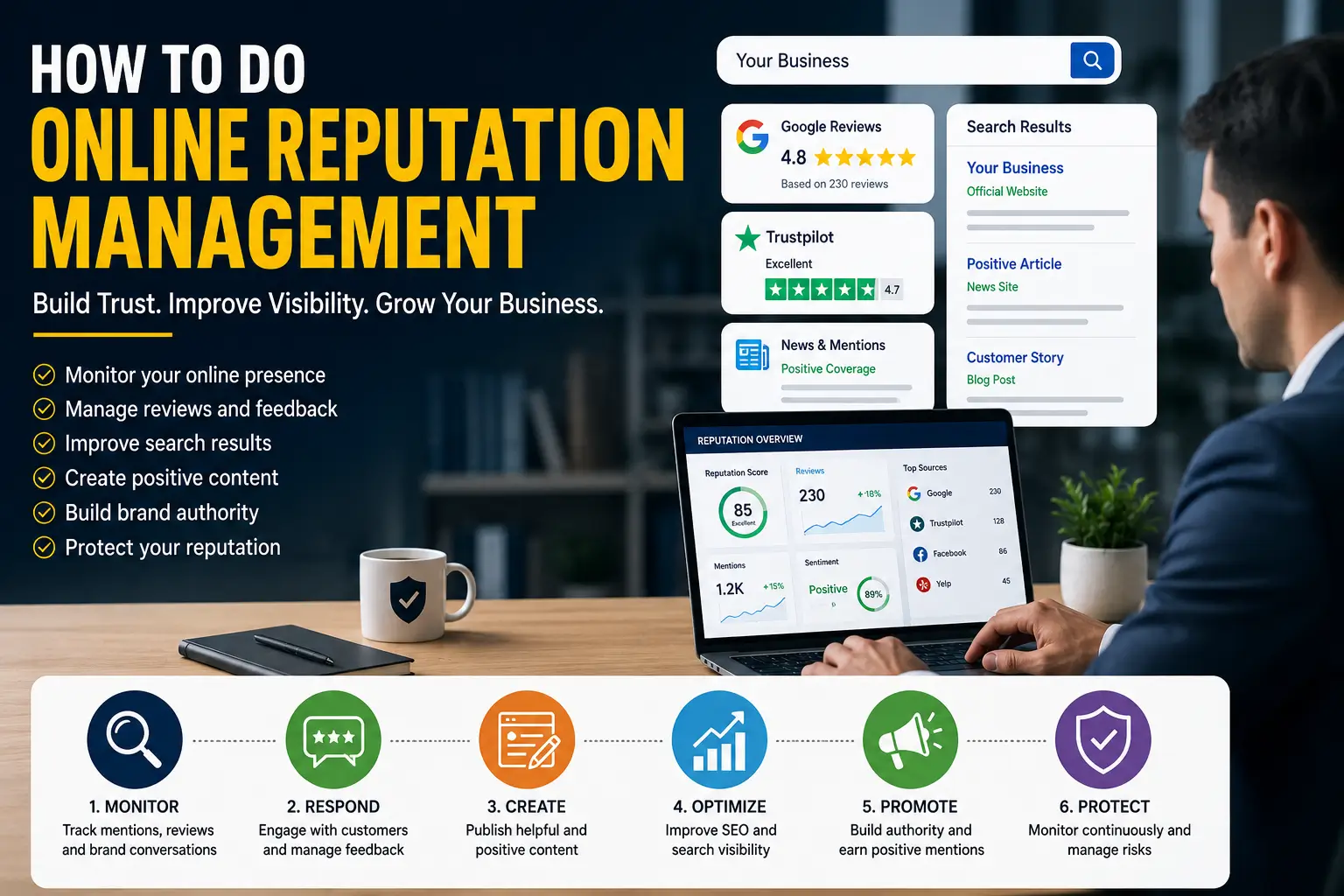
For example, practical educational guides like How to Do Online Reputation Management help establish credibility while answering common client questions.
When prospects repeatedly find valuable information from your agency, they’re more likely to choose your services when they need professional support.
Step 9: Get Your First Online Reputation Management Clients
Finding your first clients is often the biggest challenge for a new agency. Fortunately, businesses are constantly looking for professionals who can help protect their online reputation.
Instead of relying on paid advertising alone, focus on building trust and demonstrating expertise.
Effective client acquisition strategies include:
- Publishing SEO-optimized educational blogs
- Sharing valuable LinkedIn content
- Networking with marketing agencies
- Joining local business organizations
- Offering free reputation audits
- Requesting referrals from satisfied clients
- Speaking at webinars or business events
- Building partnerships with PR firms and law firms
Many businesses don’t realize they have reputation issues until someone identifies them. A free reputation assessment can be an excellent conversation starter.
Step 10: Deliver Outstanding Client Experiences
Winning a client is only the beginning. Long-term growth depends on delivering measurable value and maintaining strong relationships.
Successful ORM agencies prioritize:
- Clear communication
- Monthly performance reports
- Realistic expectations
- Transparent strategies
- Ethical SEO practices
- Proactive reputation monitoring
- Fast response times
- Continuous optimization
Clients who trust your process are more likely to renew contracts, recommend your services, and become long-term partners.
Remember, reputation management is built on trust—both for your clients and your own agency.
Real-World Example
Imagine a regional law firm that begins receiving several negative reviews and notices an unfavorable blog ranking on the first page of Google.
Instead of promising instant removal, an ORM agency develops a strategic recovery plan.
The campaign includes:
- Conducting a complete reputation audit
- Optimizing the firm’s website
- Publishing educational legal articles
- Improving attorney profile pages
- Strengthening local SEO
- Monitoring online mentions
- Encouraging authentic client reviews
- Building authoritative backlinks
- Implementing search suppression where appropriate
Over the following months, the firm’s branded search results become more balanced. Positive, accurate content gains greater visibility, helping prospective clients find trustworthy information first.
This example highlights an important principle: sustainable reputation management focuses on improving credibility rather than relying on shortcuts.
Comparison Table: DIY vs Professional ORM Agency
| Feature | DIY Reputation Management | Professional ORM Agency |
|---|---|---|
| Cost | Lower upfront | Higher initial investment |
| Learning Curve | High | Minimal for the client |
| SEO Expertise | Limited | Advanced |
| Search Suppression | Difficult | Strategic and data-driven |
| Reputation Monitoring | Manual | Continuous |
| Crisis Response | Reactive | Proactive |
| Reporting | Basic | Comprehensive |
| Long-Term Strategy | Often inconsistent | Structured and measurable |
| Scalability | Limited | Designed for business growth |
Businesses with complex reputation challenges often benefit from experienced professionals who can manage multiple aspects of online reputation simultaneously.
How to Scale Your Online Reputation Management Business
Once you’ve established a steady client base, the next step is scaling your agency without sacrificing quality.
Focus on building repeatable systems rather than relying solely on individual effort.
Ways to scale include:
Hire Specialists
Expand your team with professionals who specialize in:
- SEO
- Content writing
- Digital PR
- Graphic design
- Client success
- Technical SEO
- Project management
A skilled team allows your agency to handle larger projects more efficiently.
Standardize Your Processes
Create documented workflows for every stage of the client journey.
Examples include:
- Client onboarding
- Reputation audits
- Monthly reporting
- Content publishing
- Review management
- Crisis response
- Campaign reviews
Standard operating procedures improve consistency and reduce operational bottlenecks.
Invest in Automation
Automation helps your team spend more time on strategy and less on repetitive tasks.
Consider automating:
- Brand mention alerts
- Monthly reports
- Client reminders
- Task assignments
- CRM follow-ups
- Review requests
Automation should enhance—not replace—personalized client service.
Learn From Industry Leaders
The ORM industry evolves constantly. Staying informed about search engine updates, consumer behavior, and digital marketing trends helps your agency remain competitive.
Reliable resources include:
- Google Search Central
- Microsoft Bing Webmaster Guidelines
- HubSpot Marketing Blog
- Forbes
- Search Engine Journal
Studying these sources regularly helps you adapt to industry changes while maintaining ethical, effective strategies.
Strengthen Your Authority With Educational Content
One of the most effective ways to attract qualified leads is by consistently publishing valuable educational resources.
For example, businesses facing social media reputation issues may benefit from our guide:
How to Remove Defamatory Facebook Posts
Helpful content demonstrates expertise, answers real questions, and builds trust before a prospect ever contacts your agency.
Educational content also supports long-term SEO by improving topical authority and attracting organic traffic from search engines and AI-powered search experiences.
Common Mistakes to Avoid When Starting an ORM Business
Launching an Online Reputation Management business can be rewarding, but many new agencies struggle because they focus on quick wins instead of long-term client success. Avoiding these common mistakes will help you build credibility, improve client retention, and grow a sustainable business.
Some of the most common mistakes include:
- Promising guaranteed content removal or instant results
- Ignoring Google’s search quality and spam guidelines
- Offering too many unrelated marketing services
- Failing to educate clients about realistic timelines
- Using black-hat SEO or unethical reputation tactics
- Neglecting regular reporting and communication
- Underpricing services and undervaluing expertise
- Not investing in your own brand reputation
A reputation management business thrives on trust. Delivering honest advice and transparent communication will always outperform unrealistic promises.
Best Practices for Building a Successful ORM Agency
The most successful reputation management agencies focus on long-term relationships rather than one-time projects.
Follow these best practices to position your agency as a trusted partner:
- Develop customized strategies for every client.
- Stay updated with Google Search and AI search trends.
- Create helpful, authoritative content consistently.
- Monitor online mentions and branded search results regularly.
- Build strong relationships through transparent communication.
- Track measurable KPIs and share progress with clients.
- Invest in ongoing learning, certifications, and industry research.
Clients appreciate agencies that educate them, communicate clearly, and focus on sustainable growth instead of shortcuts.
Expert Tips From Reputation Management Professionals
If you want your ORM business to stand out in a competitive market, focus on becoming a trusted advisor rather than simply a service provider.
Here are a few expert recommendations:
- Specialize in one or two industries before expanding.
- Build your own online reputation as proof of your expertise.
- Publish educational blogs that answer real customer questions.
- Use SEO, Digital PR, and content marketing together for stronger results.
- Build strategic partnerships with law firms, PR agencies, and marketing consultants.
- Always follow ethical, white-hat reputation management practices.
Your agency’s credibility will become your strongest marketing asset.
Conclusion
Learning how to start an online reputation management business is only the beginning. Building a successful agency requires expertise, patience, ethical strategies, and a commitment to helping clients protect one of their most valuable assets—their reputation.
As businesses increasingly rely on online reviews, search engines, and AI-powered search experiences, the demand for professional Online Reputation Management services will continue to grow. Agencies that prioritize transparency, high-quality content, strategic SEO, and exceptional client service are well-positioned for long-term success.
Whether you’re launching a new agency or expanding your existing digital marketing business, focus on creating measurable value, earning trust, and continuously improving your expertise. Those principles will help you build a reputation that attracts clients and delivers sustainable growth.
Ready to Build or Improve Your Online Reputation?
Whether you’re looking to start an Online Reputation Management business or need expert support protecting your own brand, Your Reputation Agency is here to help.
Our experienced team provides customized reputation management solutions for businesses, executives, entrepreneurs, healthcare professionals, attorneys, and personal brands. From search result suppression and review management to executive reputation protection and digital brand strategy, we deliver ethical, long-term solutions designed around your goals.
See what our clients have to say on our Trustpilot profile:
Your Reputation Agency on Trustpilot
If you’re ready to strengthen your online presence or need guidance from experienced reputation professionals, contact Your Reputation Agency today. We’ll help you develop a strategy that protects your credibility, builds trust, and supports long-term business growth.
Frequently Asked Questions
1. How do I start an online reputation management business?
Start by learning SEO, content marketing, review management, and digital PR. Choose a niche, register your business, build a professional website, define your services, and develop a strategy for attracting your first clients.
2. Is online reputation management a profitable business?
Yes. As businesses become increasingly aware of the impact of online reviews and search results, demand for professional reputation management services continues to grow across many industries.
3. What skills are needed to run an ORM agency?
Successful ORM professionals typically have knowledge of SEO, content marketing, online review management, digital public relations, analytics, communication, and client relationship management.
4. Do I need technical SEO knowledge?
A solid understanding of SEO is highly recommended. Knowing how search engines rank content helps you create effective reputation management strategies and improve branded search visibility.
5. What services should an Online Reputation Management business offer?
Typical services include:
- Reputation monitoring
- Search result suppression
- Review management
- Executive reputation management
- Crisis reputation management
- Brand monitoring
- Content strategy
- Digital PR
6. How can I get my first ORM clients?
Start by publishing educational content, networking with local businesses, offering reputation audits, building partnerships, requesting referrals, and demonstrating your expertise through your own online presence.
7. How long does it take to grow an ORM business?
Growth depends on your niche, marketing strategy, experience, and client acquisition efforts. Agencies that consistently produce helpful content and deliver measurable results often experience steady long-term growth.
8. Is Online Reputation Management suitable for small businesses?
Absolutely. Small businesses often benefit significantly from reputation management because online reviews, local search visibility, and customer trust directly influence purchasing decisions.
9. Can I start an ORM business without previous agency experience?
Yes, but investing time in learning SEO, reputation management, content marketing, and digital branding will greatly improve your chances of success. Building experience through personal projects or freelance work is also valuable.