How Public Records Create Long-Term Reputation Problems
In the modern legal landscape, information is never truly “closed” or forgotten. While judicial proceedings are designed to reach a conclusion, the digitization of court filings, arrest records, and administrative documents ensures that these files remain accessible to anyone with an internet connection. For legal professionals, this represents a unique challenge where proactive legal reputation management is essential to prevent historical data from defining their present-day professional identity. Below, we examine the long-term impact of these digital footprints.

The Persistence of Digital Judicial Records
The mass digitization of court records was intended to foster transparency, but it has created a permanent archive that does not account for nuance. A case that was dismissed, settled, or won years ago often appears in search engine results with the same prominence as a current news headline. To the average layperson searching for legal representation, the presence of these documents often lacks the necessary legal context, leading them to draw erroneous conclusions about a lawyer’s expertise or success rate.
When potential clients stumble upon these archived filings, they rarely have the patience to understand the outcome. They see the name of the law firm and form a judgment based on these incomplete snippets. This is why legal reputation management must include strategies to contextualize historical data, ensuring that the public narrative aligns with the professional’s actual track record.
Furthermore, the sheer volume of public record databases means that this information is syndicated across multiple platforms. What starts as a single entry in a local clerk’s office can be scraped and republished by dozens of third-party “legal data” sites. These sites are designed to maximize traffic, meaning your past cases are often being exploited for ad revenue, keeping them ranked high in Google indefinitely.
The digital shelf-life of these records is effectively infinite. Unlike physical archives that require a trip to a courthouse to access, these digital files are indexed by crawlers that prioritize historical stability. This means that a minor procedural filing from fifteen years ago can appear just as “relevant” to a search engine as a groundbreaking case you won last month.
Ultimately, you cannot rely on the obscurity of time to protect you. In a digital world, nothing truly fades away unless it is actively managed. Lawyers who ignore this persistence are essentially allowing their professional history to be written by automated, unfeeling algorithms that prioritize data volume over accuracy and context.
The Risk of Misinterpretation by Non-Legal Audiences
The primary conflict between public records and professional branding is the gap in technical knowledge. A document stating that a case was “dismissed” might sound positive to an attorney, but to a layperson, it might be interpreted as a failure. This gap in understanding is exactly where long-term reputational damage begins to take root and spread.
Without a proper strategy for legal reputation management, this information remains a dormant threat that can be misunderstood during a client’s initial vetting process. The average client does not have a background in procedural law, so they tend to rely on simple keywords and emotional reactions to what they see. This makes them highly susceptible to drawing the wrong conclusions from raw court documents.
This misinterpretation creates an immediate barrier to trust. When a client reads a court record they don’t understand, they don’t ask for clarification; they simply move on to the next firm. The perceived risk of working with a “controversial” lawyer often outweighs the client’s desire to verify the truth, making the initial impression the only one that counts.
To mitigate this, lawyers must treat their digital presence as an educational tool. By providing summaries and outcomes that break down complex legal terminology into simple, client-facing language, you can preemptively address these misunderstandings. You are essentially providing a “translator” between the cryptic court document and the potential client.
If your digital footprint is comprised solely of dry, confusing court filings, you are failing to tell your own story. It is vital to take control of this narrative to prevent outdated records from damaging your brand. By actively populating the digital space with your own interpretation of events, you steer the conversation in a direction that favors your professional reputation.
Competitor Exploitation and Negative SEO
In a highly competitive market, legal records are often used as fodder for “dirty wars.” Competitors may link to damaging court filings on forums or social media to manipulate search results. This is a specific form of negative SEO that targets your professional authority and forces you into a permanent state of reputational defense.
If you are facing defamatory content, our service to remove negative videos helps neutralize these external attempts to distort your presence. When a competitor sees that a particular public filing is harming your standing, they may intentionally amplify its reach, hoping to siphon off your high-value clients.
This practice turns your own history against you, boosting the visibility of your most complicated cases to keep them at the top of your search results for as long as possible. The goal is to make you look disorganized or prone to conflict, forcing you to spend valuable time and resources fixing a problem that someone else is actively creating.
If you are not monitoring the search queries associated with your name, you are vulnerable to these tactics. A sudden spike in traffic to an old, negative court record is a red flag that someone is trying to damage your firm. Proactive monitoring is the only way to catch these attacks before they lead to a full-blown crisis.
An active defensive strategy is fundamental; you need a reputation that is too robust to be sidelined by the strategic amplification of a single old case file. Strengthening your presence with high-authority content ensures that if someone attempts to attack you, the system has enough positive weight to filter out the malicious falsehoods.
Algorithmic Bias and Search Engine Prioritization
Search engines are not designed to be fair, but to be relevant based on user curiosity. If a public record receives a lot of attention, the algorithm interprets this as a signal of “importance.” This creates a feedback loop where an obsolete court record is kept alive by the search engine, indefinitely damaging the lawyer’s professional image.
If you notice harmful search suggestions, we offer google auto-complete suggestions management to ensure your brand remains clean. These automated features often take existing public records and turn them into negative phrases that appear whenever a client searches for your name, creating an immediate, subconscious bias.
This algorithmic bias is effectively a trap for the digital presence of modern lawyers. Because these records remain “live” on court servers, the search engine views them as ever-relevant content. For the lawyer, this means their past is effectively their present, and unless they have a plan to force the algorithm to prioritize new content, that past will continue to dominate.
To combat this, you must force the system to evolve by feeding it fresh, positive data. By consistently publishing content that highlights your current successes, you “retrain” the algorithm to understand what is truly relevant about your career today. You are essentially teaching the search engine that the old records are no longer the primary defining features of your expertise.
This process is not an overnight fix; it requires a persistent and disciplined approach to content distribution. You must prioritize the creation of assets that search engines love: high-quality articles, professional profiles, and verified case studies. This is the only way to bury outdated information under a mountain of relevant, high-value professional content.
Ethical Considerations and Deontological Risks
Lawyers are bound by strict codes of ethics. When public records are exposed in a negative light, the temptation to use aggressive tactics to remove them can be high. However, a careless approach can lead to the “Streisand Effect,” where the attempt to hide information actually makes it more viral and brings more scrutiny to the original issue.
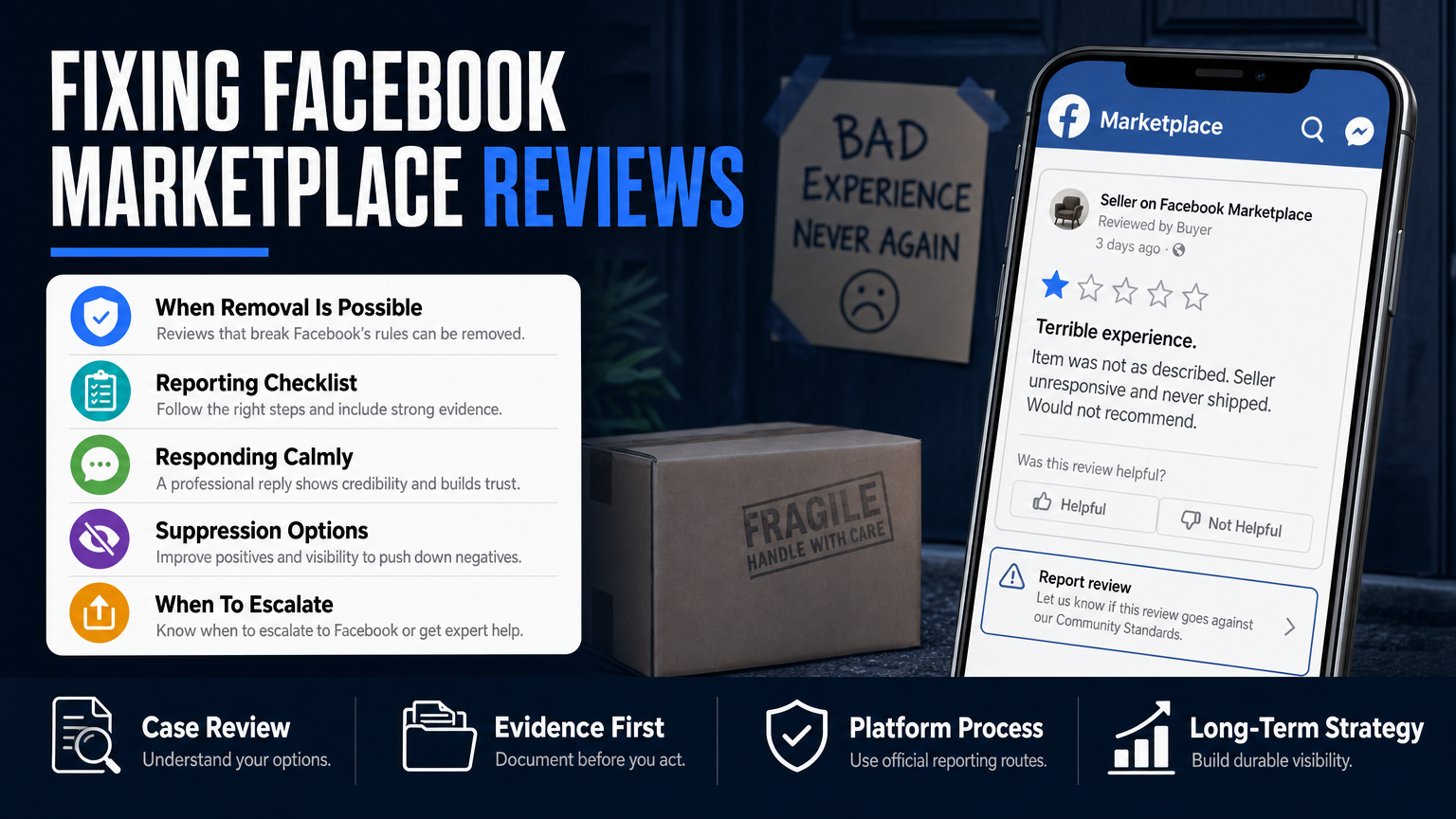
If you have issues on social media, using experts in remove instagram content or facebook content remove ensures that you follow legal protocols without creating new, public records of failed takedown attempts. These platforms have specific processes that must be respected; attempting to bypass them can lead to account suspension or further public embarrassment.
Ethics require that you are always the “grown-up in the room.” A public, sloppy fight to remove an accurate public record can be viewed as an ethics violation by potential clients and peers. You need to manage your footprint with the same professional prudence you use when drafting a contract or arguing in front of a judge.
The strategy must always be one of displacement and contextualization, not censorship. By building a reputation based on authority, you make those old records less relevant, fulfilling your ethical duties while successfully managing public perception. You are showing that you have the sophistication to handle your own image with grace and legal integrity.
It is essential to establish a protocol for digital conduct. The strategy is not to stop being human or avoid social media, but to maintain absolute coherence between the lawyer the client sees in the courtroom and the person displayed on the internet. Every digital action should reinforce your commitment to professional excellence, regardless of the challenges present in your record.
The Impact on High-Net-Worth Client Acquisition
High-net-worth clients perform rigorous due diligence before hiring counsel. A public record, if presented without context, can be the deciding factor that causes them to choose a competitor, even if that competitor has less actual experience than you. These clients prioritize discretion, stability, and a clean professional trajectory.
Integrating a robust legal reputation management strategy is the best way to ensure that records remain contextualized and do not skew the perception of your legal skills. When a prospective client sees a clean and authoritative digital footprint, they immediately understand that you are a high-level professional who manages their own affairs with the same care they expect you to apply to their cases.
These clients are looking for a partner in their success. When they find disorganized, problematic, or old legal filings associated with your name, it suggests that your practice may be prone to controversy. In the world of high-stakes law, the perception of drama is just as damaging as the reality of it, and often, it is far more expensive to mitigate after the fact.
When your online presence is meticulously managed, you pass the due diligence test before the first consultation begins. You are not just presenting a lawyer; you are presenting an institution. That distinction is exactly what allows you to command higher fees and attract the most prestigious cases in your niche, separating you from the generalists.
This level of professional projection is not accidental; it is the result of deliberate curation. By ensuring that every touchpoint a client has with your brand—from search results to LinkedIn articles—is optimized for quality and trust, you are building a reputation that acts as a magnet for the kind of work you truly want to perform.
Dealing with Mugshots and Arrest Records
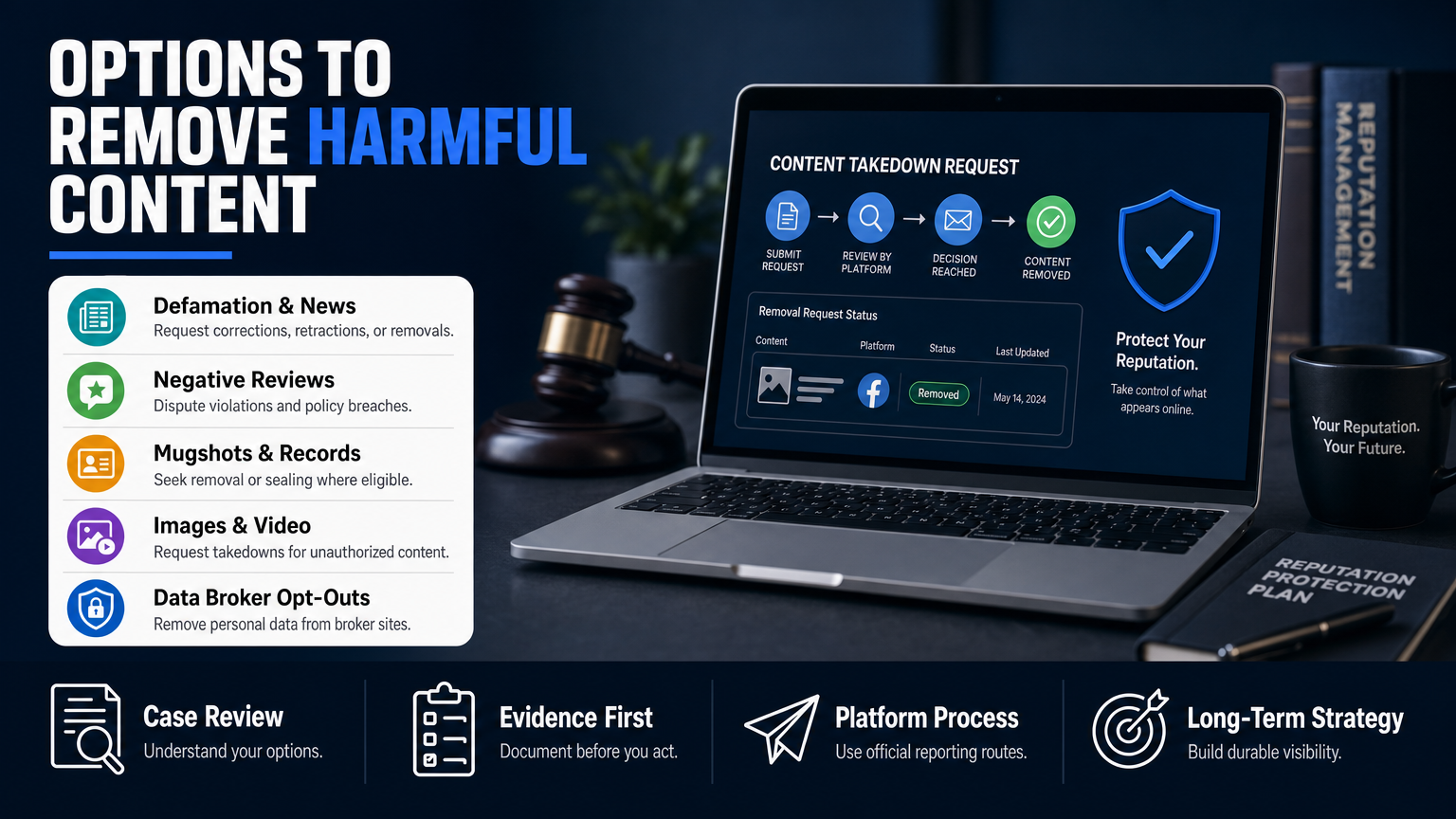
For some attorneys, their past might include brushes with the law that were long ago resolved but remain indexed as public records. These are the most damaging types of content, as they are visceral, visual, and highly stigmatizing to the average observer. Our mugshot removal service is designed to navigate this complex landscape, ensuring your professional future is not held hostage by a past mistake.
It is a mistake to believe these records will “go away on their own.” They won’t. They are data points for massive, commercialized public records websites whose entire business model relies on keeping your past visible. You must engage with the systems that index this data to ensure your rights to privacy and professional dignity are upheld.
Taking action to address these records is not a sign of guilt; it is a sign of professional maturity. It is an acknowledgment that you are in control of your career and that you will not allow outdated, stigmatizing information to define your professional identity or your value to your clients.
These services specialize in the technical aspects of data removal and de-indexing. By working with professionals who understand the nuances of the legal and technical requirements for removing this data, you can significantly increase the chances of restoring your reputation to its rightful, clean state.
You deserve the right to move forward, and a clean professional profile is the foundation for doing so. By clearing the path of these outdated obstacles, you are finally free to focus entirely on your practice, your clients, and your future, without the constant fear of being “found out” by an automated database.
The Future of Reputation as a Digital Asset
Your reputation is not a one-time project; it is a living digital asset. The way we treat public information today will determine the legal industry of tomorrow. As artificial intelligence and machine learning become the primary tools for background checks, the records that exist about you right now will be the data points used to qualify or disqualify you.
You must transition from a reactive mindset to an active one, where you curate and strengthen your digital footprint constantly. Your Reputation is dedicated to this proactive philosophy, building the infrastructure for your long-term success. We focus on ensuring that search results reflect successes, specializations, and a clear vision of your practice.
This proactive approach is the only way to stay ahead of the curve in an increasingly digital world. As search engines get smarter, they will continue to surface more granular details about your past. By taking control of the data pipeline now, you are building a defensive moat around your career that will serve you for decades to come.
The future belongs to the lawyers who treat their reputation as a strategic asset. By embracing these challenges today, you ensure that your career continues to grow, untethered by the weight of historical records, and aligned with your highest professional aspirations. You are not just managing a brand; you are securing a legacy.
Ultimately, your reputation is the most valuable thing you own as an attorney. It is the intangible currency that buys you trust, referrals, and high-stakes opportunities. By managing it with the same rigor you apply to your most complex cases, you ensure that your name remains a beacon of reliability and expertise in an unpredictable digital environment.
FAQ: Frequently Asked Questions
Can old records stop me from getting clients?
Yes. Most sophisticated clients research online, and without context, they often assume the worst.
Why does Google keep old court files on page one?
Because they value the authority and traffic of judicial websites.
Should I try to delete public records myself?
Generally, no; you risk the “Streisand Effect,” drawing more attention to the issue.
Public records function as a persistent and often misleading digital shadow that can dictate your professional perception long after a case has concluded. In an industry built on trust, allowing outdated or misinterpreted filings to define your online presence is a strategic vulnerability that you can no longer afford to ignore. These documents serve as the primary point of contact for high-value clients, and without active management, they silently erode the hard-earned authority you have built over years of practice.
Achieving long-term market dominance requires a proactive commitment to protecting the integrity of your name across all digital channels. This is not about hiding the truth, but about providing the necessary context to ensure that your digital identity remains a true, accurate, and powerful reflection of the legal expert you are today. By systematically auditing and contextualizing your online footprint, you insulate your firm from reputational volatility and ensure that your legacy is defined by your excellence rather than by fragmented, archival data.
To ensure your professional image is fully protected, we invite you to take the first step by identifying and neutralizing your firm’s hidden digital vulnerabilities. Understanding your current standing is the most effective way to secure your future and allow your digital assets to support your continued professional ascent.
We are ready to provide you with a comprehensive analysis of your online footprint so you can see exactly where your firm stands. Click below to claim your complimentary assessment and regain full control over your professional narrative with our specialized team.