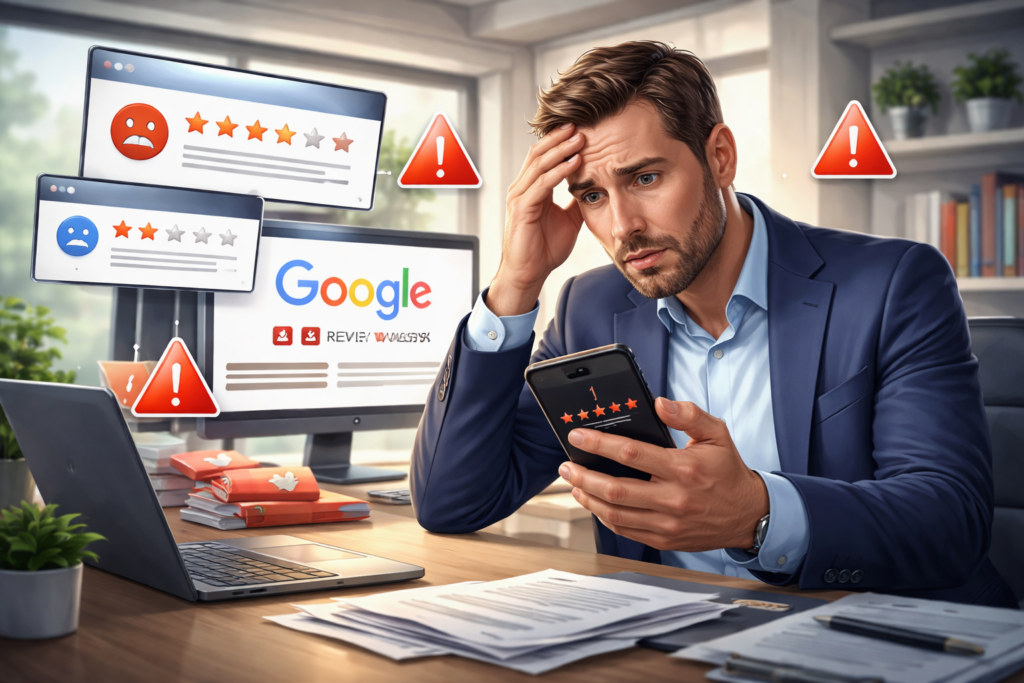
Fake Google reviews are no longer a rare annoyance—they’re a deliberate weapon competitors use to damage rankings, scare off customers, and pressure businesses into reacting emotionally instead of strategically.
For American business owners, this isn’t about ego. It’s about lost revenue, declining trust, and Google Maps visibility.
This guide breaks down:
How fake reviews are actually created
Why Google doesn’t automatically protect you
The exact steps to fight back the right way
How to prevent repeat attacks
When to escalate and get professional help
Why Fake Google Reviews Work So Well
Google reviews influence:
Local SEO rankings
Click-through rates
Purchase decisions
Brand credibility
A few one-star fake reviews can:
Drop your Maps position
Reduce calls and form submissions
Make legitimate customers hesitate
And competitors know this.
The Most Common Fake Review Tactics Competitors Use
Sock Puppet Accounts
Newly created Google profiles with no history leaving vague complaints.
Review Bombing
Multiple one-star reviews posted within a short time window.
Keyword Stuffed Attacks
Fake reviews using industry terms to look “authentic.”
Former Vendor or Ex-Employee Smears
Posing as customers to avoid Google’s filters.
If you’ve noticed reviews that don’t match real interactions, you’re not imagining it.
How to Spot Fake Google Reviews Quickly
Fake reviews usually share patterns:
No customer name or invoice reference
Generic complaints (“terrible service,” “avoid this place”)
No response to follow-up questions
Reviewer has little to no activity history
Multiple reviews appear within days
Important: Never accuse the reviewer publicly. That hurts your credibility and helps competitors.
Step-by-Step: How to Fight Fake Google Reviews the Right Way
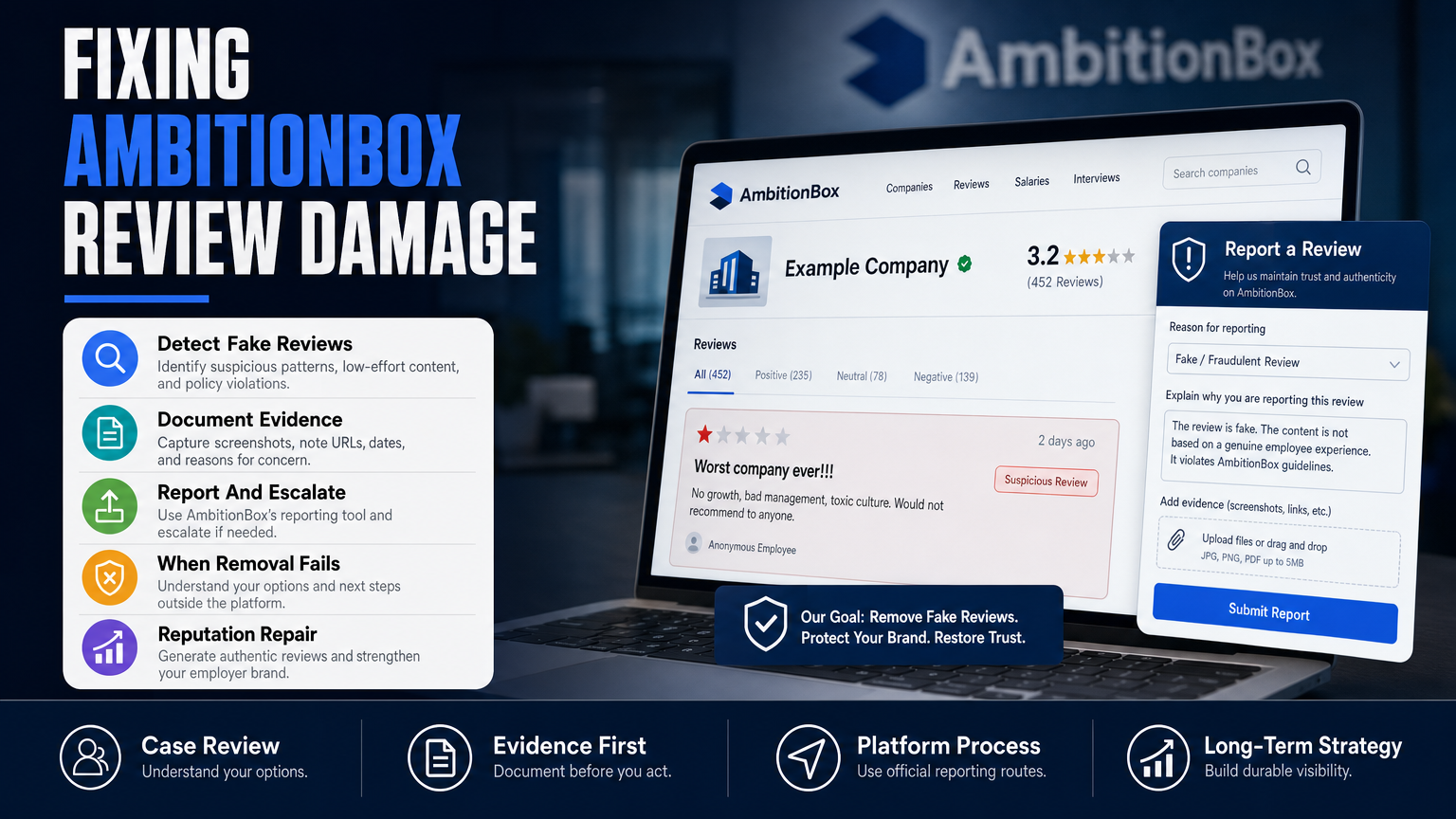
Step 1: Flag the Review Properly (Not Emotionally)
Use Google’s “Flag as inappropriate” option and select:
Conflict of interest
Spam or fake content
Do this from the Google Business Profile dashboard, not Maps.
Step 2: Document Everything
Before doing anything else:
Screenshot the review
Note the date and profile
Save customer logs proving no interaction
This evidence matters if escalation is required.
Step 3: Respond Publicly — Strategically
A strong response helps customers, not the reviewer.
Example:
“We take feedback seriously, but we can’t locate any record of this experience. We invite the reviewer to contact us directly so we can resolve this.”
This:
Signals professionalism
Reassures real customers
Avoids policy violations
Step 4: Submit a Formal Google Review Appeal
If the review violates Google’s policies, escalate it through Google’s support channels using your documentation.
This is where most business owners fail—they either give up or submit weak appeals.
Why Google Often Doesn’t Remove Fake Reviews Immediately
Google prioritizes scale over accuracy.
Their systems:
Rely heavily on automation
Require clear policy violations
Move slowly without pressure
That’s why businesses with ongoing attacks need a system, not guesswork.
How to Prevent Competitors from Sabotaging You Again
Build Review Velocity
Consistent, legitimate reviews make fake ones less impactful.
Ask customers at the right moment
Use email or SMS follow-ups
Avoid gated review systems (Google penalizes these)
Monitor Reviews Weekly
Early detection = faster removal.
Lock Down Your Online Presence
Make sure:
Business info is consistent
Categories are accurate
Suspicious edits are disabled
When You Should Get Professional Help
If:
Reviews keep reappearing
Google ignores appeals
Rankings drop significantly
You suspect coordinated attacks
Then it’s time to escalate.
👉 Request a free reputation strategy call
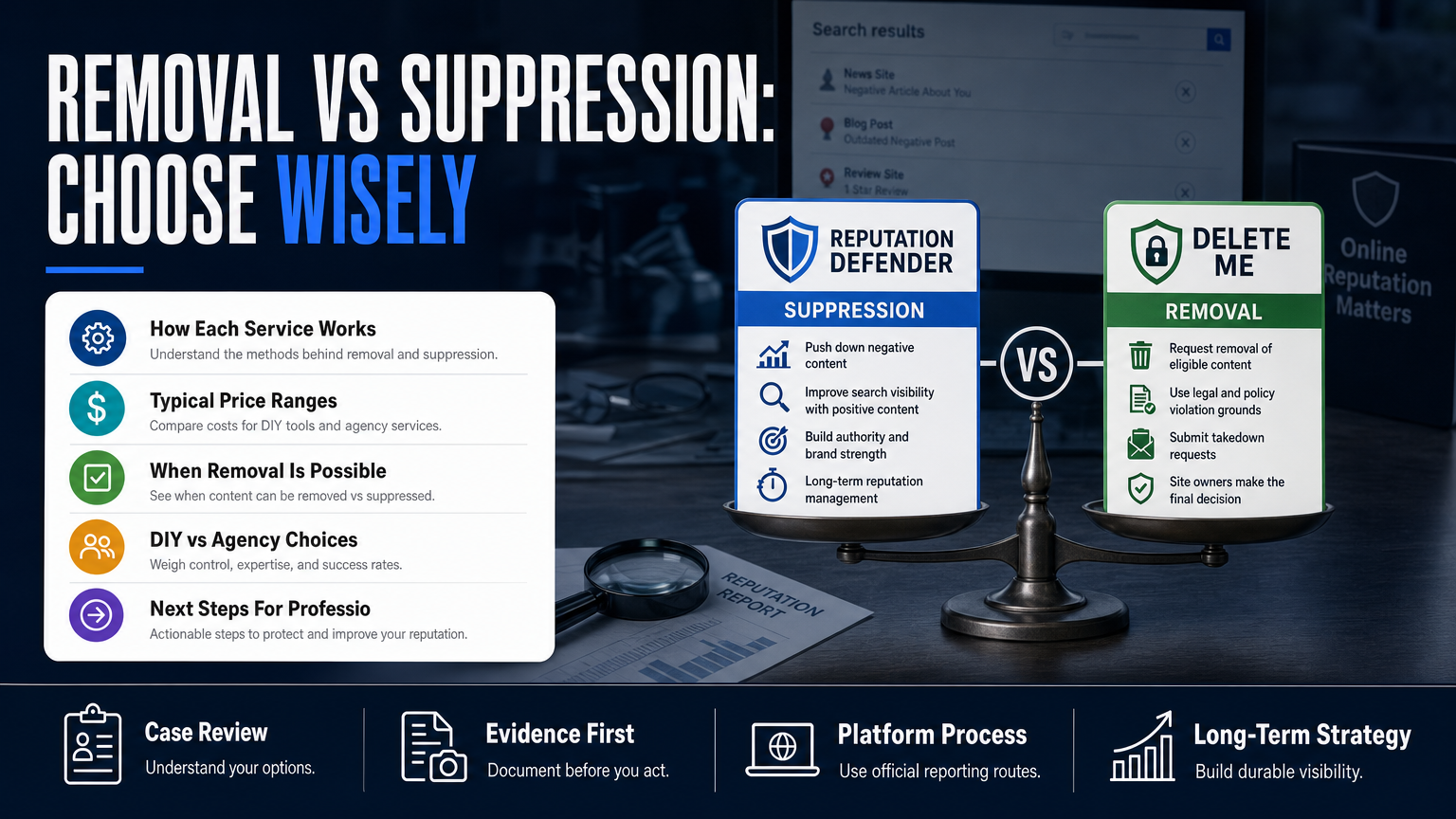
You’ll get a clear assessment of whether reviews can be removed, suppressed, or legally escalated—no guesswork.
FAQ: Fake Google Reviews
Can competitors legally post fake reviews?
No. Fake reviews violate Google policy and can expose businesses to legal action.
How long does Google take to remove fake reviews?
Anywhere from a few days to several weeks—if handled correctly.
Should I ignore fake reviews?
No. Silence damages trust and SEO.
Can fake reviews permanently hurt my rankings?
Yes, if left unmanaged.
Final Word for Business Owners
Fake Google reviews are not “just part of business.”
They are deliberate reputation attacks—and they require a deliberate response.
Handled correctly, they can be removed, neutralized, and even turned into trust-building moments.
Handled poorly, they quietly drain revenue.