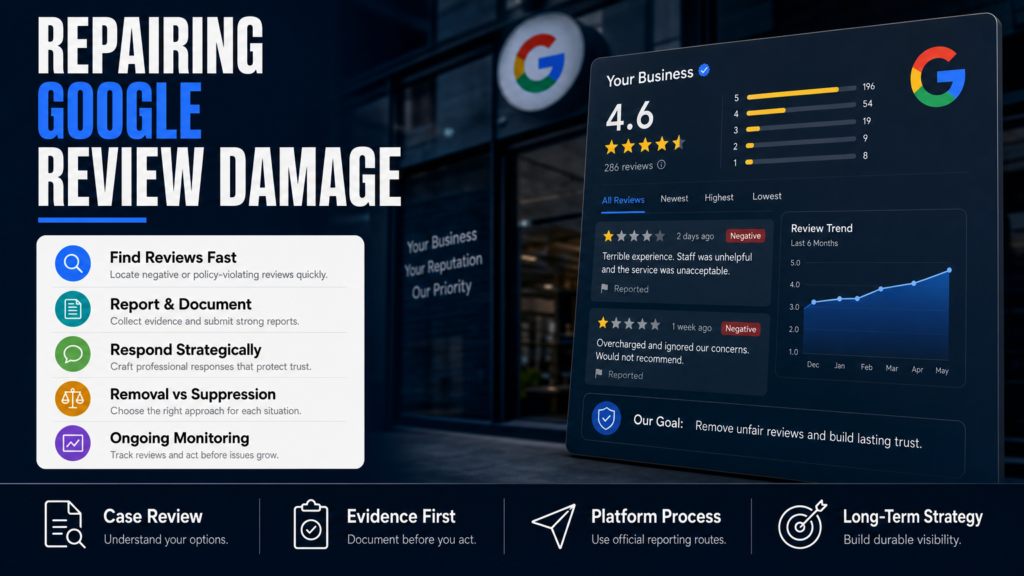
You opened this because a Google review — one-star, anonymous, or plainly false — is costing you customers, interviews, or credibility. That hit to revenue and hiring power is real, and you need steps you can act on immediately.
This article explains how online reputation management google reviews actually works: what services do, how to locate reviews tied to people or businesses, and practical options when removal isn’t possible.
You’ll get a clear workflow for triage (find, document, report, respond, and repair), legal and platform options, and a plan for long-term suppression through first-page SEO and monitoring.
No guarantees appear here — platforms control outcomes, and legal remedies depend on evidence and jurisdiction. What you will get is the exact process reputable reputation teams follow, with timeframes and caveats where necessary.
Table of Contents
- What are online reputation management services?
- Can you look up Google reviews by name?
- How to handle fake reviews on Google
- How to fix your reputation online (practical workflow)
- When removal is NOT available: mitigation and suppression
- Monitoring, tools, and workflows to prevent future review damage
- DIY vs. Agency: Which Path for Google Review Problems
- Hypothetical scenario: A local clinic hit by a smear review campaign
- Common mistakes businesses make with Google reviews
- Best practices to manage Google review risk
- Expert Tips
- Conclusion
- Why Businesses Choose Your Reputation Agency
- Frequently Asked Questions
What are online reputation management services?
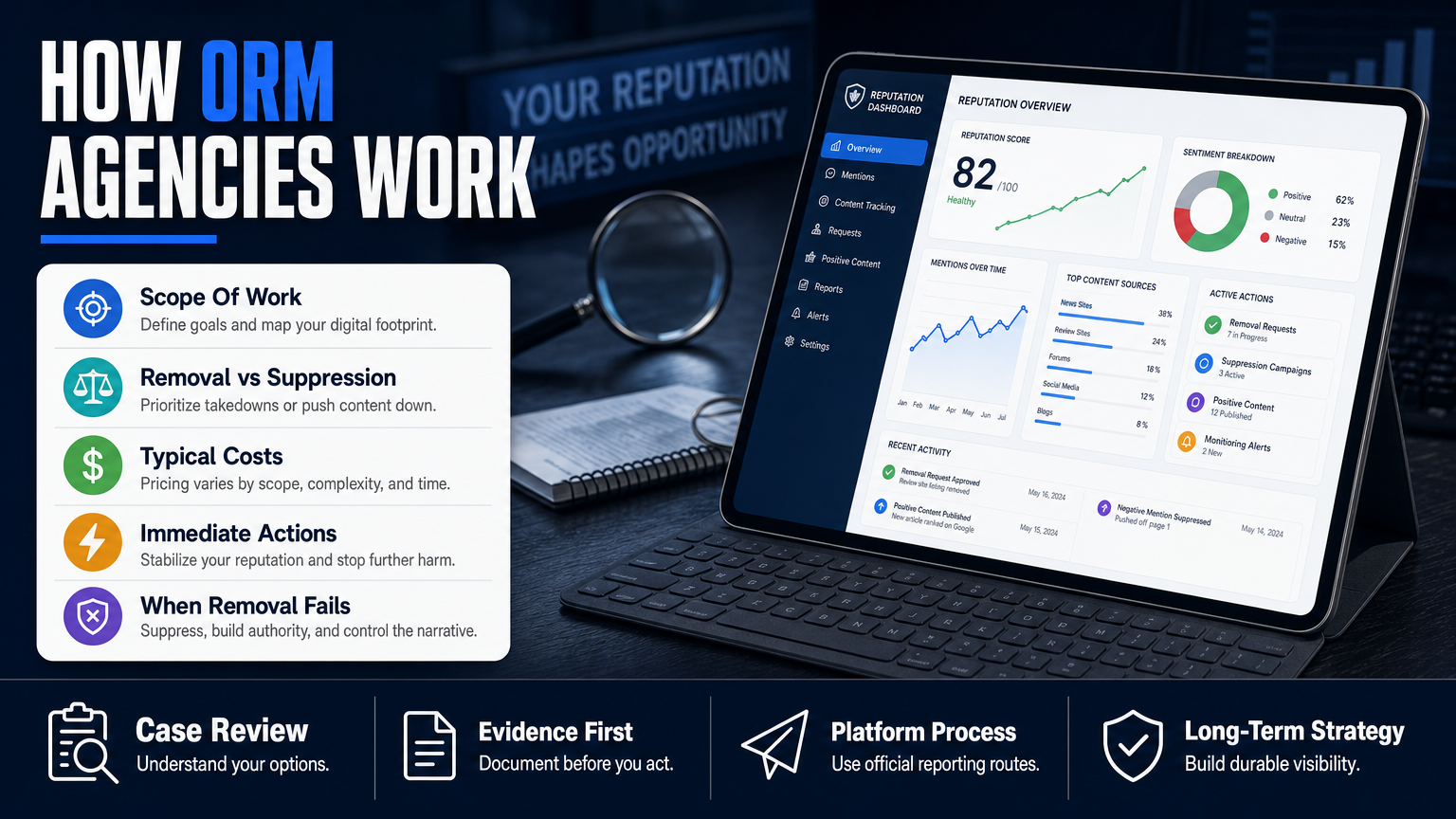
Online reputation management services help individuals and businesses evaluate, mitigate, and improve how they appear in search results and on review platforms. This includes technical, editorial, legal, and strategic work aimed at reducing the visibility of harmful content and promoting accurate, trustworthy information.
Typical services include takedown requests and platform escalation, review remediation strategies for Google, Yelp, Facebook and industry-specific sites, people-search opt-outs, first-page SEO to suppress negative links, crisis-response workflows, and ongoing reputation monitoring.
We evaluate whether content may qualify for removal or review, and we pursue the legal, technical, platform-based, and reputational options available. Platform decisions remain under the platform’s control and results vary with evidence, publisher, and jurisdiction.
- 1) Rapid intake and evidence collection (screenshots, timestamps, reviewer profile URLs).
- 2) Platform-specific reporting and escalation where policy applies.
- 3) Remediation via responses, mediation, or publisher contact when possible.
- 4) Reputation building and SEO suppression if removal is unavailable.
- 5) Ongoing monitoring and periodic reassessment.
- Content evaluation: factual vs opinion vs policy-violating material
- Platform reporting: Google Business Profile, Google Support, social networks
- Legal coordination: referrals to qualified attorneys when appropriate
- SEO suppression: create and promote authoritative pages to push negative items down
- Monitoring & alerts: continuous surveillance to catch new reviews quickly
When reputation work overlaps with legal options
If a review is defamatory, fraudulent, or part of a smear campaign, the content may warrant legal review. A qualified attorney can determine whether a legal claim may be available.
We coordinate with qualified legal professionals when a matter requires legal analysis, but an agency is not a law firm and cannot provide legal representation.
- Preserve evidence (screenshots, server logs, communications).
- Ask an attorney about subpoenas for anonymous reviewers if necessary.
- Consider a cease-and-desist only after legal counsel reviews the facts.
Where this fits with search and SEO
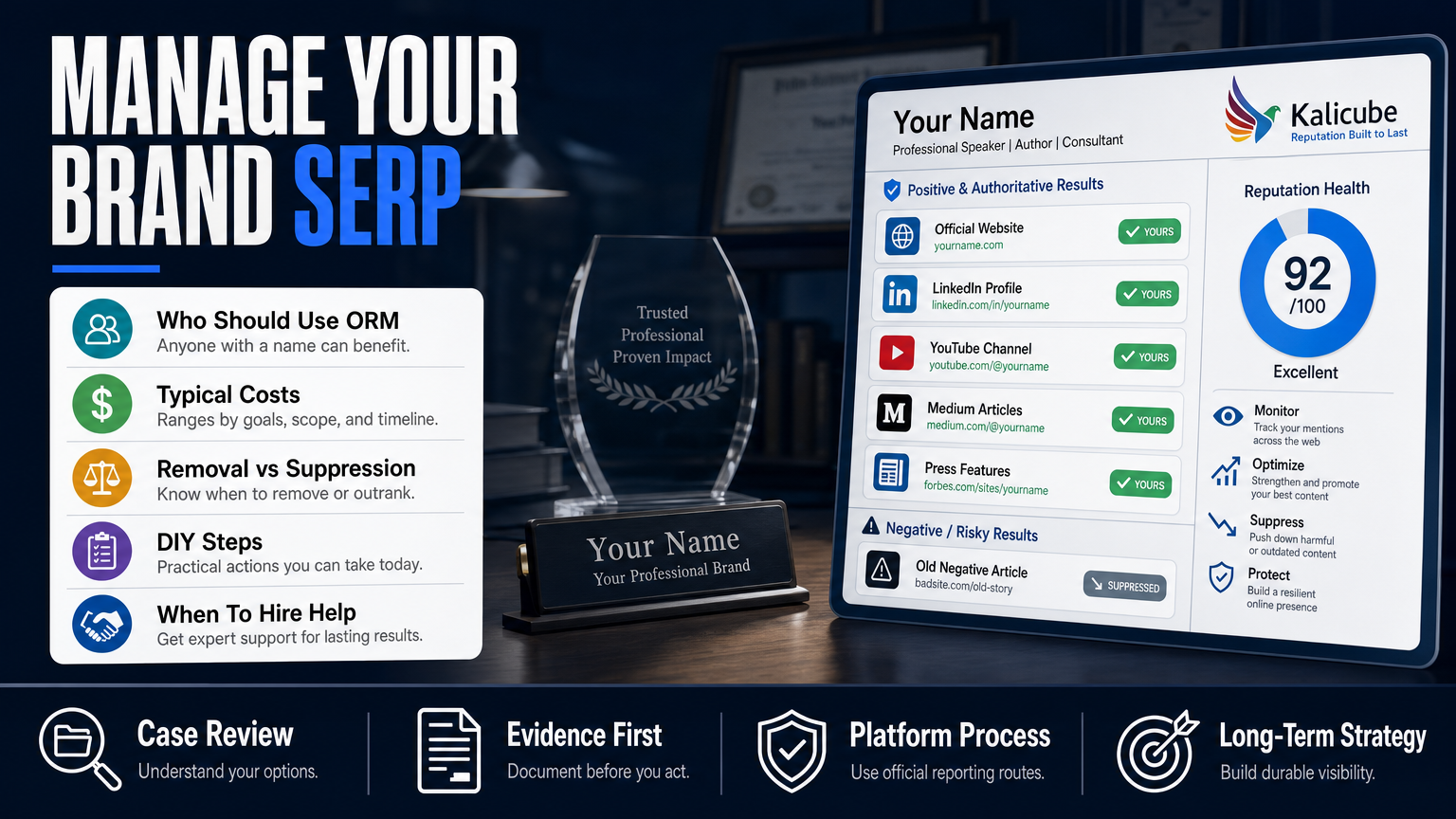
Reputation management is often primarily an SEO problem: the first page of Google is where customers form impressions. For more on shaping that page, see The First Page of Google Is Your Real Homepage.
- Not every negative review can be removed; SEO strategies aim to reduce visibility.
- Authority signals (backlinks, domain age, content quality) affect suppression speed.
Can you look up Google reviews by name?
Short answer: not directly through Google’s public interface in a reliable, comprehensive way. Google reviews are tied to a Google account and a Business Profile, not a searchable person index. However, there are practical methods to find reviews linked to a name or entity.
You can locate reviews that mention a person or business by searching targeted queries, scraping Business Profile pages, and using monitoring tools. These approaches are about discovery and evidence collection, not guaranteed identification of the account holder.
- 1) Identify the business’s Google Business Profile and copy the profile URL.
- 2) Search that profile page for the reviewer’s public name or review content.
- 3) Combine with Google search operators (quotes, site:maps.google.com).
- 4) Set up automated alerts to capture future reviews that mention specific terms.
- Search modifiers: use site:google.com “Business Name” “keyword” to find pages that include review text.
- Search for quoted phrases from the review to locate reposts on review aggregation or social sites.
- Use reputation-monitoring tools that track new Google reviews for a Business Profile.
If you need a name match for legal reasons
If you need to link an anonymous review to a real person for legal action, an attorney can seek a subpoena to compel Google to disclose identifying account information, but this requires probable cause and legal process.
Preserve all evidence and consult counsel before initiating legal discovery; Google evaluates each legal request against privacy and lawful process.
- Subpoenas require a court order or valid legal process.
- Google has disclosure policies and may challenge overbroad requests.
How to handle fake reviews on Google
Fake reviews are common: competitors posting fake one-stars, false claims from strangers, or coordinated review-bombing. Handling them requires both rapid platform actions and a records-first approach (document everything).
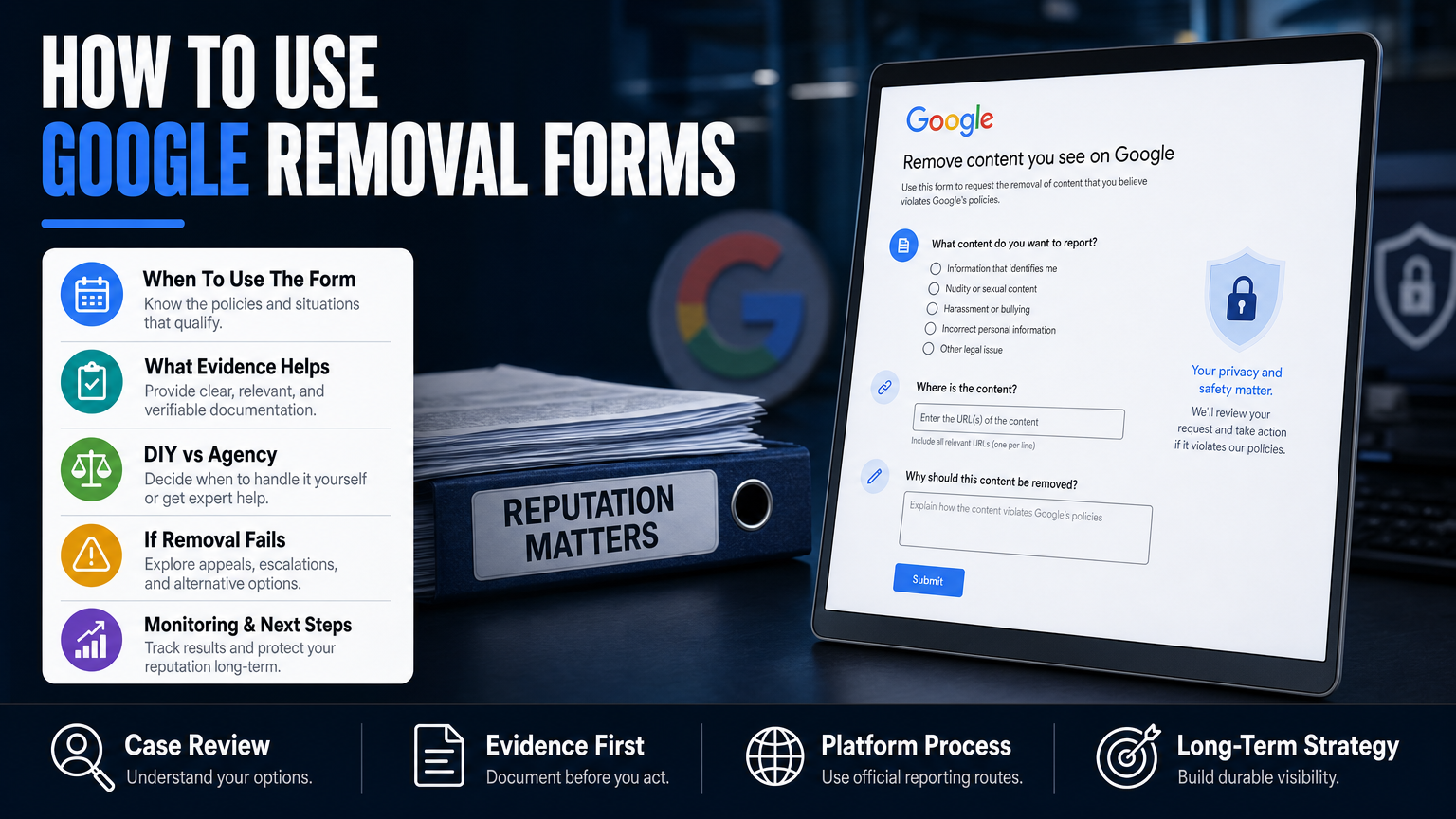
Follow Google’s policies strictly when reporting: Google removes content that violates its policies (spam, fake content, conflicts of interest), but not every negative or inaccurate review qualifies for removal.
- 1) Triage: decide if the review is false, opinion, or a factual allegation that could be defamatory.
- 2) Report: use the Business Profile dashboard to flag and escalate; include concise evidence in the report.
- 3) Public response: craft a short, professional reply that acknowledges the reviewer and offers to resolve offline when appropriate.
- 4) Escalate: if automated flags fail, use Google support channels, and document your escalation.
- 5) Consider suppression or SEO if removal isn’t possible.
- Document the review: screenshot, timestamp, review URL, Business Profile ID.
- Check for patterns: multiple reviews from the same account or IP addresses may indicate a campaign.
- Respond publicly where appropriate, then report through Google Business Profile support or the ‘flag as inappropriate’ option.
How to write a response that helps your case
A calm, factual public reply helps future readers and can influence platform moderators. Do not get into specifics about private matters or make legal threats in the public reply.
Example framework: thank, acknowledge general concern, offer offline contact, state actions taken (e.g., ‘We’re looking into this’).
- Keep it short and professional.
- Avoid admitting fault or revealing private data.
- Invite the reviewer to contact you directly to resolve the issue.
When to involve a third party or agency
If you face repeated fake reviews, coordinated attacks, or if the review references criminal allegations or sensitive data, escalation to a specialist team can speed evidence collection and platform escalation.
For brand-level crises that risk substantial revenue or hiring harm, a coordinated response including PR, legal, and SEO is often necessary. See our discussion on review crises at When Google Reviews Become a Brand’s Biggest Crisis.
- Agencies bundle documentation, platform escalation, and suppression tactics.
- They can coordinate with legal counsel when subpoena or defamation options are plausible.
How to fix your reputation online (practical workflow)
Fixing an online reputation combines immediate triage and a long-term rehabilitation plan. The core workflow: find, document, respond, pursue removal when applicable, and then rebuild and suppress negative signals with positive, authoritative content.
This is both technical (SEO, content creation) and human (customer service, PR, legal where necessary). Expect some items to move faster than others; platforms and publishers each have different review cycles.
- 1) Intake & priorities: classify each negative item by seriousness, legality, and business impact.
- 2) Contain: respond publicly to mitigate damage and instruct staff on consistent messaging.
- 3) Attempt removal: file formal requests with evidence, following the platform’s policy.
- 4) Mitigate: where removal fails, deploy suppression through SEO and content publishing.
- 5) Monitor: set alerts and schedule periodic audits.
- Immediate: collect evidence, respond to reviews, file platform reports.
- Short-term (days to weeks): escalate with platforms, request removals where policy applies.
- Medium-term (weeks to months): publish authoritative content, optimize profiles, and build backlinks.
- Long-term (months+): maintain monitoring, review collection programs, and reputation surveillance.
First-week checklist for a damaging Google review
Take these immediate actions within 48–72 hours to preserve options and reduce short-term damage.
- Take screenshots of the review and profile page (include URL and timestamp).
- Reply publicly with a professional offer to resolve offline.
- Flag the review through your Business Profile and note the ticket/reference.
- Notify internal stakeholders (manager, legal, customer care).
- Set up monitoring for further activity on the same profile.
How SEO suppression works in practice
If removal is unavailable, suppression uses relevant, authoritative pages to bury the negative item under the first page of search results. This is a strategic, measured process that uses content creation, optimization, and link-building.
We develop SEO reputation strategies intended to improve the visibility of relevant and credible information; search results may change because algorithms, competitors, and publisher behavior are outside our control.
- Create high-quality content on owned domains (service pages, blog posts).
- Optimize and publish profiles on strong third-party sites (LinkedIn, Crunchbase, industry directories).
- Leverage press releases and earned media for high-authority links.
- Use targeted link-building to boost the authority of the pages you want to rank.
When removal is NOT available: mitigation and suppression
Not every review or damaging item can be removed. Public forums, truthful but embarrassing complaints, or lawful reporting often remain online. When removal is not available, the right response is mitigation and visibility management.
Mitigation is a mix of editing public responses, putting accurate context in visible places, and suppressing undesired items with stronger, positive content and SEO.
- 1) Create authoritative replacements (company pages, bios, press features).
- 2) Optimize titles and meta tags to push replacements up in search results.
- 3) Build a targeted backlink plan for the replacement pages.
- 4) Maintain a review acquisition program to change average rating signals.
- Correct factual inaccuracies where possible via public updates or publisher contacts.
- Add context on your own channels (FAQs, a public response page, or corrective blog posts).
- Publish and amplify positive customer stories and case studies.
- Use ongoing review-generation programs to increase five-star signals.
When to raise the issue beyond platform tools
If suppression and platform reporting fail and the material causes significant ongoing harm (lost contracts, hiring rejections, or safety risks), consult counsel for the possibility of legal remedies. We can also evaluate alternative strategies and coordinate with PR to reframe the narrative.
For a discussion about responding to viral complaints and when to involve external services, see Can ReputationDefender Fix a Viral Complaint and Save Your Career?.
- Legal paths are fact-specific and depend on jurisdiction.
- PR responses must be carefully coordinated to avoid repeating the negative content unnecessarily.
Monitoring, tools, and workflows to prevent future review damage
Once you’ve addressed the immediate problem, put systems in place to prevent or catch future review issues early. The right stack pairs platform notifications with third-party monitoring and internal SOPs.
Monitoring reduces time-to-detection and gives you a chance to resolve issues before they escalate into a damaging story or loss of business.
- 1) Set up alerts on the Business Profile and preferred monitoring tools.
- 2) Define escalation rules (e.g., any 1-star review triggers manager notification).
- 3) Assign a single owner for public replies and a legal contact for escalations.
- 4) Audit reviews and public responses monthly to refine messaging.
- Enable Google Business Profile alerts and email notifications.
- Use reputation-monitoring tools (e.g., ReviewTrackers, BirdEye, or enterprise platforms) for aggregated alerts.
- Automate daily or weekly reports for leadership and customer service teams.
- Train staff on escalation procedures and consistent public response templates.
Choosing between review platforms and software
Different tools offer different strengths: some focus on automated review solicitation, others on moderation and analytics. Match tools to your needs (volume, integrations, multi-location). A comparison of DIY vs agency trade-offs appears below.
- Pick software that integrates with your CRM if you want to automate recovery workflows.
- For multi-location businesses, choose centralized dashboards with location-level controls.
DIY vs. Agency: Which Path for Google Review Problems
A quick comparison to decide whether to handle reviews in-house or hire an agency.
| DIY (In-House) | Agency |
|---|---|
| Cost | Higher upfront, ongoing fee |
| Control | Outsourced but processes managed |
| Speed | Often slower for escalations |
| Expertise | Access to platform and legal contacts |
| Documentation | Professional evidence collection |
| SEO suppression | Dedicated resources and link programs |
Hypothetical scenario: A local clinic hit by a smear review campaign
A local medical clinic receives three anonymous one-star Google reviews in 24 hours alleging unverified misconduct. The clinic loses two scheduled appointments and one job candidate withdraws their application.
Step-by-step, a focused response combines evidence collection, platform escalation, public replies, and SEO suppression to limit damage while evaluating legal options.
- 1) Intake and evidence preservation (screenshots, review URLs, account observations).
- 2) Public mitigation: standard replies and customer outreach.
- 3) Platform escalation: flag with evidence and open a support ticket.
- 4) SEO mitigation: create and promote positive content to suppress the reviews.
- 5) Legal review: if reviews appear fraudulent or tied to a competitor, consult counsel about subpoenas.
- Day 1: Take screenshots, note Business Profile URL, and assign internal owner for the case.
- Day 2–3: Publish calm, standardized public replies inviting offline resolution; flag reviews via Business Profile.
- Week 1: Escalate through Google support; compile evidence of coordinated posting (timing, similar language).
- Weeks 2–8: Publish authoritative content (staff bios, quality measures) and build links to push negative items down.
- Months 2–6: Monitor and continue review acquisition to improve rating averages.
Common mistakes businesses make with Google reviews
Avoid these recurring errors — each one makes recovery harder or creates new liability.
1. Overreacting publicly
Writing defensive, emotional, or accusatory responses draws attention to the review and often escalates the situation. Keep public replies calm, brief, and focused on resolution.
- Do not name or accuse the reviewer in public comments.
- Avoid legal threats in a public reply; escalate through private channels instead.
2. Failing to document
If you don’t secure screenshots, timestamps, and URLs immediately, the evidence can vanish. Documentation is essential for platform appeals and any legal action.
- Capture multiple screenshots and export review page HTML when possible.
- Log internal communications related to the incident.
3. Chasing removal as the only strategy
Some teams fixate on removing a review and ignore mitigation and SEO suppression. Removal can be slow or impossible; a blended plan is more resilient.
- Begin suppression and reputation building in parallel with removal attempts.
- Measure impact by client calls, conversions, and hiring outcomes, not just stars.
4. Using deceptive or retaliatory tactics
Do not post fake positive reviews or encourage employees to post under false names. These tactics violate platform policies and can result in penalties.
- Never create fake accounts or incentivize false reviews.
- Focus on authentic review solicitation and verified customer outreach.
5. Ignoring negative patterns
A single bad review is different from a pattern. Repeated negative reviews that share language or timing often indicate systematic problems that require operational fixes, not only platform interventions.
- Investigate root causes internally (service issues, staff training).
- If a pattern suggests abuse by a competitor, document and escalate.
Best practices to manage Google review risk
Adopt durable policies and communications routines to maintain control and speed in the face of negative reviews.
Centralize review ownership
Assign a single person or small team to own review monitoring, replies, and escalation. This reduces inconsistent messaging and improves response time.
- Create templates for common reply types.
- Keep a log of all public responses and internal actions.
Document everything immediately
Take screenshots, archive page links, and store metadata. Fast documentation preserves options for platform appeals and legal steps.
- Use timestamped screenshots and automated capture tools where possible.
- Preserve related communications (emails, texts) that demonstrate motive or coordination.
Practice measured public responses
Public replies should be brief, factual, and offer to resolve offline. The reply is for future readers as much as the reviewer; craft it with that audience in mind.
- Acknowledge the concern, express willingness to help, and give a contact method.
- Avoid specifics that could violate privacy or create new legal exposure.
Invest in positive signals
Encourage satisfied customers to leave reviews, maintain complete and optimized business profiles, and publish authoritative content that reflects your brand values.
A robust flow of genuine reviews reduces the relative impact of single negative items.
- Set up automated, permission-based review requests after service completion.
- Promote verified review links in follow-up emails and receipts.
Plan for escalation
Define when to escalate to legal counsel, PR, or an external reputation firm. Escalation criteria should include revenue impact, threat to licensure, or clear evidence of fraudulent behavior.
- Include contacts for legal referral and PR in your SOP.
- Document thresholds and approval paths for elevated responses.
Expert Tips
- Always take a screenshot before you click the desktop ‘flag’ button — it may be removed or change state.
- A short, empathetic response often reduces the chance that the reviewer will follow up publicly.
- Track conversions and calls, not just star ratings, to measure the business impact of reviews.
- Consolidate review links in a private dashboard to streamline evidence collection.
- If you suspect a coordinated attack, collect metadata (timestamps and text patterns) to show correlation.
- Never publish or forward a reviewer’s private information publicly; preserve privacy and legality.
- Use Google’s ‘suggest an edit’ only for factual errors in Business Profile data, not for review content.
- Consider a small PPC campaign targeting branded search while you repair organic visibility.
Conclusion
Google reviews are both a public record and a customer-acquisition signal. One damaging review can be expensive in lost bookings, interviews, or trust, but a disciplined, documented process reduces harm and prevents escalation.
Start by securing evidence, responding professionally, and pursuing platform remedies where policy applies. If removal isn’t possible, build authoritative content and an ongoing review program to improve the signal that potential customers see.
When damage threatens revenue or licensure, use documented escalation paths — coordinated PR, legal review, and professional suppression strategies — rather than reactive or emotional responses.
Why Businesses Choose Your Reputation Agency
Managing your reputation takes more than monitoring reviews or publishing the occasional blog post. It takes a strategy built around your situation, your industry, and what is actually showing up in search.
Your Reputation Agency works with businesses, executives, healthcare professionals, attorneys and growing brands. Our services include:
- Remove or suppress negative search results and news articles from Google
- Review removal and remediation (Google, Yelp, Facebook, Trustpilot, industry sites)
- Data broker and people-search opt-outs to remove personal information
- Mugshot and arrest-record removal or suppression
- Takedowns of defamatory, false, or malicious posts (social, blogs, forums)
- Online crisis management and rapid-response reputation repair
- Impersonation and fake account removal on social platforms
- Reputation monitoring, alerts, and ongoing surveillance
- First-page SEO and suppression strategies to bury negative content
- Digital security audits and privacy hardening to prevent future exposure
Frequently Asked Questions
1. What are online reputation management services?
They are services that evaluate and act on harmful online content using platform reporting, SEO, content creation, monitoring, and, where appropriate, legal coordination. They do not guarantee removal; outcomes depend on platform policies, evidence, and jurisdiction.
2. Can you look up Google reviews by name?
Not reliably through a single Google public search; reviews are tied to Google accounts and Business Profiles. You can find mentions using targeted search queries, Business Profile scraping, and monitoring tools. For legal identification, counsel can pursue discovery in appropriate cases.
3. How to handle fake reviews on Google?
Document the review, respond calmly, report it through your Business Profile with supporting evidence, and escalate to Google support if necessary. If it’s part of a campaign, collect pattern data and consider professional escalation to an agency or attorney.
4. How to fix your reputation online?
Follow a workflow: triage and document, attempt platform removal, respond publicly and privately, and deploy SEO and content strategies to promote authoritative, positive content. Maintain monitoring and a review acquisition program to sustain improvements.
5. How long does removal or suppression take?
There is no universal timeline. Platform reviews, publisher responses, and SEO suppression timelines vary with evidence, platform policies, and competitive factors. An estimated timeline can be provided after an individual assessment.
6. Can you force Google to remove a truthful negative review?
No. Truthful reviews that do not violate Google’s policies generally remain online. Removal may be possible if the review violates policy (spam, impersonation, conflicts of interest) or is demonstrably false and legally actionable, but each case is decided by the platform or a court.
7. Are fake positive reviews helpful?
No. Posting fake positive reviews violates platform policies, risks penalties, and can damage credibility if discovered. Focus on legitimate review generation and customer experience improvements.
8. When should I involve a lawyer for a Google review?
Consult an attorney if the review contains false allegations that cause measurable harm, includes threats, or is clearly tied to defamation or illegal conduct. Legal remedies require careful evaluation of evidence and jurisdictional rules.
9. Is hiring an agency always better than DIY?
Not always. DIY may suit small, isolated issues if you have the bandwidth and expertise; agencies provide faster escalation, dedicated SEO suppression, and documented evidence gathering for complex or high-stakes situations. Choose based on impact, scale, and resources.
This content provides general information and does not constitute legal advice. The available options and likely outcomes depend on the facts, evidence, platform policies, applicable law, jurisdiction, and public-interest considerations.
Past examples do not guarantee future results. Removal, correction, deindexing, and search-position changes depend on third parties and circumstances outside Your Reputation Agency’s control.