How hackers find personal information
Hackers find personal information by combining many small clues. A phone number from a people-search site, an email from a breach, a workplace profile, and a reused password can become enough information for impersonation or account takeover.
Seven common exposure paths
- Data breaches containing email addresses, passwords, or account details.
- People-search and data-broker profiles.
- Public records and professional registrations.
- Social posts that reveal dates, relatives, locations, or routines.
- Phishing messages designed to capture credentials.
- Reused passwords and weak account-recovery questions.
- Malicious apps, browser extensions, or exposed cloud files.
Use a password manager, enable multifactor authentication, remove unnecessary public details, and review the FTC’s phishing guidance. If an account is compromised, change credentials from a trusted device and review active sessions.
Hackers find personal information: Hackers find personal information by combining breached credentials, data-broker profiles, social posts, phishing, exposed documents, public records, and weak account recovery settings. Most attackers do not rely on one source; they connect small details across several systems.
How Hackers Find Personal Information
- Previously breached email addresses and passwords.
- People-search and data-broker profiles.
- Overshared social and professional profiles.
- Phishing messages and fake login pages.
- Public records and downloadable documents.
- Reused passwords and weak recovery questions.
- Malware or insecure devices and networks.
Use current source policies, preserve evidence, and seek qualified legal or security advice when appropriate. Outcomes controlled by third parties cannot be guaranteed.
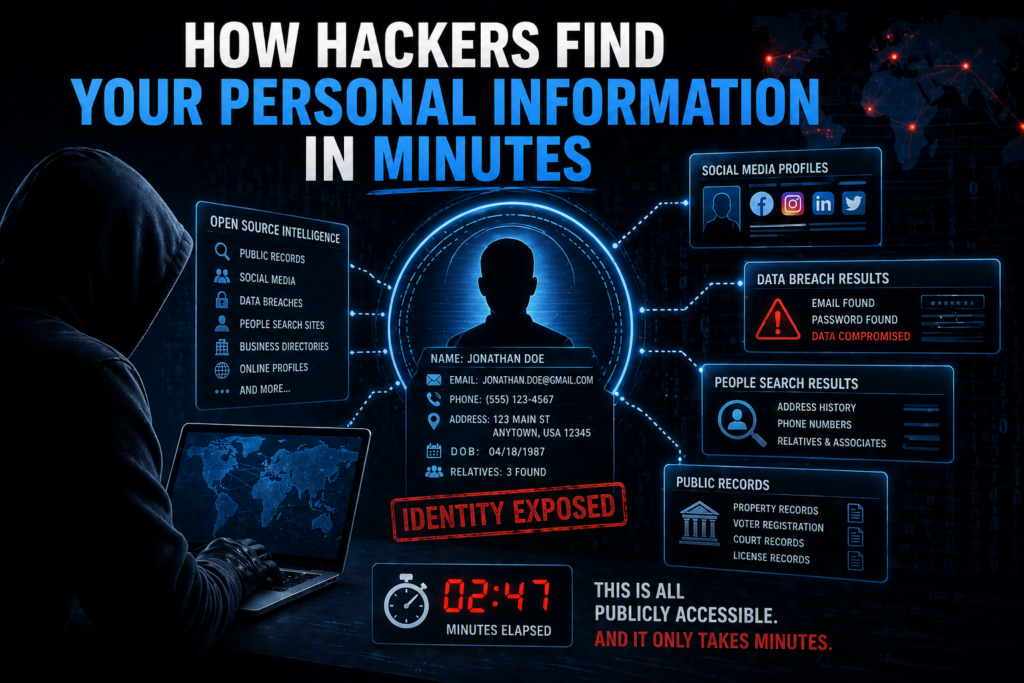
Most people assume their personal information is safe online—but the truth is, hackers can find your data in minutes, not hours or days.
From social media accounts to data breaches and public records, your digital footprint is more exposed than you think.
Understanding how hackers operate is the first step to protecting your privacy, safety, and online reputation.
How Hackers Collect Your Information
1. Social Media Scraping
Hackers often target social media platforms to collect:
- Birthdays and addresses
- Phone numbers and email addresses
- Employment and relationship details
- Photos that reveal locations or habits
Even seemingly innocent posts can reveal sensitive information.
2. Data Breaches
Whenever a website or app is compromised, hackers can access:
- Login credentials
- Payment information
- Personal identifiers like SSNs or phone numbers
Even if you reuse passwords across platforms, hackers can quickly piece together your identity.
3. People Search and Data Broker Sites
Hackers exploit people search websites and data brokers to find:
- Previous addresses
- Contact information
- Family members and associates
- Public court records
This information helps them craft targeted attacks or phishing schemes.
4. Phishing & Social Engineering
Hackers can trick you into revealing information through:
- Fake emails or websites
- Phone calls impersonating legitimate companies
- Malicious links or attachments
With just a few clicks, they can access much more personal data than you realize.
5. Public Records & Online Activity
- Property ownership records, business filings, and court records are all publicly accessible
- Cookies and trackers follow your online behavior across multiple sites
Hackers can combine these data points to build a complete profile of you in minutes.
The Risks of Exposed Information
- Identity Theft – Hackers can open accounts or make purchases in your name
- Financial Loss – Bank accounts, credit cards, and investments may be at risk
- Reputation Damage – Private or sensitive information can be posted publicly
- Harassment & Scams – Exposure of contact info can lead to persistent spam, phishing, or stalking
Even one leaked piece of information can trigger a chain reaction.
How to Protect Yourself
- Audit your online presence to know what is public
- Strengthen passwords and use a password manager
- Enable two-factor authentication (2FA) on all accounts
- Limit personal info on social media
- Use professional removal services to eliminate your data from data brokers and people search sites
Manual attempts are often time-consuming and incomplete, leaving gaps hackers can exploit.
Why Professional Services Work Best
- Identify all sources where your information is exposed
- Remove data from dozens of sites at once
- Monitor your digital footprint for new threats
- Save time, reduce stress, and protect your reputation proactively
Professionals ensure your personal information is secured and monitored, minimizing the risk of future attacks.
Take Action Before Hackers Do
Hackers don’t wait—they can uncover your personal information in minutes.
Professional negative content removal services ensure your data is removed and monitored, protecting your identity, privacy, and online reputation.
Learn more about negative content removal and how to protect your online reputation
Final Thoughts
Your personal information is constantly at risk online.By understanding how hackers collect data—and taking proactive steps with professional removal services—you regain control, privacy, and peace of mind, keeping your digital life safe from attacks.