Quick answer: reputation management and business growth
Reputation management supports growth by improving conversion, referrals, retention, recruiting, partnerships, local visibility, and crisis resilience. It also reveals service problems that marketing alone cannot fix.
Track reviews and search alongside calls, leads, close rates, repeat business, hiring, and customer themes. Invest first in accurate information and operational improvement.
Your reputation has always mattered, but in today’s digital world, it influences far more than personal opinions. Before someone contacts your business, schedules a consultation, or purchases your services, they are likely to search for your name online. What they find often shapes their first impression long before you have an opportunity to speak with them.
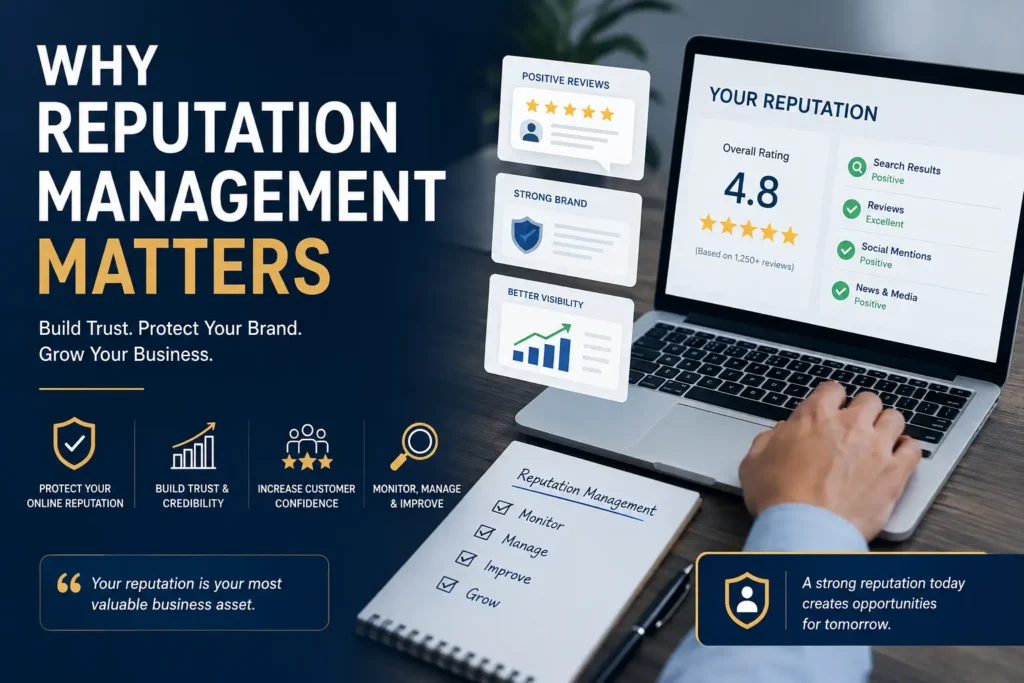
This is exactly why reputation management matters. A strong online reputation builds confidence, supports purchasing decisions, and creates opportunities. On the other hand, misleading information, negative reviews, outdated articles, or harmful search results can reduce trust and discourage potential customers.
Whether you’re a business owner, executive, healthcare provider, attorney, or entrepreneur, protecting your online reputation has become an essential part of long-term success rather than an optional marketing activity.
What Is Reputation Management?
Reputation management is the ongoing process of monitoring, improving, and protecting how individuals and businesses appear online. It combines search engine optimization (SEO), content strategy, review management, brand monitoring, and digital public relations to create a more accurate and trustworthy online presence.
Professional reputation management isn’t about hiding the truth. Instead, it’s about ensuring that credible, relevant, and up-to-date information becomes more visible than outdated or misleading content.
Effective reputation management often includes:
- Monitoring online mentions
- Managing customer reviews
- Improving search engine visibility
- Publishing authoritative content
- Addressing misinformation
- Building long-term digital credibility
As search engines and AI-powered platforms become the primary source of information, maintaining a positive digital presence has never been more important.
Why Reputation Management Matters More Than Ever
Consumers trust online research more than traditional advertising. A quick Google search can influence whether someone chooses your business or a competitor.
According to research from Google, users rely heavily on search results when evaluating companies, products, and professionals before making decisions. Likewise, the Federal Trade Commission (FTC) encourages consumers to research businesses and reviews before purchasing products or services.
This changing behavior explains why reputation management matters for organizations of every size.
A positive online reputation helps you:
- Build trust with new customers
- Increase brand credibility
- Strengthen professional authority
- Improve conversion rates
- Support long-term customer loyalty
- Protect business value during challenging situations
When your digital presence reflects your expertise and professionalism, potential clients feel more confident choosing your services.
The Real Cost of a Poor Online Reputation
Many businesses underestimate how quickly online reputation issues can affect growth. A few negative search results or unanswered reviews may seem minor initially, but they can significantly influence buying decisions over time.
Some of the most common consequences include:
- Lost sales opportunities
- Lower customer confidence
- Reduced search visibility
- Difficulty attracting partnerships
- Damaged employer reputation
- Increased customer hesitation
For executives and public-facing professionals, the impact can be even greater. Investors, journalists, recruiters, and business partners frequently research individuals online before making important decisions.
Addressing reputation concerns early is almost always easier and more cost-effective than repairing significant long-term damage.
Reputation Is No Longer Just About Reviews
When people think about online reputation, they often focus only on Google Reviews. While reviews remain important, they represent only one part of your overall digital presence.
Today’s reputation is shaped by many factors, including:
- Google Search results
- News articles
- Business profiles
- Social media platforms
- Industry directories
- Customer testimonials
- AI-generated search summaries
- Professional publications
This broader digital ecosystem explains why reputation management matters for businesses that want to remain competitive. Every online touchpoint contributes to the story people see when they research your brand.
How Reputation Management Builds Trust
Trust is one of the most valuable assets a business can earn, and your online presence plays a major role in building it. Before contacting a company, most people research its website, reviews, search results, and social media profiles. They want reassurance that they are making the right decision.
This is another reason why reputation management matters. A well-managed online reputation demonstrates professionalism, transparency, and consistency. When customers see positive content, authentic reviews, and accurate business information, they are far more likely to trust your brand and move forward with confidence.
A Strong Reputation Supports Business Growth
A positive reputation doesn’t only protect your brand—it also creates opportunities for growth. Businesses with a trustworthy online presence often generate more inquiries, enjoy higher conversion rates, and build stronger customer loyalty.
Some of the long-term benefits include:
- More qualified leads
- Higher customer retention
- Increased referral business
- Better search engine visibility
- Stronger brand authority
- Greater investor and partner confidence
These benefits illustrate why reputation management matters beyond crisis situations. It becomes a strategic investment that supports sustainable business success.
Common Reputation Risks Businesses Face
Every organization is vulnerable to online reputation challenges, regardless of its size or industry. Some issues develop gradually, while others can emerge unexpectedly and spread quickly across the internet.
Common reputation risks include:
- Negative customer reviews
- Fake or misleading information
- Online defamation
- Negative news coverage
- Social media backlash
- Outdated search results
- Unauthorized or inaccurate content
- Competitor attacks
Without a proactive strategy, these issues can influence public perception and reduce trust over time. Monitoring your digital presence regularly allows you to identify risks early and respond effectively.
Real-World Example: Reputation Can Influence Revenue
Imagine two companies offering the same service at similar prices.
The first business has recent positive reviews, updated website content, and accurate search results that demonstrate expertise. The second business has unanswered complaints, outdated information, and negative articles appearing on the first page of Google.
Most customers will naturally choose the first company because it appears more trustworthy.
This simple example highlights why reputation management matters. People rarely have complete information, so they rely on what they can find online. Your digital reputation often becomes the deciding factor before a customer ever contacts you.
Reputation Management Is Better When It’s Proactive
Many businesses only seek professional help after a reputation issue has already affected sales or credibility. However, the most successful organizations invest in reputation management before problems arise.
A proactive strategy may include:
- Monitoring search results regularly
- Encouraging genuine customer reviews
- Publishing authoritative content
- Maintaining accurate business information
- Strengthening positive search visibility
- Responding professionally to customer feedback
By taking these steps consistently, businesses build resilience and reduce the impact of future reputation challenges.
Why Businesses Choose Professional Reputation Management
Managing an online reputation requires expertise across multiple areas, including SEO, digital PR, content strategy, review management, and search visibility. While some tasks can be handled internally, complex reputation issues often require specialized knowledge and long-term planning.
Professional reputation management provides:
- Customized reputation strategies
- Ongoing monitoring and reporting
- Ethical search optimization
- Content development that builds authority
- Long-term brand protection
- Guidance during sensitive reputation situations
Working with experienced professionals allows businesses to focus on growth while ensuring their online reputation remains strong and credible.
Protect Your Reputation Before It Needs Repair
Every day, potential customers, partners, investors, and employers are forming opinions based on what they find online. Taking action today can help prevent small reputation issues from becoming larger business challenges.
At Your Reputation Agency, we help individuals, executives, and businesses build, protect, and strengthen their online reputation through ethical, strategic, and long-term reputation management solutions.
If you’re ready to improve your digital presence, protect your credibility, or address reputation concerns, explore our Online Reputation Management Services or contact our team for a confidential consultation. We also encourage prospective clients to review our Trustpilot feedback and Google Business Profile to learn about the experiences of businesses and professionals we’ve supported.
Conclusion
Your online reputation is often the first interaction people have with your business. Before they call, make a purchase, or request a consultation, they are already forming opinions based on what they find in search results, reviews, news articles, and social media.
That is why reputation management matters. It helps businesses build trust, strengthen credibility, protect their brand, and create long-term opportunities. A proactive reputation strategy not only reduces the impact of potential risks but also positions your business as a trusted authority in your industry.
Whether you’re an executive, entrepreneur, healthcare provider, law firm, or growing business, investing in your online reputation is an investment in your future success. The businesses that actively manage their reputation today are the ones most likely to earn customer confidence tomorrow.
Frequently Asked Questions
1. Why does reputation management matter for businesses?
Reputation management matters because customers, investors, and partners often research businesses online before making decisions. A positive online reputation builds trust, while negative search results or reviews can reduce credibility and impact revenue.
2. What is online reputation management?
Online reputation management is the process of monitoring, protecting, and improving how a business or individual appears across search engines, review websites, news articles, and social media platforms.
3. Can reputation management improve Google search results?
Yes. Professional reputation management strategies can improve the visibility of positive, relevant content while helping reduce the prominence of outdated or harmful information through ethical SEO and content strategies.
4. How long does reputation management take?
The timeline depends on the complexity of the reputation issue. Some improvements may be visible within a few weeks, while comprehensive reputation management is typically an ongoing long-term strategy.
5. Is reputation management only for businesses with negative reviews?
No. Reputation management is valuable for both proactive brand protection and reputation recovery. Many successful companies invest in reputation management before problems occur.
6. What industries benefit from reputation management?
Almost every industry benefits, including healthcare, legal services, finance, real estate, technology, hospitality, eCommerce, professional services, and corporate organizations.
7. Does reputation management help executives and public figures?
Yes. Executives, founders, public figures, and leadership teams often require specialized reputation management because their online presence can influence business relationships, media coverage, and public trust.
8. How can I monitor my online reputation?
You can monitor your reputation by regularly checking search results, online reviews, social media mentions, news coverage, and business listings. Many organizations also work with reputation management specialists for continuous monitoring.
9. How do I choose the right reputation management company?
Look for a company that follows ethical practices, has positive client reviews, provides transparent communication, offers customized strategies, and demonstrates experience with businesses similar to yours.
10. Why choose Your Reputation Agency?
Your Reputation Agency provides strategic, ethical, and customized online reputation management services for businesses, executives, and professionals. Our focus is on long-term reputation protection, search visibility, and sustainable digital credibility.
Protect Your Reputation Before It Becomes a Business Risk
Every search result, review, and online mention contributes to how people perceive your business. A strong reputation doesn’t happen by accident—it requires strategy, consistency, and ongoing attention.
If you’re ready to strengthen your digital presence, protect your credibility, and build lasting trust, Your Reputation Agency is here to help. Our team provides professional Online Reputation Management Services tailored to executives, businesses, and high-visibility professionals.
Explore our reputation management solutions, read what clients say about us on Trustpilot, view our Google Business Profile, or contact us today for a confidential consultation. Together, we can build a reputation that supports your long-term growth and success.