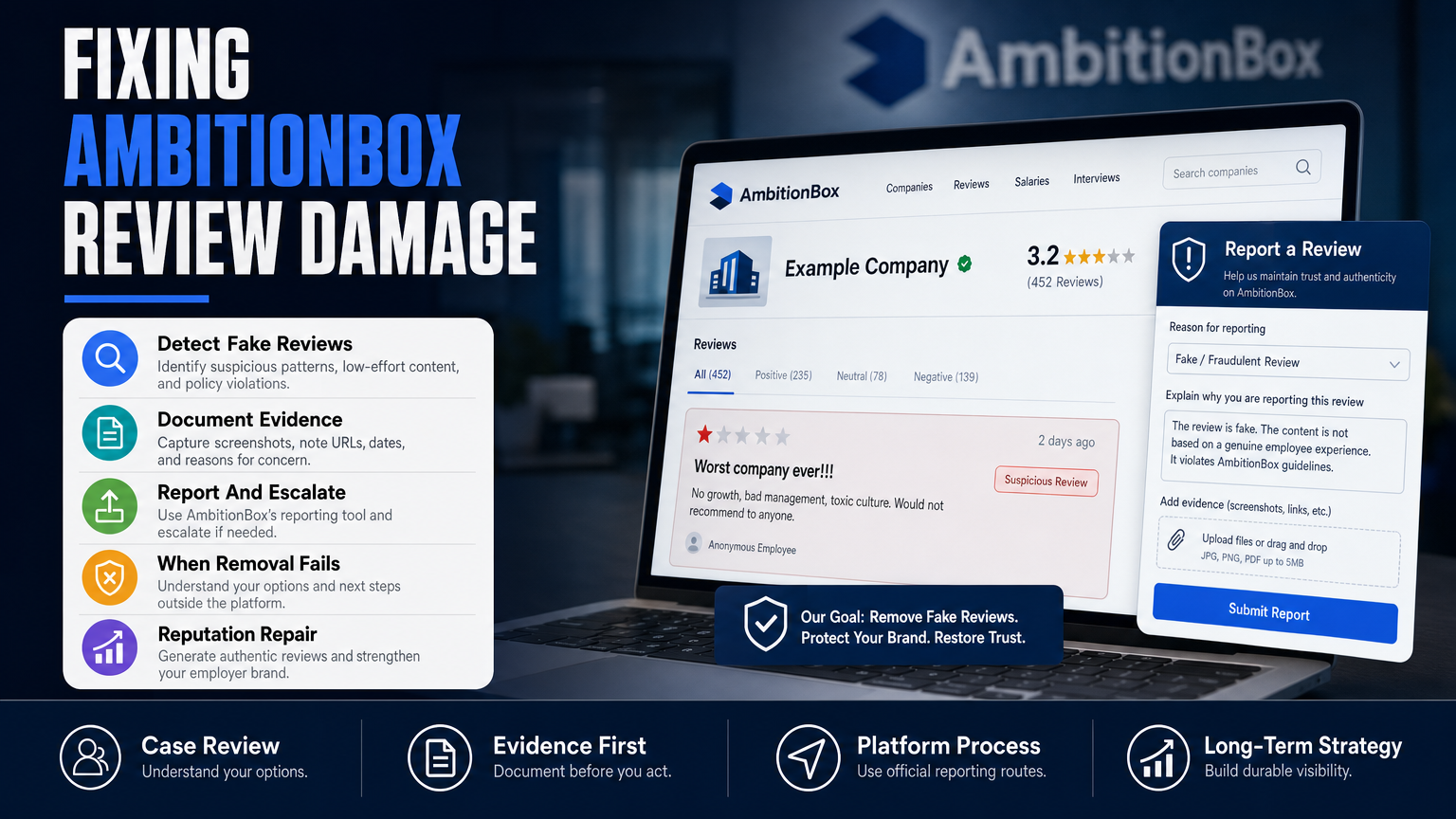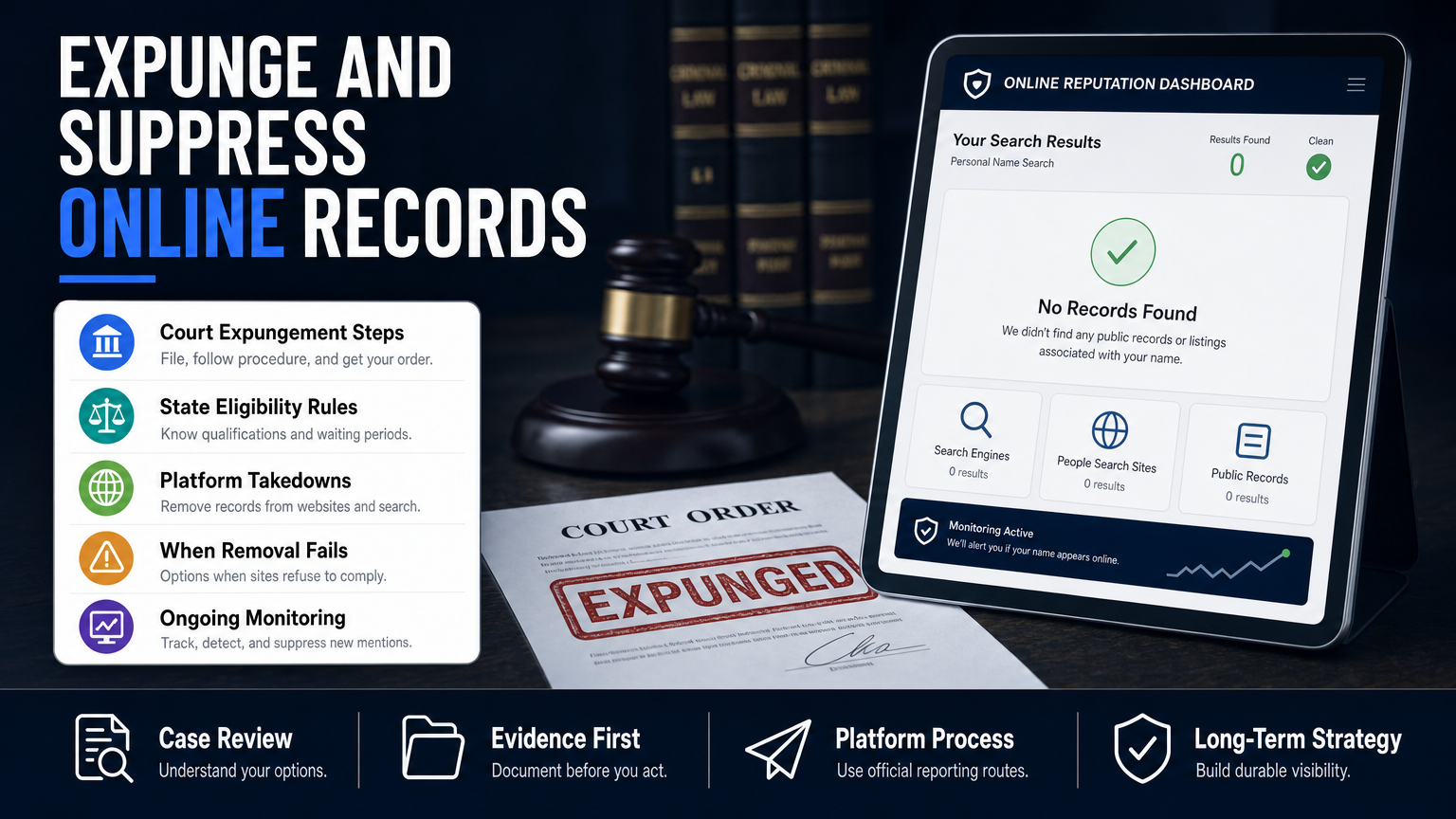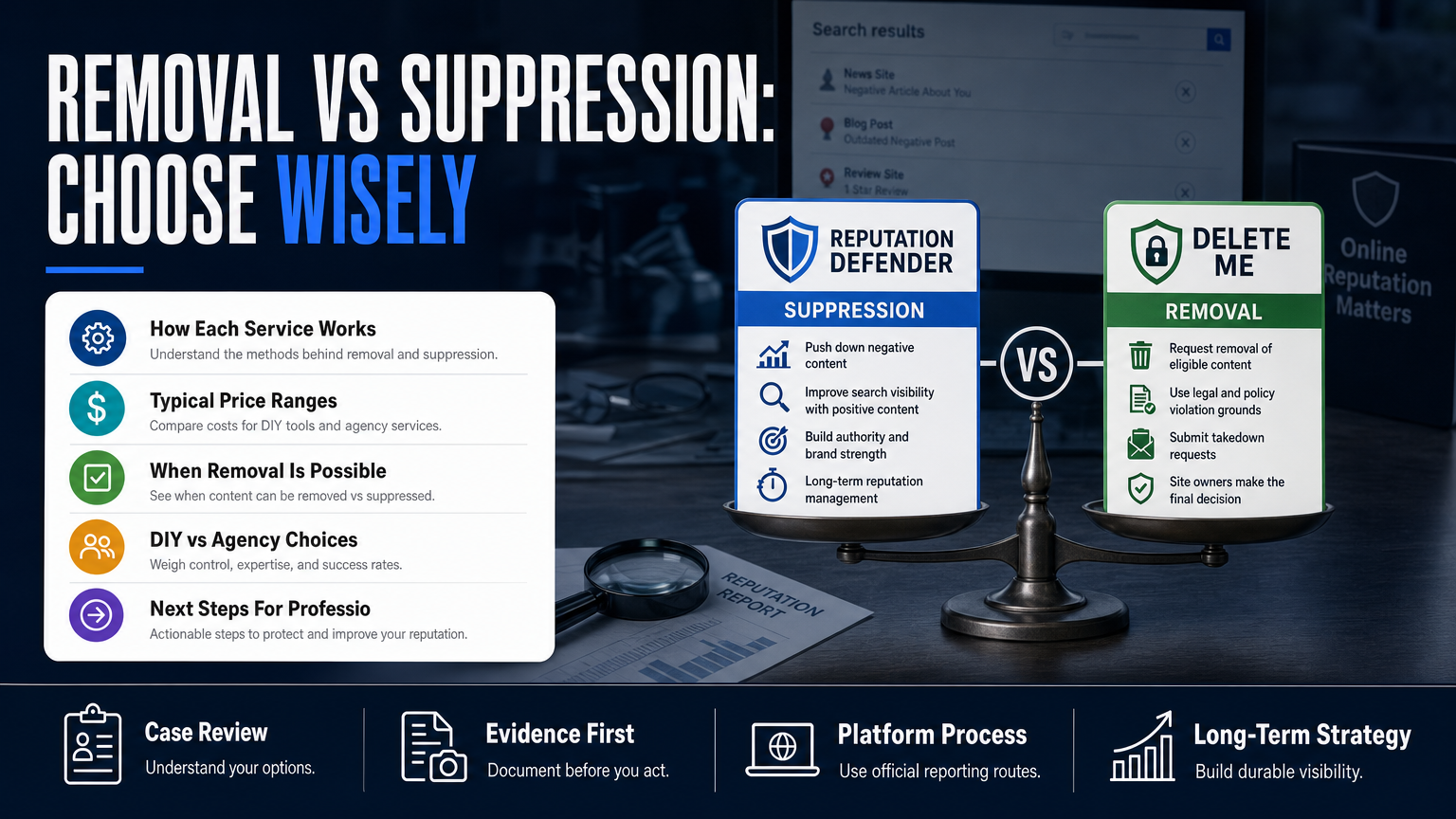
Quick answer: content Google may remove
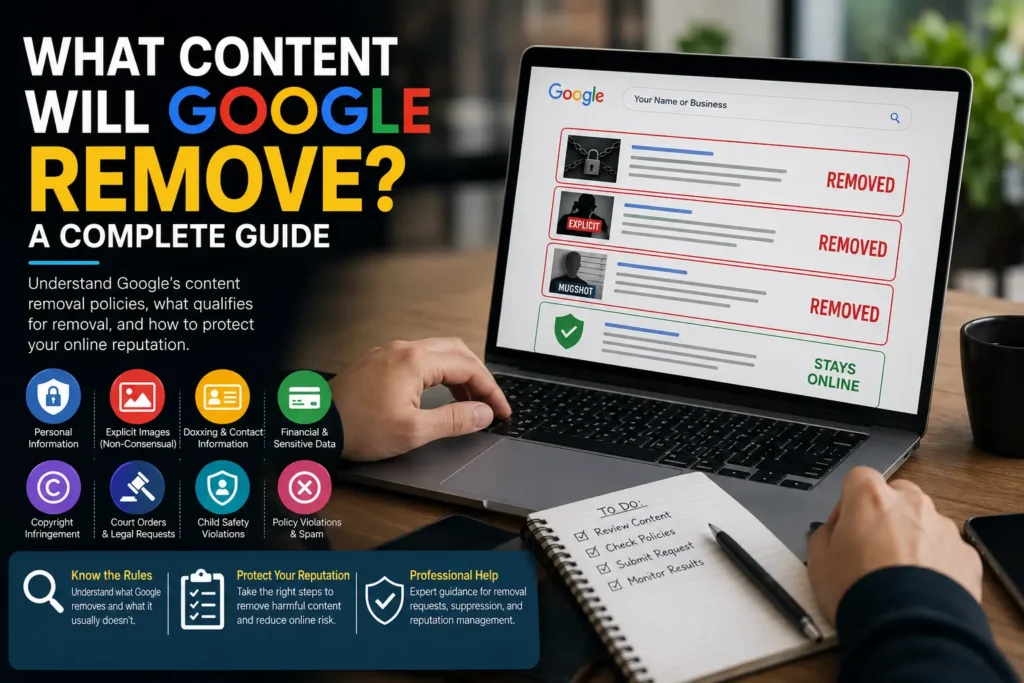
Google may remove or de-list eligible personal contact data, doxxing, nonconsensual explicit imagery, certain financial or identity information, copyright-infringing pages, and content covered by applicable law.
Negative opinion and accurate public-interest reporting often remain. Use the correct request category, provide exact URLs and evidence, and address the source page whenever possible.
Finding harmful content about yourself or your business in Google Search can be frustrating. Whether it’s personal information, fake reviews, explicit images, or outdated content, many people ask the same question: What Content Will Google Remove?
The answer is more nuanced than most expect. Google doesn’t own the content that appears in search results—it simply indexes webpages published by other websites. Because of this, Google will only remove certain types of content that violate its policies or meet specific legal and privacy requirements.
Understanding What Content Will Google Remove? is the first step toward protecting your online reputation. In this guide, we’ll explain what Google may remove, what usually remains online, and what options are available if harmful content continues appearing in search results.
Why Google Doesn’t Remove Everything
Google’s mission is to organize and provide access to publicly available information. As a result, it generally avoids deciding whether published content is true, false, fair, or unfair unless it violates established policies or legal requirements.
This means that negative content does not automatically qualify for removal simply because it is damaging or embarrassing.
Instead, Google evaluates removal requests based on specific categories such as privacy, safety, legal obligations, and policy violations. Understanding these guidelines can help you determine whether submitting a removal request is likely to be successful.
What Content Will Google Remove?
Google provides removal options for certain types of content that create significant privacy or safety concerns. While every request is reviewed individually, the following categories are among the most commonly approved.
Personally Identifiable Information (PII)
Google may remove search results that expose highly sensitive personal information when there is a risk of identity theft, fraud, or personal harm.
Examples include:
- Government-issued identification numbers
- Bank account information
- Credit card numbers
- Personal login credentials
- Images of signatures
- Confidential financial documents
If this information appears publicly without a legitimate reason, submitting a removal request may be appropriate.
Non-Consensual Explicit Images
Google has clear policies regarding intimate images shared without consent.
Removal requests may apply to:
- Non-consensual explicit photos
- Revenge pornography
- Digitally manipulated explicit images
- Deepfake intimate content
- Explicit content involving minors
These requests are treated seriously because they involve personal privacy and potential harm.
Doxxing and Personal Contact Information
Publishing private contact information with the intention of encouraging harassment or threats is commonly known as doxxing.
Google may consider removing search results containing:
- Home addresses
- Personal phone numbers
- Private email addresses
- Confidential location details
- Information used to facilitate stalking or harassment
Protecting personal safety is one of Google’s highest priorities in these situations.
Financial and Identity Theft Information
Search results exposing information that could enable financial fraud may qualify for removal.
This includes:
- Banking credentials
- Tax identification numbers
- Passwords
- Authentication codes
- Confidential financial records
These requests are designed to reduce the risk of identity theft and online fraud.
Child Sexual Abuse Material (CSAM)
Google actively removes and reports content involving child sexual abuse material.
This type of content receives immediate attention and is handled according to international legal requirements and Google’s safety policies.
Fake or Unauthorized Explicit Content
Advances in artificial intelligence have made image manipulation increasingly common.
Google may review requests involving:
- AI-generated explicit images
- Fake intimate photographs
- Deepfake videos
- Digitally altered explicit media intended to harm someone’s reputation
These cases are evaluated based on Google’s current policies regarding manipulated content and personal privacy.
Content Removed by Court Orders or Legal Requirements
In some situations, Google removes search results because of valid legal obligations.
Examples include:
- Court-ordered removals
- Copyright infringement notices (DMCA)
- Certain defamation rulings
- Legal privacy decisions
- Government-authorized removal requests
Whether Google removes the content depends on applicable laws and the documentation supporting the request.
Real-World Example
Imagine a business owner’s personal bank statement is accidentally published on a publicly accessible webpage and later indexed by Google.
Because the information creates a significant privacy and financial risk, the owner may submit a removal request. If Google’s review determines the content violates its personal information policies, the search result may be removed while the website owner is also encouraged to remove the original page.
This example illustrates why understanding What Content Will Google Remove? is important before assuming every negative search result can be taken down.
What Google Usually Will NOT Remove
Understanding What Content Will Google Remove? also means understanding what Google usually does not remove. Many people assume that negative or embarrassing content automatically qualifies for removal, but Google’s policies are much narrower.
In most cases, Google leaves content online if it is legally published and does not violate its removal policies. Even information that negatively affects your reputation may remain visible if it serves a public interest or falls within a publisher’s editorial rights.
This is why many reputation issues require a broader online reputation management strategy rather than relying solely on Google removal requests.
Negative News Articles
One of the most common misconceptions is that Google will remove unfavorable news coverage simply because it appears high in search results.
Generally, Google does not remove:
- Accurate newspaper articles
- Public records reported by legitimate publishers
- Historical news stories
- Opinion pieces published within editorial guidelines
If a news article remains online, the first step is usually to contact the publisher directly. If removal isn’t possible, reputation management strategies may help reduce its visibility over time.
If you’re dealing with this situation, you may also find our guide “How Long Does Google Remove Content? A Complete Guide” helpful for understanding the review process and expected timelines.
Negative Reviews
Business owners frequently ask whether Google removes bad reviews.
The answer depends on whether the review violates Google’s policies.
Google may remove reviews involving:
- Spam
- Fake engagement
- Hate speech
- Threats
- Impersonation
- Prohibited content
However, Google typically does not remove genuine negative customer experiences simply because a business disagrees with them.
If your company is struggling with policy-violating reviews, our Google Review Removal Service explains how professional review management can help protect your online reputation.
Defamation and False Statements
People often believe Google decides whether information is true or false.
In reality, Google usually does not investigate factual disputes between individuals or businesses.
Unless supported by:
- Court orders
- Legal judgments
- Policy violations
- Applicable removal criteria
Google generally leaves the content indexed.
In these situations, correcting misinformation often involves working directly with the publisher, pursuing legal remedies where appropriate, or improving positive search visibility through reputation management.
Outdated or Embarrassing Content
Many people want to remove old blog posts, forum discussions, or outdated information that no longer reflects their current circumstances.
Unfortunately, outdated content alone rarely qualifies for Google removal.
Examples include:
- Old business disputes
- Previous employment issues
- Years-old interviews
- Historical media coverage
- Archived webpages
If the content remains accurate and publicly available, Google will often continue indexing it.
Search Results vs. Website Content
A common misunderstanding is believing that Google controls every webpage appearing in its search results.
In reality:
- Websites publish the content.
- Google indexes the content.
This distinction is important.
Removing a search result from Google does not always remove the original webpage, and deleting the webpage does not always cause Google to update search results immediately.
For many cases, both the publisher and Google may need separate requests.
How to Submit a Google Removal Request
If your situation falls within Google’s removal policies, you can submit a request through Google’s official removal tools.
Before submitting your request, gather:
- The exact URL
- Screenshots
- Supporting documentation
- Identification if required
- A clear explanation of the issue
Providing accurate information helps Google’s review team evaluate your request more efficiently.
You can review Google’s official content removal policies through its Search Help documentation, which explains the different categories and eligibility requirements.
When Removal Isn’t Possible
Sometimes Google cannot remove a search result because it doesn’t violate any policies.
That doesn’t mean you’re out of options.
Professional online reputation management may include:
- Search result suppression
- Publishing authoritative content
- Improving branded search visibility
- Strengthening trusted digital profiles
- Building positive online authority
These strategies focus on improving what people see first when searching for your name or business.
If you’re wondering whether Google can remove a specific search result, our article “Can Google Remove Search Results? What You Need to Know” provides additional guidance and explains the situations where removal may or may not be possible.
Why Reputation Management Matters
Google’s removal policies are intentionally limited. As a result, many online reputation challenges require a broader strategy rather than depending on a single removal request.
Whether you’re dealing with misleading search results, harmful reviews, outdated news coverage, or autocomplete suggestions, combining ethical reputation management with search optimization often produces better long-term results than pursuing removal alone.
This is where experienced reputation professionals can help evaluate your options and recommend the most effective course of action based on your unique situation.
Why Professional Reputation Management Can Make a Difference
Not every online reputation issue can be solved through a Google removal request. Many situations require a broader strategy that combines technical expertise, search engine optimization, publisher communication, and long-term reputation management.
Your Reputation Agency, we help individuals, executives, and businesses understand their options before taking action. Every case begins with a careful assessment to determine whether content qualifies for removal, should be addressed with the publisher, or is better managed through ethical reputation protection strategies.
Rather than offering unrealistic guarantees, we focus on practical, transparent solutions designed to protect your digital reputation over time.
How Your Reputation Agency Can Help
If harmful content continues appearing in search results, our team develops a customized strategy based on your specific situation.
Our services may include:
- Google content removal guidance
- Online reputation management
- Search result suppression
- Negative content management
- Google Autocomplete management
- Google Review Removal support
- Mugshot removal assistance
- Executive and business reputation protection
- Ongoing reputation monitoring
Every strategy is tailored to the client’s goals, industry, and level of online visibility.
Building Trust Beyond Search Results
Managing your reputation isn’t only about removing unwanted content—it’s about creating a stronger digital presence.
A proactive strategy helps you:
- Build credibility with potential customers
- Increase trust with business partners
- Improve brand perception
- Strengthen positive search visibility
- Reduce long-term reputational risk
Many organizations invest in reputation management before a crisis occurs because prevention is often more effective than recovery.
Why Businesses Trust Your Reputation Agency
Choosing a reputation management partner requires confidence and transparency.
Clients choose Your Reputation Agency because we focus on ethical practices, customized strategies, and long-term results rather than short-term fixes.
We encourage prospective clients to review our customer feedback on Trustpilot and our Google Business Profile, where they can learn more about our reputation management approach and client experience.
Our goal is simple: provide honest guidance, realistic expectations, and professional support for every reputation challenge.
Ready to Protect Your Online Reputation?
If you’re unsure what content Google will remove, or you’re dealing with harmful search results that affect your reputation, professional guidance can help you make informed decisions.
Every reputation issue is different. Whether you’re facing negative search results, outdated content, fake reviews, or privacy concerns, the right strategy begins with understanding your available options.
Request a confidential consultation with Your Reputation Agency to receive a personalized assessment and discover the most effective approach for protecting your online reputation.
Address: 1309 Coffeen Ave Ste 1200, Sheridan, WY 82801, United States
Conclusion
Understanding What Content Will Google Remove? can help you avoid unnecessary frustration and focus on solutions that actually work.
Google removes certain types of content involving privacy, safety, legal requirements, and policy violations. However, many negative search results—including news articles, reviews, and publicly available information—do not automatically qualify for removal.
When removal isn’t possible, ethical online reputation management, search optimization, and positive content strategies often provide the best long-term solution.
By acting early and following a structured approach, you can strengthen your online presence, improve public perception, and protect one of your most valuable assets—your reputation.
Frequently Asked Questions
1. What content will Google remove from search results?
Google may remove content involving personal information, non-consensual explicit images, doxxing, financial information, copyright violations, and certain legal or policy violations.
2. Will Google remove negative news articles?
Generally, no. If the article is accurate and published by a legitimate news organization, Google usually continues indexing it unless it violates specific removal policies or legal requirements.
3. Can Google remove fake reviews?
Google may remove reviews that violate its policies, such as spam, fake engagement, impersonation, harassment, or prohibited content.
4. Does Google remove defamatory content?
Google typically does not determine whether statements are defamatory. Removal usually requires legal documentation, court orders, or applicable policy violations.
5. How long does Google take to review a removal request?
Review times vary depending on the request type, complexity, and supporting documentation. Some requests are processed within days, while others may take longer.
6. Can outdated information be removed from Google?
Outdated information does not automatically qualify for removal. Eligibility depends on Google’s policies and whether the content presents privacy or legal concerns.
7. What should I do if Google refuses my request?
If removal isn’t possible, professional online reputation management can help improve positive search visibility and reduce the prominence of unwanted content.
8. Is it better to contact the website owner first?
In many situations, yes. Because publishers control their own content, contacting the website owner is often the most effective first step before requesting removal from Google.
9. Can businesses benefit from reputation management?
Absolutely. Businesses use reputation management to protect brand credibility, improve customer trust, strengthen search visibility, and respond to reputation challenges proactively.
10. When should I contact a reputation management professional?
If negative search results are affecting your business, career, or personal reputation, consulting an experienced reputation management agency early can help you evaluate your options and develop an effective long-term strategy.