Why Personal Branding Matters More After Public Incidents
Understanding Why Personal Branding Matters More After Public Incidents is arguably the most critical component of modern professional survival. The digital age has fundamentally transformed how we construct, maintain, and occasionally lose our reputations. A public incident—whether it is a statement taken out of context, a genuine professional error, or a coordinated defamation campaign—can propagate at the speed of light across social media networks and search engines. In this landscape of hyper-visibility, the natural instinct for many professionals and public figures is to retreat, remain silent, and wait for the storm to pass. However, the reality of the modern internet dictates exactly the opposite approach. It is precisely in the aftermath of a public crisis when your personal brand acquires monumental importance. This is no longer just about standard damage control; it is about digital survival and the strategic redefinition of your identity before an audience that is now scrutinizing you more closely than ever before.

The Immediate Impact of a Public Crisis on Your Image
A public incident possesses the undeniable capacity to alter the professional and personal trajectory of any individual in a matter of minutes. When a controversy erupts, public perception shifts drastically, transitioning from neutrality or admiration to severe scrutiny and doubt. This shift is not gradual; it is a sudden shockwave that destabilizes the foundation of trust you have spent years building. In a matter of hours, a lifetime of work can be eclipsed by a single negative event. The narrative of your career, previously defined by achievements and skills, is suddenly reduced to the crisis at hand.
The first blow is always the immediate loss of control over the flow of information. The moment an incident goes viral, you are no longer the one dictating your own story; algorithms, detractors, and casual commentators take the wheel. This loss of agency is profoundly disorienting and requires rapid intervention to regain mastery of your own narrative. Social media platforms act as a massive accelerant during this initial phase. Platforms like Twitter, Facebook, and TikTok are architecturally designed to reward outrage and conflict, meaning negative news travels exponentially faster than any subsequent clarification.
During this initial phase, your personal brand is completely exposed to third-party interpretation. People who had never heard of you are now forming permanent opinions based on fragmented, often biased, or incomplete information. This initial post-incident impression is incredibly difficult to erase. It is a moment where the audience demands immediate answers, yet any hasty statement can worsen the situation. The pressure to speak is immense, but the risk of saying the wrong thing is even greater.
This is exactly Why Personal Branding Matters More After Public Incidents. A strong, pre-existing personal brand acts as a shield, giving your loyal followers a reason to doubt the negative narrative and wait for your side of the story. Inaction at this critical juncture is not a viable option. Absolute silence is frequently interpreted as an admission of guilt or a lack of respect for the affected parties. Digital news outlets and niche blogs further amplify the damage by indexing the incident in search engines. A single negative article on a site with high domain authority can anchor itself on the first page of Google results for your name.
The psychological impact on the individual at the center of the hurricane is equally immense. The sensation of being attacked from multiple fronts can lead to flawed communication decisions dictated by panic or anger. Maintaining composure and relying on the core values of your personal brand is essential to avoid aggravating the crisis with emotional reactions. Therefore, the immediate impact demands a total reevaluation of your digital presence. What worked before the incident will no longer suffice. You need a personal brand that actively defends you, establishing an anchor of credibility amidst the media chaos.
The Visibility Paradox: Why You Are Searched More Than Ever
One of the most ironic consequences of a public incident is what public relations experts call the “visibility paradox.” At the exact moment you might most desire to disappear from the public eye, your name experiences an unprecedented spike in search volume. You are more famous—or infamous—than you have ever been, and millions of eyes are focused on your digital footprint. The people searching for your name are not doing so to learn about your talents or your resume; they are motivated by curiosity, media trends, or the need to validate public outrage.
This massive traffic toward your social profiles and search results represents a massive risk, but also a hidden opportunity that a strong personal brand must leverage. When users search your name, they encounter what we call the “digital slate.” If you have not cultivated your personal brand, that slate will be filled exclusively by sensationalist headlines and hateful comments generated by the incident. You will be allowing the crisis to become your sole online identity.
Conversely, if you have a robust personal brand, curious users will find an ecosystem of content that contextualizes who you really are. They will see your articles, your past interviews, your charitable projects, and your professional achievements. This information acts as a cognitive counterbalance, forcing the user to reconcile the negative news with the evidence of a positive and structured career. According to Forbes, search trend spikes are critical moments where new content is indexed much faster by algorithms.
This is the primary reason why hiding is the worst possible strategy. By deleting your profiles or setting them to private, you create an information vacuum. In the digital world, information vacuums are quickly filled with speculation, rumors, and content generated by your detractors. Your absence surrenders the battlefield to those who wish to damage your image. The public’s attention is notoriously ephemeral, and the spike in massive searches will last a few days or weeks at most before the news cycle moves on.
This brief window is your opportunity to inject your own narrative into the information flow before the negative results solidify permanently on Google. The visibility paradox forces you to be the editor-in-chief of your own life. You must quickly audit what people see first when they search for you. Are they your professional profiles? Is it your personal website? Or are they toxic forum threads? Understanding where the traffic lands allows you to fortify those specific channels.
In this state of high visibility, every move counts. Every post, every “like,” every comment is analyzed under a magnifying glass by a hyper-critical audience. Your personal brand must act as a rigorous quality filter to ensure that nothing you emit during this period can be misinterpreted or used as ammunition against you. Accepting this forced visibility is the first step toward recovery. Instead of lamenting the unwanted attention, you must use it as a megaphone. You have the world’s attention; now, through a carefully calibrated personal brand, you must decide exactly what you want them to hear.
Taking Back Control of the Digital Narrative
Recovering your reputation after a public incident does not happen by accident; it requires a deliberate and strategic takeover of your digital narrative. This means transitioning from being the passive subject of the news to the active creator of your own story. Personal branding is the vehicle through which you execute this transition from victim to leader of your own narrative. The first step to taking control is clearly defining the core message you wish to project.
Whether it is a message of apology and learning or a clarification of misrepresented facts, this message must be consistent across all your platforms. A chaotic narrative feeds on inconsistency. If you give contradictory statements on different social networks, the public will lose trust in you. Therefore, centralizing your communication is vital. Often, this involves directing all traffic to a platform you completely control, such as your own website, where you do not depend on character limits or hostile algorithms.
Taking control also involves deciding what to respond to and what to ignore. Not all criticism deserves your attention. Engaging in circular arguments with internet trolls only serves to keep the incident alive in the algorithm. A strong personal brand knows how to differentiate between legitimate criticism that requires a response and toxic noise that should be blocked or ignored.
The use of SEO-optimized digital press releases is a fundamental tactic in this process. By publishing your official stance through authoritative news channels, you ensure that your version of events appears in searches alongside the initial accusations, providing journalists and the public with a primary source to cite. Furthermore, controlling the narrative requires transparency in the improvement process. If the incident revealed a genuine flaw, your personal brand must document the concrete steps you are taking to correct it.
It is crucial to involve your strategic allies at this point. Mentors, business partners, or colleagues who can vouch for your character and professionalism must be activated. When third parties validate your new narrative, it gains a credibility that you, being at the center of the crisis, cannot generate on your own. Creating an online “source of truth” is another effective tactic, such as a dedicated FAQ page on your website.
By centralizing the information, you prevent the audience from having to search dark forums to find answers. Ultimately, taking control of the narrative is a long-term commitment. It is not resolved with a single apology video or a Twitter thread. It requires a consistent and disciplined publication of valuable content that, month by month, buries the negative news under a mountain of evidence of your professionalism and growth, proving Why Personal Branding Matters More After Public Incidents.
The Critical Importance of Cleaning Your Digital Footprint
Before you can build a new skyscraper over your reputation, you must first clear the rubble of the previous incident. The digital footprint you leave on the internet is permanent unless you take active measures to manage, suppress, or delete it. A personal brand cannot shine if it is covered in toxic links, decontextualized images, and defamatory forums. The cleaning process begins with a deep audit of your online presence.
This requires using advanced monitoring tools to identify every single mention of your name in relation to the incident. You must catalog URLs, screenshots, social media posts, and blog articles that are damaging your image. One of the most persistent sources of infection after a public crisis are anonymous discussion forums. Platforms where users operate without showing their identity are often breeding grounds for consequence-free defamation. To deal with this, it is highly recommended to rely on experts to remove Reddit comments, as these sites have complex removal policies that require specific technical and legal knowledge.
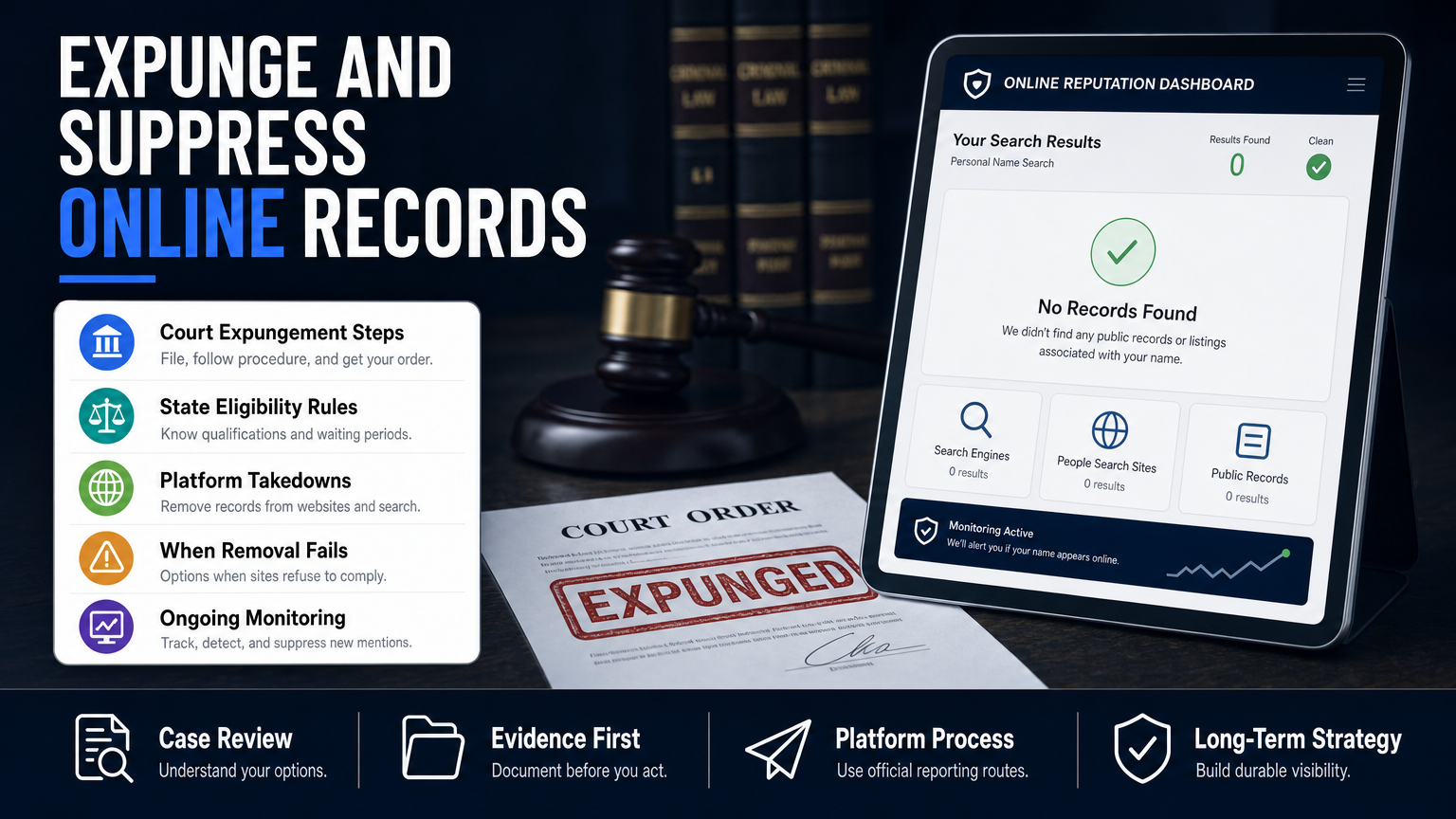
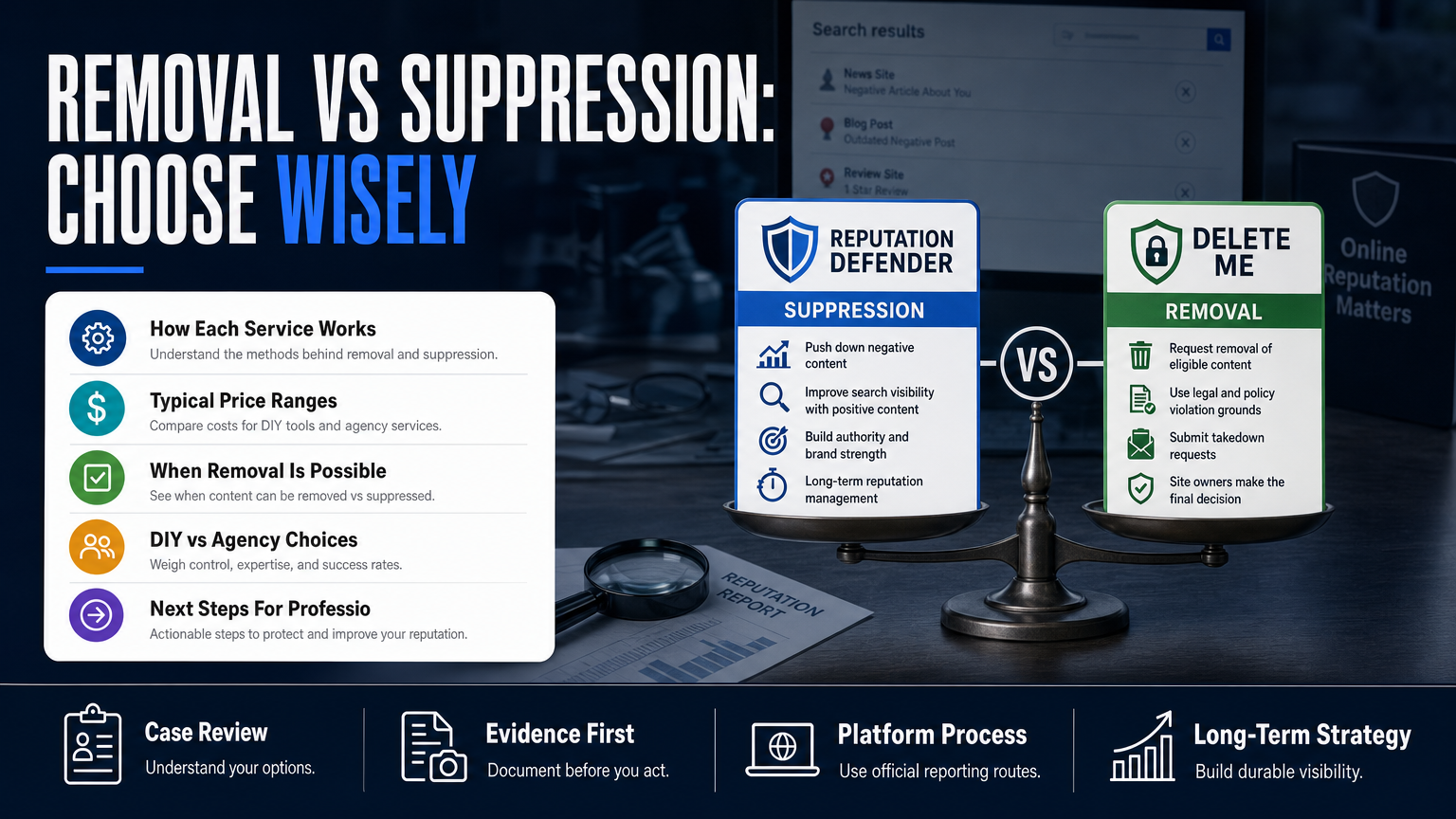
Cleaning your footprint does not always mean erasing every trace of the past; it often means suppressing it. The goal is to push negative content to the second, third, or fourth page of Google results, where statistically less than 5% of users ever navigate. This is achieved through reverse SEO tactics and the creation of stronger digital assets. You must also sanitize your own social media. A public incident often prompts users to scour your history for old tweets or inappropriate photos.
Proactively deleting historical content that no longer represents your current values is an indispensable protective measure. Copyright management is a powerful tool in digital cleaning. If your private images or protected material are being used without your consent to illustrate defamatory articles, you can issue takedown notices under the DMCA (Digital Millennium Copyright Act).
Cleaning also extends to background check databases and public data aggregators. Information associated with a resolved legal incident or misunderstanding often continues to appear on people-search sites. Formally requesting opt-outs from these databases is a crucial step in regaining your privacy. It is vital to understand that cleaning your digital footprint is ongoing work, as deleted content often reappears on mirror sites.
Your personal branding strategy must include permanent monitoring to detect and neutralize these flare-ups before they regain traction in search engines. Furthermore, cleaning allows you to establish a clear boundary between your past and your present. By removing the visual and digital noise of the incident, you prepare the ground for the new seeds of your positive content to germinate without toxic interference.
Rebuilding Trust Through Unfiltered Authenticity
Once the fire of the initial incident has been contained and you have begun to clean your digital footprint, the true work of reconstruction begins. The most damaged asset during a public crisis is not your follower count or your short-term revenue; it is trust. Trust cannot be bought or hacked; it can only be rebuilt through radical and sustained authenticity. The post-incident personal brand must abandon any pretense of immaculate perfection.
The public has already seen your vulnerabilities or mistakes; attempting to return to an image of polished, flawless success will feel fake and generate rejection. The new era of your brand must embrace humanity, acknowledging that growth often comes from failure. Authenticity requires a real apology if you have committed a fault. A corporate apology, full of legal jargon and evasive language, will destroy whatever little trust you have left.
A genuine apology assumes total responsibility, explains what measures will be taken to prevent a recurrence, and does not seek excuses. After the apology, authenticity is demonstrated with actions, not words. If your incident was related to poor customer service, your content must focus on showing the newly implemented policies. If it was an insensitive comment, your brand must reflect genuine education and ongoing commitment to the affected communities.
Showing the “behind the scenes” of your recovery process is one of the most powerful ways to humanize your brand. Sharing lessons learned, moments of doubt, and efforts to improve creates a narrative of redemption that the audience can emotionally connect with. People love stories of overcoming adversity much more than stories of uninterrupted success. Controlled vulnerability is your best ally at this stage.
According to leadership experts cited in the Harvard Business Review, leaders who show vulnerability generate higher levels of loyalty in their teams and audiences. Sharing your learnings openly transforms the incident from a shameful stigma to a testament to your resilience. Consistency is the engine of trust. You cannot be authentic and vulnerable one day and then revert to arrogant behavior patterns the next.
Your personal brand must maintain a firm, humble, and value-centric tone throughout the months and years following the incident. Trust is regained in drops, but lost in buckets. Reconnecting with your core community is fundamental. Take the time to respond to their messages, thank them for their support, and create content specifically for them. Their loyalty will be the hard core upon which you will rebuild your broader audience.
The Role of Third-Party Reviews and Public Perception
In the digital ecosystem, your personal brand is not just what you say about yourself; it is predominantly what others say about you. Following a public incident, review platforms and opinion sites become battlegrounds where detractors attempt to leave permanent scars on your professional or commercial reputation, directly affecting your livelihood. When a professional or business suffers a viral crisis, it is common to experience the phenomenon known as “review bombing.”
Hundreds of users, many of whom have never been real clients, flock to platforms like Google My Business, Yelp, or Trustpilot to leave one-star ratings and inflammatory comments based solely on the news of the incident. This collateral damage directly affects local SEO and conversion capacity. For a doctor, lawyer, or agency owner, a drop in rating can translate into thousands of dollars in lost revenue.
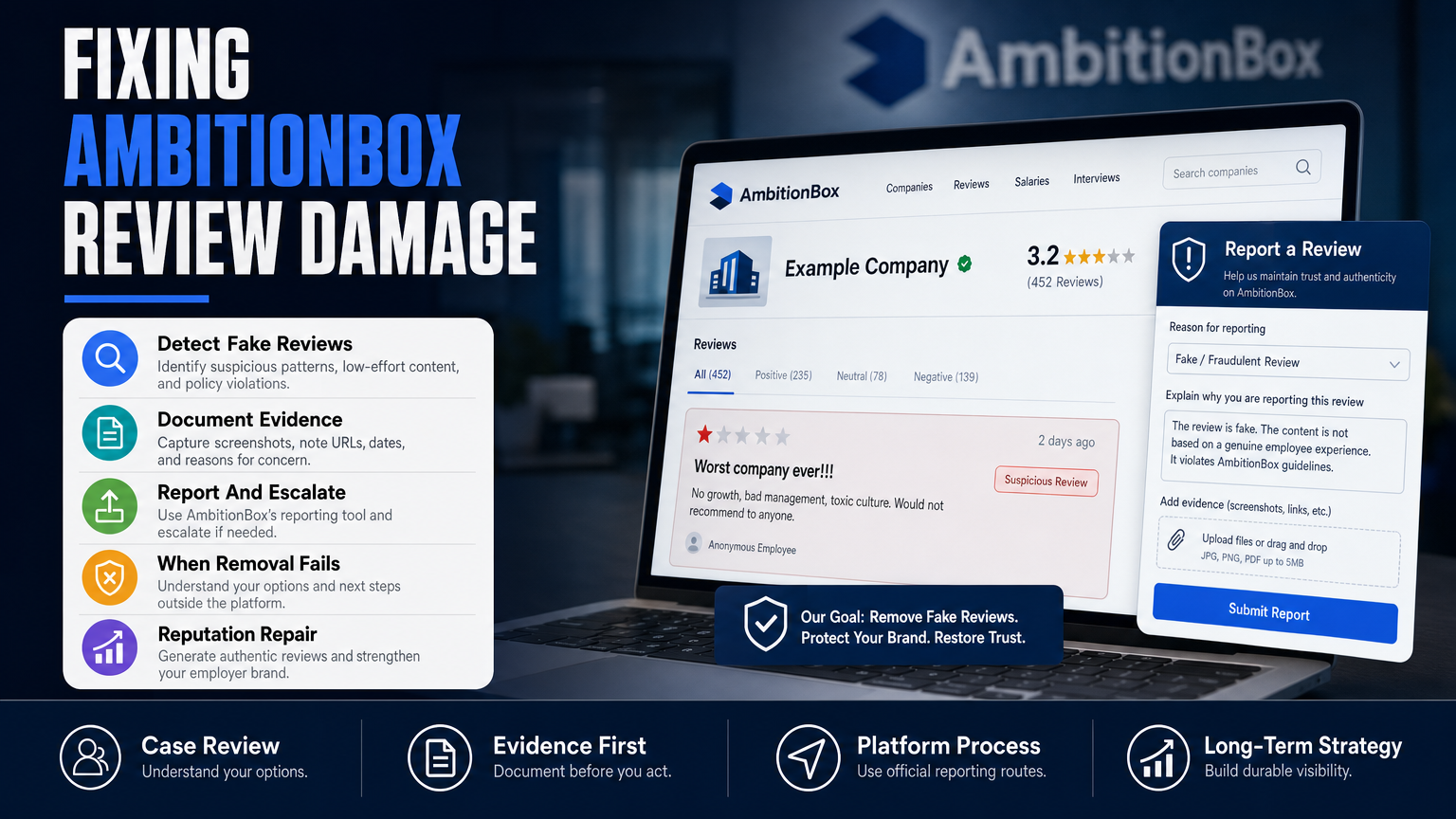
Because review platforms are designed to protect freedom of speech, it is often incredibly difficult for a standard user to get these fake reviews removed, even when they blatantly violate the platform’s terms of service. This is where a professional Google review removal service becomes crucial. Experts know exactly how to document the coordinated attack, escalate the issue through the proper legal and administrative channels, and restore the profile’s legitimate rating.
However, removal is only half the battle. To truly fortify your personal brand against the lingering effects of a public incident, you must actively dilute the remaining negativity by generating a massive influx of positive, legitimate reviews. This requires implementing automated review generation systems that respectfully prompt your satisfied, real clients to share their experiences online.
By pushing the narrative back into the hands of actual consumers, you neutralize the artificial outrage generated by the internet mob. Furthermore, responding to reviews—both positive and negative—becomes a critical exercise in public relations. A well-crafted response to a negative review demonstrates professionalism and a commitment to customer satisfaction.
This level of engagement proves to prospective clients that you are present, accountable, and dedicated to excellence, reinforcing Why Personal Branding Matters More After Public Incidents. In the modern marketplace, third-party validation is the ultimate currency, and a resilient personal brand ensures that this currency remains strong even after a significant reputational hit.
Professional Intervention in Crisis Management
Navigating the turbulent waters of a public incident is rarely a DIY project. The emotional toll, combined with the technical complexity of algorithms, SEO, and digital law, makes independent recovery highly improbable for most professionals. This is exactly why specialized intervention is often the deciding factor between a temporary setback and permanent career ruin.
Relying on expert crisis reputation management provides a structured roadmap, separating personal emotion from the technical execution needed to silence damaging narratives. Professional reputation agencies do not just react; they proactively analyze the threat matrix surrounding your digital footprint. They utilize enterprise-level listening tools to track sentiment shifts in real-time, allowing them to anticipate the next wave of negative press before it hits.
This data-driven approach is essential for deploying counter-narratives exactly where and when they will be most effective. Furthermore, crisis management professionals act as a crucial buffer between you and the media, ensuring that every statement released is legally sound and strategically aligned with your long-term brand goals. They understand the nuances of dealing with journalists, bloggers, and influencers, turning potential adversaries into neutral reporters or even allies.
Legal intervention is also a massive component of professional management. When defamation crosses the line into illegality, reputation agencies coordinate with cyber-attorneys to issue cease-and-desist letters, file injunctions, and hold malicious actors accountable. This multi-disciplinary approach ensures that your personal brand is protected on all fronts—technologically, strategically, and legally.
Attempting to manage a crisis without this level of support is akin to performing surgery on yourself; the risks of making a fatal error are simply too high. By outsourcing the technical burden of reputation repair, you free yourself to focus on what you do best: running your business and demonstrating your value to the world.
Long-Term Strategies for a Resilient Personal Brand
The true measure of a successful reputation recovery is not just surviving the immediate aftermath of an incident, but emerging from it with a brand that is fundamentally stronger and more resilient than before. This requires transitioning from reactive damage control to proactive, long-term brand building. A resilient personal brand is one that is diversified across multiple high-authority platforms.
You cannot rely solely on a single social media channel or a single website. You must build a robust digital portfolio that includes industry publications, authoritative blogs, podcast appearances, and active participation in professional organizations. This diversification ensures that if one platform is compromised, your overall reputation remains intact. Continuous content creation is the lifeblood of this strategy.
By consistently publishing high-quality, value-driven content related to your expertise, you signal to Google and your audience that you are an active, forward-thinking professional. This continuous stream of positive content naturally pushes any lingering negative search results further down the pages, eventually rendering them obsolete. Networking and relationship building are also vital components of long-term resilience.
Cultivating strong relationships with peers, industry leaders, and media professionals creates a support network that can vouch for you during future crises. When your character is inevitably questioned again, having a chorus of respected voices rushing to your defense is invaluable. Finally, ongoing reputation monitoring must become a permanent fixture of your business operations.
You must set up automated alerts to track mentions of your name and your companies across the web. Early detection of potential issues allows you to address them while they are still embers, before they erupt into full-blown public incidents. Ultimately, understanding Why Personal Branding Matters More After Public Incidents transforms a terrifying ordeal into a catalyst for profound professional growth.
FAQ: Navigating the Aftermath of a Public Incident
Can I legally force Google to remove a negative article about me?
-
Generally, search engines are not legally obligated to remove content simply because it is negative or damaging to your reputation. However, if the content violates specific legal parameters (such as copyright infringement, non-consensual explicit imagery, or proven defamation via a court order), removal requests can be successful. For most negative press, suppression through positive content creation (Reverse SEO) is the most effective strategy.
How long does it take to recover a damaged personal brand?
-
Reputation recovery is a marathon, not a sprint. Depending on the severity of the incident and the authority of the sites hosting the negative content, a comprehensive recovery campaign can take anywhere from 3 to 12 months of sustained, strategic effort.
Should I address the incident on my professional profiles like LinkedIn?
It depends on the nature of the crisis. If the incident directly impacts your professional integrity, a well-crafted, singular statement taking accountability and outlining corrective steps can be beneficial. However, for personal matters or highly polarized controversies, it is often better to keep professional platforms focused strictly on industry value and expertise.
The digital landscape is unforgiving, and the speed at which a public incident can dismantle years of hard work is terrifying. However, you do not have to remain a passive victim to the whims of algorithms and internet outrage. Recognizing Why Personal Branding Matters More After Public Incidents is the turning point in your recovery journey. By treating a crisis not as an end, but as a forced pivot toward a stronger, more authentic, and highly optimized digital presence, you can reclaim your narrative. A resilient personal brand acts as both a shield against current attacks and a foundation for future success. It ensures that your legacy is ultimately defined by your continuous contributions, your professional growth, and your unwavering authenticity, rather than by a single moment of controversy.
Take Control of Your Reputation Today
Do not let a past mistake or a coordinated attack dictate your professional future. At Your Reputation Agency, we specialize in aggressive, strategic reputation repair and proactive personal brand building. Whether you need to suppress damaging search results, remove toxic reviews, or construct an impenetrable digital footprint, our team of experts is ready to execute a custom recovery plan. Reclaim your narrative and secure your digital legacy today.