How Online Reputation Problems Escalate Faster Than Ever
Understanding How Online Reputation Problems Escalate Faster Than Ever is the defining challenge for businesses, public figures, and professionals operating in the modern digital ecosystem. Gone are the days when a negative news story took weeks to circulate through print media or localized television broadcasts. Today, a single negative review, a misunderstood social media post, or a malicious rumor can transform into a full-blown digital crisis in a matter of hours. The architecture of the internet is fundamentally designed to reward engagement, and unfortunately, outrage and controversy generate the highest levels of interaction. As a result, the speed at which a reputation can be dismantled has increased exponentially, leaving targets disoriented and struggling to catch up.
To survive in this environment, it is no longer sufficient to simply have a good product or a clean record. You must possess a deep understanding of the mechanisms that drive digital virality and the compounding factors that turn minor complaints into top-ranking search engine disasters. When you realize How Online Reputation Problems Escalate Faster Than Ever, you stop relying on outdated public relations strategies and begin implementing proactive, tech-driven defenses. This comprehensive guide explores the eight critical factors accelerating reputation crises today and provides the strategic framework necessary to intercept them before irreversible damage is done.

The Algorithmic Preference for Outrage and Controversy
The primary reason explaining How Online Reputation Problems Escalate Faster Than Ever lies within the core programming of social media algorithms. Platforms like X (formerly Twitter), Facebook, and TikTok do not prioritize truth or nuance; they prioritize user retention and screen time. Data scientists have consistently found that content triggering strong negative emotions—such as anger, outrage, or indignation—keeps users engaged longer than positive or neutral content.
When a reputation-damaging claim is published, it acts as high-octane fuel for these algorithms. As initial users react with shock or anger, the platform’s machine learning models immediately recognize the spike in engagement. The algorithm then pushes the content to wider audiences, including the “Lookalike Audiences” of those who initially engaged, exponentially increasing the post’s reach within minutes.
This creates a self-sustaining loop of virality. The more the algorithm promotes the negative content, the more people see it, comment on it, and share it. Every single interaction signals to the platform that this is a high-value piece of content, ensuring it stays at the top of users’ feeds. Nuance is completely lost in this process; the algorithm does not care if the original claim was factually incorrect or taken entirely out of context.
Furthermore, algorithms are designed to create echo chambers. Once a user engages with a negative post about a specific brand or person, the platform will continuously feed them similar content. This means that a localized reputation issue quickly becomes an inescapable narrative for the affected audience. The target of the attack finds themselves fighting a battle not just against the original accuser, but against the mathematical foundation of the platform itself.
According to a study by Pew Research Center, negative news and controversial posts are shared at a significantly higher rate than positive updates. This human psychological bias is weaponized by algorithms to maximize ad revenue. Therefore, a reputation problem is not just spreading organically; it is being actively and artificially amplified by the platforms hosting it.
The speed of this algorithmic amplification is what catches most businesses off guard. In traditional media, a company might have 24 hours to issue a press release or respond to a journalist. In the algorithmic era, a crisis can achieve millions of impressions while the company’s PR team is still drafting an internal email. By the time a corporate response is formulated, the public narrative has already been solidified.
This rapid escalation renders traditional “wait and see” approaches entirely obsolete. Hoping that a negative trending topic will simply die down on its own is a catastrophic miscalculation. The algorithm will squeeze every possible ounce of engagement out of the controversy before moving on, leaving a trail of digital destruction in its wake.
To combat this, modern reputation management requires real-time algorithmic monitoring. Brands must utilize sentiment analysis tools that detect early spikes in negative keywords before they cross the threshold into algorithmic virality. Intercepting the narrative at the micro-level is the only way to prevent the machine learning models from taking over.
Ultimately, you cannot out-wait an algorithm. Understanding that the system is rigged to accelerate your crisis is the first step in building a defense. You must deploy counter-narratives and positive digital assets with the same speed and volume, essentially hacking the algorithm to push your truth as aggressively as it pushed the controversy.
The Unregulated Danger of Anonymous Forums
A critical factor in How Online Reputation Problems Escalate Faster Than Ever is the proliferation and power of anonymous discussion boards. Platforms like Reddit, 4chan, and specialized industry forums allow users to post severe allegations, defamatory statements, and coordinated attacks without ever revealing their true identities. This veil of anonymity removes all social and legal accountability, encouraging a level of toxicity and aggression that rarely exists in spaces where real names are required.
When an individual can hide behind a pseudonym, they are far more likely to exaggerate claims or fabricate evidence against a business or professional. These platforms operate on a system of community upvotes and downvotes, meaning that a highly sensationalized (albeit false) story can quickly rise to the top of a popular thread. The community acts as an echo chamber, validating the original poster and encouraging others to pile on with their own grievances or fabricated stories.
The true danger of anonymous forums lies in their incredible domain authority. Search engines like Google view sites like Reddit as highly authoritative sources of user-generated content. Consequently, a defamatory thread can index on the first page of Google results for your name or business in a matter of hours. Anyone searching for your services will immediately be confronted by an unregulated mob’s verdict.
Because the attackers are anonymous, traditional legal routes like cease-and-desist letters are often useless. You cannot sue an avatar, and the platforms themselves are heavily protected by laws like Section 230 in the United States, which shields them from liability for what their users post. This legal gray area leaves victims feeling helpless as their reputation is torn apart in real-time.
Furthermore, anonymous forums are often the birthplace of coordinated harassment campaigns, sometimes known as “doxxing” or “brigading.” A single thread can organize hundreds of users to simultaneously attack your social media profiles, flood your inbox, or leave fake reviews on your business listings. The escalation from a single forum post to a multi-platform siege happens incredibly fast.
Navigating the removal of this content is notoriously difficult. Forum moderators are often volunteers who are hostile to corporate intervention, and platform administrators rarely step in unless their terms of service are blatantly violated in a legally actionable way. This is why relying on professional intervention is crucial; experts understand the specific nuances and administrative backchannels necessary to remove Reddit comments and threads that violate specific platform rules.
Attempting to argue with anonymous users in the comment section is perhaps the worst mistake a victim can make. Engaging with trolls only signals to the platform that the thread is highly active, further boosting its visibility. It also provides the anonymous mob with more material to twist and use against you, accelerating the crisis rather than containing it.
The permanence of these threads is another escalating factor. Unlike a social media story that disappears after 24 hours, a popular forum thread will remain archived and searchable for years. Long after the initial incident has passed, that thread will continue to act as a digital anchor, dragging down your brand equity every time a prospective client searches your name.
To mitigate this, brands must establish proactive listening protocols specifically targeting these dark corners of the internet. Detecting a negative thread while it only has a few comments allows for stealthy mitigation strategies, such as diluting the search results before the thread gains enough traction to rank on page one.
In summary, anonymous forums are the accelerant that turns a spark of dissatisfaction into a roaring digital wildfire. Recognizing their outsized power and having a specialized strategy to suppress or remove their content is essential for surviving the modern speed of reputation degradation.
The Unrelenting Memory of Search Engines
To truly grasp How Online Reputation Problems Escalate Faster Than Ever, one must understand the role of search engine optimization (SEO) in cementing negative narratives. Google and other search engines are not objective arbiters of truth; they are complex algorithms designed to deliver the most relevant and popular results to a user’s query. Unfortunately, when a crisis hits, the most popular content is almost always the most negative.
When a public incident occurs, the sheer volume of users searching for the controversy sends a massive signal to Google. The algorithm interprets this sudden spike in search volume (Search Volume Velocity) as an indicator that the negative news articles, blog posts, and forum threads are highly relevant to your brand name. Consequently, Google rapidly elevates these negative links to the top of the search engine results pages (SERPs).
Once a negative article anchors itself on the first page of Google, the crisis is no longer a fleeting moment in time; it becomes a permanent fixture of your digital identity. Every potential client, investor, or employer who searches your name will see the controversy before they see your website, your achievements, or your side of the story. The search engine effectively replaces your curated brand with the crisis.
The speed at which this happens is alarming. High-authority news sites and established blogs can index new articles in a matter of minutes. If a prominent publication writes a damaging piece about you in the morning, it can dominate your search results by the afternoon. This rapid indexation means that your digital footprint can be completely rewritten before you even have a chance to issue a public statement.
Moreover, the “People Also Ask” (PAA) and Google Autocomplete features can further escalate the problem. If users are constantly searching “Is [Your Brand] a scam?” or “[Your Name] lawsuit,” Google will begin suggesting these negative queries to anyone who types your name. This subconsciously plants seeds of doubt in the minds of users who may have been searching for you with positive intentions.
This SEO nightmare creates a secondary crisis: the loss of inbound opportunities. Unlike a social media storm that you can actively see unfolding, the damage done by search engines is often invisible. You will never know how many contracts you lost, how many interviews were canceled, or how many partnerships evaporated simply because someone Googled you and found a page one disaster.
Combating this requires a fundamental shift from traditional PR to highly technical SEO reputation management. You cannot simply ask Google to remove an article because you don’t like it. The only way to push negative content off the first page is by creating, optimizing, and promoting a massive volume of positive, authoritative content that outranks the negative links.
This process, known as Reverse SEO, is a digital arms race. You are essentially competing against the SEO power of news outlets and viral forums. If your personal brand or corporate website was weak before the crisis, you will have no foundational strength to absorb the blow. The negative links will fill the vacuum left by your lack of proactive digital assets.
This highlights the critical need for a pre-established, robust digital footprint. Brands that have invested heavily in their own blogs, PR distribution, and high-authority profiles (like Crunchbase or Medium) are much better equipped to withstand a search engine assault. Their positive assets act as a buffer, preventing the negative news from easily conquering page one.
Ultimately, search engines are the ultimate record-keepers of the internet. When we analyze How Online Reputation Problems Escalate Faster Than Ever, we see that Google’s efficiency in indexing and ranking controversial content ensures that an unmanaged crisis quickly transforms from a temporary PR headache into a permanent business liability.
The Phenomenon of Coordinated Review Bombing
No discussion about How Online Reputation Problems Escalate Faster Than Ever is complete without addressing the devastating impact of “review bombing.” In the past, a dissatisfied customer might tell a few friends or leave a single bad review on a comment card. Today, a localized grievance or a viral misunderstanding can trigger an avalanche of one-star reviews across every major platform in a matter of hours.
Review bombing occurs when a large group of people—often orchestrated through social media or anonymous forums—coordinates an attack on a business’s online listings. The terrifying aspect of this phenomenon is that the vast majority of the attackers have never set foot in the business or purchased the product. They are weaponizing the review system purely to inflict financial and reputational damage based on a perceived moral failing or viral controversy.
Platforms like Google My Business, Yelp, Trustpilot, and Facebook are highly susceptible to these attacks. Because these platforms prioritize ease of use to encourage user-generated content, they often lack robust, real-time verification systems to ensure a reviewer is a legitimate customer. This loophole allows a digital mob to drop a company’s stellar 4.8-star rating down to a dismal 1.2 stars in a single afternoon.
The escalation here is purely financial. Consumers rely heavily on aggregate star ratings to make purchasing decisions. According to business studies, including data analyzed by Forbes, a drop of just one star in an overall rating can lead to a massive decline in revenue. When a review bomb hits, the drop is immediate, causing foot traffic, online conversions, and inbound calls to plummet overnight.
Furthermore, these platforms often lock down or freeze pages when they detect unusual activity, but the damage is usually already visible. Even when the business attempts to explain the situation, the sheer volume of negative reviews drowns out any logical response. The visual impact of seeing hundreds of one-star ratings creates a psychological barrier for new customers that is incredibly difficult to overcome.
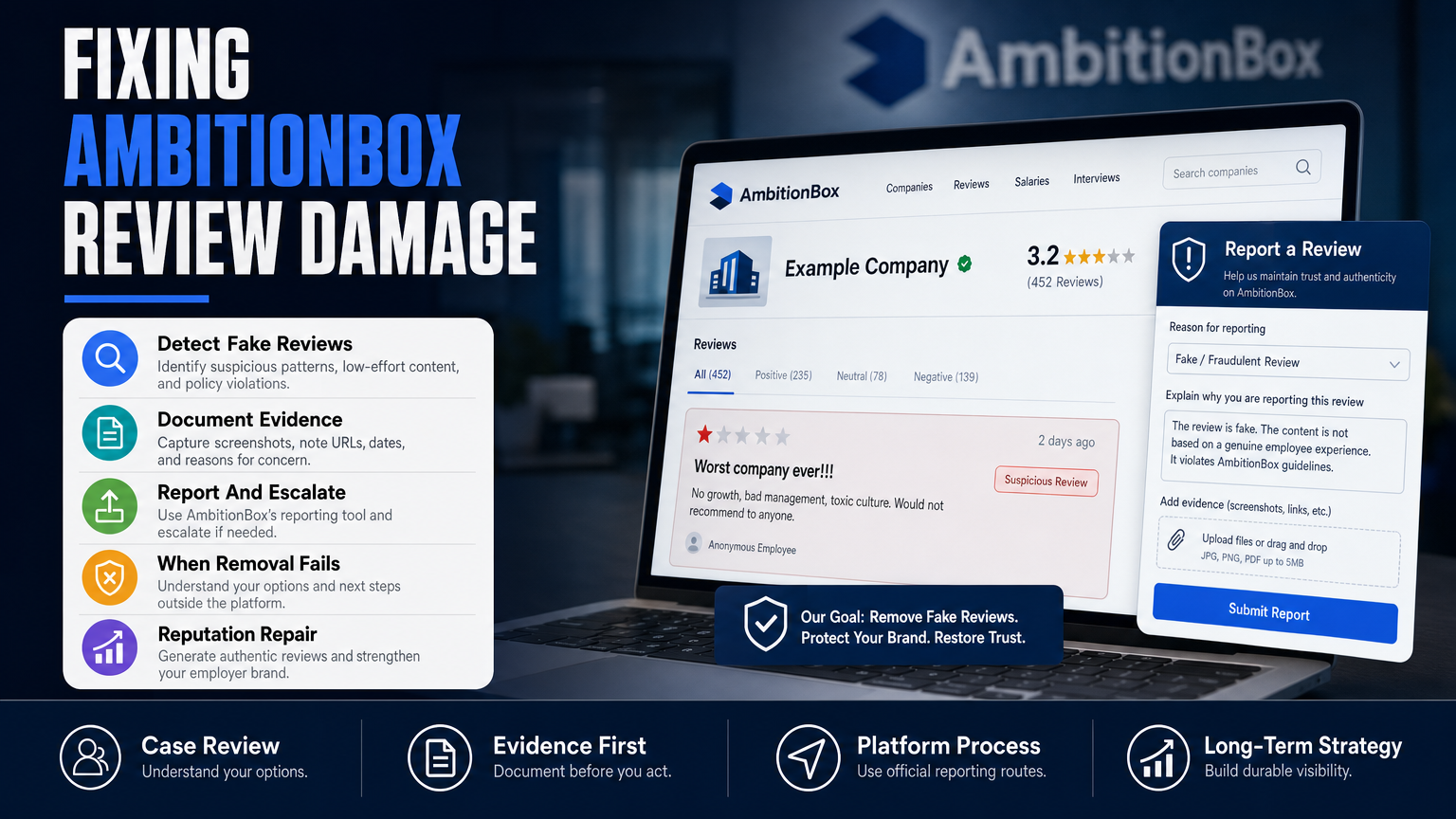
Dealing with review bombing requires immense patience and technical expertise. Business owners often make the mistake of angrily replying to fake reviews or desperately trying to delete their profiles, both of which violate platform terms and can result in permanent bans. The correct protocol involves meticulously documenting the attack and escalating it through the proper administrative channels.
This is precisely why businesses turn to experts for a professional Google review removal service. Specialists understand how to communicate with platform support teams, proving that the influx of negative ratings is a coordinated attack violating policies against non-customer experiences and harassment, rather than legitimate consumer feedback.
Even if the fake reviews are successfully removed, the recovery process must be immediate. The algorithm has been shocked, and the profile’s standing has been compromised. The business must launch aggressive, legitimate review-generation campaigns to loyal customers to re-establish a steady flow of positive signals and stabilize their local SEO rankings.
The speed at which review bombing destroys trust is unprecedented. It bypasses the traditional news cycle entirely, striking directly at the point of sale. A restaurant, medical practice, or agency can go from thriving to financially crippled over a weekend simply because a viral video mischaracterized an employee’s action, triggering a review mob.
In conclusion, review bombing perfectly illustrates the modern acceleration of reputation crises. It turns passive internet users into active participants in the destruction of a business’s livelihood, proving that protecting your online profiles is as critical as locking the front door of your physical establishment.
The Amplification Power of Influencers and Micro-Media
Another pivotal element explaining How Online Reputation Problems Escalate Faster Than Ever is the decentralization of media and the rise of influencers. Previously, a reputation crisis required the attention of a major news network or a large publication to gain national traction. Today, an individual with a smartphone and a highly engaged following can inflict more damage on a brand in a 60-second video than a traditional newspaper could in a front-page exposé.
Influencers and content creators are constantly searching for “tea” or drama to discuss with their audiences. When a brand makes a misstep or a professional is involved in a controversy, micro-media channels (like drama channels on YouTube, TikTok commentators, and niche bloggers) immediately pounce on the story. They act as independent amplifiers, translating the crisis for their specific demographics.
This decentralization means a crisis no longer has a single origin point that can be contained. Instead, it fragments into hundreds of different narratives across various platforms. A PR team might be busy drafting a response for a Twitter controversy, completely unaware that a TikTok influencer has just made a video about the same issue that is currently racking up millions of views among a younger demographic.
Furthermore, influencers often add their own subjective commentary, outrage, and bias to the original incident. They are not bound by journalistic standards of objectivity or fact-checking. If a rumor aligns with their personal brand or promises high engagement, they will broadcast it as fact. This rapid spread of unverified information drastically accelerates the severity of the reputation problem.
The parasocial relationships that audiences have with influencers make this amplification particularly dangerous. If a trusted creator condemns a brand, their followers will adopt that stance without question. This leads to immediate boycotts, mass unfollowing, and the mobilization of the influencer’s fanbase to attack the brand’s social media channels and review platforms.
Attempting to silence these creators through legal threats often backfires spectacularly, resulting in the “Streisand Effect.” If an influencer claims a corporation is trying to silence them, the controversy multiplies in size. The narrative shifts from the original incident to a David vs. Goliath story of corporate bullying, which the internet will always rally against.
Managing this fragmented media landscape requires agile and highly segmented crisis communication. A single, rigid corporate statement posted on a company website is entirely ineffective. Brands must meet the crisis where it lives, utilizing short-form video responses, authentic community engagement, and direct outreach to key commentators to provide context before the narrative hardens.
This dynamic also highlights the importance of preemptive influencer relations. Brands that have established strong, positive relationships with creators in their niche have a built-in defense mechanism. In the event of a crisis, these allies can serve as voices of reason, urging their audiences to wait for the facts rather than jumping on the outrage bandwagon.
Ultimately, the barrier to entry for broadcasting news has dropped to zero. Anyone can be a reporter, and anyone can spark a viral scandal. The sheer volume of independent voices looking for the next big controversy ensures that any misstep is immediately caught, analyzed, and broadcasted to millions, accelerating the crisis far beyond the capabilities of traditional damage control.
Cancel Culture and the Demand for Immediate Retribution
The socio-cultural phenomenon known as “Cancel Culture” is a massive driver behind How Online Reputation Problems Escalate Faster Than Ever. The modern internet user is not just a passive consumer of information; they view themselves as active enforcers of digital morality. When a person or brand is perceived to have violated societal norms, the online community does not just want an apology; they demand immediate, tangible retribution.
This demand for instant consequences compresses the timeline of a crisis. In the past, if an executive made a controversial statement, there might be a period of investigation, internal review, and measured disciplinary action. Today, the digital mob demands that the executive be fired, the company boycotted, and all associated sponsors drop their contracts within 24 hours.
If a company fails to act with this demanded speed, the mob turns its wrath on the company itself, accusing them of complicity. This immense pressure forces organizations into making panicked, highly reactive decisions. People are fired, partnerships are dissolved, and statements are rushed out not based on a thorough investigation of the facts, but solely to appease the trending hashtag.
This environment of hyper-reactivity means that reputation crises escalate from a localized complaint to an existential threat almost instantly. The goal of the online mob is often deplatforming—removing the target’s ability to earn a living, speak in public, or operate their business. The stakes are incredibly high, and the margin for error in responding is virtually non-existent.
Furthermore, Cancel Culture rarely forgives. The digital footprint of the cancellation is designed to be permanent. Even if a target successfully navigates the initial onslaught, the internet will frequently “resurface” the controversy months or years later. Every new project, product launch, or public appearance is overshadowed by users linking back to the original incident, creating a recurring cycle of reputational damage.
The psychological toll of being the target of this collective retribution is devastating. Professionals often experience severe anxiety, paralysis, and a complete inability to think strategically. This emotional distress leads to erratic behavior online, such as lashing out at critics or posting emotional, defensive videos that only serve to provide more ammunition to the attackers.
Navigating this requires a stoic and highly strategic approach. It is vital to separate the noise of the radical online mob from the actual concerns of your core audience and stakeholders. Apologizing for the sake of apologizing to a mob that hates you will not save your reputation; it will only signal weakness.
Instead, the response must be calibrated, authentic, and directed at the people who actually matter to your business. This is where strategic alignment with experts is necessary to map out the true blast radius of the controversy versus the perceived, inflated outrage manufactured by algorithms and anonymous users.
Cancel Culture has transformed reputation management into high-stakes crisis negotiation. Understanding that the online community is actively seeking to escalate the problem for entertainment and moral posturing is crucial. It underscores why having a fortified digital presence and a crisis plan before an incident occurs is the only way to survive the modern demand for digital destruction.
The Financial Consequences of Unchecked Escalation
The most critical reason executives and professionals must understand How Online Reputation Problems Escalate Faster Than Ever is the direct, rapid, and often irreversible impact on revenue. Digital reputation is no longer a soft metric managed by the PR department; it is a hard, financial asset that dictates consumer behavior, investor confidence, and enterprise valuation. When escalation goes unchecked, the financial bleeding begins immediately.
The first financial casualty is customer acquisition. In the modern buyer’s journey, over 90% of consumers Google a business or professional before making a purchasing decision. If the first page of search results is dominated by a recent scandal, negative reviews, or defamatory forum threads, the conversion rate drops to near zero. Marketing budgets spent on generating leads are entirely wasted, as the leads abandon the funnel the moment they perform a background check.
For B2B companies and agencies, the escalation of a reputation problem can lead to the immediate termination of lucrative contracts. Corporate partners possess strict “morality clauses” and risk management protocols. If associating with your brand becomes a liability to their own reputation, they will sever ties immediately. The loss of a single major client due to a digital crisis can threaten the survival of an entire agency.
Recruitment and talent retention also suffer massive financial blows. Top-tier professionals do not want to work for a company with a toxic online presence or a leadership team embroiled in scandal. When a crisis escalates, current employees may resign to distance themselves, and the cost of recruiting replacements skyrockets. The company is forced to pay a “reputation premium” in salaries just to attract candidates.
Furthermore, the cost of belatedly attempting to fix the problem is significantly higher than the cost of proactive prevention. Hiring legal teams to fight defamation, investing heavily in emergency PR, and spending massive amounts on digital marketing to suppress negative links requires a huge injection of capital precisely when the business’s revenue is dropping.
This rapid financial degradation highlights the necessity of treating digital reputation as a core business function. It requires dedicated budgeting for continuous SEO monitoring, review generation software, and strategic content creation. When a brand actively builds a fortress of positive digital assets, they are essentially buying insurance against future viral incidents.
If a crisis does slip through the defenses, deploying specialized crisis reputation management is not an expense; it is a critical investment to stop the financial bleeding. Experts intervene to silence the algorithmic amplification, scrub defamatory content, and restore the search engine results to a state that allows the business to resume normal operations.
In the fast-paced digital economy, you do not have quarters or months to recover from a PR disaster; you have days. The algorithms, the anonymous mobs, and the search engines will strip away consumer trust at lightning speed. Understanding this financial reality is what finally pushes organizations to stop reacting to the internet and start controlling it.
Strategies to Intercept and Manage Digital Wildfires
Having analyzed the factors behind How Online Reputation Problems Escalate Faster Than Ever, the focus must shift to actionable defense. Surviving the digital age requires a fundamental transition from reactive damage control to proactive digital dominance. You must build an infrastructure capable of intercepting controversies before they reach critical algorithmic mass, effectively starving the digital wildfire of oxygen.
The cornerstone of this defense is establishing a pervasive and authoritative digital footprint during times of peace. You cannot wait for a crisis to build your brand. You must aggressively claim and optimize every relevant social media profile, industry directory, and content platform available. By publishing consistent, high-quality content across Medium, LinkedIn, Crunchbase, and personal blogs, you create a dense network of positive SEO assets that dominate your search results.
When an incident occurs, this pre-existing architecture acts as a shock absorber. A negative article will have to fight through pages of established, highly-ranked positive content to reach the first page of Google. Furthermore, having a large, engaged audience that you have nurtured over time provides you with a loyal base that will demand context and defend your brand against the initial wave of outrage.
Active, real-time social listening is the next critical strategy. Brands must utilize enterprise-level software that monitors the internet for brand mentions, analyzing sentiment and volume. If a negative keyword associated with your brand spikes by 200% on a Sunday night, the system must trigger an alert. Intervening when a problematic Reddit thread has 10 comments is infinitely easier than fighting it when it has 10,000.
When a response is necessary, speed and format are everything. Corporate press releases are too slow and often feel disconnected from the reality of social media. The response must be authentic, direct, and deployed on the platforms where the crisis is occurring. If the fire is on TikTok, put out the fire on TikTok using a human, face-to-camera approach that cuts through the algorithmic noise with genuine transparency.
It is also crucial to establish strict internal protocols for crisis communication. The delay caused by legal teams reviewing every single tweet allows the mob to control the narrative. Organizations must have pre-approved messaging frameworks and an agile chain of command that empowers the digital team to react within the golden hour of a crisis.
Finally, integrating professional reputation management services as a retainer rather than an emergency button provides the ultimate safety net. Reputation experts act as your digital bodyguards, constantly optimizing your SEO, managing your reviews, and scanning the dark web and anonymous forums for emerging threats. They possess the proprietary tools and platform relationships necessary to suppress escalation instantly.
In conclusion, you cannot stop people from talking, and you cannot dismantle the algorithms designed to amplify outrage. However, by understanding the mechanics of digital escalation, building a robust SEO fortress, and deploying real-time listening tools, you can ensure that a momentary problem never escalates into a permanent catastrophe.
FAQ: Understanding Digital Crisis Escalation
Why do negative news stories rank so quickly on Google?
-
Search engines prioritize user intent and relevance. When a crisis occurs, a massive influx of users searches for the controversy, signaling to Google’s algorithm that the negative articles are highly relevant and demanded by the public, causing them to shoot to the top of the results instantly.
Can I ignore a social media controversy and hope it goes away?
No. The “wait and see” approach is obsolete in the algorithmic era. Ignoring a controversy creates an information vacuum that your detractors will fill. Furthermore, algorithms will continue to push the controversy as long as it generates engagement, causing irreversible damage to your digital footprint while you remain silent.
How do anonymous forums impact my business reputation?
Platforms like Reddit have massive domain authority. A single defamatory thread created by an anonymous user can easily rank on the first page of Google for your brand name. Because the users are anonymous, it is incredibly difficult to combat the claims legally, requiring specialized technical intervention to remove or suppress the content.
The digital landscape has fundamentally changed the rules of public relations and brand survival. Recognizing How Online Reputation Problems Escalate Faster Than Ever is not meant to inspire fear, but to instigate preparation. The algorithms that govern social media and search engines are mathematically designed to fan the flames of controversy, turning minor sparks into uncontrollable wildfires in hours. The anonymity of the internet empowers bad actors, while cancel culture demands immediate financial and professional destruction. However, this ecosystem can be navigated and mastered. By abandoning reactive, outdated strategies and embracing aggressive, SEO-driven reputation management, you can build a digital fortress capable of withstanding the worst internet storms. Your reputation is your most valuable asset; it is time to defend it with the speed and sophistication that the modern digital age demands.
Protect Your Digital Empire Before It’s Too Late
Do not wait for a viral misunderstanding or a coordinated attack to destroy the reputation you have spent years building. The internet moves fast, but our experts move faster. At Your Reputation Agency, we specialize in advanced algorithmic defense, aggressive SEO suppression, and instant crisis containment. Whether you need to remove toxic forum threads, delete fake reviews, or build an impenetrable wall of positive search results, we have the tools and the tactics to secure your digital legacy.