Your phone number, home address, email, relatives, and even your past locations are being collected, packaged, and sold by data brokers and public databases without your knowledge.
This isn’t just invasive—it’s dangerous.
Exposed personal data can lead to identity theft, scams, harassment, and long-term damage to your online reputation.
In this 2026 guide, you’ll learn how to remove your personal information from the internet—and why doing it the right way matters more than ever.
What Personal Information Is Available Online?
Most people underestimate how much of their data is public.
A simple search can reveal:
- Full name and aliases
- Current and previous home addresses
- Phone numbers (mobile and landline)
- Email addresses
- Family members and associates
- Employment history
- Property ownership records
- Legal or court records
This information is collected and distributed by data broker websites, many of which exist solely to profit from your personal data.
Where Is Your Data Coming From?
Your data doesn’t appear online by accident—it’s systematically gathered from multiple sources.
The most common include:
- Data broker platforms (people search sites)
- Social media accounts
- Public records databases
- Online purchases and subscriptions
- Mobile apps and trackers
- Data breaches and leaks
Once your information enters this ecosystem, it spreads quickly—and removing it becomes significantly more difficult.
Step 1: Search Yourself (Know What’s Out There)
Start by identifying what’s already exposed.
Search for:
- Your full name (use quotes)
- Your phone number
- Your email address
- Your home address
Review at least the first 3–5 pages of search results.
Make note of:
- Websites displaying your data
- Links you want removed
- Duplicate or outdated listings
This step gives you a clear picture of your exposure—and for most people, it’s worse than expected.
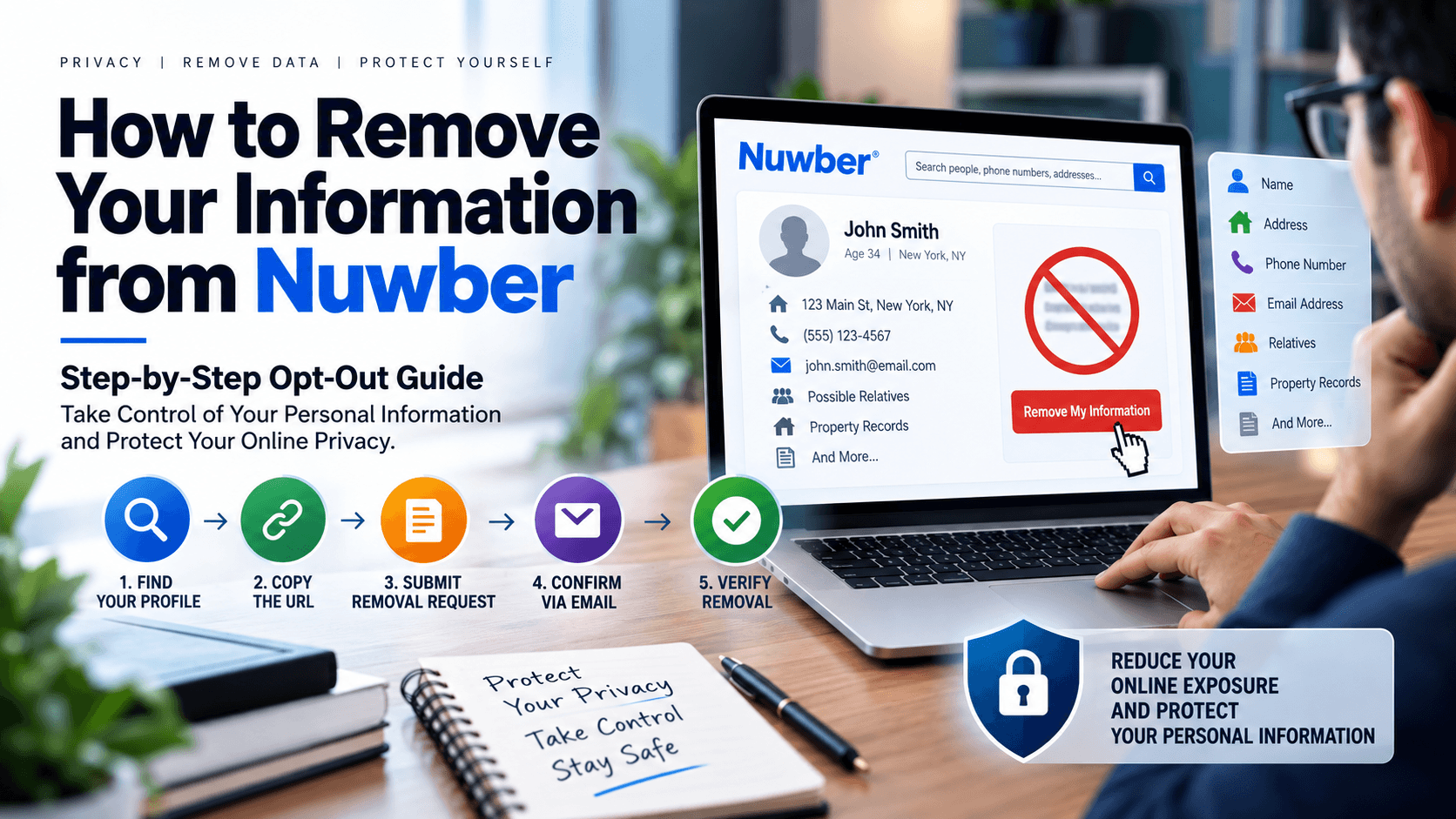
Step 2: Remove Your Information from Data Broker Sites
Data broker websites are the primary source of personal data exposure.
To remove your information, you’ll need to:
- Locate your profile on each site
- Submit an opt-out request
- Verify your identity
- Wait for confirmation
The reality:
- There are dozens of these sites
- Each has a different removal process
- Some require repeated follow-ups
- New listings often reappear later
This is where the process becomes time-intensive and frustrating.
Step 3: Clean Up Your Social Media Profiles
Your social media accounts may be exposing more than you realize.
Take these actions:
- Remove your phone number and email from profiles
- Set accounts to private where possible
- Delete posts containing personal details
- Turn off location tracking and tagging
- Limit who can find you via search
Even one public profile can make your personal data easily accessible again.
Step 4: Remove Personal Information from Search Results
Search engines may display pages that contain your personal information.
You can request removal of sensitive data such as:
- Phone numbers
- Email addresses
- Financial information
However, there’s a limitation:
- Removing a result from search does not remove it from the original website.
If the source page remains active, your information can still be accessed directly.
Step 5: Contact Website Owners
For websites that don’t offer opt-out options:
- Locate their contact page
- Request removal of your personal data
- Follow up if necessary
This can work—but results vary, and responses are not guaranteed.
Step 6: Monitor Your Information Continuously
Here’s what most guides don’t tell you:
- Removing your data once is not enough.
Data brokers continuously update their databases, meaning:
- Your information can reappear
- New sites may publish your data
- Old listings can resurface
Without ongoing monitoring, your exposure will return over time.
Why Most People Fail to Remove Their Information Completely
On paper, the process seems straightforward.
In reality, it’s not.
Most individuals struggle because:
- The process is time-consuming
- There are too many sites to track
- Removal requests are inconsistent
- Data keeps reappearing
What starts as a simple task quickly turns into an ongoing, complex problem.
The Bigger Problem: When Personal Data Turns Into Reputation Damage
At first, exposed personal information may seem like a privacy issue.
But it often escalates.
Your data can become tied to:
- Negative search results
- Outdated or misleading information
- Unwanted public profiles
- Reputation-damaging content
Once that happens, basic removal requests are no longer enough.
Take Control of Your Online Presence
If your personal information is already showing up in search results—or connected to harmful or misleading content—manual removal methods may not fully protect you.
In these cases, you need a more advanced approach that goes beyond simple opt-outs.
Professional negative content removal strategies are designed to address not just exposure—but the impact that exposure has on your reputation.
Learn more about negative content removal and how to protect your online reputation
Final Thoughts
Removing your personal information from the internet is possible—but it’s not a one-time fix.
It requires persistence, strategy, and ongoing effort.
The longer your data remains online, the more it spreads—and the harder it becomes to control.
Taking action now is the difference between staying exposed and regaining control of your online presence.