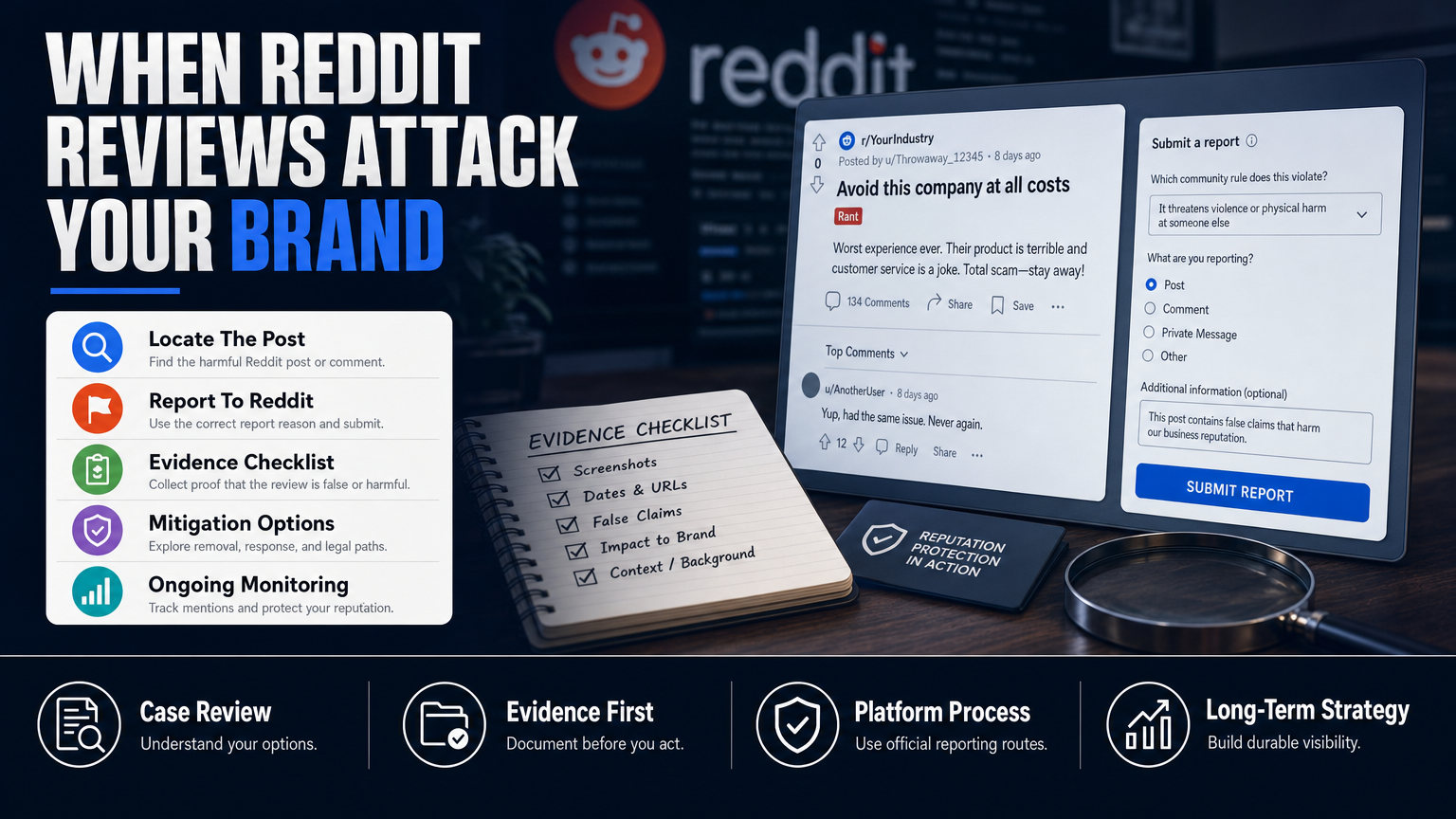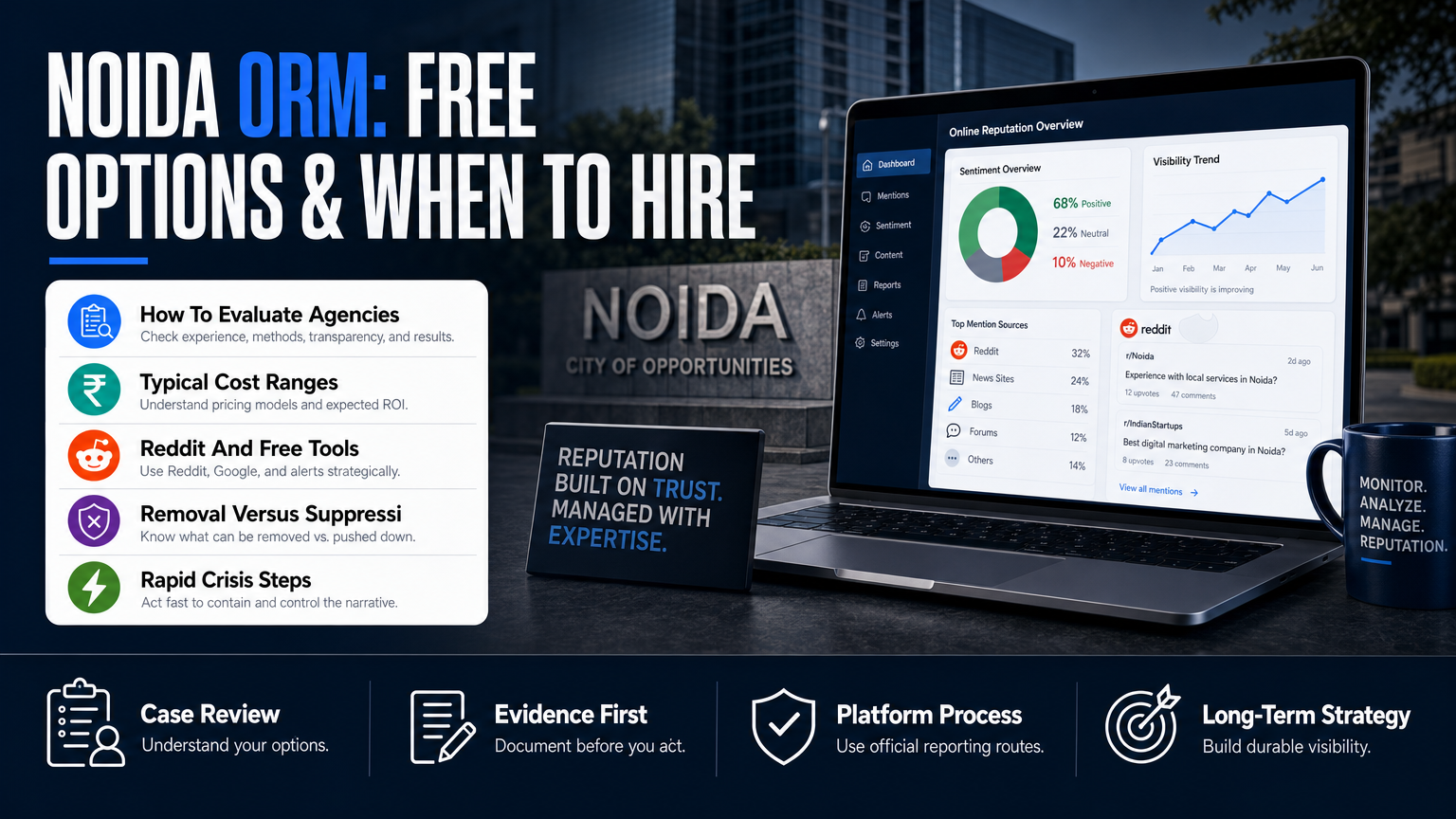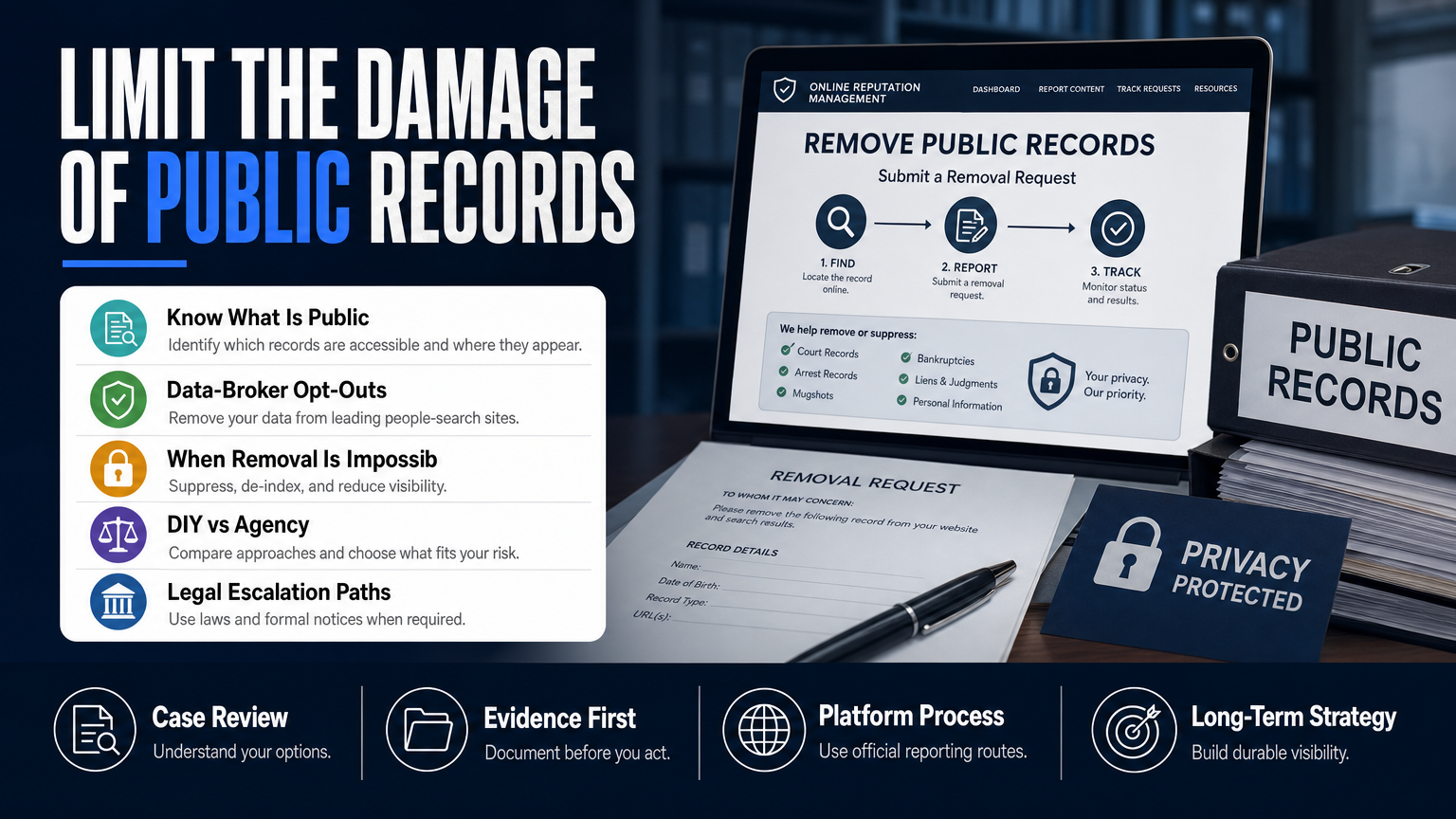
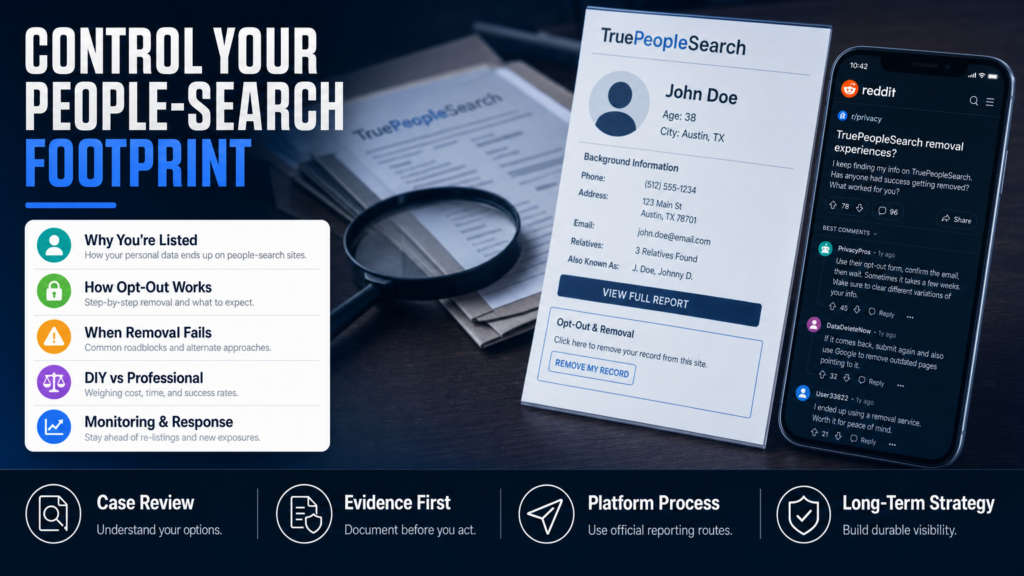
You found yourself on TruePeopleSearch — maybe with an old address, a phone number you no longer use, or a listing that links to other public records. You’ve searched Reddit and seen threads telling you the site is impossible to remove, while other users share step-by-step opt-outs. This article helps you sort the reliable tactics from noise.
This guide walks through what Truepeoplesearch removal reddit threads get right, what they miss, and the practical steps a business or high-income professional should take now. You’ll get clear opt-out actions, escalation options when removal is denied, and mitigation strategies that work when deletion is not available.
We’ll also explain why you end up on people-search sites, what the site actually does with your data, and how to choose between DIY removal and paying a professional. The phrase “Truepeoplesearch removal reddit” appears here because Reddit is a common first stop — but it should not be your only source of truth.
Table of Contents
- How did I end up on TruePeopleSearch?
- Does TruePeopleSearch removal actually work?
- Is there a way to remove yourself from TruePeopleSearch?
- What to do when TruePeopleSearch won’t remove your info
- Is TruePeopleSearch trustworthy — should you worry about legitimacy?
- TruePeopleSearch removal reddit: what community threads get right — and the limits
- Monitoring and protection after an opt-out
- DIY Opt-Out vs Hiring a Reputation Agency
- Hypothetical scenario: A surgeon’s phone number and address on TruePeopleSearch
- Common Mistakes Professionals Make When Trying to Remove People-Search Listings
- Durable Best Practices for Handling People-Search Listings
- Expert Tips
- Conclusion
- Why Businesses Choose Your Reputation Agency
- Frequently Asked Questions
How did I end up on TruePeopleSearch?
TruePeopleSearch aggregates names, phone numbers, addresses, and public-record links from multiple sources. You may appear because a past lease, a driver’s-license record, a phone-directory scrape, or a public court record contains identifying data. In many cases the site assembled records that were already public.
Being listed is rarely the result of a single event — it’s the cumulative effect of data brokers, public records, and online directories sharing or republishing fields tied to your name.
- Search yourself: run queries for name + city, name + phone, and name + former employer.
- Document the fields you consider sensitive (home address, personal phone, SSN fragments, mugshots).
- Check other brokers: your listing often appears across several people-search websites that syndicate data.
- Source aggregation: phone companies, county records, voter rolls, marketing databases.
- Historical traces: old addresses, previous businesses, prior phone numbers.
- Third-party republishes: other people-search sites and aggregator networks republish the same records.
- Name collisions: common names can pull multiple public records into one listing.
What data is usually visible
Typical listings show full name, age or birth year, known addresses, phone numbers, possible relatives, and links to public records. Rarely do they show full SSNs, but partial data and court links can be present.
- Contact info (phone, sometimes email)
- Last known addresses and map pins
- Relative names and associated people
- Links to public court or arrest records when available
Does TruePeopleSearch removal actually work?
Short answer: sometimes. Whether an opt-out or takedown ‘works’ depends on the specific data, the evidence you can show, platform policy, and whether the data is genuinely public record. Removal is an outcome we evaluate and pursue, not a guarantee.
Many Reddit threads show successful opt-outs for phone numbers and addresses; others document refusals when the site claims the data came from a public court or a government dataset.
- Identify the exact field you want removed and why (privacy, safety, identity theft risk).
- Collect supporting evidence (proof of ownership of phone number, proof that an address is private or outdated).
- Submit a targeted opt-out and track the response.
- Removals are most likely for voluntarily submitted or scraped contact details.
- Removals are less likely when the listing republishes public-record links that the platform treats as lawful to display.
- Platform enforcement decisions are discretionary and can change over time.
How Reddit’s crowd advice helps — and where it fails
Reddit can be useful for real-user screenshots and updated opt-out URLs. However, Reddit comments often lack the full legal nuance: a successful post on Reddit may be a partial fix and not reflect syndication across other broker sites.
If you use Reddit as a starting point, corroborate the steps with the official opt-out process and retain screenshots of what you submit.
- Use Reddit for process tips, not legal certainty.
- Verify any reported success by checking search results and other brokers.
- Avoid sharing sensitive proof on public forums; use private channels for documents.
Is there a way to remove yourself from TruePeopleSearch?
Yes — TruePeopleSearch provides an opt-out process for many listings, and there are practical steps you can take to request removal or suppression. But removal outcomes depend on the data type and platform policy, and you should not treat opt-out results as permanent.
Below is a practical checklist and a step-by-step opt-out procedure you can follow. If you prefer a walkthrough, our article How to Opt Out of TruePeopleSearch: Complete 2026 Removal Guide shows the forms and screenshots used in typical requests.
- Step 1 — Locate the listing: copy the TruePeopleSearch profile URL (or take a screenshot if it’s transient).
- Step 2 — Use the site’s opt-out or contact form: TruePeopleSearch maintains an opt-out page where you enter the URL and confirm your identity.
- Step 3 — Provide supporting evidence if requested: for phone numbers you may show control of the number; for addresses you may show a forwarding or proof of move.
- Step 4 — Record the submission: keep timestamps, confirmation emails, and screenshots.
- Step 5 — Re-check search results and related broker sites over the next 2–12 weeks and repeat if needed.
- Identify the listing URL and the exact fields to remove.
- Decide whether you can supply verification documents (phone carrier bills, lease agreements).
- Prepare plain, concise requests referencing the opt-out policy.
Step-by-step opt-out (what you’ll likely need)
Prepare: full name variants, the listing URL, recent proof you control a phone number or moved from a listed address, and a secure email address for confirmations. Do not post proof publicly.
Expect: an automated acknowledgement, possible follow-up, and varying timeframes for content removal. If the listing republished a public court link, the platform may refuse removal.
- Full legal name and known aliases
- Listing URL(s) copied exactly
- Verification documents (only if requested) stored securely
- A tracking spreadsheet for submissions
What to do when TruePeopleSearch won’t remove your info
If TruePeopleSearch refuses removal, you still have options. The next steps depend on why removal was denied — for example, a refusal based on public-record status requires a different approach than a refusal citing lack of verification.
When removal is unavailable, professional suppression and content remediation frequently provide the most practical path to reducing the visibility and harm of the listing.
- Step 1 — Confirm the reason for refusal and document the response.
- Step 2 — Escalate via the platform’s help channels or DM on social platforms if available.
- Step 3 — File takedown requests with publishers that host the original data (county clerks, websites), when appropriate.
- Step 4 — Build authoritative content (LinkedIn, professional bios, press) to outrank the listing.
- Step 5 — Use monitoring and repeated requests; sometimes re-evaluation leads to removal later.
- Resubmit with clarified evidence if the refusal cited verification issues.
- Request partial redaction: remove phone or exact address while leaving non-sensitive fields.
- Use search-engine reputation strategies to push other content above the listing.
When to consider paid remediation or legal counsel
If the listing contains defamatory content, falsified statements, doxxed data, or sensitive personal data that poses safety risks, the matter may warrant legal review. A qualified attorney can determine whether a legal claim is available.
For professionals who depend on search results for client acquisition, suppression and ongoing monitoring may be more realistic than an absolute removal. For a deeper discussion of business impact and suppression strategies see When A People-Search Listing Costs You Clients.
- Evidence of falsity: retains legal relevance
- Safety risks: escalate immediately
- Business harm: consider reputational remediation and PR coordination
Is TruePeopleSearch trustworthy — should you worry about legitimacy?
TruePeopleSearch is a data-aggregation service that publicly repackages data gathered from multiple sources. It operates legally within the United States where data is publicly available, but ‘legal’ does not equal ‘trustworthy’ by privacy standards.
The site’s business model is to aggregate and surface records. That means privacy concerns are real: incorrect or outdated listings can cause reputational harm, harassment, or identity risk.
- Verify all fields for accuracy.
- Correct errors through opt-out or direct publisher correction when possible.
- Monitor to ensure syndication doesn’t repopulate deleted data.
- The site is generally legal but lacks robust gatekeeping on accuracy.
- Listings can be outdated, conflated across people with similar names, or derived from data brokers with weak data hygiene.
- Trustworthiness for personal privacy is limited — treat published data as a risk vector.
Privacy vs. public-records tradeoff
Many listings are based on public records — bankruptcies, court filings, property records — which platforms view as fair to publish. Removing public records requires addressing the original publisher (court clerk or repository) or showing legal basis under narrow statutes.
For non-public fields (personal phone numbers, private addresses), opt-outs are generally more effective.
TruePeopleSearch removal reddit: what community threads get right — and the limits
Reddit and similar forums are helpful for urgency, screenshots, and recent workaround tips. Threads titled things like “Truepeoplesearch removal reddit free” or “Need to get off True People Search — any help?” often contain practical process notes, but they rarely account for syndication to other brokers.
If you’re following Reddit advice, use it to inform your approach but always cross-check official procedures and preserve privacy when sharing evidence online.
- Step 1 — Take process cues from Reddit but verify every step on the official site.
- Step 2 — Never post personal documents or verification proof on public threads.
- Step 3 — Use Reddit-sourced links as leads, not confirmation of permanent removal.
- Reddit good: updates on form URLs, user-submitted screenshots, morale support.
- Reddit limited: incomplete legal context, potential for outdated instructions, and public exposure of sensitive proof.
- Blocked or private threads: some subreddits limit detailed help to protect privacy — respect those boundaries.
DIY vs hiring an agency
For many professionals, a DIY removal attempt works for a single listing. But when data is widespread across multiple brokers or the listing is tied to public court links, a coordinated approach by a reputation firm can be faster and more comprehensive.
Use this two-column comparison to decide whether to DIY or hire outside help.
Monitoring and protection after an opt-out
Removal is rarely a one-and-done task. Listings can reappear through syndication or new data pulls. Ongoing monitoring and basic security controls are essential to preserve outcomes and detect new exposures quickly.
Set up alerts, audit other brokers, and harden any exposed personal accounts to reduce the chance of identity misuse.
- Step 1 — Create a monitoring cadence (weekly for 3 months, monthly thereafter).
- Step 2 — Maintain a list of opt-out confirmations and expiration/re-check dates.
- Step 3 — Update recovery contacts and consider identity-theft protection if sensitive data was exposed.
- Set Google Alerts and a manual monthly search routine for name + city/phone.
- Subscribe to a monitoring tool that covers common people-search brokers.
- Harden privacy settings on social profiles and remove contact info you don’t want public.
How professionals should prioritize fields
For doctors, executives, and other high-risk professionals prioritize removal of personal phone numbers, home addresses, and direct contact details; for public-facing business owners, prioritize anything that leads to harassment or false allegations. Where removal is unavailable, focus on mitigation and content suppression.
- Priority 1: Home address and personal phone
- Priority 2: Mugshots and wrongful criminal allegations
- Priority 3: Misattributed negative reviews or false biographical claims
DIY Opt-Out vs Hiring a Reputation Agency
A brief, practical comparison to help you decide where to spend time and budget.
| DIY Opt-Out | Reputation Agency |
|---|---|
| Cost | Higher upfront, recurring fees |
| Speed | Faster coordinated escalation |
| Coverage | Comprehensive broker network coverage |
| Technical SEO | Professional SEO and suppression strategies |
| Legal escalation | Assists in coordinating with counsel |
| Ongoing monitoring | Continuous alerts and reporting |
Hypothetical scenario: A surgeon’s phone number and address on TruePeopleSearch
Problem: A surgeon found a listing showing a personal cell number and home address, copied across three broker sites. The surgeon’s patients were contacting the home number late at night. A Reddit thread suggested the opt-out was simple, but the listing kept returning.
Action taken: First, the surgeon documented the listing URLs and screenshots, then submitted opt-out requests to TruePeopleSearch and two other brokers with proof of phone ownership (redacted bill) via secure channels. Next, the surgeon requested partial redaction from publishers of the original public record (where possible) and asked the office manager to publish authoritative contact info (clinic number and professional bio) on high-authority pages.
Outcome and timeline: Over 4–10 weeks the personal phone number was removed from TruePeopleSearch for the listing checked; however, copies still appeared on lower-authority mirrors that required repeated opt-outs. The surgeon then engaged a reputation firm to audit 12 broker sites and implement suppression pages (LinkedIn, clinic profile, professional directory). Within 3 months the authoritative pages outranked the broker entries for many query combinations, reducing direct calls to the home number. Note: results vary by data type and syndication — no outcome was guaranteed.
- 1) Audit listings and collect URLs.
- 2) Submit opt-outs with minimal, secure proof where requested.
- 3) Publish authoritative content and optimize for name queries.
- 4) Monitor, repeat opt-outs, and escalate if harassment or doxxing persists.
- Documented listings and saved screenshots before any submission.
- Used secure channels to send redacted proof of phone ownership.
- Published authoritative business contact information to outrank the listing.
- Engaged professional services when repeated DIY opt-outs left residual listings.
Common Mistakes Professionals Make When Trying to Remove People-Search Listings
These errors slow resolution and can worsen exposure. Avoid them.
1. Sharing verification documents publicly
Posting scans of bills or IDs on public Reddit threads or social media to ‘prove’ a listing is yours exposes far more data. Always use secure channels and redact extraneous information.
2. Opting out of a single site and assuming the problem is solved
Data brokers syndicate. Removing a single TruePeopleSearch listing may not remove mirrors or older crawls; a broader broker audit is usually necessary.
3. Paying for dubious “guaranteed removal” services
Be wary of companies that promise absolute removal. No legitimate service can guarantee permanent deletion across the web or search engines.
4. Treating public records as removable by default
Court records and many government datasets are not removable through people-search opt-outs. Trying to force removal without addressing the original publisher wastes time.
5. Not tracking submissions and responses
Without a simple tracking log of opt-outs, confirmation IDs, and dates, you’ll likely resubmit unnecessarily or miss denial reasons that would suggest a different tactic.
Durable Best Practices for Handling People-Search Listings
Adopt a methodical approach combining documentation, targeted opt-outs, and long-term mitigation.
Document everything
Log URLs, screenshots, confirmation numbers, and dates for every opt-out attempt. This helps with escalation and demonstrates the scope if legal counsel becomes necessary.
Prioritize sensitive fields
Start with direct-contact data (personal phone, home address) and anything that creates immediate safety or identity theft risk; deprioritize non-sensitive biographical details.
Use official reporting channels
Submit opt-outs through the site’s official form or email. Platform decisions are made inside those channels; social-media shaming rarely produces consistent results.
Suppress with authoritative content
Publish and optimize high-authority pages (LinkedIn, company bios, professional directories) and standardize your professional name across them to outrank broker listings.
Monitor and repeat
Set a monitoring cadence and expect to repeat submissions. If a listing returns, check the source and resubmit with updated evidence.
Expert Tips
- Never post verification documents on public forums; use redaction and secure uploads.
- When possible, centralize your communications with a single email for confirmations.
- Audit the top 10 people-search brokers; removing one often leaves nine more.
- If a listing includes a mugshot or false allegation, document the falsity and consult legal counsel.
- Use structured business profiles (Google Business Profile, LinkedIn) to push broker results down.
- Set Google Alerts for your name variations and key contact terms (e.g., home phone, clinic name).
- Track opt-out expiration and re-check in 30, 60, and 90 days after submission.
- If you’re a high-risk professional, consider ongoing reputation monitoring rather than one-time removal.
Conclusion
Truepeoplesearch removal reddit threads are a useful starting point but not the endpoint. You need a documented, multi-channel approach: try the site’s opt-out, track everything, audit other brokers, and prepare mitigation if removal is denied.
For professionals whose livelihood depends on search results, combine targeted opt-outs with active reputation work (authoritative pages, SEO, and monitoring). If the listing includes defamatory or dangerous content, engage legal counsel and consider professional remediation that coordinates takedowns, suppression, and PR.
Why Businesses Choose Your Reputation Agency
Managing your reputation takes more than monitoring reviews or publishing the occasional blog post. It takes a strategy built around your situation, your industry, and what is actually showing up in search.
Your Reputation Agency works with businesses, executives, healthcare professionals, attorneys and growing brands. Our services include:
- Remove or suppress negative Google search results and news articles
- Take down or mitigate negative reviews (Google, Yelp, Trustpilot, industry sites)
- Remove defamatory content, false posts and impersonation accounts
- Remove personal data from people-search and data-broker sites (opt-outs)
- Mugshot and arrest-record removal or suppression
- YouTube and negative video removal / demotion
- Rapid crisis response for viral incidents and online smear campaigns
- Social media impersonation and fake account removal
- Reputation monitoring, alerts and ongoing surveillance
- Search engine reputation repair (SEO to bury negative results)
Frequently Asked Questions
1. Does TruePeopleSearch Removal work?
It can. Opt-outs often succeed for phone numbers and addresses that were scraped or voluntarily submitted. However, success depends on the data type, evidence you provide, platform policy, and whether the data is a public record. We evaluate whether the content may qualify for removal or review and pursue the options available.
2. Is there a way to remove yourself from TruePeopleSearch?
Yes — TruePeopleSearch provides opt-out options for many listings. Locate the listing URL, follow the site’s opt-out process, and provide verification if requested. For a step-by-step visual walkthrough see How to Opt Out of TruePeopleSearch: Complete 2026 Removal Guide.
3. How did I end up on TruePeopleSearch?
Listings are created by aggregating records from public databases, phone directories, marketing lists, and other data brokers. Past addresses, phone numbers, and public records are common sources. Name collisions and republished data from other brokers also explain many listings.
4. Is TruePeopleSearch trustworthy?
The site is a legal aggregator of public and commercially obtained data, but ‘trustworthy’ is a separate question. Accuracy varies, and the site may republish outdated or conflated records. Treat published data as a privacy risk and verify fields carefully.
5. What if TruePeopleSearch refuses my removal request?
If removal is refused, document the reason, resubmit with clearer evidence if applicable, and pursue alternatives: partial redaction, contacting the original data publisher, suppression via authoritative content, or professional remediation. In cases of defamation or safety risks, consult a qualified attorney.
6. Is following Reddit threads enough to get removed for free?
Reddit can offer practical tips and updated URLs, but it often lacks the full context (syndication, legal nuance). Use Reddit as a process guide, verify instructions against official channels, and avoid sharing sensitive proof publicly.
7. How long does removal take?
Timing varies by platform and data type. Some opt-outs process in days; others may take weeks or require repeated requests. Timing depends on the platform, publisher, evidence, and legal complexity — no universal timeframe applies.
8. Should I hire a reputation agency to handle this?
If the data is widespread across dozens of brokers, tied to public records, or creating measurable business harm, an agency can save time and coordinate suppression, monitoring, and legal escalation. Compare DIY vs professional tradeoffs — speed, coverage, and ongoing monitoring are common advantages of hiring help.
9. Can I stop data brokers from republishing my information permanently?
Permanently stopping data flows is difficult because new crawls and third-party transfers continue. You can reduce visibility through opt-outs, correction requests to original publishers, and reputation strategies, but no method guarantees permanent deletion across the entire web.
This content provides general information and does not constitute legal advice. The available options and likely outcomes depend on the facts, evidence, platform policies, applicable law, jurisdiction, and public-interest considerations.
Past examples do not guarantee future results. Removal, correction, deindexing, and search-position changes depend on third parties and circumstances outside Your Reputation Agency’s control.