
The Digital Reputation Risks Lawyers Rarely Expect
The digital reputation of an attorney is not static; it is a living ecosystem that is constructed minute by minute. Many legal professionals focus exclusively on winning cases in court, forgetting that in the age of immediacy, public perception can destroy a career before a judge ever delivers a verdict. In this context, proactive legal reputation management has become the single most important asset for any firm. Below, we explore the invisible risks that threaten your prestige.

The "Ghost" Review Effect: Neglected Profiles
Many lawyers believe that if they do not have negative comments, their reputation is intact. However, a Google Business profile or legal directory without recent activity or responses to minor inquiries sends a signal of “professional neglect.” Potential clients quickly interpret this as a lack of interest or a lack of caseload, which directly affects the perception of your success and reliability.
At Your Reputation, we have observed how digital silence is perceived as a lack of competence. When a prospective client searches for a lawyer and finds a profile that appears abandoned, they immediately assume the professional is either no longer actively practicing or does not value customer service. Effective legal reputation management ensures that your digital presence reflects the high standards of your practice.
Social validation is the new standard of trust. Clients are not just looking for someone who knows the law; they are looking for someone with whom they can interact. The absence of updated content or engagement on digital profiles acts as a negative filter; the client will simply close the tab and move on to the next professional who projects vitality and commitment.
The Algorithmic Bias of Search Engines
Google does not always show what is “true”; it shows what is popular and relevant to the user. This means that if an old case generates a high volume of search traffic, Google’s algorithm will keep it on the first page of results indefinitely. Furthermore, the way your name appears in the search box can be damaging; if you notice harmful search predictions, we offer specialized Google auto-complete suggestions management to ensure your brand remains clean.
This decontextualization creates a distorted narrative that can haunt a lawyer for years. Search algorithms lack ethical or legal judgment; they only measure user interest, often turning an old news headline or a manipulated search query into a weight that burdens a professional’s career. When your name is linked to negative search suggestions, it undermines your authority before the client even clicks on your website.
It is vital to implement content strategies to displace obsolete or damaging information to less visible positions. The goal is not just to ignore the past, but to generate sufficient authority through new, relevant, and precise content that forces the algorithm to prioritize information in a more favorable light for your image.
A proactive positioning strategy is the only defense against algorithmic bias. If you allow the vacuum of content to be filled by old negative headlines or biased search predictions, you lose control of your narrative. By taking the reins of your digital presence, you force search engines to display the most up-to-date and successful version of your legal career.

Ethical Risks in Lawyer-Client Social Interaction
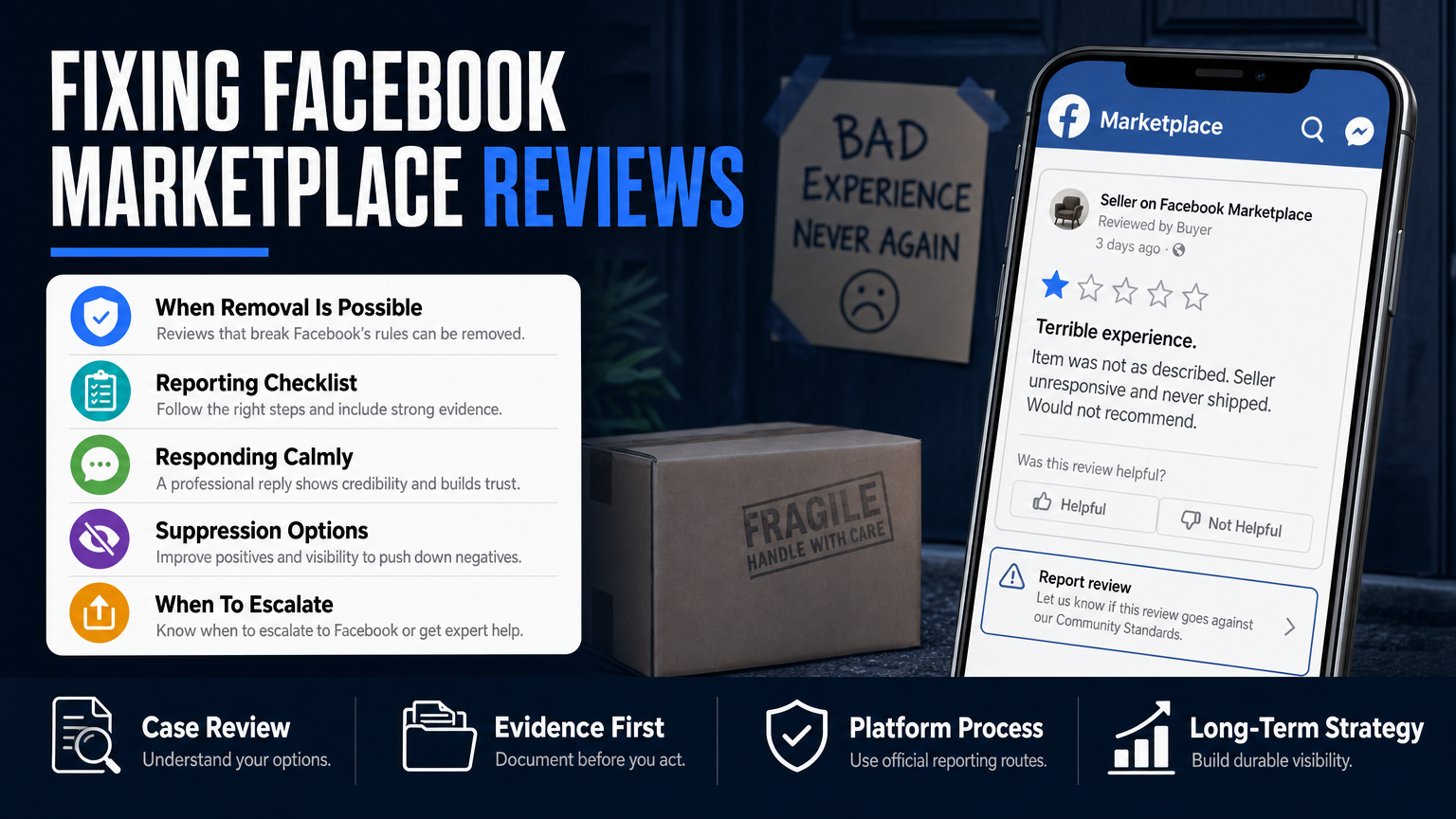
The line between friendliness and lack of professionalism is extremely thin on social media. A misinterpreted comment on a platform like Instagram or Facebook can be easily used against an attorney by opposing parties. If you find yourself in a situation where harmful or unauthorized posts are damaging your firm’s integrity, we provide expert solutions for Instagram content removal and Facebook content removal.
Ethics in the digital age require that lawyers be conscious of their digital footprint at all times, as impartiality is the most valuable asset of any jurist. The perception of unethical conduct online often translates directly into a loss of trust in the courtroom, where a lawyer’s reputation is just as important as their legal arguments.
The immediacy of social media invites relaxation, but for a lawyer, there is no such thing as a “100% private profile” when your name is public. Any digital interaction is potentially subject to the scrutiny of the public, journalists, or current clients. This exposure requires constant self-control that many professionals ignore until they face a public image crisis.
It is essential to establish a protocol for digital conduct. The strategy is not to stop being human or avoid social media, but to maintain absolute coherence between the lawyer the client sees in the courtroom and the person displayed on the internet. We advise that every digital interaction pass through a filter of “professional prudence.”
The Vulnerability of Public Records Digitization
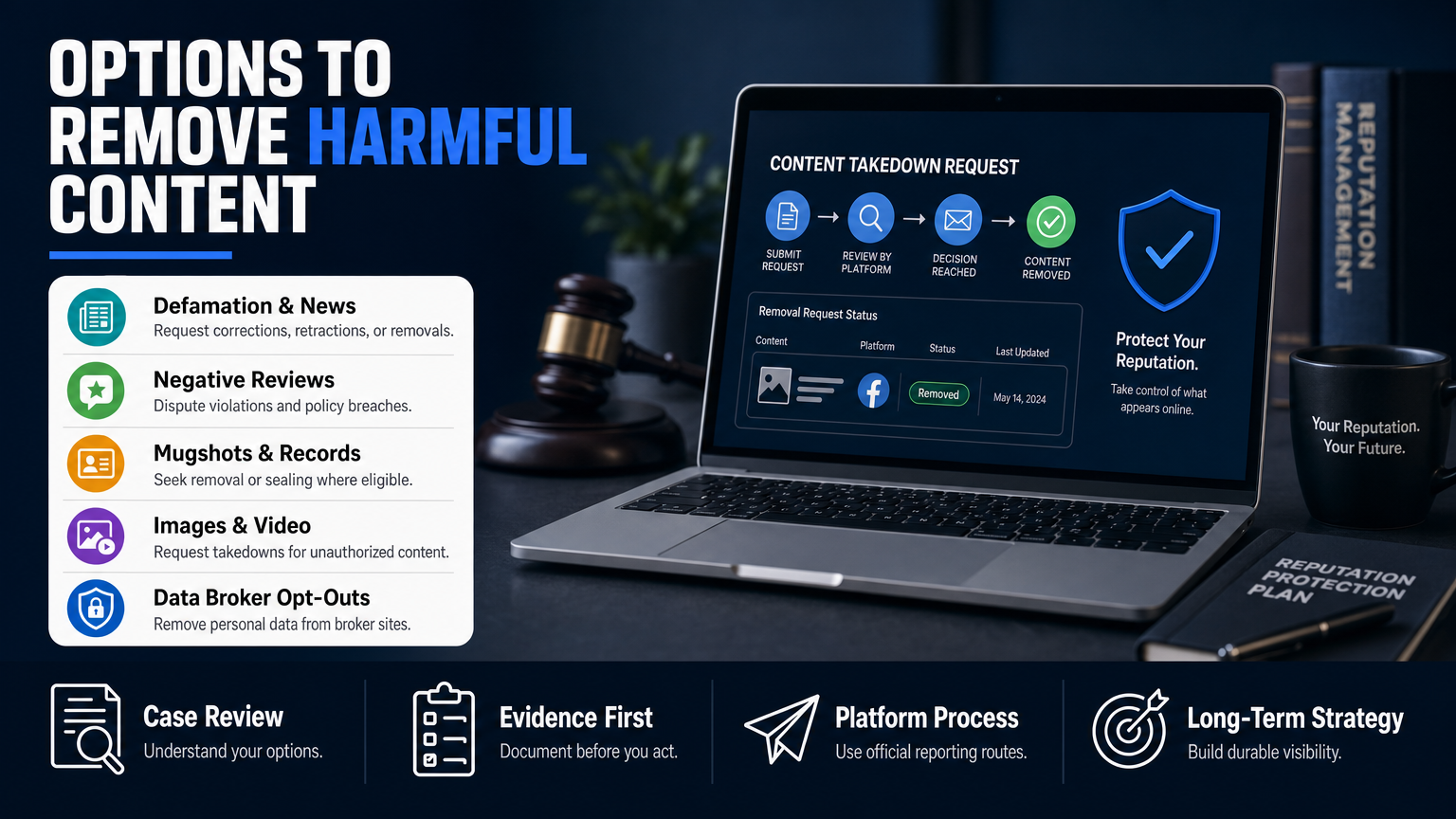
The mass digitization of judicial records has exposed data that was once buried in physical archives. Now, anyone can access the history of a lawyer or their clients with a simple click. For those facing the challenge of past public records affecting their current professional standing, our mugshot removal service is designed to help reclaim your privacy.
When a client finds court documents or related negative media without an explanation, their first reaction is not to analyze the law, but to judge the outcome. The danger lies in the misinterpretation of data by laypeople. Integrating robust legal reputation management into your firm’s strategy is the best way to ensure that public records remain contextualized and do not skew the perception of your legal skills.
The management of this vulnerability involves constantly monitoring what information is appearing about your firm and your cases. We focus on ensuring that search results reflect successes, specializations, and a clear vision of your practice, neutralizing the impact of old records that do not reflect your current quality.
Transparency is good, but the lack of digital context is a constant threat. Proactively managing how these records appear is essential. By taking control of your online footprint, you ensure that the narrative surrounding your firm remains focused on your expertise and current legal successes.

Competitor-Driven Reputation Sabotage
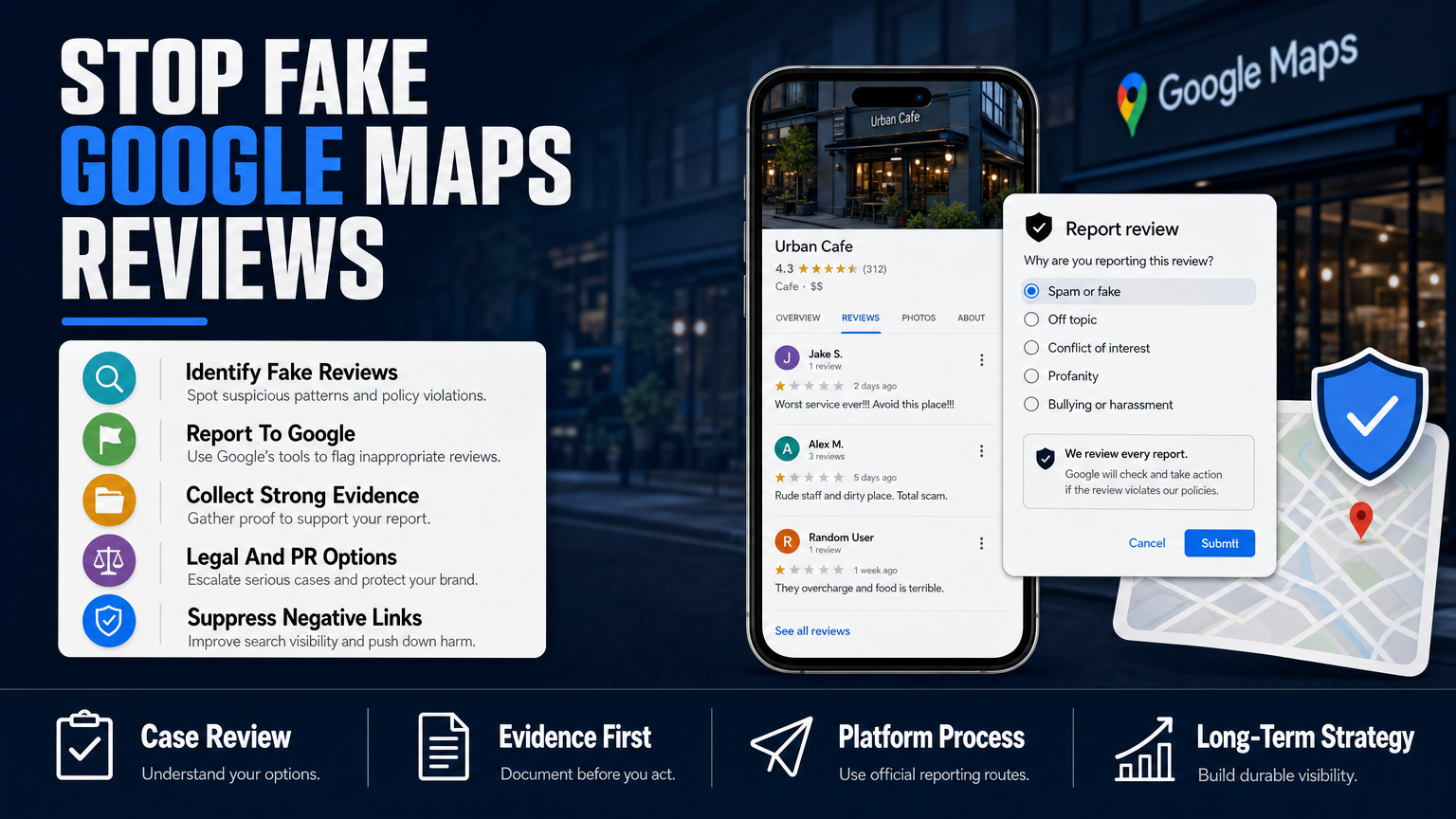
In highly competitive markets, “dirty wars” have migrated completely to the digital realm. Strategies like “fake one-star reviews” or the distribution of malicious videos are risks that lawyers rarely anticipate. If you are dealing with defamatory media or harmful video content, our negative video removal service can help mitigate the damage.
The ease with which a competitor can orchestrate a smear campaign is alarming. Through fake profiles or the use of bot networks, they can undermine years of reputation building in a matter of days. Worse, once the damage is done, platforms often take a long time to react to reports of fake content or defamatory media.
We help monitor these attacks before they escalate into irreparable damage. Early detection is the difference between a small inconvenience and a reputational crisis. It is necessary to be aware of every new review and every negative mention to be able to activate the necessary legal and technical defense mechanisms.
Shielding your reputation against sabotage requires an active defensive posture. This includes strengthening your presence with high-authority content so that, if someone attempts to attack you, the search engine system has enough positive weight to filter out the falsehoods. The best defense against sabotage is a reputation so solid that malicious criticism appears irrelevant.
The "Expertise" Misalignment on LinkedIn
A common mistake is treating LinkedIn as a static CV or a social entertainment network. If the content you publish does not match the positioning of an expert that you project in court, you create cognitive dissonance for the client. If you market yourself as an expert in corporate law but your posts are about general politics, you lose authority.
Clients look for absolute coherence. If your personal brand strategy does not reflect your real specialty, you lose authority with high-profile clients who vet their lawyers before hiring them. They are not looking for a generalist; they are looking for the exact specialist who can solve their problem.
Content must be aligned with your commercial value proposition. Every article, post, or interaction must reinforce why you are the best option in your legal niche. The lack of a content plan on LinkedIn is a waste of an incredible sales platform; turning your profile into a knowledge hub for your clients is the winning strategy.
We emphasize that LinkedIn is your most important professional showcase. It is not about posting for the sake of posting, but about curating a narrative that positions your experience and success stories in front of the right audience. The alignment between your specialty and your digital content is the bridge that converts a profile visit into a paid consultation.
The Rise of AI-Generated Misinformation
We are entering an era where AI-generated misinformation can impersonate a lawyer, create fake quotes, or generate fraudulent content using your likeness. Lawyers are frequent targets due to the controversial nature of their work, and this new technology allows attackers to create highly convincing narratives that damage a jurist’s image.
The risks of AI are not limited to impersonation; they also include the distortion of your practice through mass-generated fake articles. The speed at which negative content can be created today exceeds the human capacity for response. Protecting your name and your firm through ongoing mention monitoring is an essential defense against this threat.
Faced with these risks, digital identity becomes an asset that must be protected both legally and technically. Trademark registration, social media profile verification, and constant auditing of what is said about you on the web are necessary measures. We work to anticipate these misinformation threats.
Education regarding these risks is the first step toward protection. Lawyers must be aware that their digital reputation is an asset that no longer depends solely on their actions, but on how technology can be used to alter them. Adopting a technological defensive posture is vital for navigating this new landscape.
The Legacy Risk: Inactive Personal Blogs
Many lawyers wrote blogs or participated in specialized forums a decade ago when they were starting their careers. Those texts, while well-intentioned, may not reflect the level of sophistication or legal maturity they have today. Maintaining obsolete content sends an image of professional stagnation.
Old content that is not updated or deleted can confuse a potential client looking for the lawyer of “today.” If the tone of a 2014 blog is immature or the legal criteria have been superseded by new laws, the client will question whether the professional has kept up to date. Reviewing and auditing your digital history is a critical step.
Our strategy consists of performing a full audit of your digital trail. This involves not only deleting what is harmful but also updating what is valuable. Articles from years ago can become pieces of authority if refreshed with current knowledge, turning a legacy risk into a display of professional evolution.
Managing your digital legacy is an exercise in cleaning and relaunching. Every lawyer must ask themselves: “Does every piece of content currently on Google represent me as I want to be seen today?” If the answer is no, it is time to act. Cleaning your digital past is the most liberating and necessary act to project the cutting-edge firm you are today.
FAQ: Frequently Asked Questions
Can I completely remove negative information from Google?
Google does not allow the absolute removal of content under your control, but through SEO techniques and digital asset management, we can push it off the first page, where more than 95% of traffic occurs.
How often should a lawyer audit their reputation?
We recommend a biannual audit to detect new mentions, fake reviews, or changes in search results that may affect the firm’s perception.
Is a personal brand the same as a digital reputation?
No. A personal brand is what you intentionally build; a digital reputation is the sum of your personal brand plus what others say about you and how search algorithms interpret both factors.
Digital reputation is not a game of luck; it is a continuous, sophisticated risk management effort that defines your long-term success in the legal field. In an era where a single search result can determine whether a high-net-worth client decides to hire you or cross you off their list, the importance of maintaining a pristine online presence cannot be overstated. Lawyers who choose to ignore these digital dangers expose themselves to a silent, persistent vulnerability that can silently erode years of hard-earned professional growth and stall the expansion of their firm.
The digital landscape is inherently unforgiving to those who remain passive. Your professional identity is constantly being shaped by algorithms, public records, and the actions of competitors, meaning that if you do not actively curate your digital narrative, the narrative will be curated for you by default. Achieving long-term market dominance requires more than just legal excellence; it requires a proactive commitment to protecting the authority and integrity of your name across all digital channels.
At Your Reputation, we specialize in transforming your digital footprint into a powerful, solid asset that actively supports your professional trajectory rather than hindering it. By combining advanced technical strategies with a deep understanding of legal ethics, we help you neutralize threats before they escalate, ensuring that your online presence remains a true reflection of your expertise and your commitment to your clients. Setting yourself apart from the competition starts with securing your digital legacy today.
Don’t wait until a crisis emerges in your search results to take action. Secure your name and ensure your online presence commands the respect you deserve.