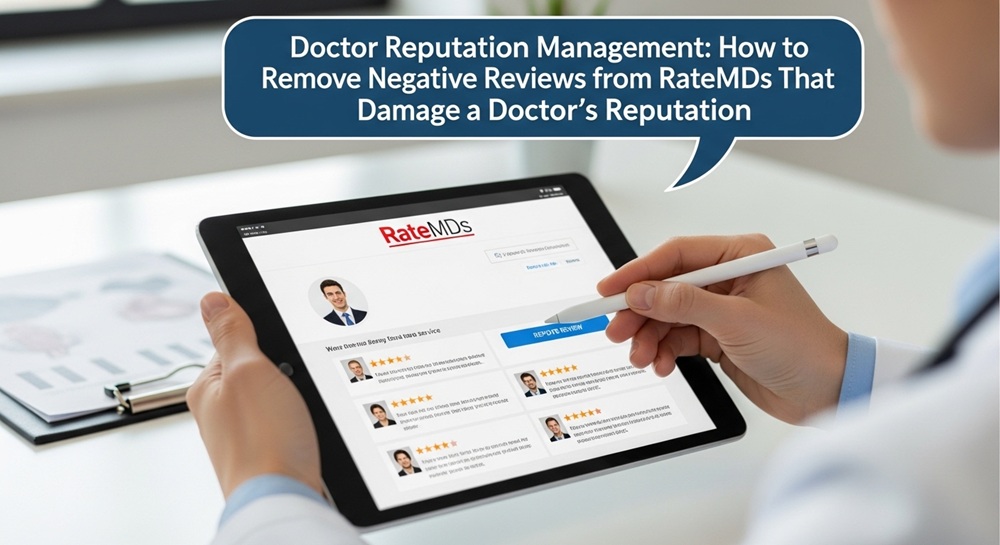
A single negative review on a physician rating site can influence how potential patients perceive a medical professional. For doctors and clinic owners, this makes doctor reputation management a critical part of maintaining trust and credibility online.
Websites like RateMDs allow patients to publicly rate and comment on healthcare providers. While many reviews are fair and helpful, others can be inaccurate, misleading, or even defamatory. In some cases, a single damaging comment can appear prominently in search results and affect patient decisions.
For physicians, private practice doctors, medical practice owners, clinic managers, healthcare marketing agencies, and legal professionals, understanding how to address these reviews is essential. Effective doctor reputation management involves identifying problematic reviews, understanding removal policies, and implementing strategies to protect a physician’s online image.=Understanding the Problem Behind Negative RateMDs Reviews
Before discussing removal strategies, it’s important to understand why negative reviews appear in the first place. Effective doctor reputation management begins with recognizing the sources of reputation damage.
Patients increasingly rely on review platforms to evaluate healthcare providers. When they encounter a negative experience, they often turn to online platforms to share it.
Common Causes of Negative Reviews
Negative comments on RateMDs usually stem from one or more of the following issues:
• Miscommunication between doctor and patient
• Long wait times or administrative frustrations
• Dissatisfaction with treatment outcomes
• Emotional responses after medical procedures
• Competitor manipulation or fake reviews
• Misinterpretation of medical advice
In many cases, the complaint may not even relate directly to the physician’s medical expertise. Yet the review still affects doctor reputation management because potential patients rarely see the full context.
Why These Reviews Damage a Physician’s Reputation
Online reviews influence search behavior and patient decision-making.
A highly visible negative review can:
• Reduce patient trust before the first appointment
• Create hesitation among referral partners
• Damage clinic credibility in local search results
• Impact hospital affiliation reputation
Because of this, doctor reputation management should be proactive rather than reactive.
How RateMDs Handles Review Removal Requests
One of the most common questions in doctor reputation management is whether reviews can actually be removed.
The answer depends on whether the review violates the platform’s policies.
RateMDs generally allows patient opinions, but it does restrict certain types of content.
Reviews That May Qualify for Removal
A review is more likely to be removed if it includes:
• False or defamatory claims
• Personal attacks or harassment
• Hate speech or discriminatory language
• Disclosure of personal health information
• Content unrelated to the doctor’s services
• Spam or promotional material
When these elements are present, doctor reputation management professionals can submit a formal review dispute to the platform.
When Removal Is Not Possible
Not all negative reviews qualify for removal.
If a patient simply shares a personal opinion or dissatisfaction with care—even if it feels unfair—RateMDs may allow the review to remain. In these cases, doctor reputation management strategies must shift toward reputation repair rather than removal.
Step-by-Step Process for Removing Negative RateMDs Reviews
Removing harmful reviews requires a structured and patient approach. Successful doctor reputation management often involves a combination of reporting, documentation, and follow-up.
Step 1: Identify the Problematic Review
Start by monitoring review platforms regularly.
Look for reviews that:
• Contain incorrect statements
• Violate platform guidelines
• Reveal confidential information
• Appear to be fake or malicious
Consistent monitoring is a core component of effective doctor reputation management.
Step 2: Document Evidence
Before submitting a removal request, gather relevant documentation.
This may include:
• Screenshots of the review
• Medical records (without violating privacy laws)
• Evidence of factual inaccuracies
• Proof the reviewer was not an actual patient
Strong documentation improves the success rate of doctor reputation management removal efforts.
Step 3: Report the Review Through the Platform
Most review platforms, including RateMDs, provide a reporting feature. Use the reporting system to explain exactly how the review violates platform policies.
Be clear and concise.
Doctor reputation management professionals typically avoid emotional language and focus on factual policy violations.
Step 4: Submit a Formal Removal Request
If the initial report does not lead to removal, a formal request may be required.
Many healthcare reputation specialists follow documented escalation processes as part of comprehensive doctor reputation management strategies.
Step 5: Follow Up and Monitor Results
Removal requests may take several weeks to process. During this period, continue monitoring the platform.
Doctor reputation management is an ongoing process rather than a one-time fix.
Alternative Strategies When Removal Is Not Possible
Sometimes a review remains online despite removal attempts. When this happens, doctor reputation management shifts toward mitigation strategies.
Encourage Positive Patient Reviews
One of the most effective reputation management strategies is increasing the number of authentic positive reviews.
Satisfied patients are often willing to share their experiences when politely asked.
Over time, this dilutes the impact of isolated negative feedback.
Respond Professionally to Reviews
While physicians must comply with patient privacy laws, a carefully worded response can demonstrate professionalism.
Responses should:
• Remain respectful and calm
• Avoid discussing medical details
• Show commitment to patient care
This approach strengthens doctor reputation management by demonstrating accountability.
Improve Overall Online Presence
Search engines display multiple results related to a doctor’s name.
Effective doctor reputation management includes strengthening positive content such as:
• Professional biographies
• Medical publications
• News coverage
• Patient testimonials
• Educational articles
This strategy helps push harmful content further down search results.
Preventing Future Reputation Issues
The best doctor reputation management strategy focuses on prevention.
Healthcare organizations can reduce negative reviews by improving communication and patient experience.
Key Preventive Practices
• Set clear patient expectations during consultations
• Train staff to handle complaints professionally
• Follow up with patients after treatments
• Monitor review platforms regularly
• Implement structured patient feedback systems
These practices reduce misunderstandings and support long-term doctor reputation management.
Healthcare marketing agencies and medical SEO specialists often assist clinics with reputation monitoring and review management.
The Role of Healthcare Marketing Teams
Their responsibilities may include:
• Review tracking
• Reputation reporting dashboards
• Search engine visibility management
• Crisis response strategies
In larger hospitals and multi-clinic networks, these professionals play a significant role in doctor reputation management.
H6: When Legal Action Becomes Necessary
In rare cases, reviews may cross into defamation.
Defamation lawyers and medical malpractice attorneys may become involved when reviews include:
• False accusations of malpractice
• Intentional reputation sabotage
• Fabricated claims of patient harm
Legal intervention is usually considered a last resort in doctor reputation management, but it can be necessary in serious situations.
Frequently Asked Questions
What is the fastest way to remove a RateMDs review?
The fastest approach in doctor reputation management is reporting a review that clearly violates platform policies, such as defamatory content or personal attacks.
Can doctors delete reviews from RateMDs themselves?
Doctors cannot directly delete reviews. However, doctor reputation management strategies can involve submitting removal requests or reporting policy violations.
Are fake patient reviews common?
Unfortunately, fake reviews can occur. Competitors, disgruntled individuals, or anonymous users sometimes post misleading comments. Identifying and reporting them is an important part of doctor reputation management.
Should doctors respond to negative reviews?
A professional response can demonstrate accountability and transparency. In many cases, responding calmly supports doctor reputation management by showing professionalism.
Do negative reviews affect patient acquisition?
Yes. Many patients research physicians online before scheduling appointments. Effective doctor reputation management ensures that negative reviews do not dominate a physician’s online presence.
Final Thoughts on Protecting a Physician’s Online Reputation
In the digital healthcare landscape, patient reviews influence how physicians are perceived long before the first consultation. Even a single negative comment can shape public perception if left unaddressed.
Effective doctor reputation management involves a combination of review monitoring, removal attempts, reputation repair, and proactive patient engagement.
For physicians, clinic owners, healthcare marketing teams, and legal advisors, understanding how review platforms operate is essential. While not every negative review can be removed, strategic reputation management ensures that a doctor’s professional reputation reflects the quality of care they provide.