For hospitality brands and consumer-facing businesses, TripAdvisor negative reviews can influence booking decisions within minutes. A single one-star rating on a hotel listing or restaurant profile can shift conversion rates, reduce walk-ins, and erode buyer confidence, especially for small business owners, CEOs, and eCommerce operators competing in tight markets.
TripAdvisor operates under strict content guidelines. While not every negative comment qualifies for removal, certain categories clearly violate platform policy. Understanding those boundaries is the difference between wasted appeals and successful takedowns.
When TripAdvisor Negative Reviews Qualify for Removal
TripAdvisor does not remove reviews simply because they are critical. However, TripAdvisor negative reviews may be removed if they include:
- Extortion attempts
- Reviews from non-guests
- Threatening or defamatory language
- Promotional or competitor-driven content
- Policy violations under their Review Guidelines
If your situation falls into one of these categories, structured action significantly improves your odds.
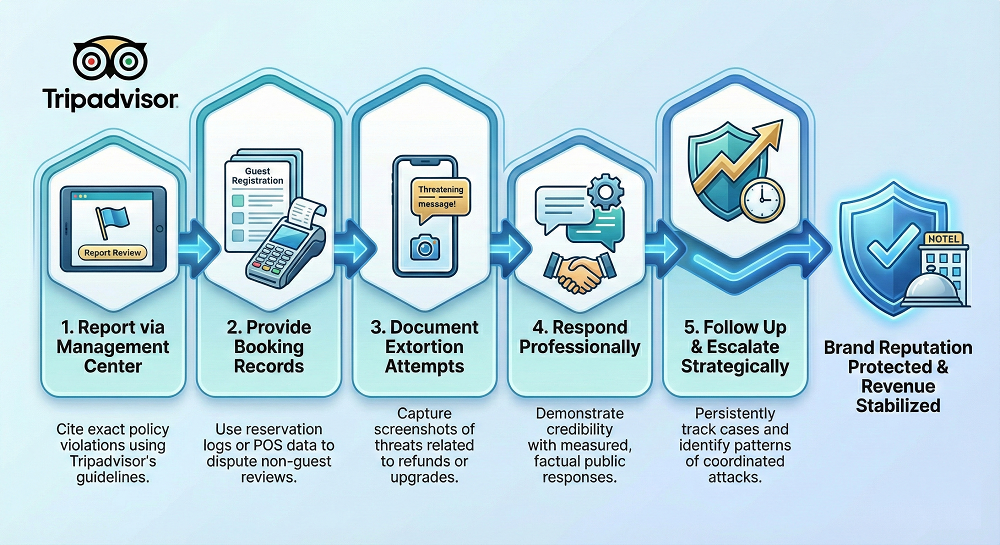
1. Report Tripadvisor Negative Reviews via the Management Center
The Tripadvisor Management Center is your first line of defense. Many business owners either ignore it or submit incomplete reports, which leads to automatic rejection.
Step-by-Step Escalation Process
Log Into Your Verified Owner Account
Only verified owners can challenge TripAdvisor negative reviews formally.
Select “Report a Review”
Choose the specific violation category that applies. Avoid emotional arguments. Stick strictly to policy language.
Reference Exact Guideline Violations
Cite Tripadvisor’s content policy verbatim. For example:
“This review violates Tripadvisor’s policy on blackmail and extortion under Section X.”
Precision matters. Vague complaints like “This is unfair” almost always fail.
2. Provide Booking Records to Dispute Non-Guest Reviews
One of the most effective strategies for removing Tripadvisor negative reviews is proving the reviewer was never a customer.
Restaurants, hotels, and tour operators often face anonymous reviews from individuals who never completed a transaction.
Evidence That Strengthens Removal Requests
- Reservation logs
- Payment confirmations
- POS transaction history
- CCTV timestamps (if applicable)
- Guest registration records
If no matching data exists, clearly state that the reviewer cannot be identified in your booking system. Tripadvisor may request additional verification, so documentation must be organized before submission.
This approach works particularly well for boutique hotels and independent restaurants where guest tracking is consistent.
3. Document Refund Blackmail or Extortion Attempts
Extortion is one of the fastest ways to have TripAdvisor negative reviews removed—if properly documented.
Common scenario:
A guest demands a refund or free service upgrade and threatens to leave a damaging review if denied.
What You Must Capture
- Screenshots of email threats
- Direct messages requesting compensation
- Refund demand language tied to review threats
- Timestamped communication
Submit this evidence through the Management Center under the extortion category.
If the situation escalates publicly or begins affecting bookings at scale, a more structured online crisis escalation strategy may be necessary. Businesses dealing with coordinated attacks often require formal intervention through professional crisis reputation management services rather than relying solely on platform reporting.
Pattern recognition is key. One review may be random. Multiple similar complaints within days may indicate coordinated manipulation.
4. Respond Professionally to Strengthen Removal Chances
Many CEOs underestimate how response tone impacts moderation outcomes. Even when TripAdvisor negative reviews are not immediately removed, a measured response demonstrates credibility to both customers and moderators.
Best Practices for Public Responses
- Stay factual, not emotional
- Invite the reviewer to contact management privately
- Avoid defensive language
- Do not accuse without evidence
Example framework:
- Acknowledge the concern
- Clarify policy or service standards
- Offer offline resolution
Professional responses often trigger reconsideration by the original reviewer. In some cases, they voluntarily remove or amend the review.
For eCommerce operators using TripAdvisor for product-based experiences or travel-linked services, reputation optics directly impact conversion rates. Public handling is often as important as removal itself.
5. Follow Up Consistently and Escalate Strategically
TripAdvisor negative reviews are not always removed after the first submission. Persistence—without spamming—improves outcomes.
Structured Follow-Up Strategy
- Wait 5–7 business days
- Re-submit with additional documentation
- Escalate through business support channels
- Track all correspondence
If negative reviews appear coordinated or fraudulent, structured escalation becomes critical. Businesses experiencing repeated defamatory attacks should document IP overlaps, language similarities, or suspicious timing patterns.
In these situations, combining internal documentation with external reputation strategy increases leverage and improves removal rates over time. You can contact an experienced online reputation management company to manage and remove your TripAdvisor negative reviews.
Why TripAdvisor Negative Reviews Impact Revenue Immediately
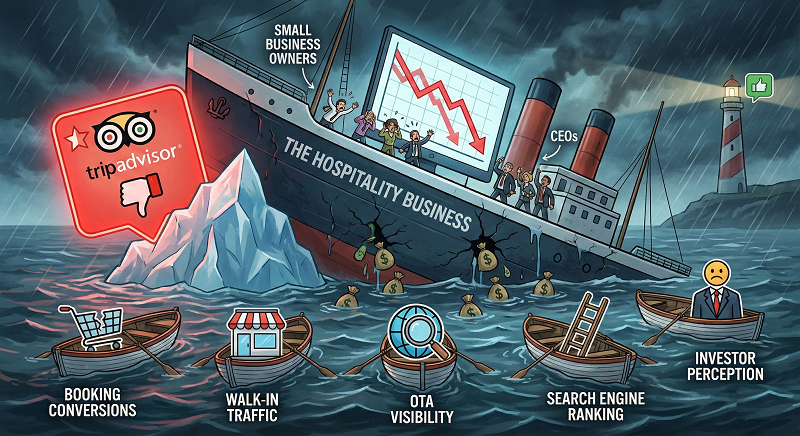
Hospitality and service-based businesses rely on trust signals. Star ratings influence:
- Booking engine conversions
- Walk-in traffic
- OTA visibility
- Search engine ranking
- Investor perception
For small business owners and CEOs, unmanaged TripAdvisor negative reviews create long-term brand erosion. Hotels and restaurants may recover from one complaint. They rarely recover from patterns.
Proactive Reputation Protection for Long-Term Stability
Removal is reactive. Prevention is strategic.
High-performing businesses:
- Actively request authentic guest feedback
- Monitor review velocity
- Implement internal service recovery protocols
- Track sentiment analytics
Reputation management should function as an operational system—not a panic response.
Frequently Asked Questions About TripAdvisor Negative Reviews
Can TripAdvisor negative reviews be removed permanently?
Yes, if they violate platform guidelines such as extortion, non-guest status, or policy breaches. Otherwise, they typically remain unless voluntarily removed by the author.
How long does TripAdvisor take to remove a review?
Initial reviews may take 3–7 business days. Escalated cases can take several weeks depending on documentation and policy category.
Can I sue over TripAdvisor negative reviews?
Legal action is possible in cases of defamation or malicious falsehood, but platform-level removal is typically faster and more cost-effective for most small businesses.
Do professional reputation firms improve removal success rates?
When reviews are coordinated, fraudulent, or legally sensitive, structured intervention significantly increases success probability.
Final Thoughts
TripAdvisor negative reviews are not automatically permanent. For small business owners, hotel operators, restaurant managers, and CEOs, understanding policy boundaries is the foundation of successful removal.
Report strategically. Document thoroughly. Respond professionally. Follow up consistently.
Reputation is an asset. Protecting it requires process—not panic.