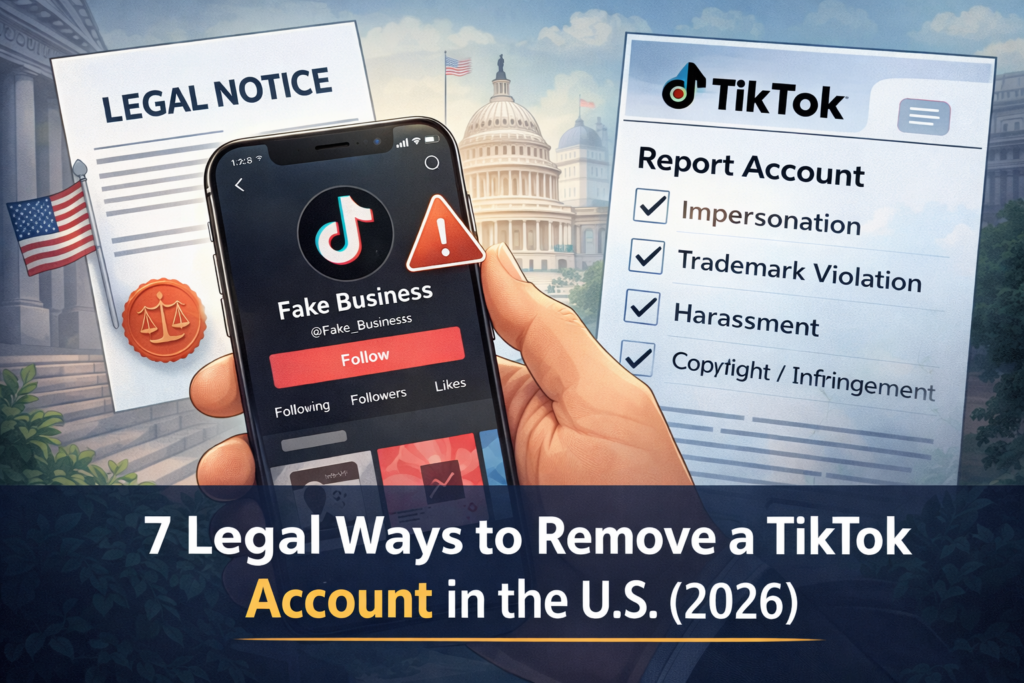
7 Legal Ways to Remove a TikTok Account in the United States (What Actually Works in 2026)
If you’re an American business owner dealing with a fake, impersonation, or malicious TikTok account, here’s the truth: most takedown attempts fail because people use the wrong method.
TikTok doesn’t remove accounts because they’re annoying.
They remove accounts when legal or policy pressure is applied correctly.
This guide breaks down the seven legal methods that actually work in 2026, what success looks like for each, and when removal isn’t realistic—so you don’t waste time, money, or credibility.
Can You Legally Remove a TikTok Account in the United States?
Yes—but only under specific conditions.
You cannot remove an account simply for:
Criticism
Negative opinions
Parody (in many cases)
You can remove or terminate accounts that violate:
Impersonation rules
Trademark or copyright law
Harassment or defamation standards
Platform safety and authenticity policies
The difference is evidence and execution.
1. Impersonation (The Fastest and Cleanest Removal)
If a TikTok account:
Uses your business name
Uses your logo
Claims to be “official”
Pretends to be you, an employee, or an executive
That’s impersonation—and it’s one of the easiest violations to enforce on TikTok.
What works
Proof of business ownership (website, filings, Google Business Profile)
Screenshots showing impersonation
A short, factual report
What doesn’t
Emotional language
Public accusations
Threats
Success rate: High
Timeline: Often days
2. Trademark Infringement (Extremely Effective for Established Brands)
If you own a registered U.S. trademark and the account:
Uses your brand name in the username
Uses your logo in videos or profile images
Sells products or services under your mark
You can file a formal trademark infringement complaint.
This moves your request out of general moderation and into legal compliance.
Why this works:
Platforms are legally required to respond to valid trademark claims.
Success rate: Very high
Risk: None if your trademark is legitimate
3. Copyright (DMCA) Takedowns for Content Removal
If the account posts:
Your videos
Your ads
Your website content
Your images
Your scripts or voice recordings
You can file a DMCA takedown notice.
Each approved DMCA strike:
Removes the content
Weakens the account
Builds a compliance record
Multiple strikes often lead to account termination.
Important: False DMCA claims are illegal. Only file when you own the content.
4. Harassment, Defamation, or Targeted Abuse
If an account:
Makes false factual claims about your business
Encourages harassment
Repeatedly targets your company or staff
You may have grounds for defamation or harassment enforcement.
TikTok doesn’t decide truth—but patterns of abuse matter.
Best practice
Document every post
Avoid public arguments
Submit consistent, policy-based reports
Success rate: Moderate
Improves significantly when paired with legal escalation
5. Policy Violations That Lead to Account Suppression
Not every takedown is instant—but suppression works.
Repeated violations involving:
Misinformation
Hate or harassment
Spam behavior
Coordinated inauthentic activity
Lower an account’s trust score.
Low trust leads to:
Content removal
Reduced reach
Eventual termination
This requires consistency, not mass-reporting.
6. Legal Notice or Attorney Escalation
When accounts refuse to stop impersonation, false claims, or interference:
A formal legal notice changes the platform’s response.
Why?
Because legal exposure triggers manual review, not automation.
You don’t always need to file a lawsuit—but you do need to demonstrate that you can.
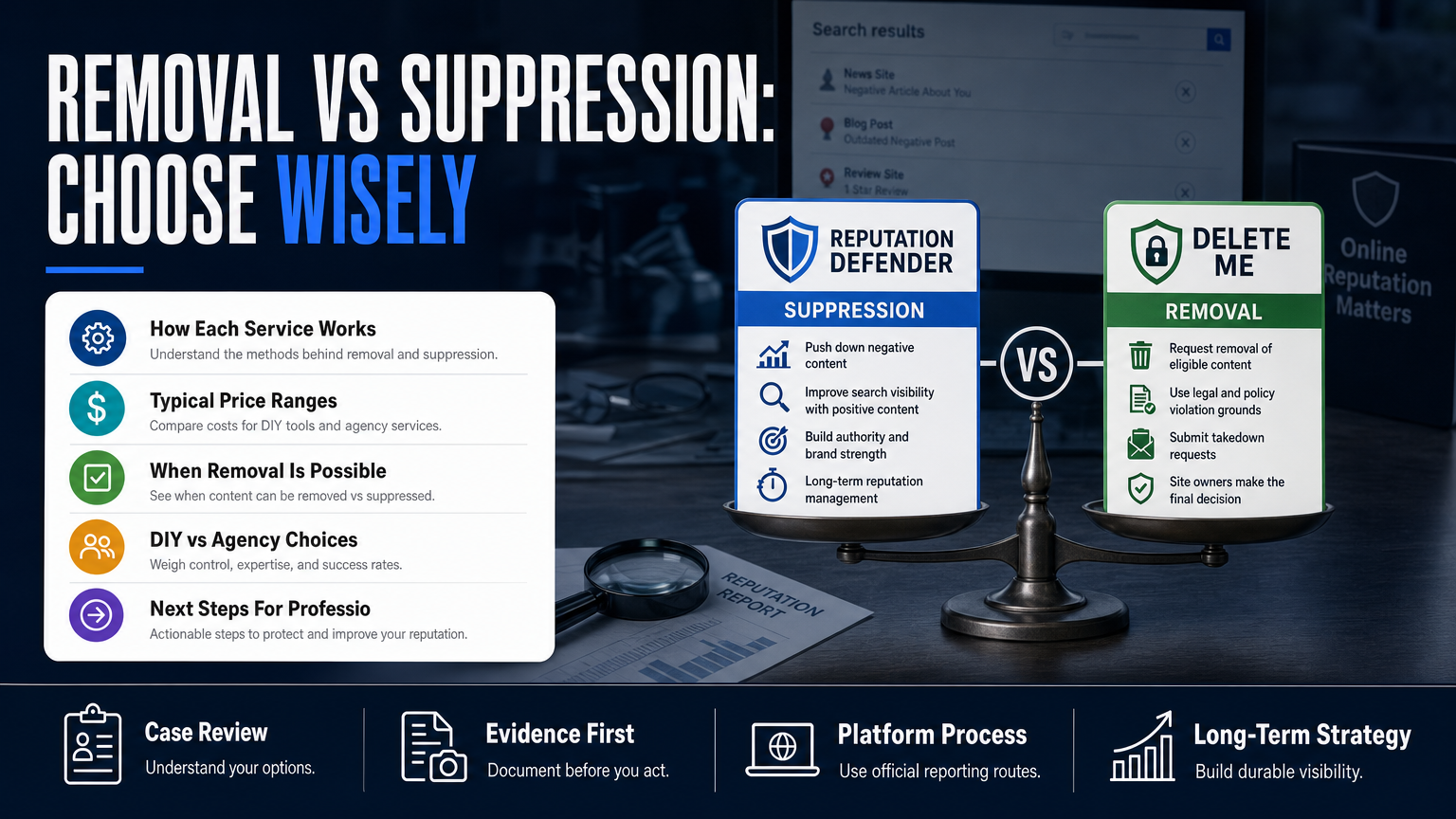
7. Reputation Suppression When Removal Isn’t Possible
Here’s the part most guides avoid:
Some TikTok accounts cannot be removed legally.
When that happens, the winning strategy becomes:
Outranking the account
Diluting visibility
Controlling branded search results
Replacing narrative with authoritative content
This protects revenue even when takedowns fail.
👉 Request a free reputation strategy call
You’ll find out quickly whether removal is realistic—or whether suppression is the smarter move.
What Does
Not
Work (Stop Doing This)
Mass-reporting with friends
Public comment wars
Empty threats
Copy-paste “cease and desist” emails
These often increase visibility and strengthen the account you want gone.
FAQ: Removing a TikTok Account in the U.S.
Can you legally remove a TikTok account in the United States?
Yes, if it violates impersonation, IP, harassment, or platform safety policies.
How long does TikTok take to remove an account?
Anywhere from days to weeks, depending on the violation and evidence.
Can a business force TikTok to remove an account?
Only when legal or policy violations are clearly documented.
Should you respond publicly to malicious accounts?
Rarely. Public engagement often backfires.
Final Word for Business Owners
Removing a TikTok account isn’t about shouting louder—it’s about applying the right pressure point.
When violations are real and handled correctly, removals happen.
When they aren’t, smart businesses shift to control, not confrontation.