Why ignoring negative reviews can cost you customers is a question every modern business must face. In a hyperconnected economy, silence speaks louder than words.
A single unaddressed review on Google, Yelp, or TripAdvisor can trigger a ripple effect that quietly drives customers away — not because of what’s written, but because of how your business responds to it.
Picture a potential customer researching your restaurant or law firm. They find glowing reviews but stumble upon a one-star complaint. What matters most at that moment isn’t the review itself — it’s your reaction.
Did you ignore it? Did you respond with empathy? Or did you let that silence imply guilt or indifference? In the United States, where digital trust drives consumer choice, ignoring negative reviews is more than bad PR; it’s a costly mistake.
The Real Cost of Ignoring Negative Reviews
In a market driven by perception, ignoring negative reviews signals to potential clients that your brand doesn’t value feedback.
According to BrightLocal’s 2024 Consumer Review Survey, 89% of U.S. consumers read responses from businesses before making a purchase decision.
That number reflects more than curiosity — it reflects trust as currency.
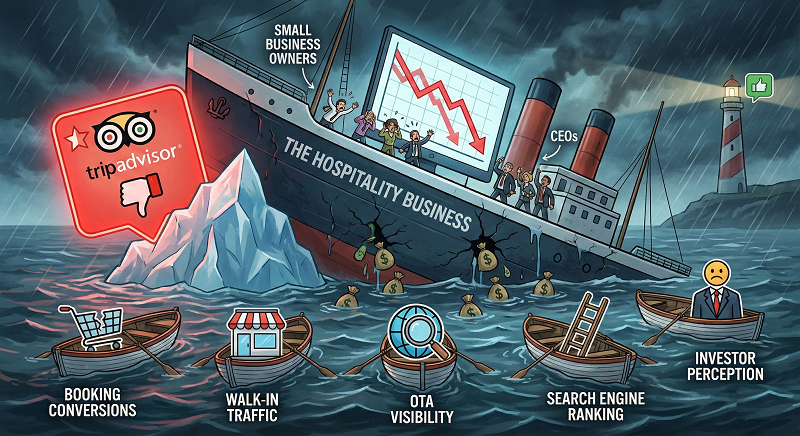
Businesses often underestimate how one unanswered complaint can influence revenue. For example, a small café in New York saw a 20% drop in foot traffic after ignoring repeated Yelp complaints about service delays.
When they finally engaged and addressed concerns publicly, customers returned — not because the issue disappeared, but because transparency replaced indifference.
This phenomenon isn’t limited to hospitality. In the political, healthcare, and education sectors, reputation management defines credibility.
In the United States, where social media amplifies both praise and outrage, silence can be interpreted as guilt.
Why Ignoring Negative Reviews Can Cost You Customers: The Psychology Behind Feedback
Negative reviews trigger emotional responses — both for the business and for readers. Research from Northwestern University shows that consumers perceive brands with only perfect ratings as less authentic.
In other words, negative feedback gives credibility, but ignoring it erases trust.
Psychologically, readers see a lack of response as avoidance. It signals that the company is either careless or unable to handle criticism — two perceptions that can quickly erode brand loyalty.
By contrast, a professional and empathetic reply can convert criticism into opportunity.
A U.S. example illustrates this perfectly: When a California hotel faced harsh criticism for its outdated rooms, management publicly thanked reviewers, explained upcoming renovations, and offered return discounts.
Within months, ratings improved, and customer sentiment shifted from frustration to appreciation. The hotel didn’t just fix its image — it strengthened its relationship with future guests.
Cultural and Economic Context: Why It Matters in the U.S.
In the United States, the relationship between brands and consumers is deeply tied to transparency.
The American market thrives on the expectation of accountability. When companies ignore feedback, they violate an unspoken cultural contract.
Moreover, in the post-pandemic economy, consumers have become more vocal about ethics, quality, and service.
Platforms like Yelp, Google, and Glassdoor shape public opinion faster than traditional advertising. Small businesses, especially local ones, cannot afford to underestimate how a single ignored complaint can influence community trust.
For instance, in 2023, a Texas dental clinic ignored online allegations about overcharging clients. Instead of responding, they deleted their social media pages — a move that backfired.
Local news outlets picked up the story, amplifying the damage. Eventually, they had to hire a reputation management agency to rebuild digital credibility and restore Google rankings.
5 Frequently Asked Questions About Negative Reviews
- Should I respond to every negative review?
Yes. Even brief, polite responses show you value customer feedback and professionalism. Silence gives the impression of guilt or negligence. - What if the review is false or defamatory?
Report it through the platform’s dispute process. If the claim violates guidelines or constitutes defamation, a legal removal request can be filed. - Can responding to negative reviews improve SEO?
Absolutely. Active engagement increases keyword activity and signals credibility to Google’s algorithm. - How should I respond to an angry customer?
Acknowledge their concern, apologize if necessary, and offer a solution privately. Avoid emotional replies — professionalism builds trust. - Should I hire a reputation management service?
Yes, if the issue affects business perception or SEO rankings. Agencies like Your Reputation Agency specialize in removing false content and building positive visibility.
Turning Criticism into Strategy
The smartest businesses in the U.S. see negative reviews as strategic tools.
They collect data from recurring complaints and turn insights into operational improvements.
In the restaurant industry, for example, feedback often reveals weaknesses in customer service or logistics that internal teams overlook.
Ignoring that data means ignoring growth. Beyond that, responding to criticism humanizes your brand. It shows humility — a quality American consumers increasingly associate with authenticity.

Legal and Reputational Dimensions
Sometimes, negative reviews cross the line from opinion to defamation. U.S. law allows victims of false statements to pursue legal remedies, including content removal and damages.
However, legal processes can take time, and public perception moves fast. That’s why businesses often combine legal action with online reputation management to control narrative damage in real time.
Companies like Your Reputation Agency help coordinate both — ensuring false reviews are reported, harmful content is suppressed, and verified testimonials are promoted through SEO optimization and public relations.
Final Reflection: Silence Isn’t Neutral — It’s Costly
Ignoring negative reviews doesn’t protect your brand; it isolates it. Every review, good or bad, is an opportunity to connect with your audience and display professionalism.
In today’s economy, where digital presence defines reputation, your voice is your credibility.
American consumers value transparency more than perfection. A thoughtful response can turn critics into advocates, while silence can turn prospects into skeptics.
The question isn’t whether negative reviews will happen — it’s how you’ll handle them.
If your business is struggling with online criticism, Your Reputation Agency offers expert solutions to manage, repair, and protect your digital presence. Don’t let silence speak for your brand — take control of your story today.
Follow us on social media:
Don’t forget to read our blog. Here is a link to our previous post: Legal Options for Removing False Online Accusations