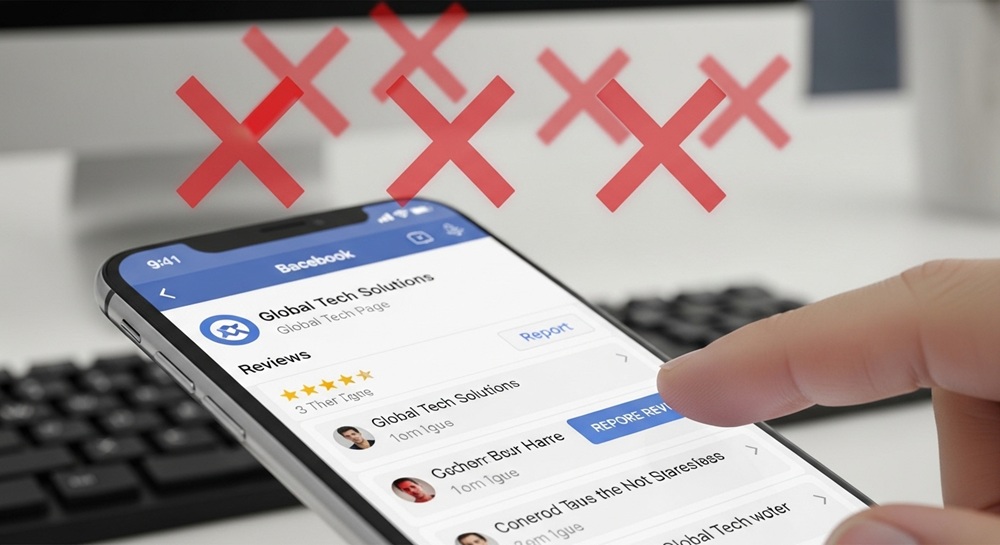
A single malicious review on Facebook can travel faster than most brands expect. For service-based businesses, public professionals, and companies that rely on trust, even one defamatory comment can influence perception before a potential client ever visits your website.
Brand managers and online reputation management teams regularly face this issue: someone leaves a fabricated complaint, a competitor posts misleading feedback, or an anonymous account attempts to damage credibility. Knowing how to remove fake Facebook reviews is no longer optional — it’s a critical component of modern reputation protection.
This guide outlines a practical, experience-based approach to remove fake Facebook reviews using methods aligned with Facebook’s policies and professional reputation management strategies.
Why Businesses Need to Remove Fake Facebook Reviews Quickly
Facebook recommendations spread rapidly across personal networks. When someone leaves a negative recommendation on a business page, their friends often see it in their feeds.
That visibility is exactly why defamatory content can escalate into a serious reputation issue.
Businesses commonly attempt to remove fake Facebook reviews when they contain:
- Spam promotions
- Fake accounts or impersonation
- Harassment or targeted attacks
- Hate speech or discriminatory language
Facebook’s community standards allow businesses to report these violations, but the process requires structure and documentation.
If handled correctly, it is often possible to remove fake Facebook reviews that clearly violate platform policies.
Understanding Facebook Review Policies Before Taking Action
Before attempting to remove fake Facebook reviews, it’s important to understand how Facebook categorizes recommendations.
Unlike traditional star ratings, Facebook recommendations function as user-generated opinions. That means Facebook will not remove a review simply because it is negative.
However, reviews become removable when they violate policies such as:
- Harassment or bullying
- Hate speech
- Impersonation or fake identities
- Spam or promotional abuse
Professionals managing online reputation typically analyze whether the review meets removal criteria before reporting it.
5 Steps to Remove Defamatory Reviews from Facebook
Step 1: Report the Review Through Meta Business Suite
The first step to remove fake Facebook reviews is reporting the content through Meta Business Suite.
Navigate to your business page and locate the review under the Recommendations section. Select the reporting option and choose the most accurate violation category.
When submitting a report:
- Choose “Harassment” if the review attacks a person
- Select “Spam” if it promotes unrelated services
- Use “Fake account” when the reviewer appears illegitimate
Meta’s moderation team evaluates these reports, and if the content violates policy, the platform may remove the recommendation.
Step 2: Block Suspicious or Fake Accounts
Many defamatory reviews originate from accounts with minimal activity, fake names, or newly created profiles.
Blocking these users prevents further interactions with your page and reduces the likelihood of additional attacks.
Indicators of suspicious accounts include:
- No profile photo or personal information
- Recently created account history
- Multiple negative reviews targeting different businesses
- Copy-pasted comments across pages
Blocking alone does not remove fake Facebook reviews, but it helps stop repeated harassment.
Step 3: Document Evidence Before Removal Attempts
Experienced ORM professionals always capture evidence before attempting to remove fake Facebook reviews.
Take screenshots showing:
- The full review text
- Username and profile link
- Date and timestamp
- Any additional comments or replies
This documentation serves several purposes:
- Supports your report to Facebook
- Provides evidence for legal review if necessary
- Helps track patterns in coordinated attacks
Businesses dealing with organized review attacks often discover multiple fake accounts working together. Proper documentation helps identify these patterns.
Step 4: Post a Controlled Public Response
While attempting to remove fake Facebook reviews, it’s essential to manage public perception.
Potential clients will see the review before it is removed, so a calm, professional reply protects credibility.
An effective response usually includes:
- A neutral tone
- An invitation to resolve the issue privately
- A brief clarification if the claim appears false
Example structure:
- Acknowledge the concern
- State that the business cannot find a record of the incident
- Offer a direct contact for resolution
This approach signals transparency while your team works to remove fake Facebook reviews through official reporting channels.
Step 5: Escalate Repeated Violations
Sometimes review attacks are coordinated. Competitors or disgruntled individuals may create multiple accounts to post defamatory recommendations.
In these situations, a systematic removal strategy becomes essential.
Escalation strategies include:
- Reporting multiple related accounts
- Documenting patterns of harassment
- Submitting repeated policy violation reports
- Consulting legal counsel for defamation cases
Corporate reputation management teams frequently use structured escalation when trying to remove fake Facebook reviews that appear in waves.
When Organized Review Attacks Occur
Businesses facing organized attacks must move beyond basic reporting.
Common scenarios include:
- Competitors creating fake reviewer profiles
- Reputation sabotage campaigns
- Viral misinformation spreading through recommendations
In these cases, the goal is not just to remove fake Facebook reviews, but to stabilize the brand’s online reputation across platforms.
Professionals typically combine:
- Platform reporting
- public response management
- legal consultation
- ongoing monitoring
This multi-layered approach protects long-term credibility.
Long-Term Strategy for Preventing Fake Facebook Reviews

Preventing defamatory reviews is just as important as removing them.
Experienced brand managers implement several protective measures:
- Encourage genuine customers to leave authentic recommendations
- Monitor Facebook reviews daily
- Document suspicious activity early
- Respond quickly to new feedback
A healthy flow of real recommendations also dilutes the impact of occasional fake ones.
Over time, this strengthens your digital reputation while reducing the damage caused by malicious posts.
FAQ: Removing Fake Facebook Reviews
Can businesses delete Facebook reviews themselves?
No. Businesses cannot directly delete recommendations. They must report the review and request removal through Facebook if it violates community guidelines.
How long does Facebook take to review reported reviews?
Moderation timelines vary. Some reports are reviewed within 24–72 hours, while complex cases may take longer depending on evidence and policy violations.
What qualifies as a fake Facebook review?
Fake reviews typically involve accounts that never interacted with the business, impersonation profiles, spam promotions, or coordinated reputation attacks.
Can competitors post fake Facebook reviews?
Unfortunately, yes. Competitors sometimes create anonymous accounts to post misleading feedback. Proper reporting and documentation help address these situations.
Should businesses reply to defamatory reviews?
Yes. A calm public response shows professionalism while the business works to remove fake Facebook reviews through reporting and moderation processes.
Businesses today operate in an environment where reputation spreads instantly across social networks. Learning how to remove fake Facebook reviews effectively ensures that misleading or defamatory content does not define your brand’s credibility.