A single defamatory Facebook post can damage a reputation faster than most companies can draft a response. For brands, influencers, and professionals such as doctors, lawyers, and consultants, the impact isn’t just emotional — it’s financial. One misleading accusation shared in a local group or industry thread can erode trust built over years.
Understanding how to take down defamatory Facebook posts quickly and strategically is no longer optional. It’s a core part of modern reputation management.
Understanding What Qualifies as a Defamatory Facebook Post
Not every negative comment is defamation. Frustrated customers are allowed to voice opinions. A defamatory Facebook post crosses the line when it presents false statements as fact and harms a person’s or company’s reputation.
Key Elements of Defamation on Social Media
To determine whether content qualifies, assess whether it includes:
- False factual claims (not opinions)
- Harm to professional or commercial reputation
- Evidence of negligence or malicious intent
- Public visibility
For professionals — particularly doctors and lawyers — allegations of misconduct, fraud, or malpractice can be especially damaging, even if entirely fabricated.
Why Speed Matters
Facebook’s algorithm rewards engagement. The longer a defamatory Facebook post remains live, the more comments and shares it may collect. That momentum makes removal more complicated and reputational repair more expensive.
Immediate Steps to Take After a Defamatory Facebook Post Appears
The instinct to respond emotionally is understandable. However, strategic action is far more effective.
1. Preserve Evidence Before Reporting
Before attempting removal:
- Take screenshots (including timestamps and profile URLs)
- Document comments and shares
- Record any business impact (lost clients, cancellations)
If legal escalation becomes necessary, this documentation is critical.
2. Evaluate Whether to Respond Publicly
In some cases, silence is strength. In others, a measured response prevents speculation.
Professionals in regulated industries — such as healthcare and law — must be cautious. Privacy laws and ethical guidelines limit what can be shared publicly. A reactive reply to a defamatory Facebook post can unintentionally violate compliance standards.
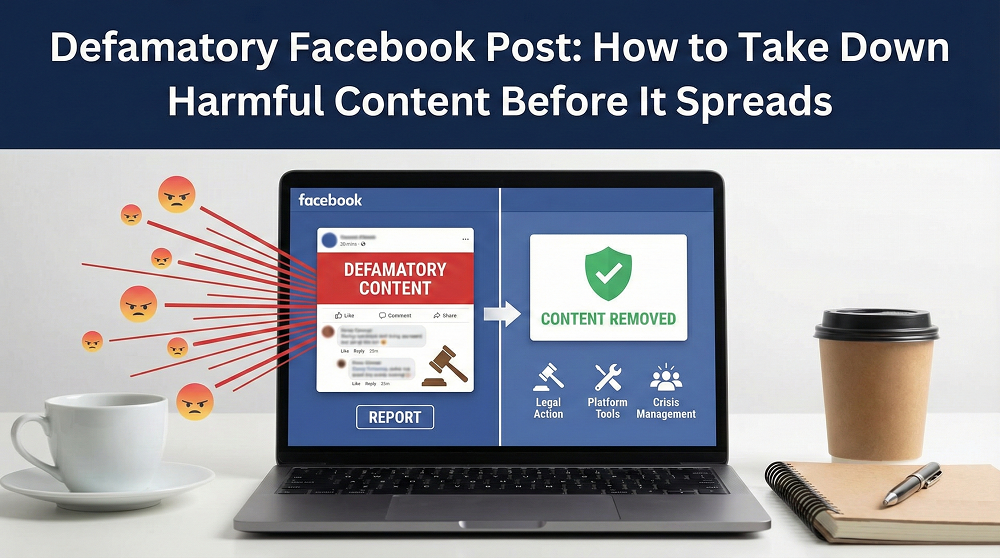
3. Report the Content to Facebook
Facebook provides reporting mechanisms for harassment and false information. However, removal is not guaranteed unless the post clearly violates platform policies.
For structured support and faster resolution pathways, many organizations rely on specialized services for Facebook content removal rather than navigating platform bureaucracy alone.
Legal and Platform-Based Removal Strategies

When reporting fails, escalation becomes necessary.
Cease-and-Desist and Legal Notices
If the defamatory Facebook post includes provably false statements, legal counsel may issue:
- A cease-and-desist letter
- A formal demand for retraction
- A defamation claim
This approach is often effective when the poster acts anonymously but becomes cooperative once confronted formally.
Working with Reputation Specialists
Companies and high-profile individuals often require a more strategic approach. Beyond simple removal, the goal is suppression, content dilution, and long-term reputation stabilization.
This is where structured social media reputation management becomes essential. Services such as integrate removal efforts with proactive brand reinforcement.
Preventing Future Defamatory Facebook Posts
Taking down one defamatory Facebook post is reactive. Prevention is strategic.
Monitor Brand Mentions Consistently
Active monitoring allows early intervention before posts gain traction. Set alerts for:
- Brand name variations
- Executive names
- Practice or firm names
- Industry-specific accusations
Strengthen Your Positive Digital Footprint
When accurate, high-authority content dominates search results, isolated defamatory Facebook posts carry less weight.
Invest in:
- Thought leadership content
- Verified reviews
- Media features
- Optimized professional profiles
H6: Establish a Crisis Protocol
Every company and professional practice should maintain a response framework. This includes:
- Internal decision-makers
- Legal contacts
- Communications guidelines
- Escalation timelines
Having a plan prevents panic-driven responses that amplify the issue.
Common Mistakes That Make a Defamatory Facebook Post Worse
- Even sophisticated brands make avoidable errors.
- First, threatening legal action publicly often escalates conflict and invites further commentary.
- Second, mobilizing friends or staff to argue in the comments usually fuels engagement, pushing the defamatory Facebook post higher in visibility.
- Third, ignoring the issue entirely can allow narrative control to shift permanently.
- Balance is critical. Strategic restraint combined with decisive backend action yields better outcomes than emotional reactions.
Final Thoughts on Managing a Defamatory Facebook Post
A defamatory Facebook post is not merely a nuisance. For companies, influencers, and licensed professionals, it represents tangible risk — reputational, financial, and legal. The solution lies in structured action: document, assess, report, escalate if necessary, and reinforce your digital presence. When handled properly, even a damaging post can become a temporary disruption rather than a lasting liability. Reputation is built slowly but can be attacked instantly. Protecting it requires vigilance, expertise, and the confidence to act with precision rather than panic.
Frequently Asked Questions
How to get slanderous posts removed from Facebook?
To get slanderous posts removed, document the content, report it under Facebook’s defamation or harassment policies, and provide clear evidence that the claims are false and harmful. If the platform does not act, escalate through legal notice or professional removal support.
How do I remove offensive posts from Facebook?
Use the “Report” option directly on the post, selecting the most accurate violation category such as harassment, hate speech, or false information. For business pages, you can also moderate, hide, or ban users while submitting a formal review request to Facebook.
What is defamation and how do I report it?
Defamation is a false statement presented as fact that harms a person’s or company’s reputation. To report it, gather proof, submit a detailed complaint through Facebook’s reporting system, and reference the specific policy violated for faster review.