How to Respond When Someone Posts Lies About You: Protecting Your Reputation in the Digital Age
In a hyperconnected United States, knowing how to respond when someone posts lies about you is no longer just a matter of pride—it’s about survival.
Every tweet, review, or Facebook comment has the potential to alter your reputation, career, or business trajectory overnight. In cities like Los Angeles, New York, or Austin, where social influence moves markets, a single false statement can have devastating consequences.
Defamation online spreads faster than truth, and algorithms tend to favor controversy over accuracy. This is why responding correctly—legally, strategically, and calmly—is the difference between reputational recovery and digital disaster.
Understanding how to respond when someone posts lies about you is essential for entrepreneurs, doctors, and public figures who depend on trust to sustain their professional lives.

The Real Impact of Online Lies on American Professionals
False information online is more than a personal attack—it’s an economic and psychological blow. A small business in Chicago that receives fake reviews on Google can lose up to 30% of potential customers.
A Texas medical clinic falsely accused of malpractice may face state investigations and public distrust, even after proving its innocence.
So, how do you respond when someone posts lies about you in an environment where anyone can publish anything? The first step is understanding that silence doesn’t erase lies—it amplifies them.
Inaction gives algorithms and audiences time to assume guilt. The best response must be based on documentation, emotional control, and an understanding of how reputation systems work.
Real Cases Across the United States
In Miami, a real estate broker was targeted by an anonymous blogger who accused him of fraud. The post quickly ranked on Google and cost him over $200,000 in lost deals.
With the help of an online reputation agency, he issued legal takedowns and launched a visibility campaign. Within months, his official website and verified profiles outranked the false information.
In San Francisco, a tech startup faced coordinated social media attacks from a competitor. Instead of responding emotionally, the company documented every post, filed a defamation claim, and publicly released a factual statement supported by customer testimonials.
The transparency turned a potential scandal into a success story of integrity and resilience.
These cases show that how to respond when someone posts lies about you requires balance between firmness and professionalism. Legal action may be necessary, but reputation rebuilding is equally vital.
The Right Way to Respond When Someone Posts Lies About You
When falsehoods go viral, your instinct might be to fight fire with fire. Don’t. Responding impulsively can validate the lie and damage your credibility.
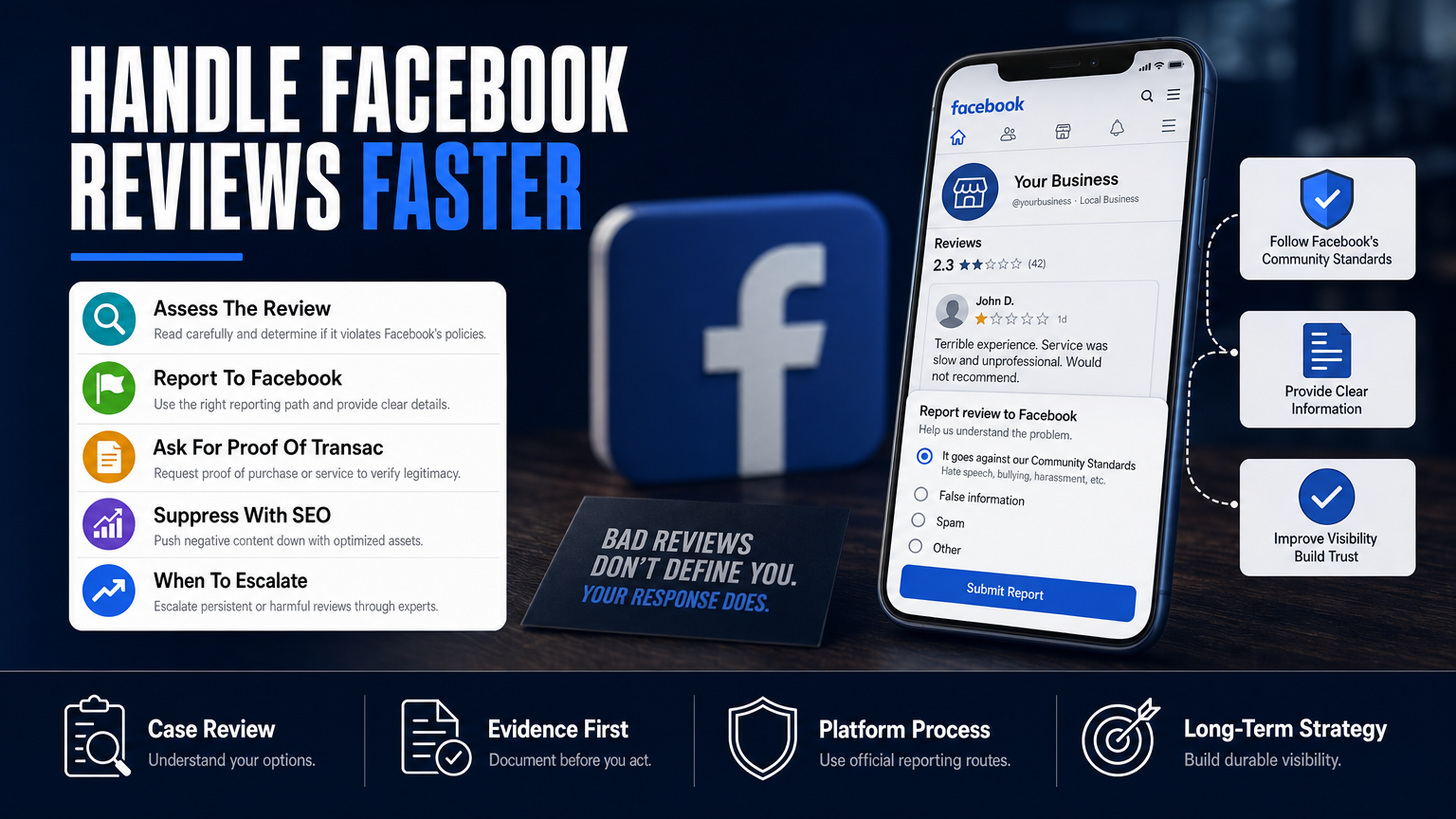
Instead, analyze the context and the source. If it’s a comment on a review site like Yelp or Glassdoor, document it. If it violates community guidelines, request removal immediately.
The next step is public response strategy—acknowledging the issue without aggression. A message such as:
“We are aware of misleading information circulating online and are addressing it through the appropriate channels. We value transparency and truth.”
This type of communication reassures your audience while preserving your dignity. It also prevents the spread of misinformation by controlling the narrative.
Working with a professional agency that specializes in online crisis management ensures the response includes SEO suppression, legal actions (like DMCA takedown notices), and content creation to promote verified information.

5 Frequently Asked Questions About How to Respond When Someone Posts Lies About You
1. Can I sue someone for posting lies about me online?
Yes. In the U.S., defamation (libel online) is grounds for a civil lawsuit if you can prove the statement is false, published publicly, and caused harm.
2. How do I remove false information from Google?
You can request removal through Google’s legal process or work with a reputation management firm to de-index harmful links ethically.
3. What if the post is anonymous?
Lawyers can request a court order to identify the author. Many defamation cases in the U.S. begin with subpoenas to platforms like Reddit or Facebook.
4. Should I respond publicly to the false claim?
Only if it’s strategic and factual. A well-worded, professional response can neutralize the lie, but emotional reactions often make it worse.
5. How long does it take to recover from online defamation?
With professional help, it can take from weeks to several months, depending on the platform’s cooperation and the visibility of the false content.
The Economic and Cultural Relevance of Digital Reputation in the U.S.
In today’s American culture, digital reputation equals financial credibility. From Wall Street investors to Los Angeles influencers, the perception of integrity directly affects market value.
Studies show that over 80% of U.S. consumers trust online reviews as much as personal recommendations. That means a single false claim can shift consumer behavior instantly.
Politicians in Washington D.C., for example, are increasingly hiring reputation agencies before campaigns to monitor and mitigate potential misinformation attacks.
Likewise, hospitals, law firms, and tech companies now include “digital risk management” in their PR budgets.
Knowing how to respond when someone posts lies about you is not only about defense—it’s about maintaining competitiveness in a reputation-driven economy.
Reflection: Truth as the Strongest Strategy
As misinformation grows faster than ever, the future of personal and corporate reputation will rely on speed, strategy, and authenticity.
Every professional in the United States—whether in healthcare, politics, or business—must understand that their digital identity is a living asset, one that requires protection as seriously as financial capital.
Ultimately, how to respond when someone posts lies about you comes down to one principle: truth must be louder than defamation. And truth, when defended with professionalism and persistence, always prevails.
At Your Reputation Agency, we help individuals and businesses across the United States remove false content, respond strategically, and rebuild their public image with integrity.
Don’t let a lie define your story.
Visit yourreputation.agency for a private consultation today.
Follow us on social media:
Don’t forget to read our blog. Here is a link to our previous post: What Online Defamation Really Means (And What It Doesn’t)