Quick answer: remove online news about yourself
Online news may be corrected, updated, anonymized, removed voluntarily, or de-indexed when a privacy or legal basis applies. Accurate public-interest reporting may remain.
Save the article and query, document exact errors or later outcomes, contact the publisher with primary evidence, use eligible search tools, and publish accurate current context.
Finding your name attached to an unwanted news article can be frustrating. Whether it’s an outdated story, inaccurate reporting, or coverage of an event you’d rather move past, negative online news can affect your reputation long after it was first published.
Today, employers, clients, investors, and even potential business partners often search your name before making important decisions. One unfavorable article appearing on the first page of Google may influence how others perceive you—even if the information is incomplete or no longer relevant.
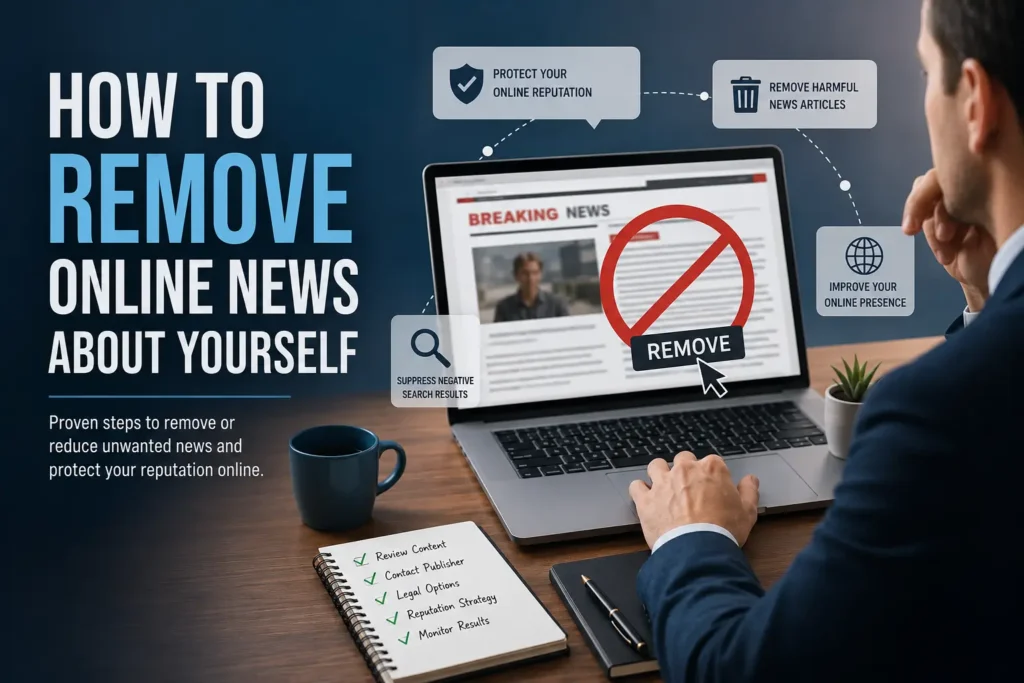
If you’re wondering how to remove online news about yourself, you’re not alone. Individuals, executives, business owners, healthcare professionals, and public figures face this challenge every day. The good news is that there are legitimate strategies that can help reduce or even remove harmful online news, depending on the circumstances.
This guide explains the available options, when removal is possible, and what you can do if an article cannot be taken down.
Why Online News Can Damage Your Reputation
News websites often have strong authority in Google’s search results. Because of this, articles published by newspapers, online magazines, blogs, or media organizations can remain visible for years—even after the original event is no longer relevant.
Negative online news can impact:
- Business opportunities
- Job applications
- Investor confidence
- Customer trust
- Professional relationships
- Personal reputation
Even when an article is factually accurate, it may no longer represent who you are today. In other situations, articles may contain outdated information, misleading headlines, or factual inaccuracies that continue to shape public perception.
This is why many individuals begin searching for how to remove online news about yourself before the content causes long-term reputational damage.
Can Online News Actually Be Removed?
The answer depends on where the content is published and why it exists.
Some articles can be removed, corrected, or updated. Others may remain online because publishers have editorial protections or legal rights to archive their content.
Removal is generally more likely when:
- The article contains false or defamatory information.
- Personal information has been published improperly.
- Copyright has been violated.
- The content breaches the publisher’s editorial policies.
- Local privacy laws provide legal grounds for removal.
If direct removal isn’t possible, reputation management strategies such as search result suppression and positive content development can often reduce the article’s visibility over time.
Google also explains that not every webpage can be removed from search results unless it violates specific policies or the original publisher removes the content. Reviewing Google’s guidance can help you understand what qualifies for removal and what alternatives are available.
Step 1 — Identify Where the News Was Published
Before taking action, determine exactly where the article appears and who controls it.
Ask yourself:
- Is it published by a major news organization?
- Is it a local newspaper?
- Is it an industry publication?
- Is it a blog reposting another article?
- Has the article been copied across multiple websites?
Many people discover that one original article has been syndicated or copied to dozens of websites. Removing only one version may not fully solve the problem.
Create a list that includes:
- Website URL
- Publication date
- Author (if available)
- Search engine ranking
- Whether the article contains factual errors
Having this information organized makes it much easier to decide on the most effective removal strategy.
Step 2 — Contact the Publisher First
If the article contains inaccurate information, outdated facts, or information that should no longer be publicly available, your first step should be contacting the publisher directly.
Many news organizations have editorial policies that allow corrections, updates, or, in limited cases, content removal. A professional and respectful request is far more effective than an emotional complaint.
When contacting the publisher:
- Clearly explain why the content is harmful.
- Provide supporting evidence or documentation.
- Request a correction if facts are inaccurate.
- Ask whether the article can be updated or removed.
- Keep all communication professional and concise.
Not every request will be approved, but starting with the publisher often provides the fastest path toward a resolution.
Understand Google’s Role
Many people believe Google owns every webpage shown in search results, but that’s not how search engines work.
Google indexes content that exists on other websites. If the original article remains published, Google will usually continue displaying it unless the content violates Google’s removal policies or the publisher removes it first.
This is why effective reputation management often focuses on both the source website and search engine visibility. In many cases, reducing an article’s prominence in search results can be just as valuable as removing it entirely.
When Search Result Suppression Becomes the Best Option
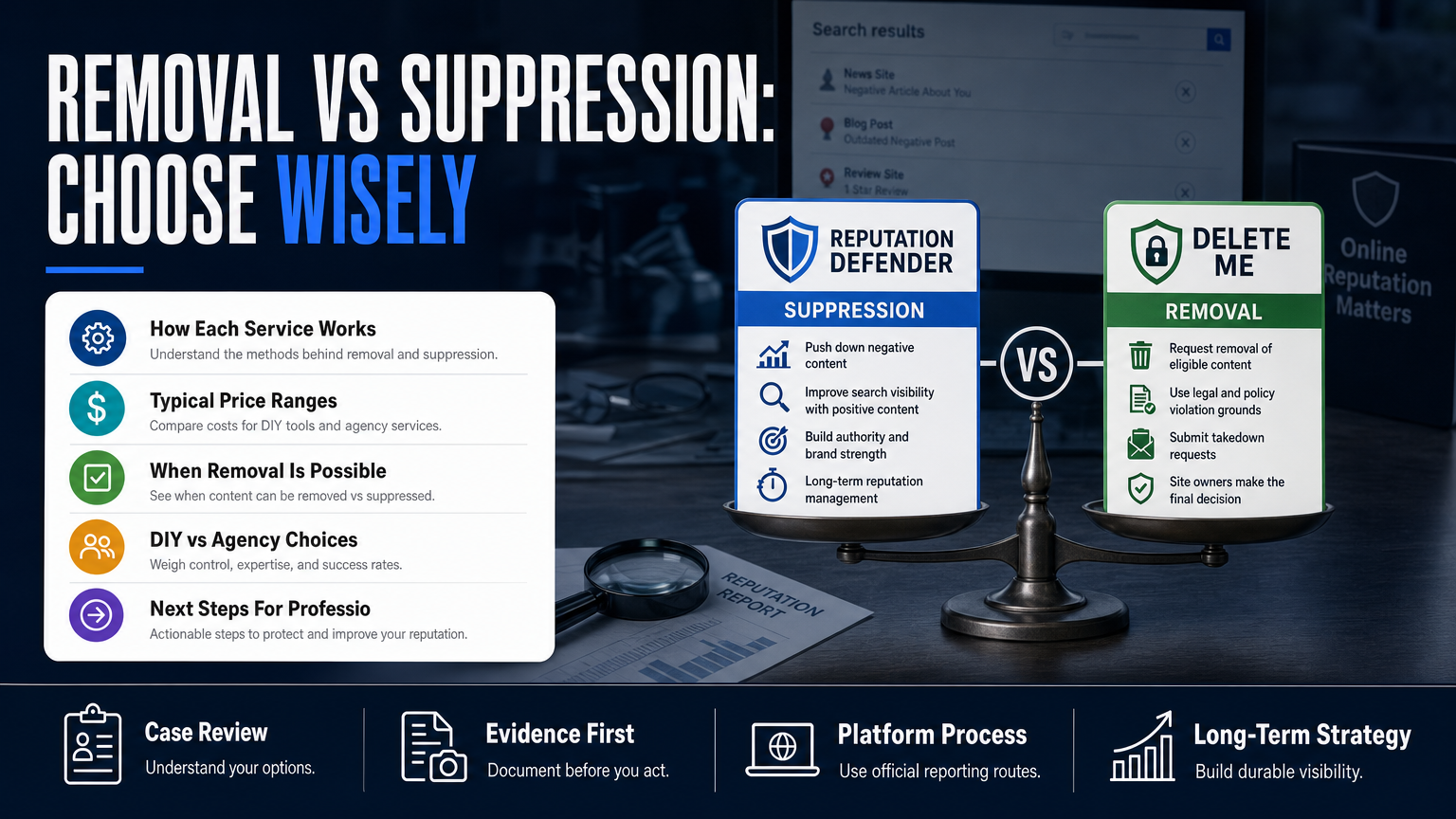
Sometimes a news article cannot be removed because it is legally published or protected by editorial policies. In these situations, search result suppression becomes one of the most effective long-term strategies.
Rather than trying to erase the article, suppression focuses on improving the visibility of stronger, more relevant content that reflects your current reputation.
A suppression strategy may include:
- Publishing authoritative content
- Strengthening your professional profiles
- Building positive media coverage
- Creating high-quality branded content
- Improving SEO for positive assets
- Optimizing your digital footprint
Over time, these efforts can push harmful content lower in search results, making it far less visible to potential employers, clients, or business partners.
Protect Your Reputation Before the Situation Gets Worse
If a negative news article is already affecting your reputation, delaying action can make recovery more difficult.
As the article gains more visibility, it may be copied by other websites, referenced in blogs, shared on social media, or continue ranking in search engines for years. Taking action early gives you a better chance of limiting its reach and protecting your digital reputation.
At Your Reputation Agency, we work with executives, professionals, business owners, and public figures who need practical, confidential solutions for reputation challenges.
Our team can help you:
- Evaluate whether an article may qualify for removal
- Develop a customized reputation strategy
- Reduce the visibility of harmful search results
- Strengthen your online presence with positive content
- Protect your long-term digital reputation
If you’re unsure where to begin, a confidential consultation can help you understand your options before the issue grows further.
Related Resources
If you’d like to learn more about online reputation management, these guides may also help:
- What Is Online Reputation Management? A Complete Guide
- Can Newspaper Articles Be Removed? What You Need to Know
- Remove News Articles from Internet
- Remove Personal Information from Data
Many readers also check our Google Business Profile to learn about other clients’ experiences before reaching out.
Legal and Privacy Options You Should Know
Depending on where you live and the nature of the article, you may have legal or privacy rights that support a removal request. Some countries have stronger privacy protections than others, particularly when information is outdated, inaccurate, or no longer in the public interest.
Potential options may include:
- Requesting a factual correction
- Requesting content removal under applicable privacy laws
- Filing a defamation claim when appropriate
- Submitting a search engine removal request if eligible
Because every case is unique, it’s important to understand your legal position before taking action. A professional review can help determine the most appropriate strategy while avoiding unnecessary delays.
Mistakes to Avoid When Trying to Remove Online News
Many people unintentionally make the situation worse by reacting emotionally or using ineffective tactics. Avoiding these common mistakes can save both time and money.
Common mistakes include:
- Sending aggressive or threatening emails to publishers
- Paying unverified companies that guarantee removal
- Ignoring the issue and hoping it disappears
- Publishing large amounts of low-quality content
- Sharing the article repeatedly on social media
- Attempting legal action without proper advice
The safest approach is to use a well-planned reputation strategy based on facts, platform policies, and ethical SEO practices.
Real-World Example
Imagine a business owner whose name appears in a five-year-old news article about a legal dispute that was later resolved. Although the case ended positively, the outdated article continues appearing on the first page of Google.
Instead of relying on a single tactic, a comprehensive strategy may involve requesting updates from the publisher, optimizing positive business content, strengthening professional profiles, publishing authoritative articles, and improving search visibility for more current information.
The result isn’t always complete removal, but it can significantly improve how people perceive the individual when searching online.
Building a Stronger Online Presence
Removing harmful content is only one part of reputation management. Long-term success comes from building a digital presence that reflects your current achievements and professional credibility.
Consider investing in:
- A professional personal or company website
- Regular thought leadership articles
- Media interviews and industry publications
- Updated LinkedIn and business profiles
- Positive customer testimonials
- High-quality branded content
- Consistent SEO and reputation monitoring
A strong digital footprint makes it more difficult for outdated or negative content to dominate search results.
Conclusion
Learning how to remove online news about yourself starts with understanding that every situation is different. Some articles can be corrected or removed, while others require long-term reputation management strategies to reduce their visibility and protect your online image.
The most effective approach combines publisher outreach, policy-based removal requests, search engine optimization, and proactive reputation building. Acting early often produces better outcomes and helps prevent further reputational damage.
If a negative news article is affecting your personal or professional life, don’t wait until it becomes more difficult to manage. A strategic, ethical, and experience-driven approach can help you regain control of your online reputation.
Frequently Asked Questions
Can I remove a news article about myself from Google?
Google usually indexes content rather than hosting it. In most cases, the publisher must remove the article first, although some content may qualify for Google’s removal policies.
How long does it take to remove online news?
The timeline depends on the publisher, the reason for removal, and the complexity of the case. Some requests are resolved within weeks, while others require longer-term reputation management.
What if the news article is true but outdated?
Even accurate information can become misleading over time. Depending on the publisher’s policies and local laws, you may be able to request an update or use search result suppression strategies.
Can defamatory news articles be removed?
If an article contains false or defamatory information, removal may be possible through publisher requests or legal processes, depending on the jurisdiction.
Does deleting the article remove it from Google immediately?
Not always. Search engines may continue showing cached results until they re-crawl the page or process removal requests.
Is search result suppression legal?
Yes. Search result suppression is an ethical SEO strategy that promotes accurate and authoritative content to reduce the visibility of harmful search results.
Should I contact the publisher myself?
Yes, if you have a valid reason. A professional and evidence-based request is often the best first step before exploring other options.
When should I hire an online reputation management company?
If negative news is affecting your career, business, or personal reputation—or if previous removal attempts have failed—working with an experienced reputation management team can help you evaluate the best strategy and protect your long-term digital presence.