Small business owners, restaurant operators, hotel managers, eCommerce founders, and CEOs often start searching how to delete review on Glassdoor the moment a damaging post appears. One harsh review can affect hiring, investor confidence, and even customer perception.
Before attempting to delete review on Glassdoor, it’s important to understand how the platform works. Glassdoor protects anonymous employee opinions, even negative ones. However, it does remove policy violations.
Removable Content Includes:
- False statements presented as fact
- Confidential data leaks
- Reviews written by non-employees
- Threats, harassment, or discriminatory language
If your goal is to successfully delete review on Glassdoor, your strategy must focus strictly on documented policy breaches.
When Can You Delete Review on Glassdoor?
You cannot simply log in and delete review on Glassdoor because you disagree with it. The platform separates opinion from violation. Saying “management was disorganized” is allowed. Claiming “the company commits tax fraud” without evidence may qualify as a factual misrepresentation.
Understanding this difference prevents wasted effort and emotional responses.
For restaurants and hotels especially, where staffing turnover is high, reviews can reflect short-term frustrations. But if those posts include confidential supplier agreements, fabricated legal accusations, or impersonation, you have grounds to request removal.
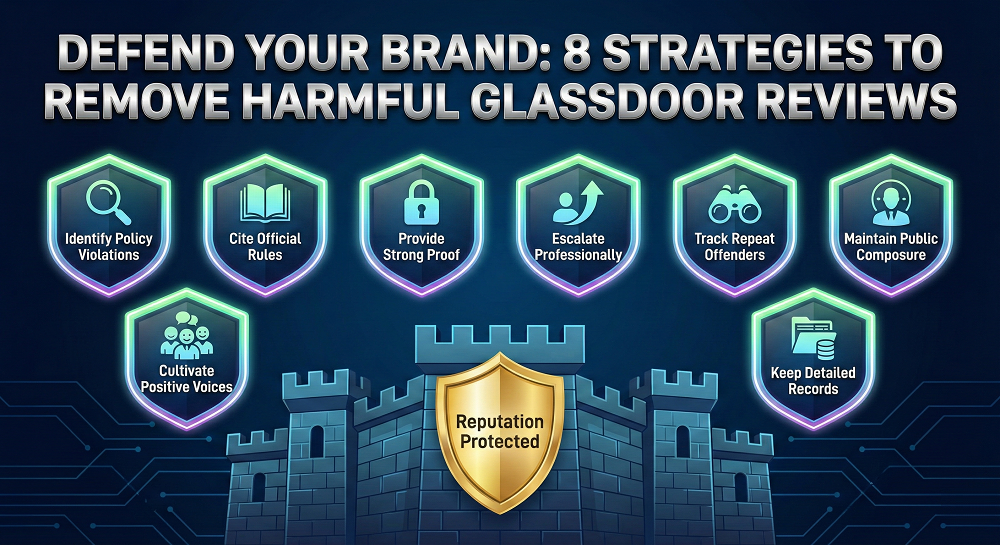
8 Steps to Remove Harmful Reviews from Glassdoor
1. Flag Specific Violations
The first step to delete review on Glassdoor is using the employer dashboard to flag the review.
Be precise.
Instead of stating, “This is false,” identify the exact sentence that violates policy. Copy the line and connect it directly to the rule it breaches. Vague complaints rarely succeed.
2. Reference Glassdoor Policy Language
If you want to increase your chances to delete review on Glassdoor, cite policy language directly.
For example:
- “False statements presented as fact”
- “Disclosure of confidential information”
- “Non-employee reviews”
When you frame your request using Glassdoor’s own rules, your submission becomes procedural rather than emotional.
3. Provide Documentation
Executives often skip this step, and it’s a mistake.
To properly delete review on Glassdoor, attach supporting documentation:
- Employment records (if the person was never employed)
- Internal policies disproving specific claims
- Legal documents showing inaccuracies
Evidence transforms your request from opinion to substantiated claim.
4. Escalate Through Employer Support
If initial flagging does not work, escalate.
Keep communication neutral and professional. Never threaten. Never accuse. State facts and reference prior ticket numbers.
In complex or defamatory cases, structured escalation matters. Many businesses consult specialized professionals who understand platform procedures and policy frameworks. If you need structured support navigating serious reputation damage, resources focused on strategic review removal can help, such as professional guidance available here.
Escalation should feel strategic, not reactive. Contact YourReputation.Agency Today.
5. Monitor Repeat Accounts
Some harmful reviewers create multiple accounts.
If your objective is to delete review on Glassdoor tied to coordinated attacks, monitor for:
- Similar language patterns
- Multiple reviews posted within minutes
- Identical accusations across accounts
Document patterns carefully. Pattern evidence strengthens escalation.
6. Avoid Public Overreaction
Many CEOs damage their brand more through responses than the review itself.
If you cannot immediately delete review on Glassdoor, respond calmly and briefly. A professional reply shows leadership maturity.
Avoid:
- Legal threats in public comments
- Emotional rebuttals
- Revealing internal disputes
For hospitality and eCommerce brands especially, public tone influences buyer confidence.
7. Build Positive Employee Feedback
Deleting one post does not fix perception.
Encourage current team members to leave authentic, balanced feedback. A steady stream of genuine reviews reduces the visibility of isolated harmful posts.
For growing startups and small businesses, employer branding is long-term protection. The goal should not only be to delete review on Glassdoor, but to create enough positive presence that one review cannot define you.
8. Document Everything
Keep records of:
- Submission dates
- Case numbers
- Screenshots
- Follow-up communications
If a former employee crosses into defamation, threats, or harassment, documented attempts to delete review on Glassdoor demonstrate good-faith effort and strengthen potential legal positioning.
Documentation is protection.
When Legal Escalation Is Appropriate
If a review includes blackmail, explicit threats, or demonstrably false criminal accusations, legal consultation may be necessary.
However, legal action should be the final option. Over-aggressive responses can attract unwanted attention and amplify the issue.
A structured approach, policy citation, documentation, professional escalation, is typically more effective than intimidation.
FAQs
Can I directly delete review on Glassdoor myself?
No. Employers cannot directly delete review on Glassdoor. Only policy violations may be removed after review by the platform.
How long does it take to remove a harmful review?
It typically takes several days to a few weeks, depending on documentation quality and escalation level.
What if the reviewer never worked for my company?
Provide employment records proving non-affiliation. Non-employee reviews often qualify for removal.
Should I respond publicly while waiting?
Yes, professionally and briefly. A calm response demonstrates transparency and leadership.
Long-Term Reputation Strategy
For small business owners, restaurants, hotels, and online brands, the objective is not simply to delete review on Glassdoor repeatedly. It’s to build a resilient digital presence.
Focus on:
- Consistent employer branding
- Proactive employee engagement
- Ongoing monitoring
- Strategic response protocols
Reputation is not defined by the absence of criticism. It is defined by how leadership handles it.
When managed strategically, even negative feedback can reinforce credibility instead of weakening it.